Unlike smaller Philippine resort islands, Bohol lets visitors combine diving and island-hopping with day trips to caves, waterfalls, and rice fields, all without leaving the province.
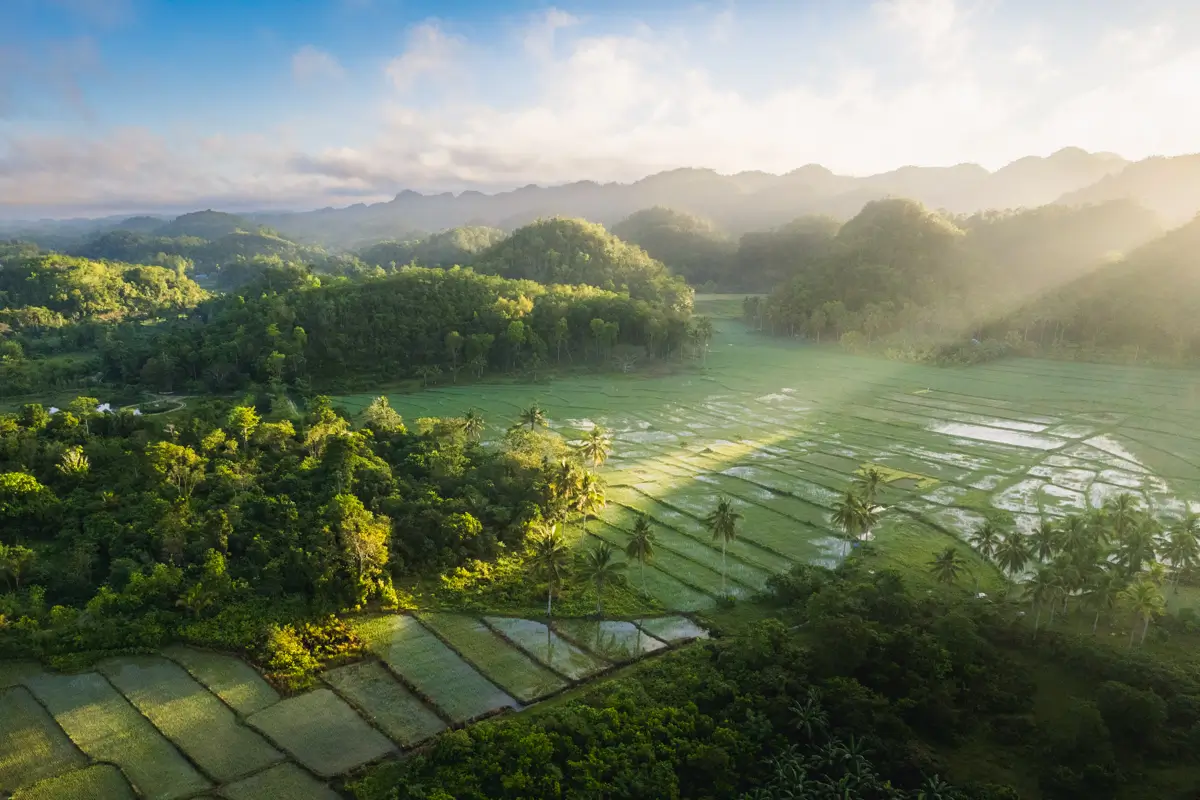
Bohol is one of the central Visayan islands, known for its iconic Chocolate Hills, white sand beaches, and long irregular coastline broken up by coves and fishing villages. It’s large enough to offer very different experiences depending on where you stay: Panglao on the southwest edge is crowded with resorts, dive shops, and most of the island’s tourist infrastructure, while Anda on the far eastern side feels quiet and remote, with caves, beaches, and fewer crowds. Inland, rice terraces, forested hills, and waterfalls contrast sharply with the coastal scene, giving Bohol more variety than many other islands in the Philippines.
Archaeological finds suggest people lived on Bohol thousands of years ago, long before Spanish colonists arrived. By the 1500s it was home to established settlements trading with nearby islands like Cebu and Siquijor. Spanish rule began after the Sandugo Blood Compact between Miguel López de Legazpi and Datu Sikatuna in 1565, a symbolic pact still commemorated today in Tagbilaran. Later, agriculture, especially rice and coconut, dominated the island’s economy. During the 20th century, Bohol became more connected to Cebu City and Dumaguete through regular ferry routes, and today tourism is the main driver of its economy. Panglao has absorbed much of that growth, but Anda and the island’s interior still offer glimpses of a slower pace of life.
Visitors come to Bohol for a mix of natural and cultural attractions: the Chocolate Hills, the tarsier sanctuary protecting one of the world’s smallest primates, and river cruises on the Loboc. Inland waterfalls like Can-Umantad and a number of agritourism destinations make good day trips, while divers head to Balicasag and Pamilacan Islands off Panglao. Those looking to relax on the beach without travelling far often base themselves in Anda. Thanks to its size and varied landscapes, Bohol is one of the few islands where you can combine beach time with inland exploration without long transfers, making it easy to mix diving, wildlife, and history in one trip.
In this guide, I’ve detailed all the best things to do in Bohol. If I’ve missed something (and I probably have), feel free to let me know.
When is the Best Time to Visit Bohol?
Bohol can be visited year-round since it doesn’t have as sharply defined wet and dry seasons as other parts of the country, but February through May are usually the driest months and the best time for beaches, diving, and inland trips without much chance of rain. March and April are also the hottest months, with daytime highs often over 33°C, so plan for heat if you’re out exploring the hills and waterfalls.
Rain is more frequent from June through December, peaking in October and November, but it usually falls in short, heavy bursts rather than all day. Travel is rarely disrupted, and mornings are often clear. Bohol sits south of the main typhoon belt, so while storms occasionally pass through, they’re less common and weaker here than in northern provinces.
Local events are worth planning around. The Sandugo Festival in July commemorates the 1565 blood compact between Datu Sikatuna and Miguel López de Legazpi with parades, street dancing, and cultural shows. Tagbilaran fills quickly during the festival, so book accommodation early if you’re coming for it.
How to get to Bohol
Ferry from Cebu City: The most common way to reach Bohol is by ferry from Cebu City. Fastcraft ferries operated by OceanJet, SuperCat, and Lite Ferries connect Cebu to Tagbilaran City, Bohol’s main port, with travel times ranging from 1.5 to 2 hours. Ferries depart frequently throughout the day from Cebu’s Pier 1, making this a convenient and popular option. Economy, business, and first-class seats are available, and it’s advisable to book tickets in advance during weekends and holidays.
Ferry from Dumaguete: Travelers from Dumaguete City can also take ferries to Tagbilaran or Tubigon in Bohol. Fastcraft ferries from Dumaguete to Tagbilaran take around 2 hours, while slower vessels may take longer. This is an excellent option for those exploring nearby Negros Oriental and planning to extend their trip to Bohol.
Ferry from Cagayan de Oro: For travelers from Mindanao, ferries also connect Cagayan de Oro to Bohol, with trips typically docking at the ports of Tagbilaran or Jagna. These routes are less frequent, often operating overnight journeys. RoRo (roll-on/roll-off) ferries are available for those traveling with vehicles.
Flights: Bohol-Panglao International Airport, located on Panglao Island, is the gateway for air travellers. The airport offers direct domestic flights from Manila, Clark, Cebu, and Davao, as well as a few international routes. Flights to Bohol are the fastest way to reach the island, ideal for those with limited time. From the airport, taxis, vans, and tricycles are available for transfers to popular destinations like Panglao’s beaches or Tagbilaran City.
Private Car or Van: From Cebu, some tour operators offer private cars or vans that include the ferry transfer to Bohol. This option is perfect for families or groups looking for a hassle-free, door-to-door service. The trip combines a drive to the Cebu port with a ferry ride to Bohol, where another vehicle will be waiting for onward travel.
How to get Around Bohol
Scooter – If you’re planning on renting a scooter, you can either ask your accommodation to arrange a rental for you, contact a rental shop via Facebook, or alternatively there a bunch of guys right at the port who will offer to rent to you right when you arrive. The benefit to that option is that you can drop it off back at the port when you leave, but the downside is that these scooters tend not to be taken care of quite as well as the ones you might get through your accomodation or rental shop. I’ve never had any problems, but it’s up to you.
Private car – If you don’t want to drive yourself, you can hire a private car with a driver for the day and build your own route. Most accommodations have a list of trusted drivers they can call, and you’ll also find drivers advertising on Facebook and at popular tourist areas in Panglao and Tagbilaran. This is a good option if you want to link together places that aren’t on the usual tour route, or if you’re travelling with family and don’t want to worry about parking and navigation. Before you confirm, agree clearly on the total price, how many hours are included, and how far you’ll go. Ask what happens if you stay out later than planned, and make sure the vehicle has working seatbelts and decent aircon, especially if you’ll be covering long distances on hot days.
Van tours – If you’d rather not plan anything at all, you can join a shared van tour on a set itinerary. The most common is the “countryside tour,” which usually includes the Chocolate Hills, the fake “tarsier sanctuary”, the Loboc River cruise, and a few viewpoints or churches, with hotel pickup and drop-off in Panglao or Tagbilaran. These tours are easy to book through hotels, travel agencies, or online, and the price is typically per person, which can work out cheaper than a private car if you’re travelling alone or as a couple. The trade-off is that you follow a fixed schedule and move with a group, so you’ll have limited time at each stop and less flexibility to skip places you’re not interested in or linger where you are.
Where to Stay in Bohol
Panglao – This small island connected to Bohol by bridge is where 99% of tourists in Bohol stay, so it’s no wonder it’s also the most heavily developed. Alona Beach is the main hub, lined with largely Chinese- and Korean-owned bars, dive shops, and international restaurants. Because Panglao is hours from most of Bohol’s natural attractions, most people staying here only end up catching only a surface-level glimpse of Bohol on packaged van tours that loop back in a day. If you’re not planning on renting your own scooter and want a package tour, easy airport access, and a fully set-up tourist base, this is where you should stay.
Anda – On the far eastern end of Bohol, Anda has a much quieter scene with long stretches of beach, clear water, and a small town center. Resorts here are more spread out, and the crowd is mostly divers, long-stay travellers, and people uninterested in Panglao’s noise. It takes about three hours by car from Tagbilaran, so it’s not as convenient, but it makes up for it with its cenotes, beaches, coral reefs, and slightly better proximity to the most of the island’s inland attractions. If you’re probably planning on renting a scooter and want to stay somewhere laid-back, comfortable, but not touristy, this is your best option.
Central Bohol – Staying right near in the heart of Bohol near Carmen or one of the other little towns puts you smack dab in the middle of the Chocolate Hills, and not far from the tarsier sanctuary, the Loboc River, and many of the provinces most famous waterfalls. The accommodation options here are fewer, with a mix of homestays, eco-lodges, and resorts aimed at mostly Filipino travellers. The big advantage of being here is geography – rather than being stuck at one end of the island like Panglao or Anda, you’re positioned to reach almost any destination in a couple of hours or less. If you’re renting a scooter and want to see as much of Bohol as possible, and don’t care as much about where you stay, this is the best option for you.
My Tips for Visiting Bohol
1. Eat at carinderias. If you’re staying in Panglao, there are a variety of foreign-owned restaurants offering “tourist-friendly” meals like burgers, pizza, and lots of Korean and Chinese food, but most of Bohol still eats in carinderias and simple local eateries. These are the small turo turo places with trays of cooked food behind glass where you just point at what you want, usually paying 60 to 100 PHP per ulam plus rice. Look for busy spots near public markets, schools, and transport terminals. You’ll eat better and spend far less than on the tourist strip, and it’s the best way to try actual local dishes.
2. Only visit tarsiers at the real sanctuary. Most package tours will automatically take you to the highway-side Loboc Tarsier Conservation Area, which isn’t actually run by conservationists and has been repeatedly criticized as a for-profit viewing site where tarsiers are placed on branches and disturbed all day for photos. If you see images of tarsiers with their eyes wide open in bright daylight (they’re nocturnal), you can safely assume they are being stressed for the camera, and highly stressed tarsiers are known to kill themselves.
Instead, insist on the Philippine Tarsier Sanctuary in Corella, which is operated by the non-profit Philippine Tarsier Foundation inside a larger protected forest and is the more ethical way (though still imperfect, more on that later) to see them. Visits there are shorter and more controlled, with small groups, no touching, and rules about noise and camera use to keep stress on the animals down; your entrance fee also goes back into habitat protection and research rather than an exploitative roadside tourist trap.
3. Panglao is overrated. Almost everyone I know who has stayed only in Panglao has flown away thinking there isn’t much to do in Bohol, simply because they followed the standard tour circuit and never saw the rest of the island. Most tourists experience a handful of attractions in one small corner of the large province, then miss out on nearly everything Bohol has to offer. The majority of spots in this guide are well away from Panglao, so if you want to see them you’ll need to leave the tourist trail and actually move around the island. Panglao itself is known for its beaches, but they’re neither the most beautiful nor the cleanest in Bohol; they’re just the most developed, with denser crowds, higher prices, and more traffic than almost anywhere else you’ll visit in the province. If you’re planning on visiting Bohol by just staying in Panglao, prepare to be underwhelmed.
Best Bohol Tourist Spots
1. Asin Tibuok
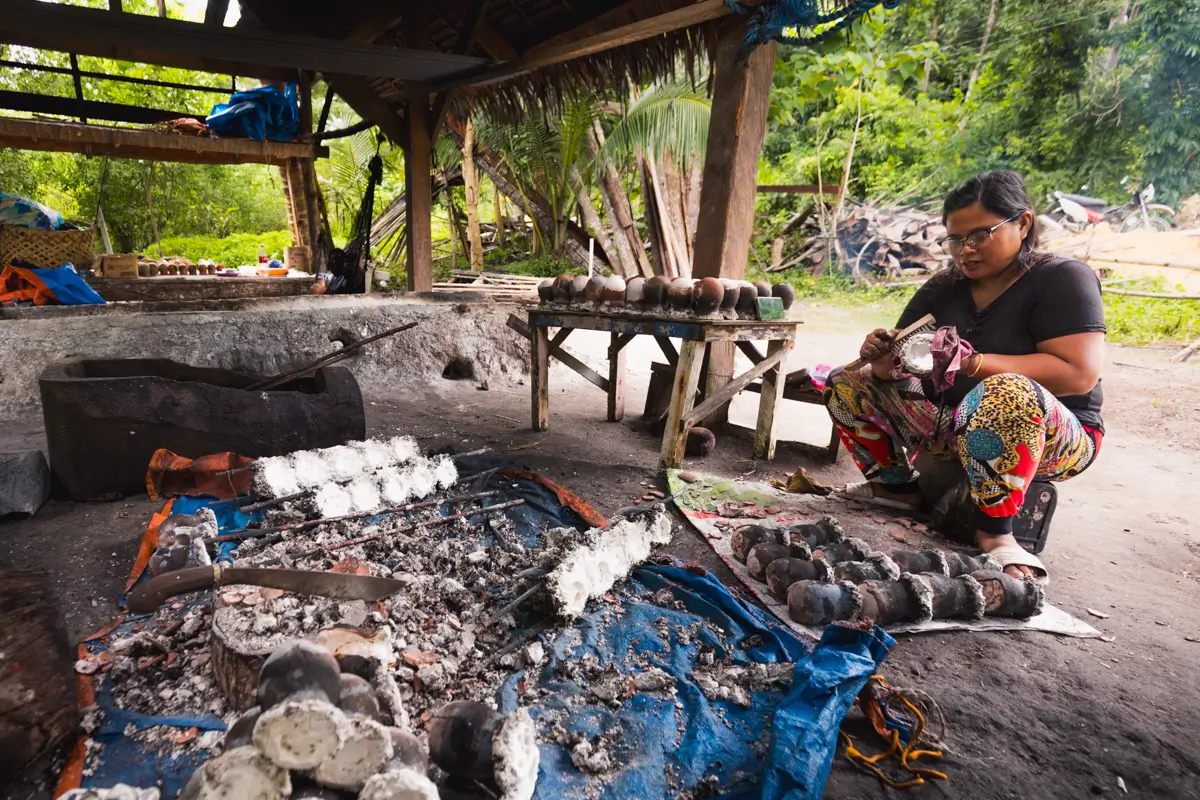
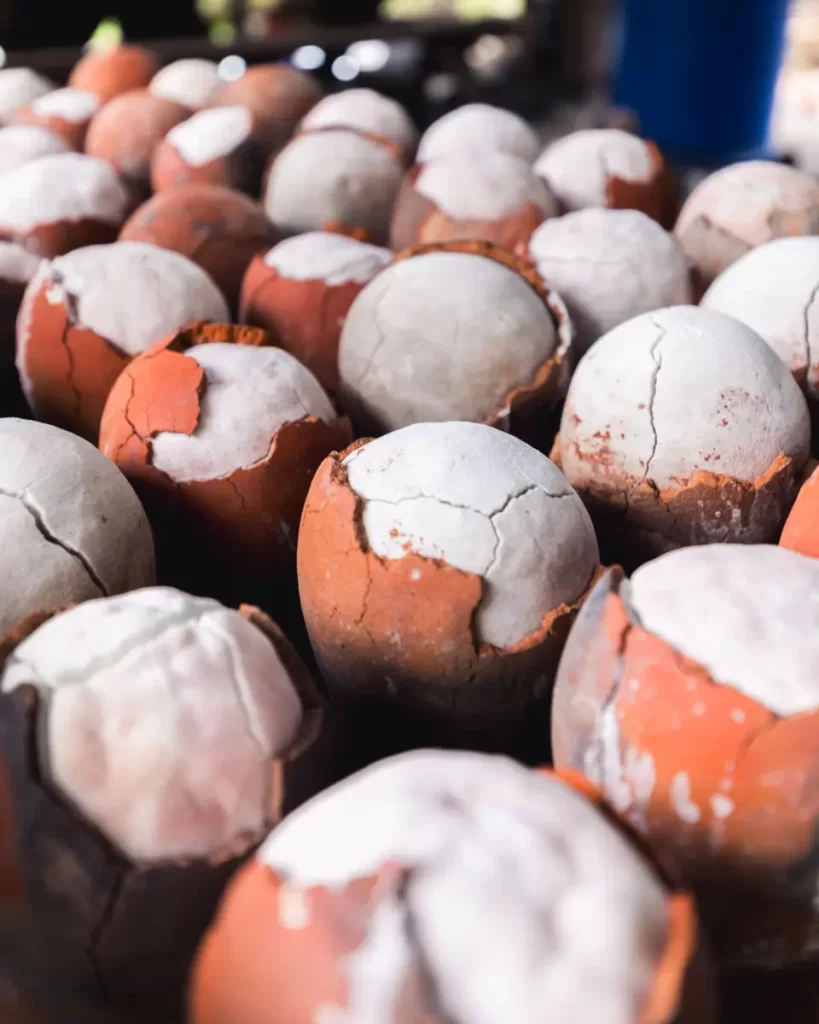
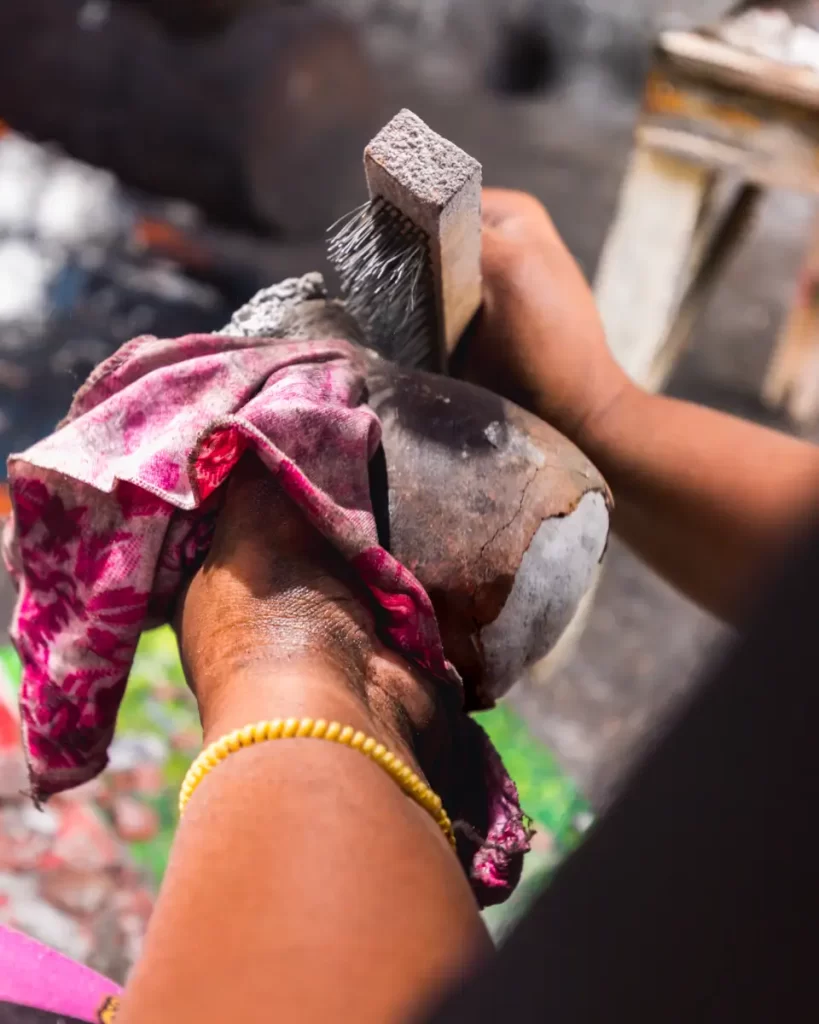
Asin tibuok is one of Bohol’s most important heritage ingredients and one of my favourite souvenirs to bring home from the Philippines; a dome-shaped salt made in Alburquerque through a labor-intensive process where coconut husks are soaked in brine, dried, burned to ash, and used to filter sea water into clay pots that are slowly evaporated over wood fires. The result is a solid block of salt with a subtle smoky, mineral flavour that locals grate over food. This ancient salt-making tradition was once close to dying out, but is now being revived, and you can see asin tibuok being used as an ingredient around the Philippines more and more. Travellers can buy it directly from the roadside stall about twenty minutes from Tagbilaran, which is just down the road from the workshop where you can even see it being made if you ask nicely. Prices fall between 350 and 450 PHP depending on size, and it keeps well for transport.
2. Chocolate Hills
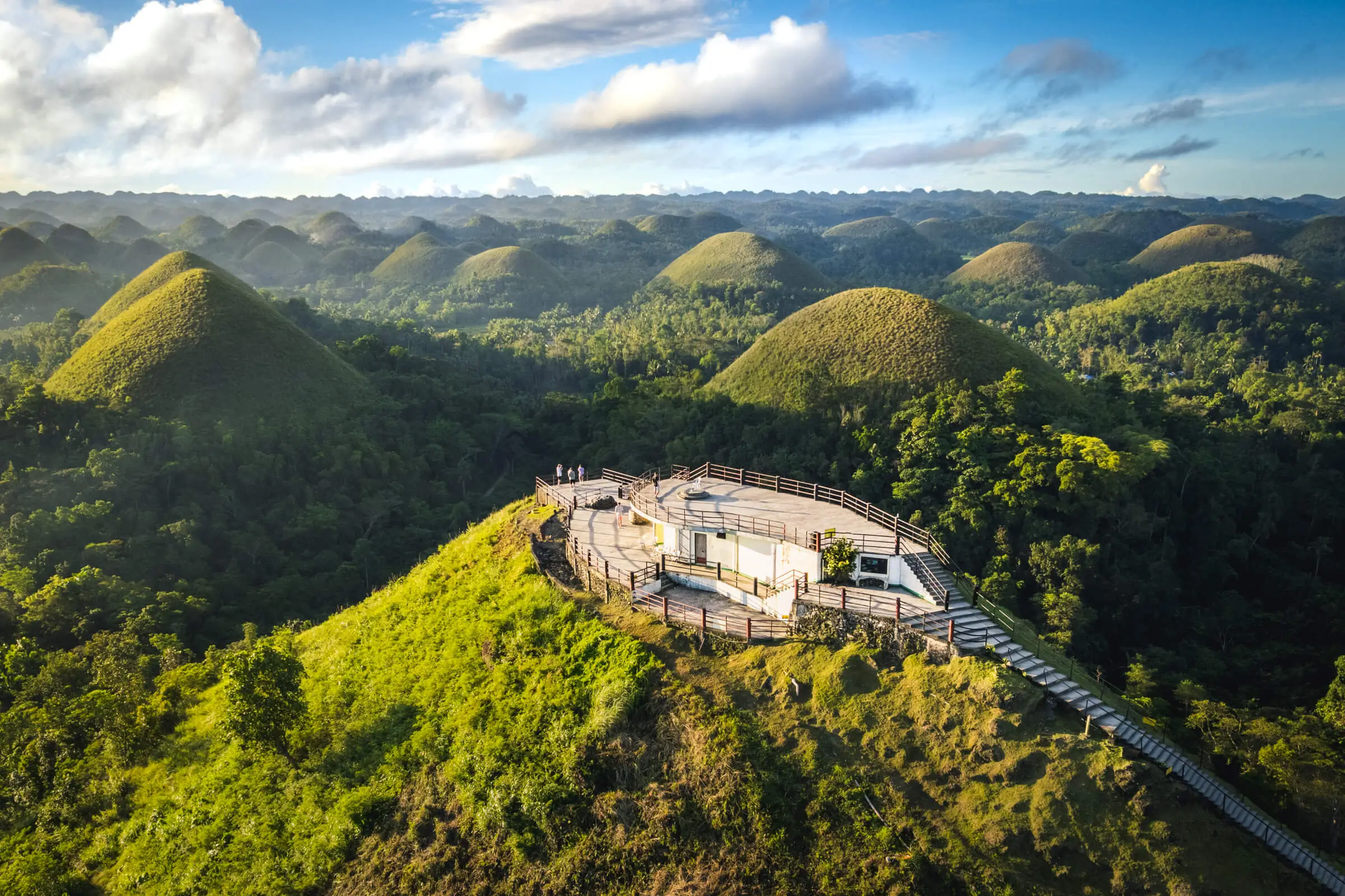
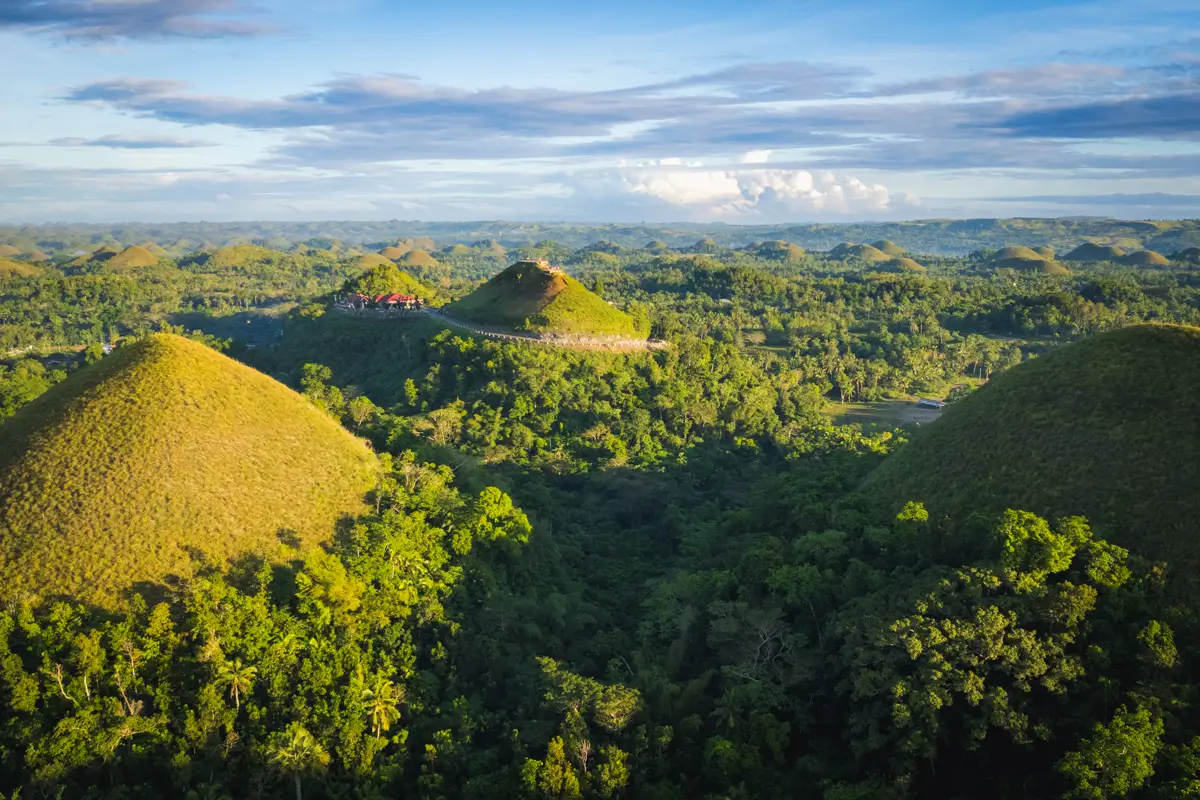
The Chocolate Hills are Bohol’s most distinctive landform, a cluster of more than a thousand almost uniform limestone mounds scattered across the center of the island. They formed from ancient coral and marine deposits that were pushed upward millions of years ago, then shaped by rain and erosion into the smooth, conical hills you see today. In the dry months they turn brown, giving them the “chocolate” colour that shows up on postcards, while in the rainy season they stay green. Building on the hills has been illegal for several decades, so the one viewing platform that was grandfathered in is naturally one of the top tourists spots in Bohol, despite it being pretty dilapidated and kitschy. It’s frustrating that in other countries a place this striking would have a clean, well-maintained viewpoint funded by a parks system, while here it ends up feeling like a lame tourist trap. As much as I’d like to tell you not to go here, the fact remains that the view is incredible. Even if you don’t pay to walk the stairs all the way up to the top, the free panoramas from the road on the way up to the parking lot and restaurant halfway up (don’t eat here) are breathtaking.
Also, reading online reviews it looks like a lot of tourists who ened up booking a package tour from Panglao end up taking a poorly-run ATV ride here, being told that it’s the only way to get to the lookout. Nope. You can just drive up off of the highway.
3. Hinagdanan Cave
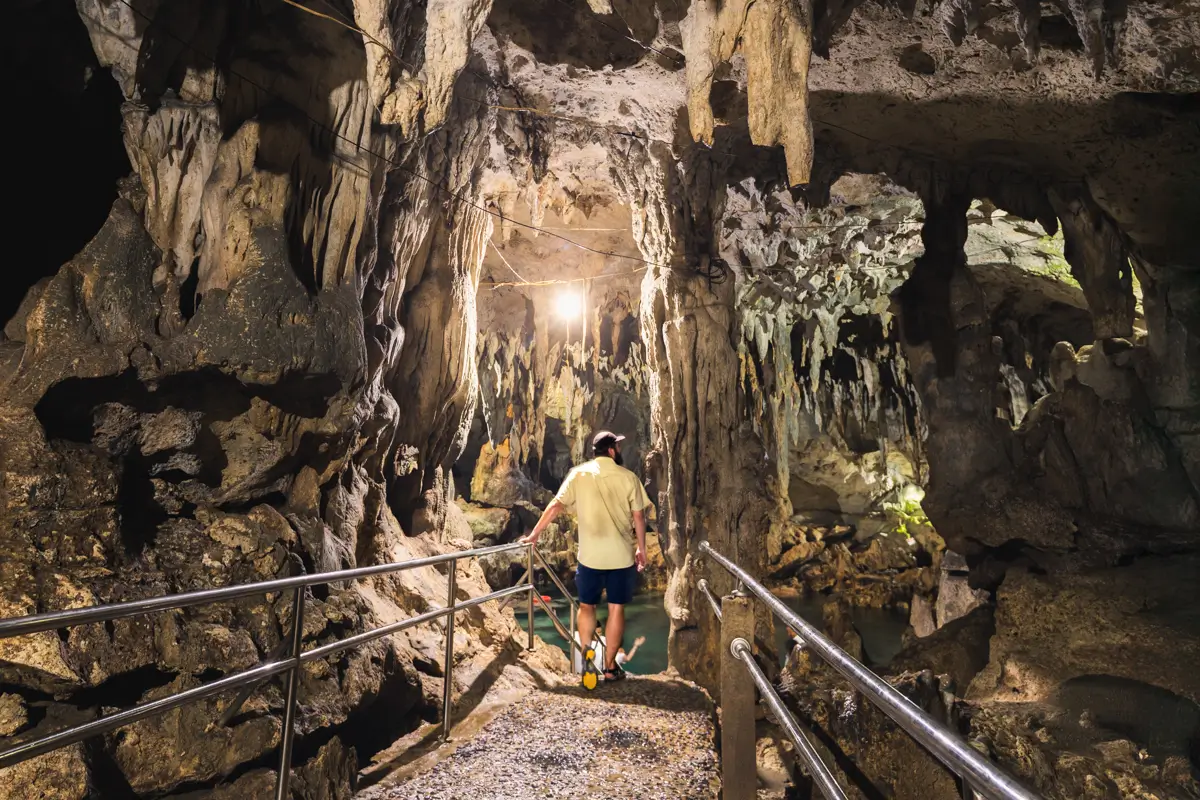
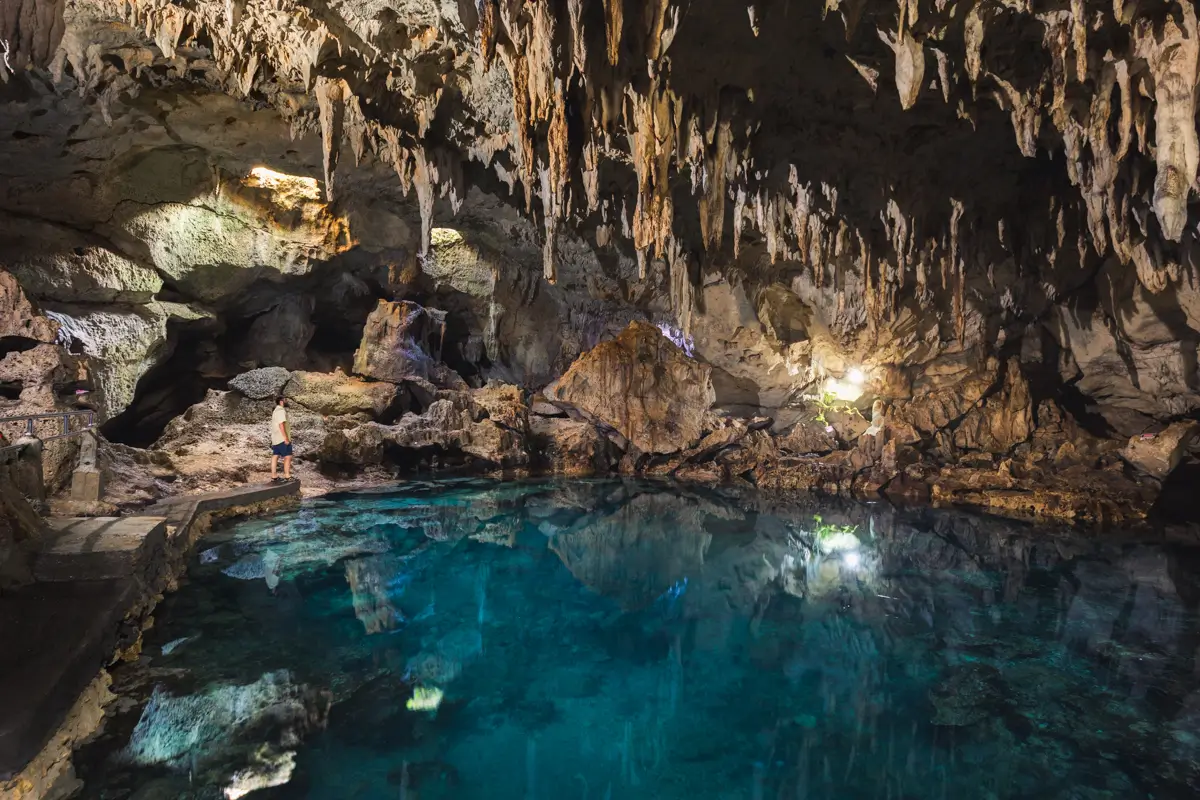
Hinagdanan Cave on Panglao is a natural limestone cave famous for its stunning stalactites, stalagmites, and crystal-clear underground lagoon. The name “Hinagdanan,” which means “laddered” in Cebuano, refers to the improvised ladder locals once used to access the cave’s narrow entrance. Inside, natural light filters through small openings in the ceiling, illuminating the lagoon and casting dramatic shadows on the rock formations. The cave is a popular tourist attraction, meaning that if you want to visit the cave and swim in the water, I suggest getting here early. I like to think I have a certain reverence for nature, and a dazzling emerald cave pool is the kind of place that I’d like to quietly take in the beautiful rock formations and tranquil atmosphere. For better or worse, Philippine tourists tend not to share the same attitude, and the midday vibe of many caves including this one can be a lot more “noisy crowded public pool”. Personally, I’d be fine paying a bit more for my entrance ticket if it meant there were a cap on how many visitors are allowed at a time. Right now entrance is 50 PHP, or 75 PHP if you want to swim.
4. Dumaluan Beach
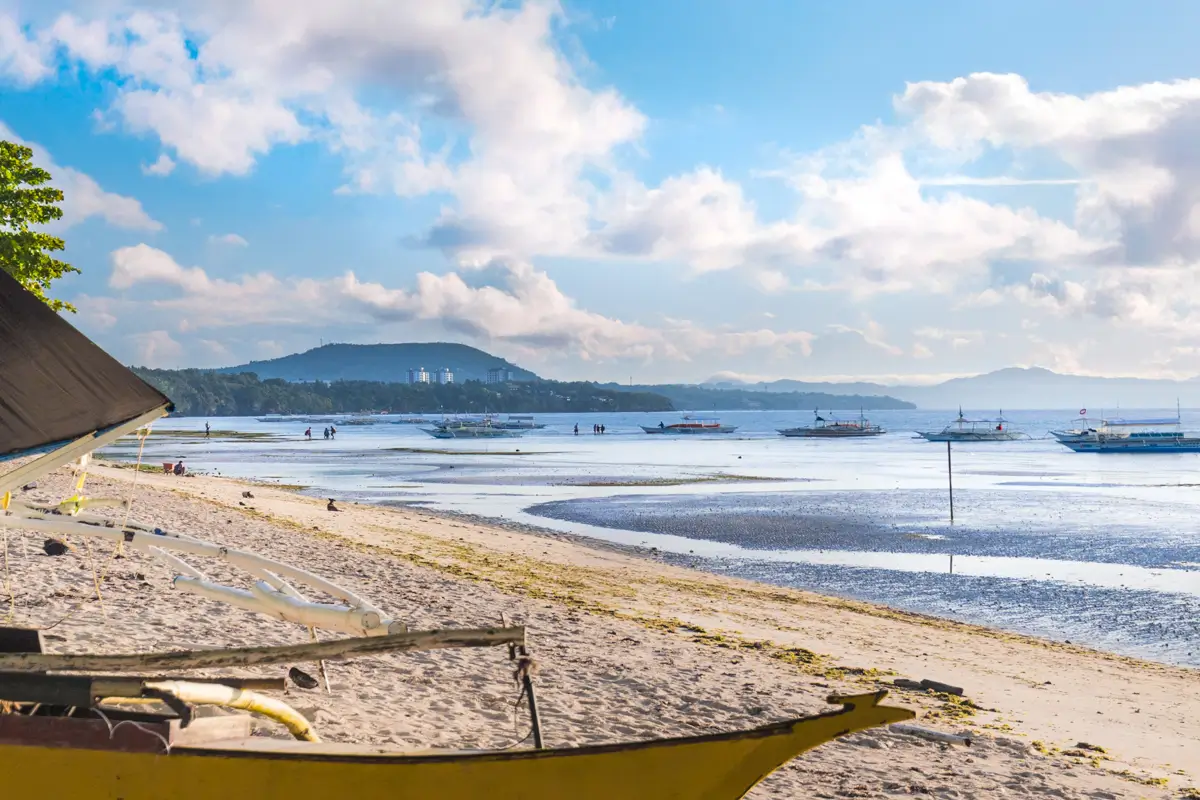
Dumaluan Beach is one of my favourite beaches on Panglao Island. Less crowded than the nearby Alona Beach, Dumaluan is popular with local families who come for picnics, swimming, and the calm water that stays waist-deep far from shore. The beach is shared by several resorts along with a public access point beside Dumaluan Beach Resort; the public section isn’t undeveloped, but it’s spacious enough that you can easily find room to enjoy yourself away from other tourists or someone trying to sell you something. Located on the east end of Panglao, it’s an ideal sunrise spot if you’re staying nearby.
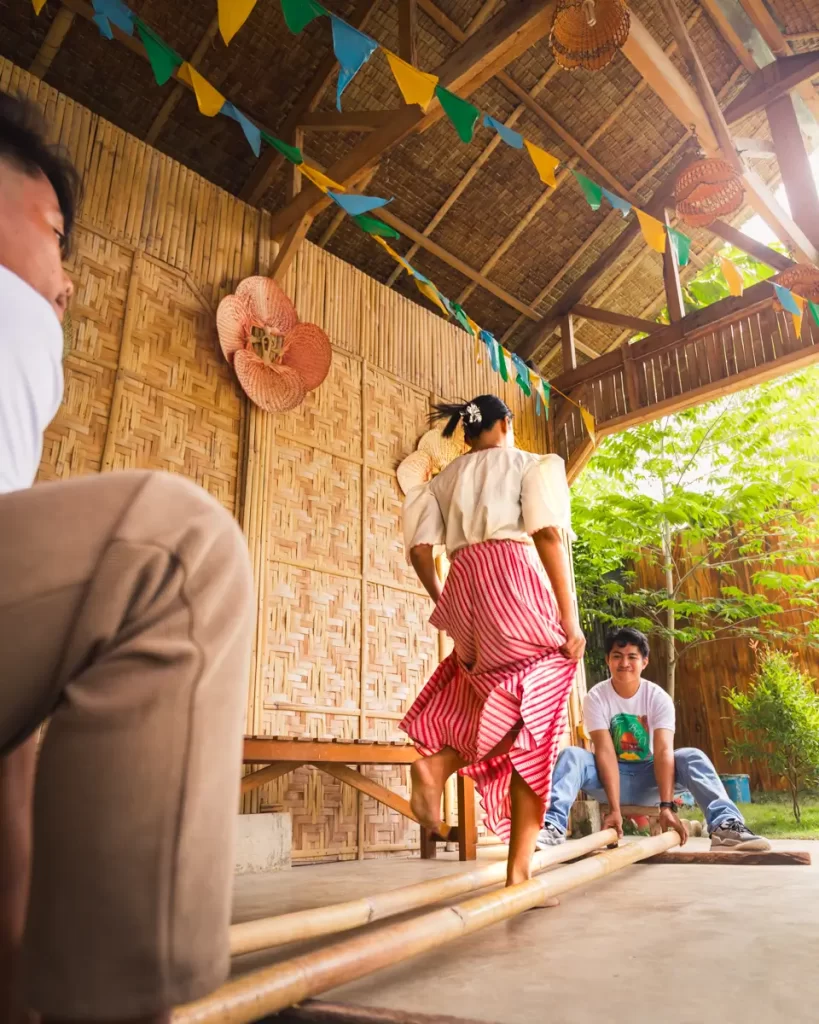
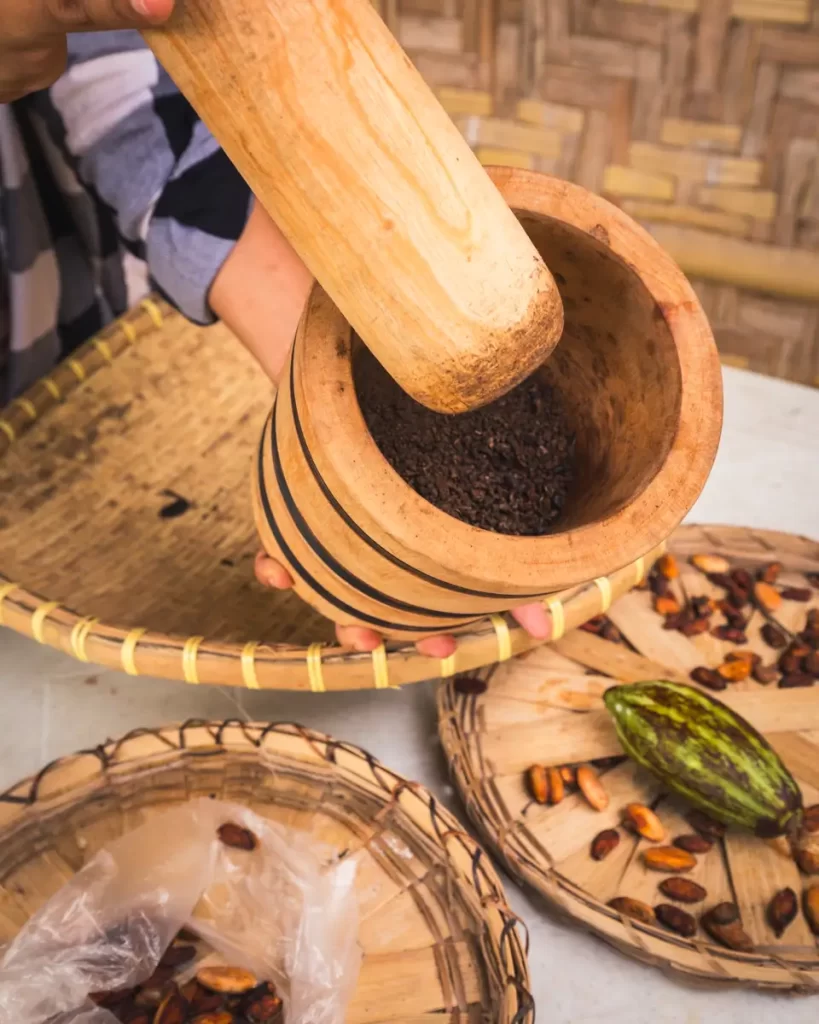
5. Bohol Cultural Village
Bohol Cultural Village is the one place on this list that didn’t show up in my pre-trip research – I just happened to notice it while riding past. Lucky accident, as it turned out to be a highlight.
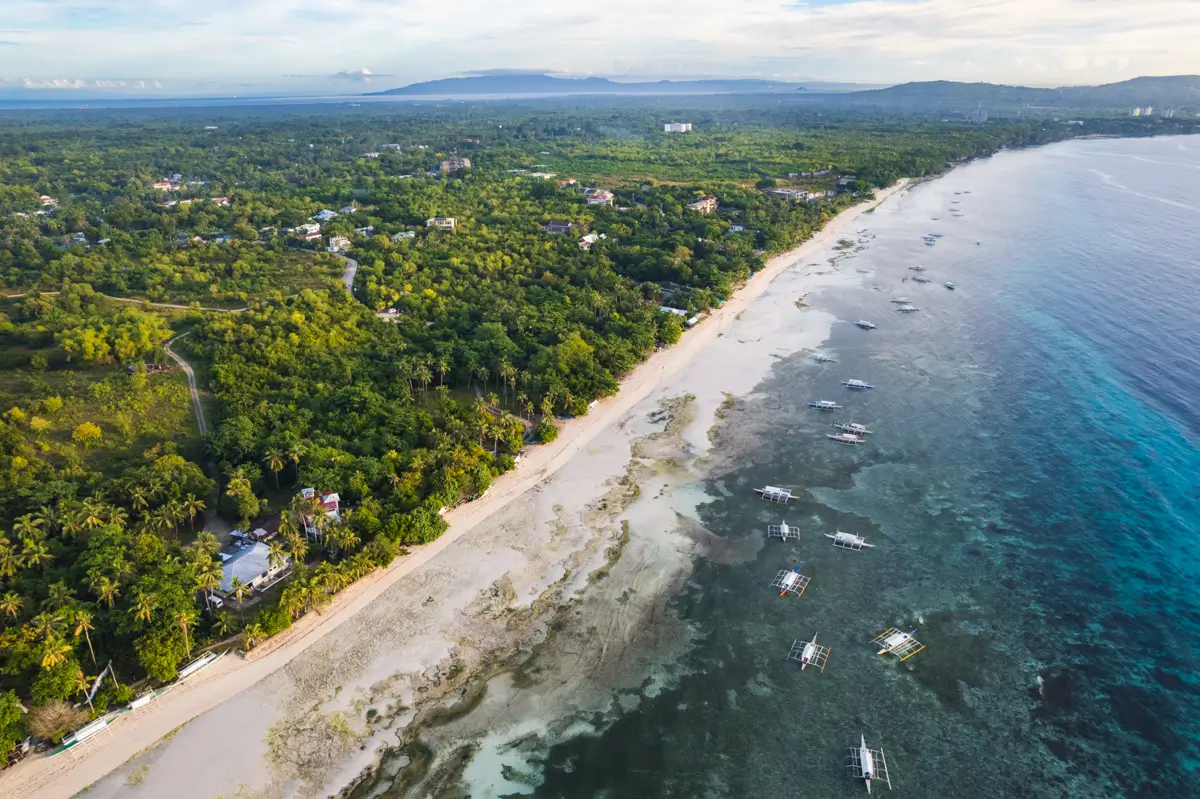
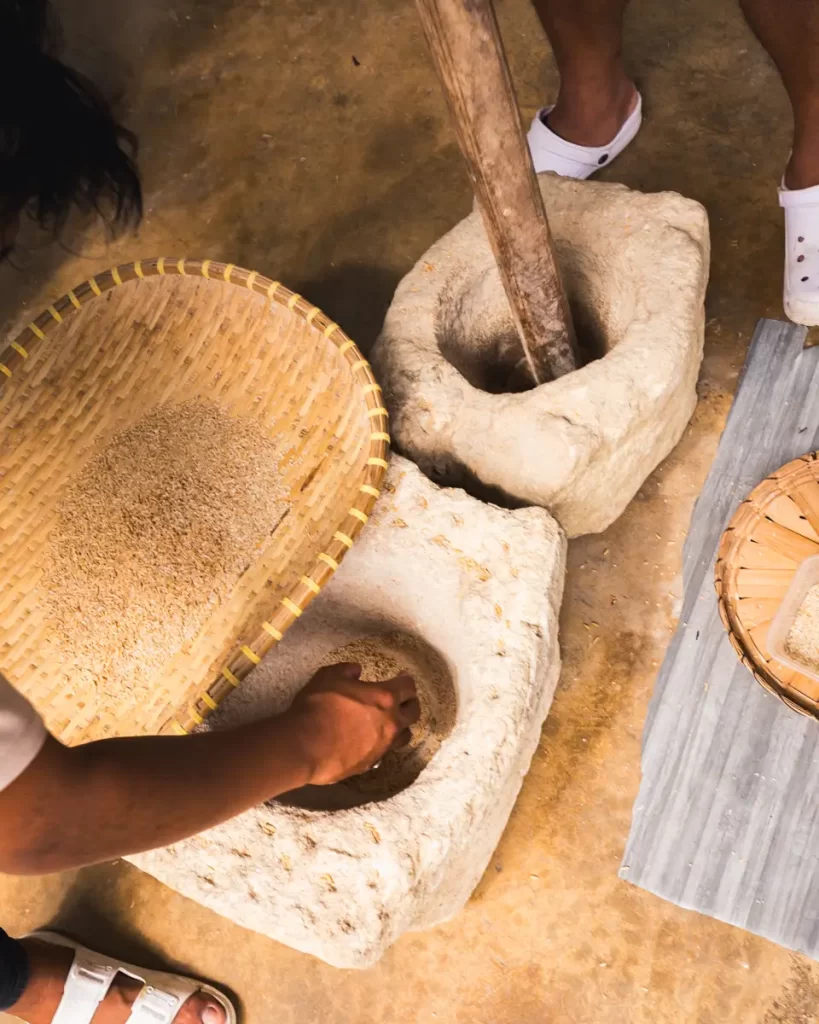
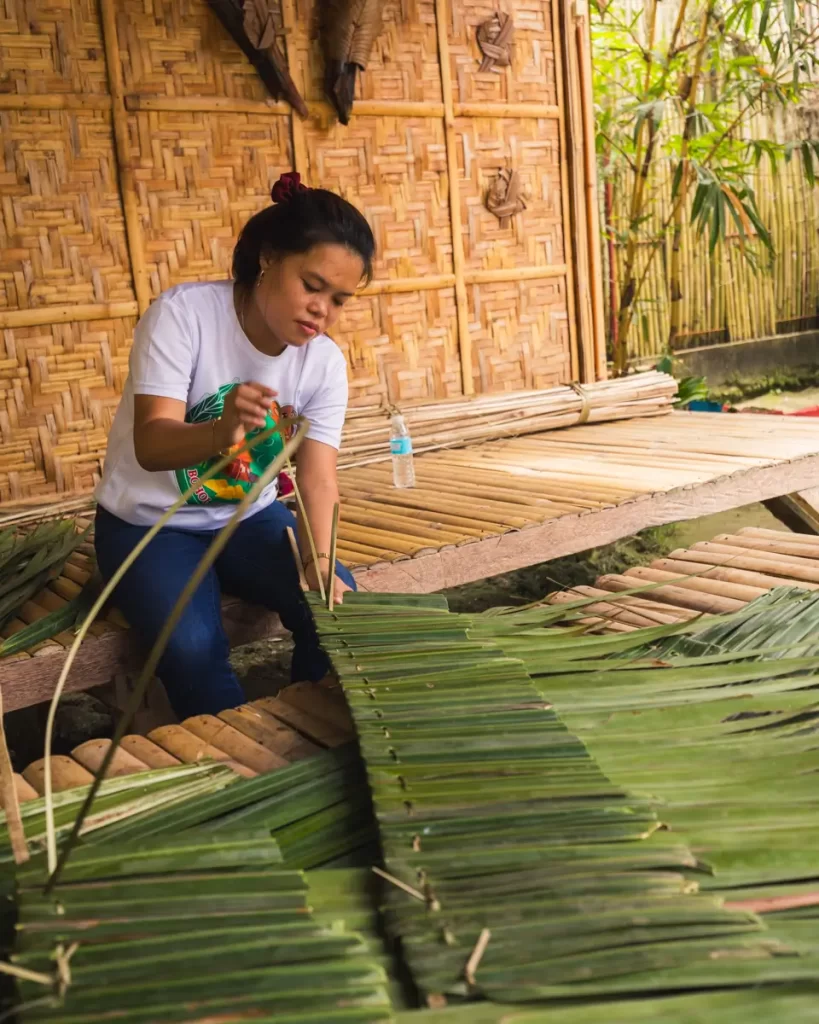
Bohol Cultural Village in Baclayon is a small setup where visitors are walked through traditional crafts and daily-life practices of Bohol. The visit includes demos of weaving and basket-making, hand-milling rice, blacksmithing, coffee production, tuba, and more. Nearly all the sections were a bit of a re-tread for me, as on this same trip I also got to see nearly all of these things done “for real”, but if I were spending less time on Bohol, this would be a perfect glimpse of local culture and traditions without having to ride around the whole province. I was left very very impressed by the successful attempt to create a tourist attraction that highlights what makes this corner of the Philippines special, instead of erasing the local culture in order to just give the tourists what they want.
6. Tarsier Sanctuary
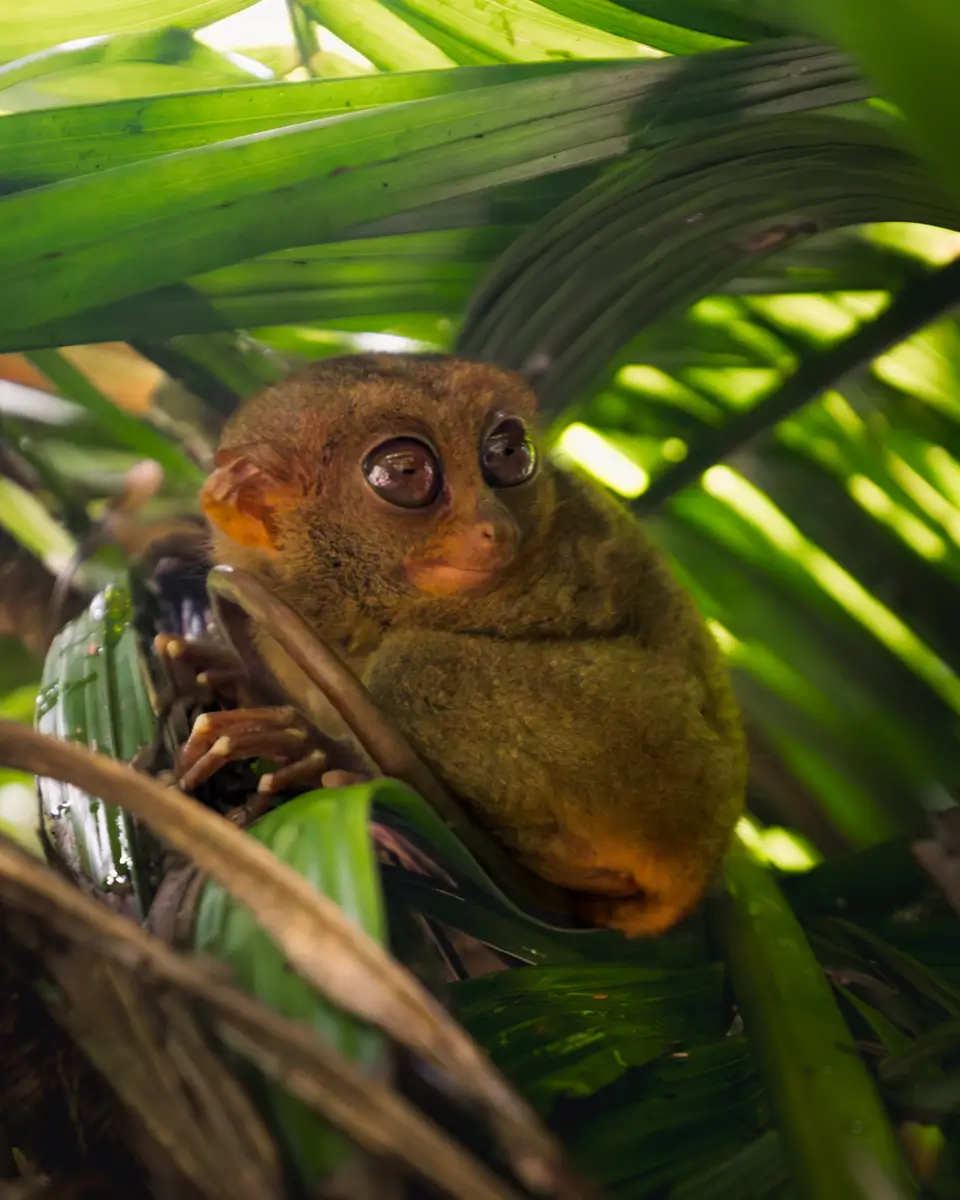
Tarsiers are tiny nocturnal primates found in only a few parts of Southeast Asia, and Bohol’s Philippine tarsier is one of the smallest and most threatened of them all. They’re incredibly sensitive nocturnal hunters with huge eyes (bigger than their brains!), fragile bone structure, and stress levels that spike with noise, handling, or bright light. Habitat loss has only made their situation more precarious, pushing the species toward extinction
Many package tours default to taking tourists to the Tarsier Conservation Area in Loboc, which is unfortunately not a conservation site at all. It’s a roadside attraction where tarsiers are placed on low branches for easy viewing, surrounded by crowds only a few feet away. Because tarsiers are prone to killing themselves when stressed, this reckless and expoitative approach is criticized by wildlife groups.
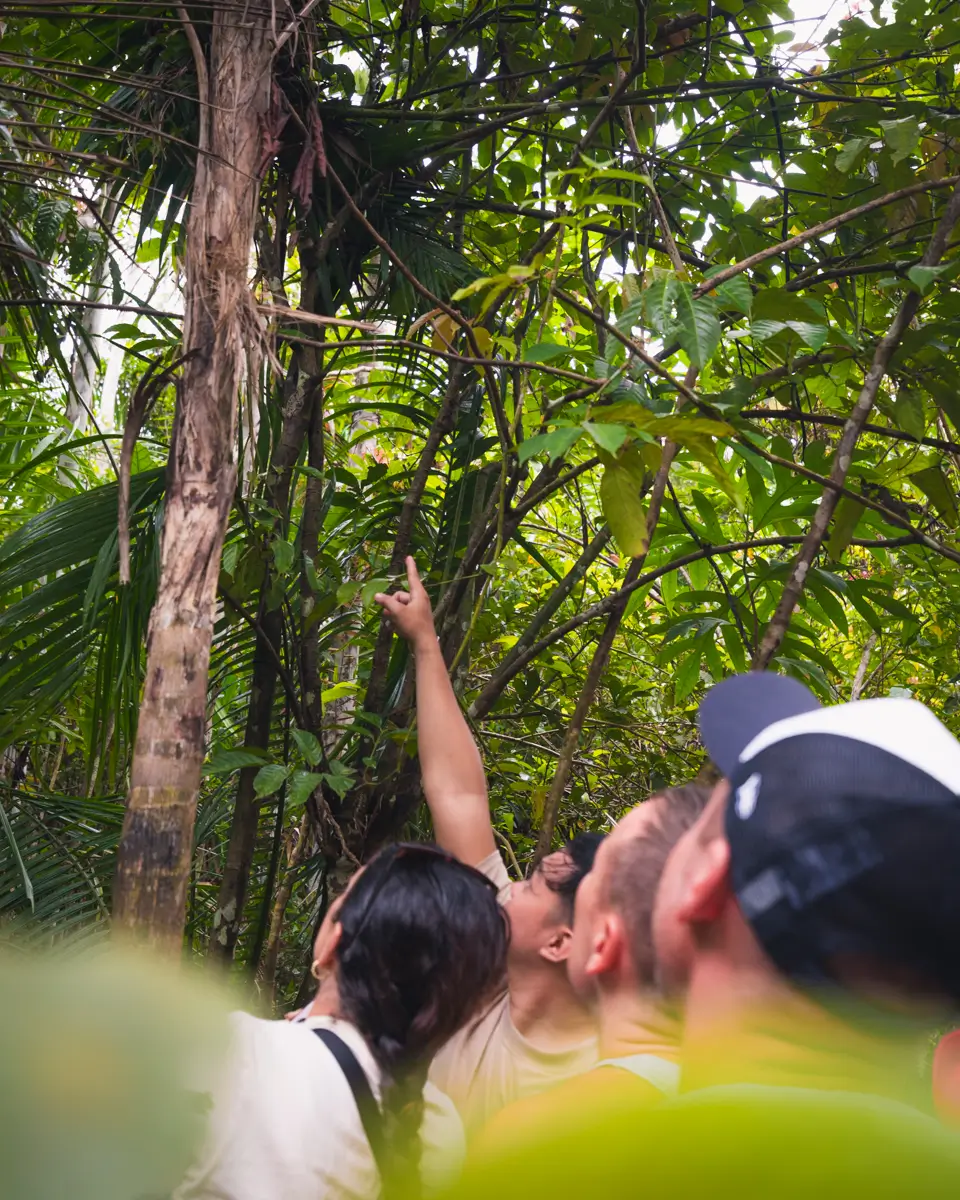
If you care where you spend your pisos (and you should), try the Tarsier Sanctuary in Corella, run by the Philippine Tarsier Foundation. This is the more ethical option: a protected forest where tarsiers live freely and guides simply help you spot the ones trying to sleep in their trees. Visitors are supposed to walk along a quiet, shaded trail, keep a proper distance, and avoid flash photography, which protects the animals’ well-being. Unfortunately, while the rules are clearly stated, enforcement is lax, and there’s little to actually deter poorly-behaved tourists from laughing and shouting. If you see someone being an asshole, be a Karen. Shush them.
7. Chicken Halang-Halang
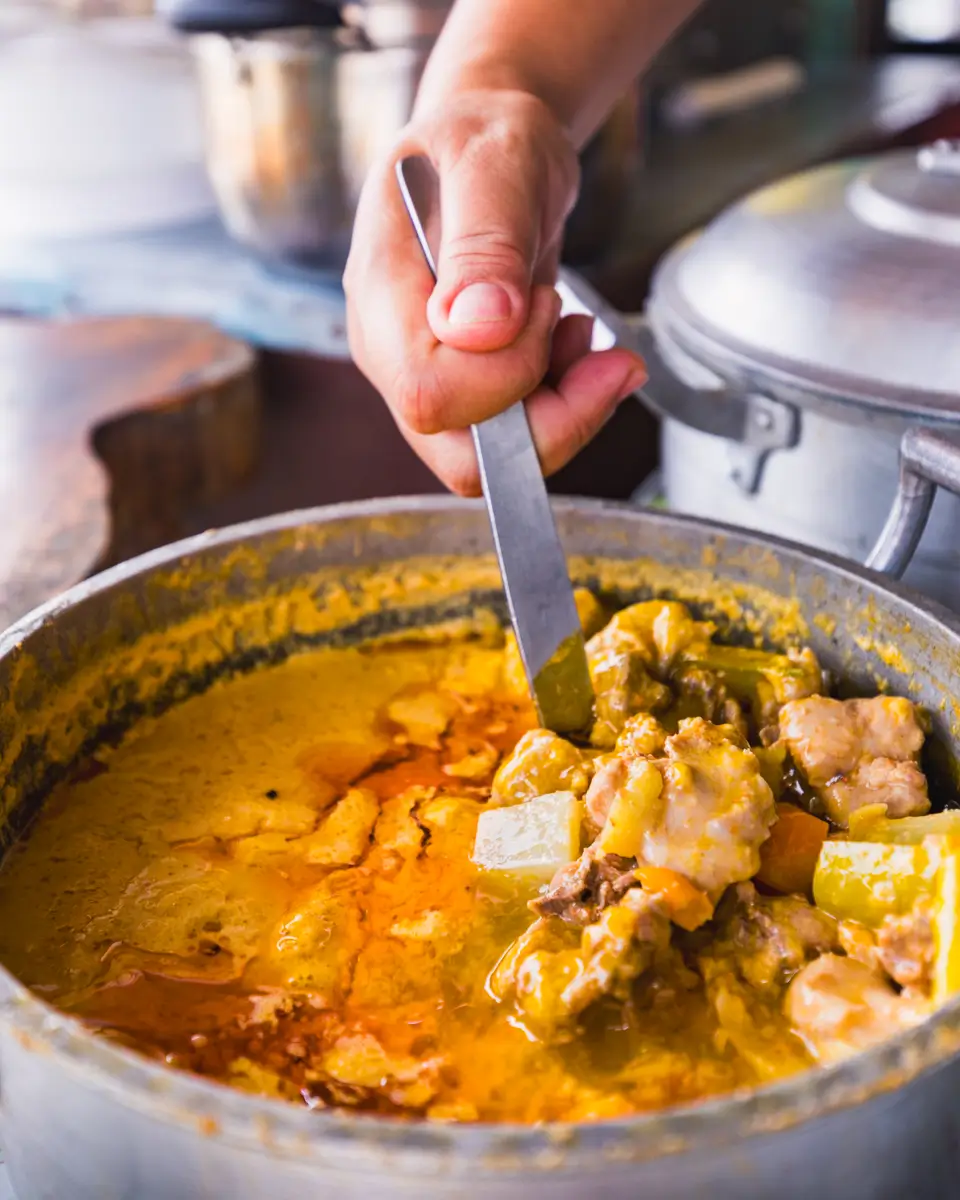
Chicken halang-halang is one of the most reliable dishes to look for in Bohol’s carinderias, a staple that sits somewhere between tinola and a light coconut-milk curry. Though the dish is not uncommon in other areas of the Visayas and Mindanao, it’s most strongly associated with Bohol The name means “spicy-spicy,” which describes the dish well; native chicken is simmered with coconut milk, lemongrass, ginger, garlic, and siling labuyo until the broth turns rich, aromatic, and just hot enough. You’ll see halang-halang in big metal pots at carinderias all over the island, though it’s easy to miss out on if you just stick to tourist restaurants.
8. Ermita Ruins
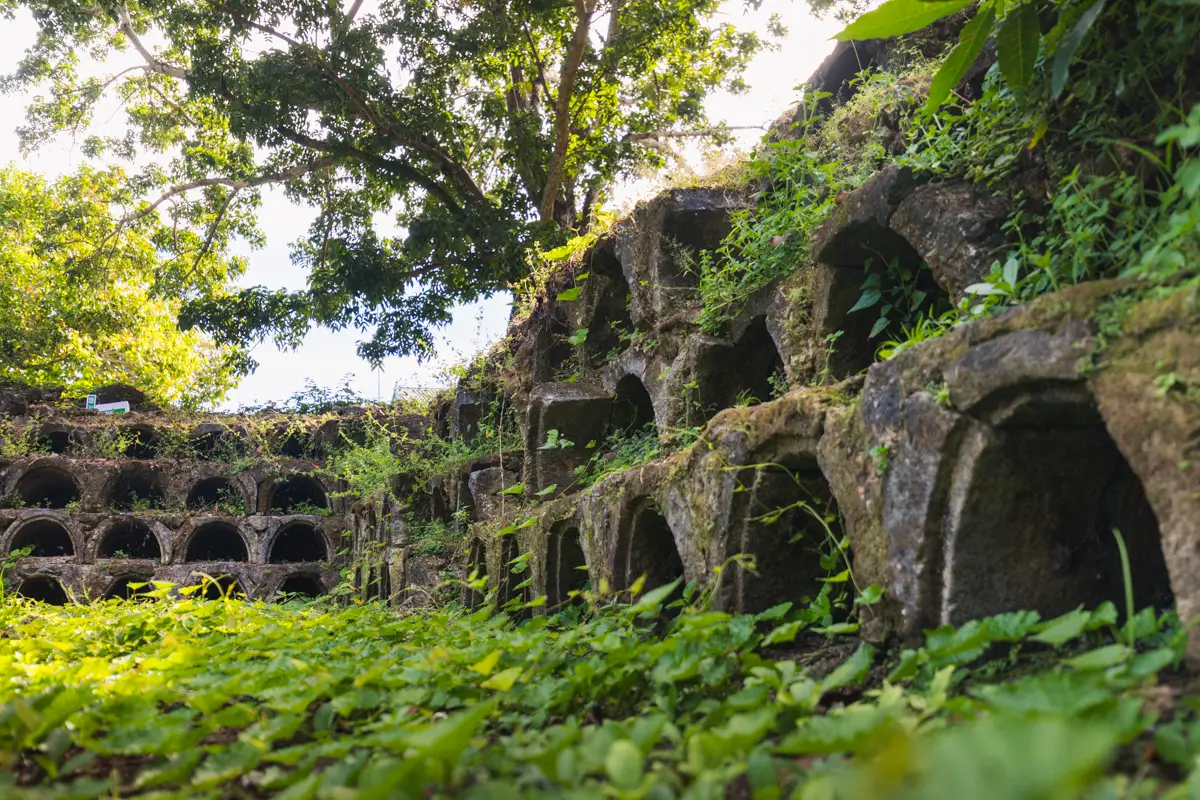
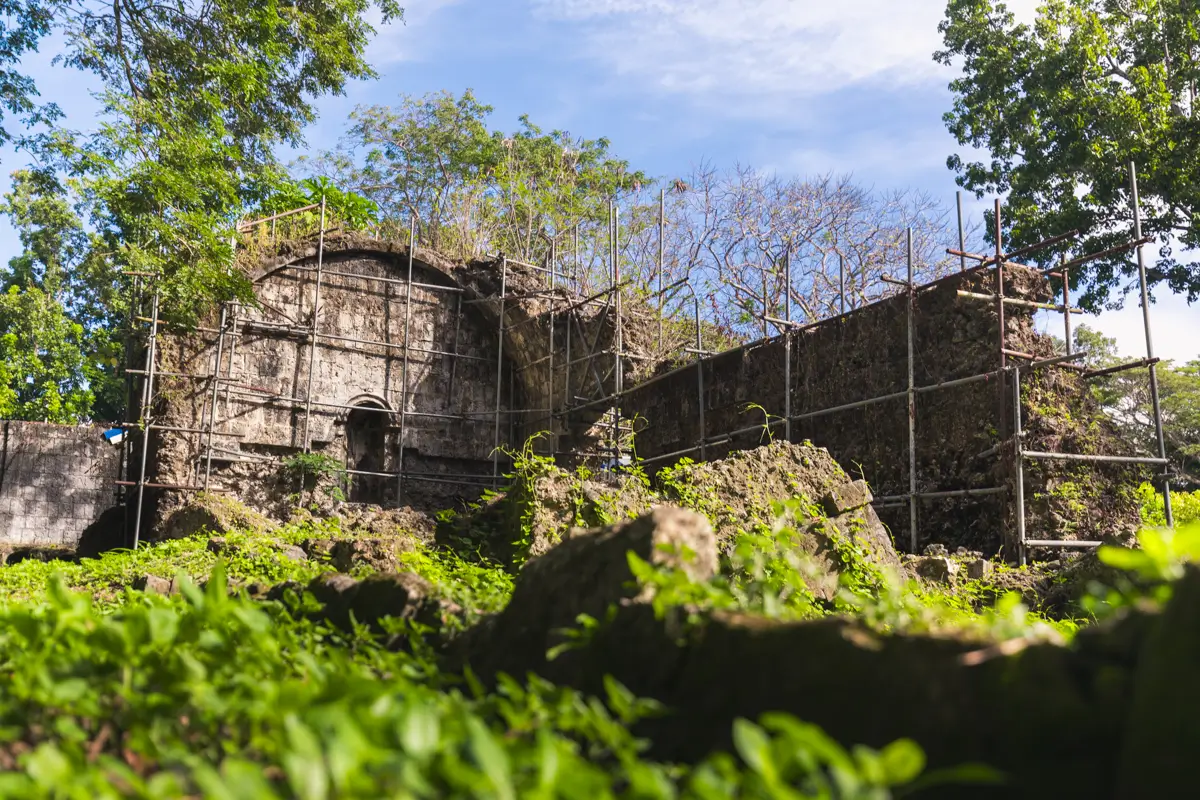
The ruins of the Spanish-era ermita (Spanish for “church” or “hermitage”) sit beside the 19th-century San Nicolas de Tolentino Church and consist of nearly 700 unused semicircular niches arranged in a honeycomb wall. Built between 1800 and 1815 from coral limestone, the structure formed part of a larger complex that included a small chapel at its center. During the Spanish period, people were not allowed to hold wakes in their houses so they took their dead to the ermita instead. Excavations by the National Museum in 1998 confirmed the wider grounds were used as a cemetery during the Spanish period, with skeletons recovered from the soil rather than the niches, along with evidence of early Christian burials and tooth-filing traditions. The ruins stand within a designated National Cultural Treasure and remain one of the more unusual heritage sites on Bohol, where you can walk through the walled complex and see the preserved stonework up close. Every November 1, a Mass is still held here in memory of those buried on the grounds.
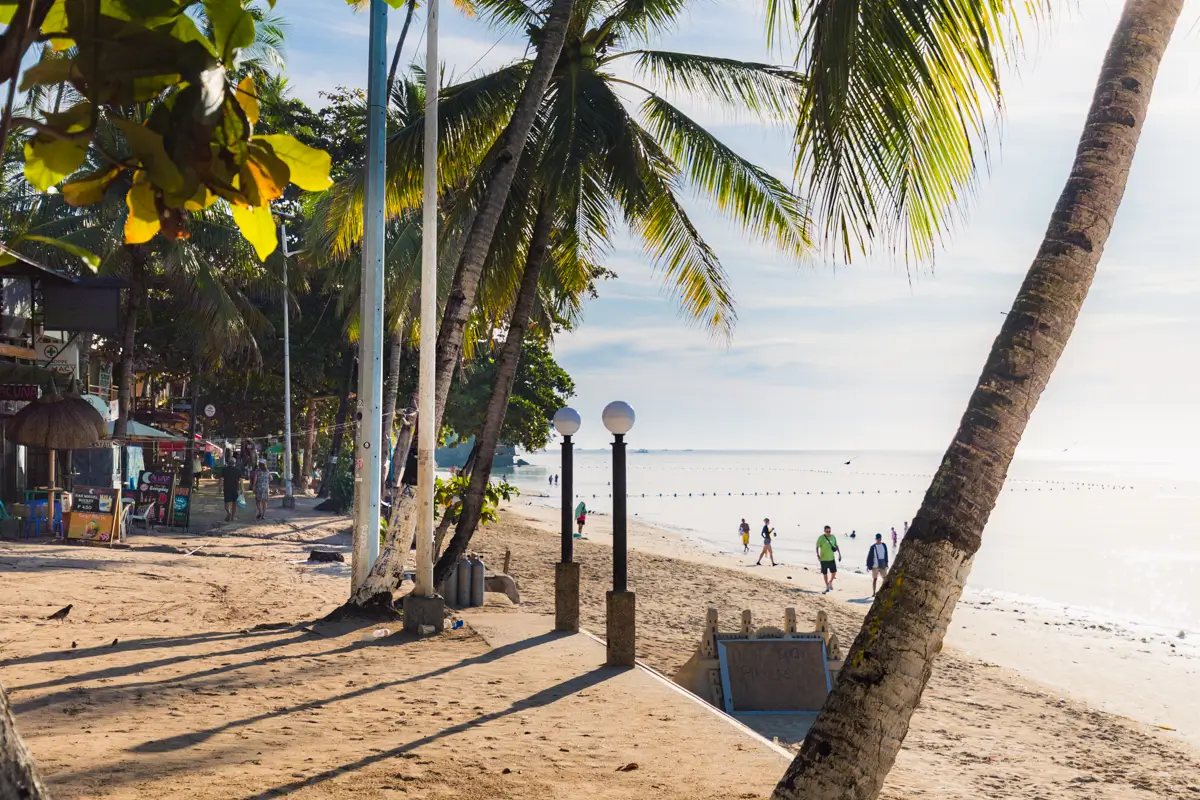
9. Alona Beach
Alona Beach on Panglao Island is Bohol’s busiest strip of sand, a one and a half kilometre curve lined with dive shops, restaurants, bars, and small resorts packed tightly along the waterfront. The beach itself is attractive in the morning when the crowds haven’t arrived yet, with pale sand, clear water, and boats anchored just offshore waiting to run island-hopping and dolphin-watching trips. By midday it shifts into full tourist-commercial mode, with vendors working the walkway, music spilling out of the bars, and dive boats shuttling in and out so regularly that swimming can feel secondary to boat traffic. Most travellers end up here at some point simply because it’s supposedly the best beach on Bohol, but it’s better for arranging tours, grabbing dinner, or people-watching than for a quiet day on the sand. If you want the beach mostly to yourself, come right after sunrise before the day’s first island-hopping departures. Or pick a better beach.
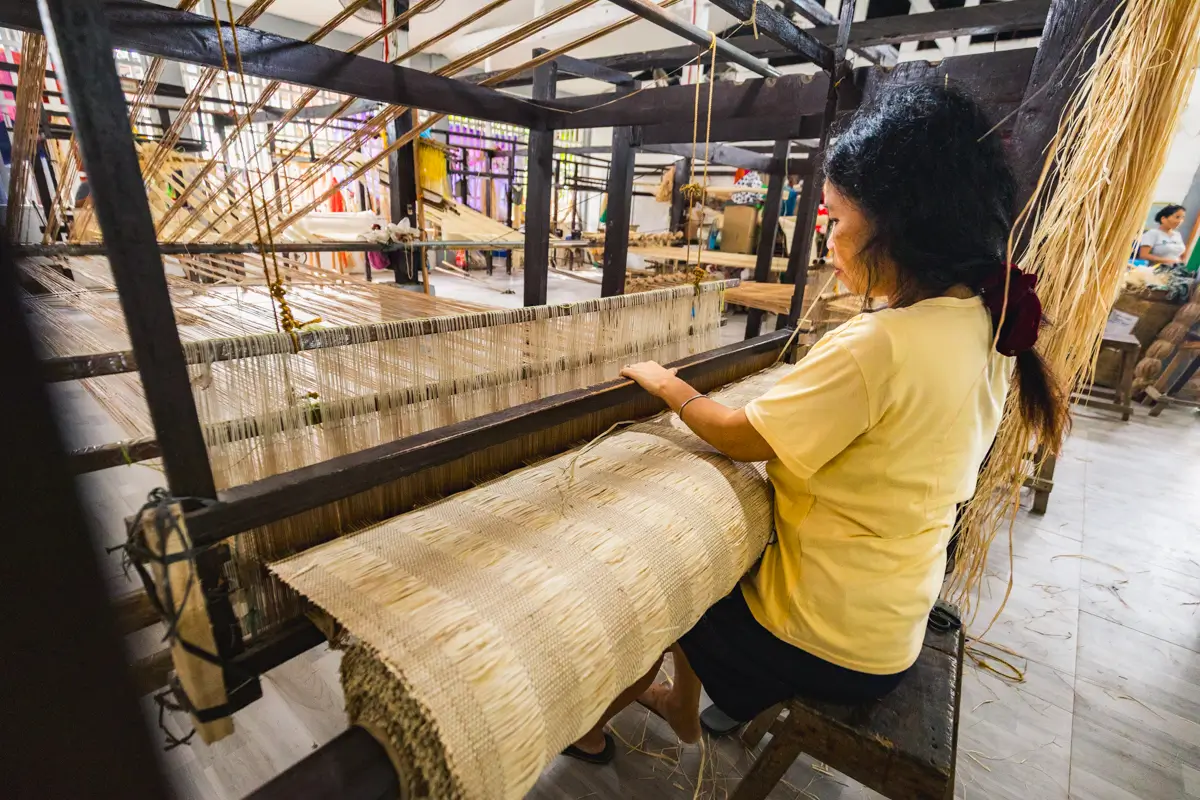
10. Tubigon Loom Weavers Multi-Purpose Cooperative
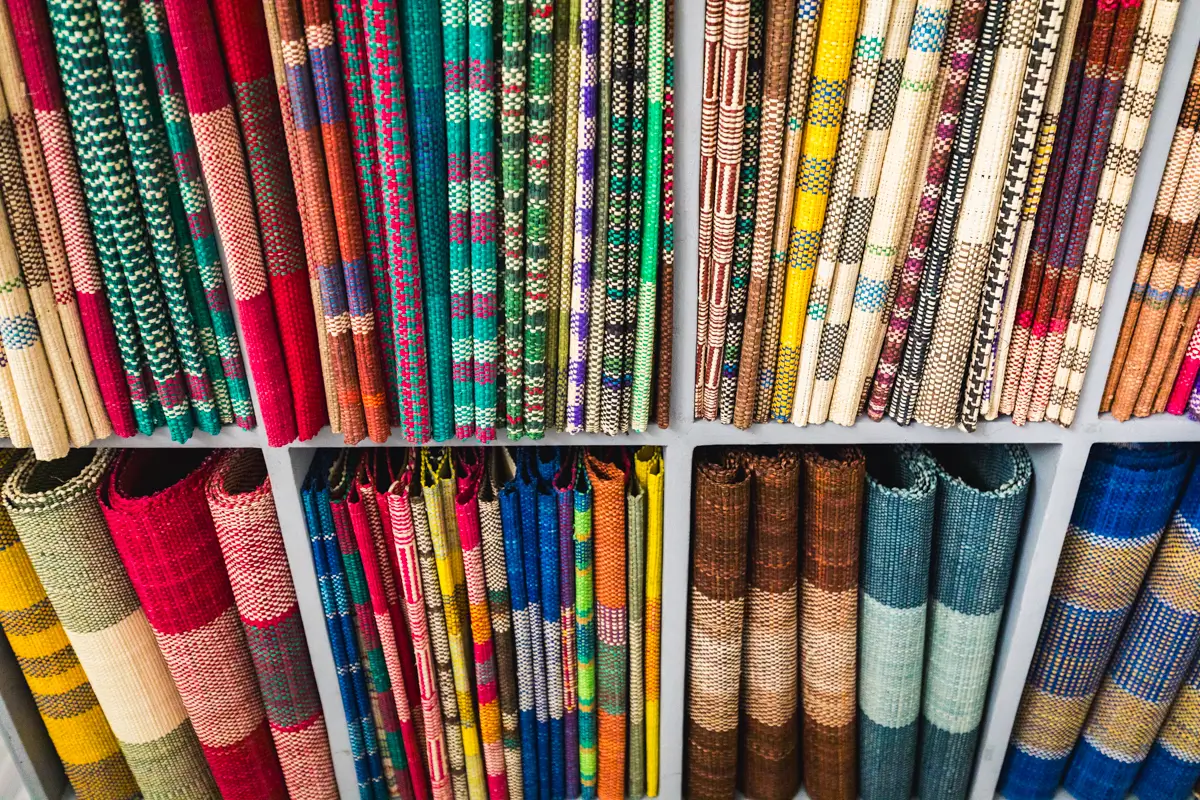
Tubigon Loom Weavers Multi-Purpose Cooperative on Bohol’s northern coast is one of the province’s most important weaving centres, known for handwoven raffia made from locally harvested buri palm. The cooperative began in the 1990s as a way to provide stable income for women in Tubigon, and today dozens of weavers work on upright looms producing textiles that end up as table runners, bags, wallets, and décor sold across the Philippines. Visitors can walk through the open workshop and watch each step of the process, from stripping and drying the raffia to dyeing it in bright colours and weaving it into tight, even patterns. The sound of the looms is constant, and you get a clear sense of how much labour goes into pieces that are often treated as simple souvenirs. There’s a small on-site shop where prices are better than in Panglao or Tagbilaran, and buying here means the money goes directly to the cooperative.
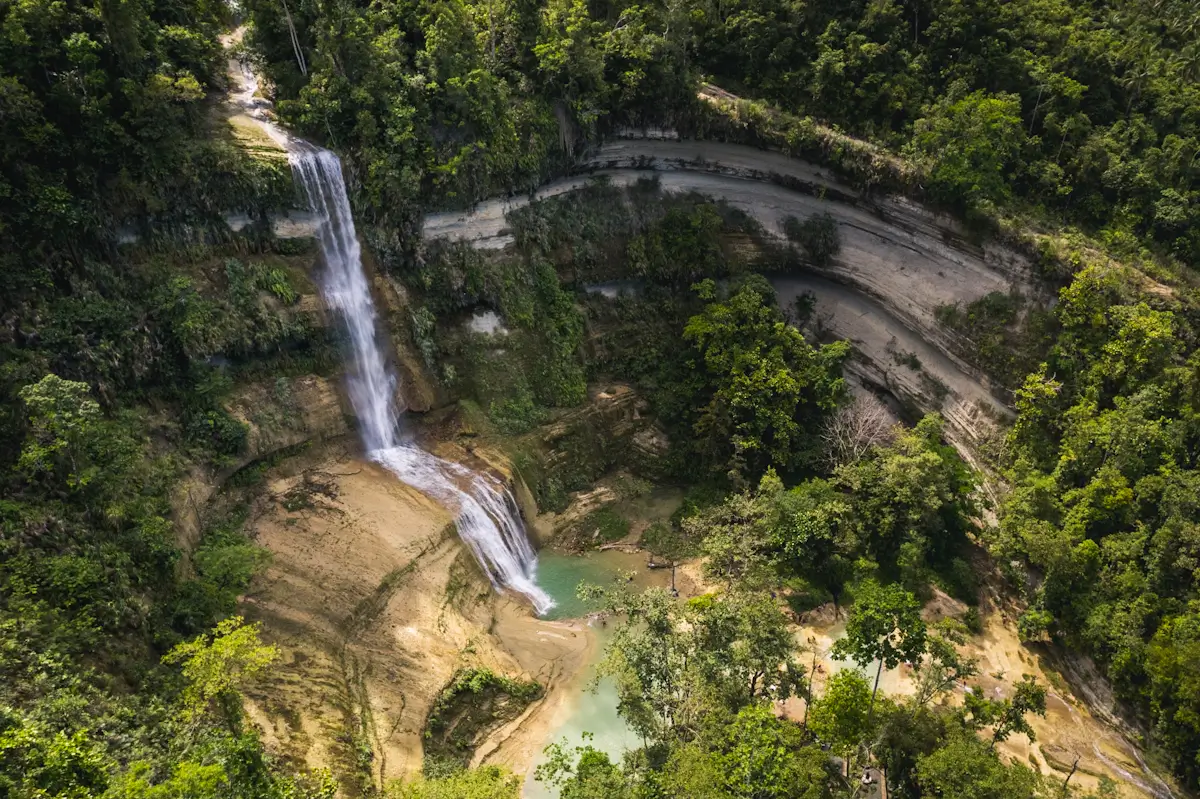
11. Can-Umantad Falls
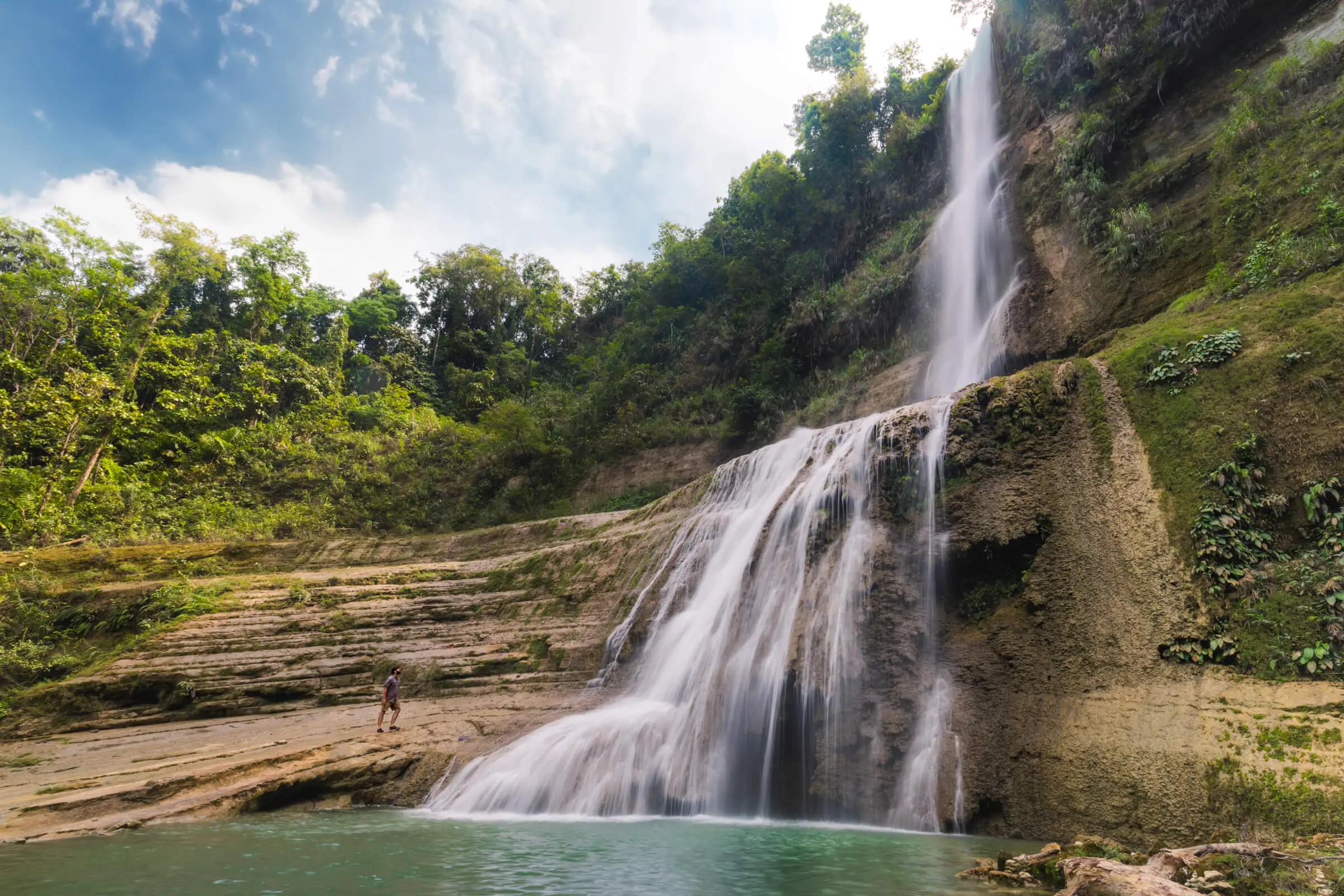
Can-Umantad Falls in Candijay is Bohol’s most well-known waterfall, a wide, terraced sheet of water that drops in two stages over limestone and into a clear turquoise pool. Its source comes from the highlands of Barangay Cadapdapan, where rice terraces line the steep gorge leading toward the falls. The walk down is short and easy with concrete steps, and you’ll hear the roar of the water long before you see the main cascade. Can-Umantad pairs naturally with the Cadapdapan Rice Terraces just above it, and most visitors tackle both in a single stop, whether on their own or as part of a tour. It’s not the kind of waterfall you’ll have to yourself, but the setting and scale make it one of the most rewarding sights on the eastern side of Bohol.
12. Can-Uba Beach
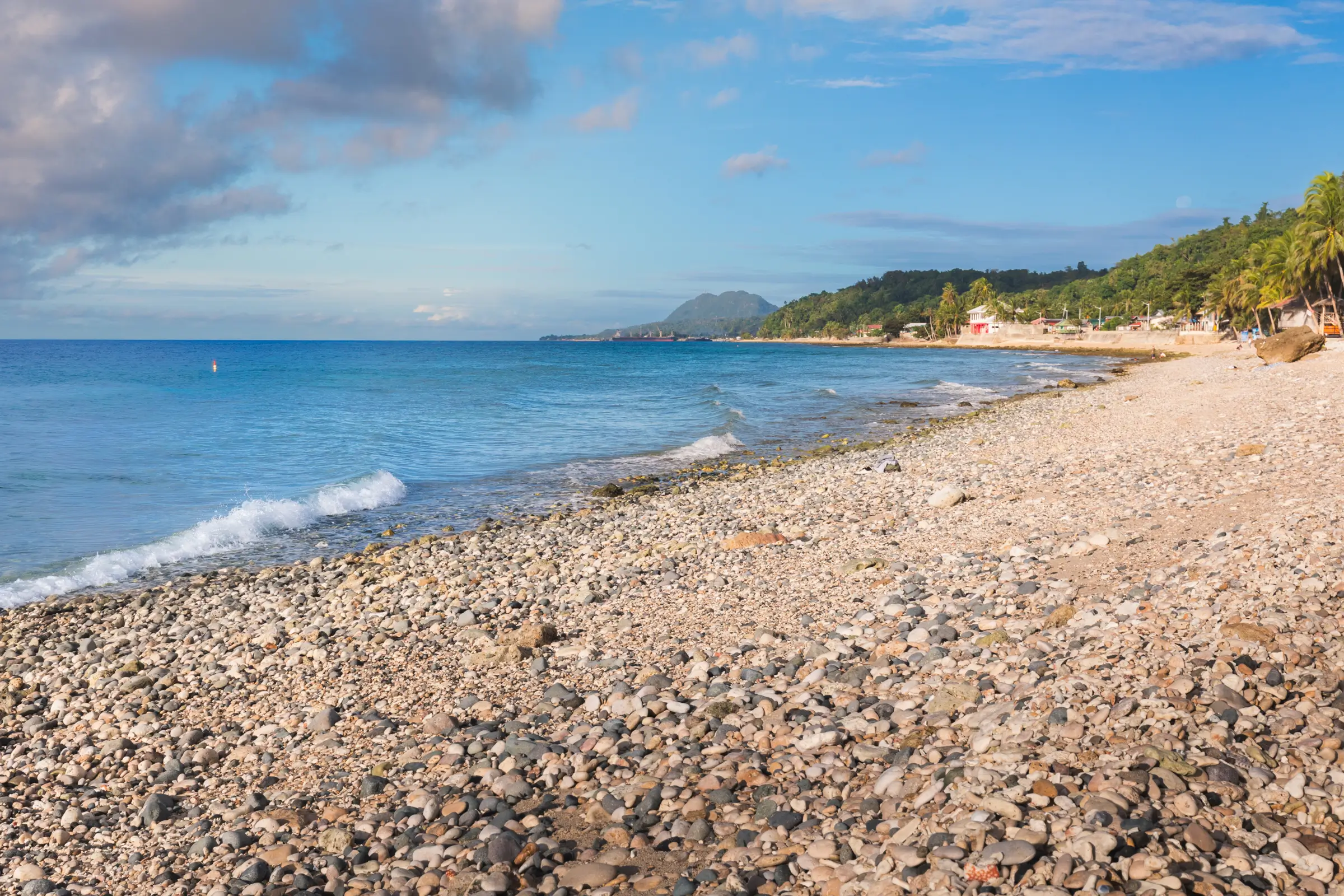
Can-Uba Beach on the southeastern coast of Bohol is a small gravel and pebble beach that sits between volcanic rock outcrops, giving it a very different feel from the white-sand beaches on Panglao. The shoreline is made up of smooth, rounded stones that shift underfoot with the waves, and the water drops off into a deep blue channel. There’s no real infrastructure aside from a few picnic huts, so most people stop for a short swim or to break up a coastal drive rather than plan a full beach day. It’s easy to reach from the coastal road in Candijay, and because it’s rarely crowded, it works well as a quiet contrast to the busier resort beaches elsewhere on the island.
13. Common Crew Coffee
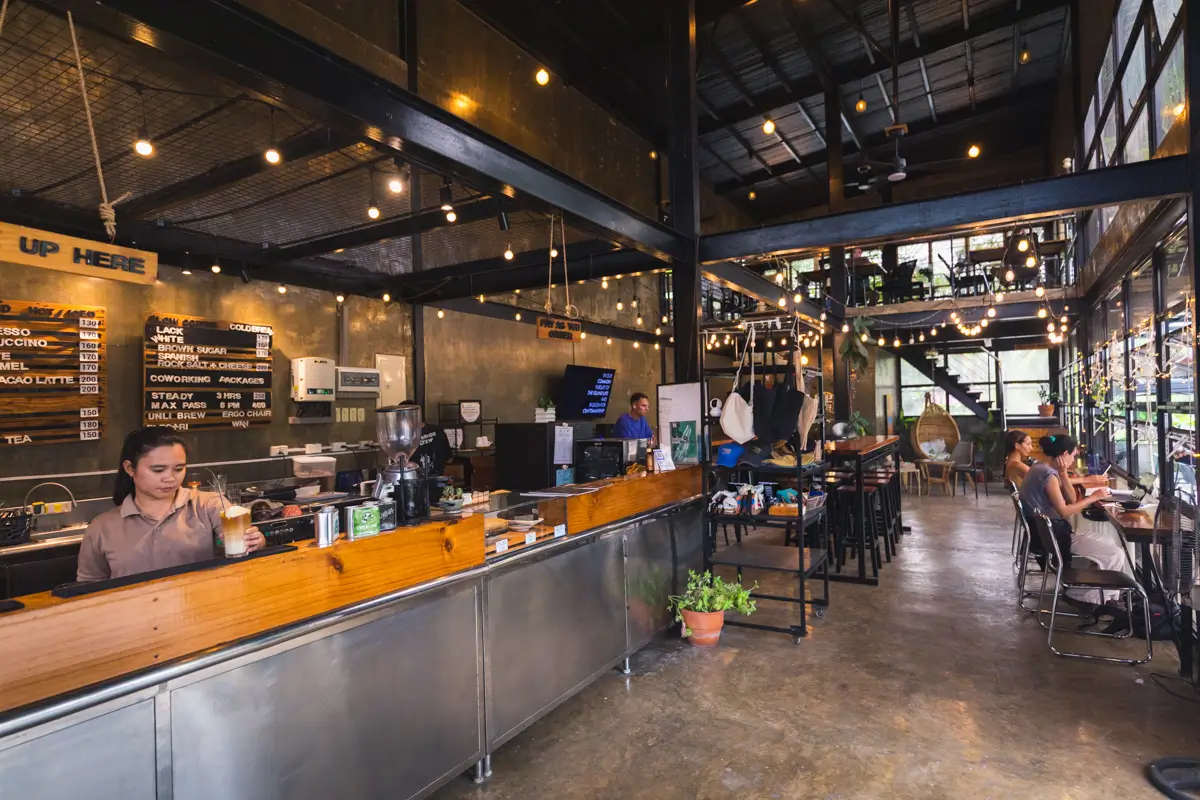
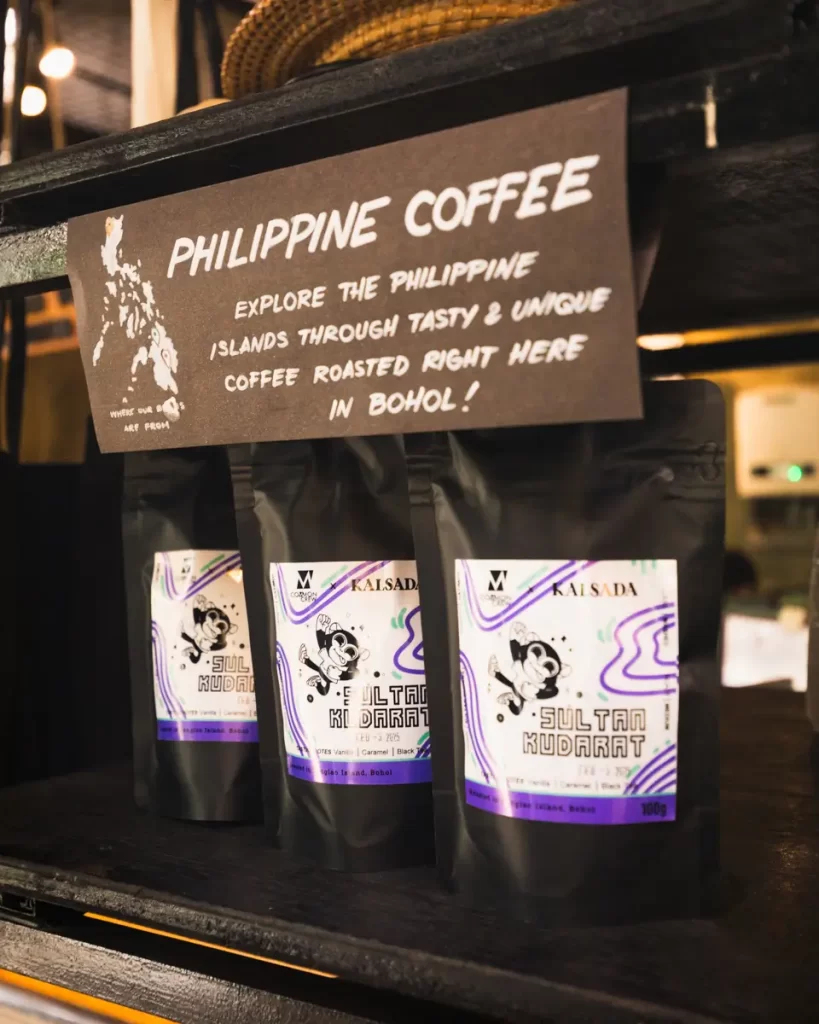
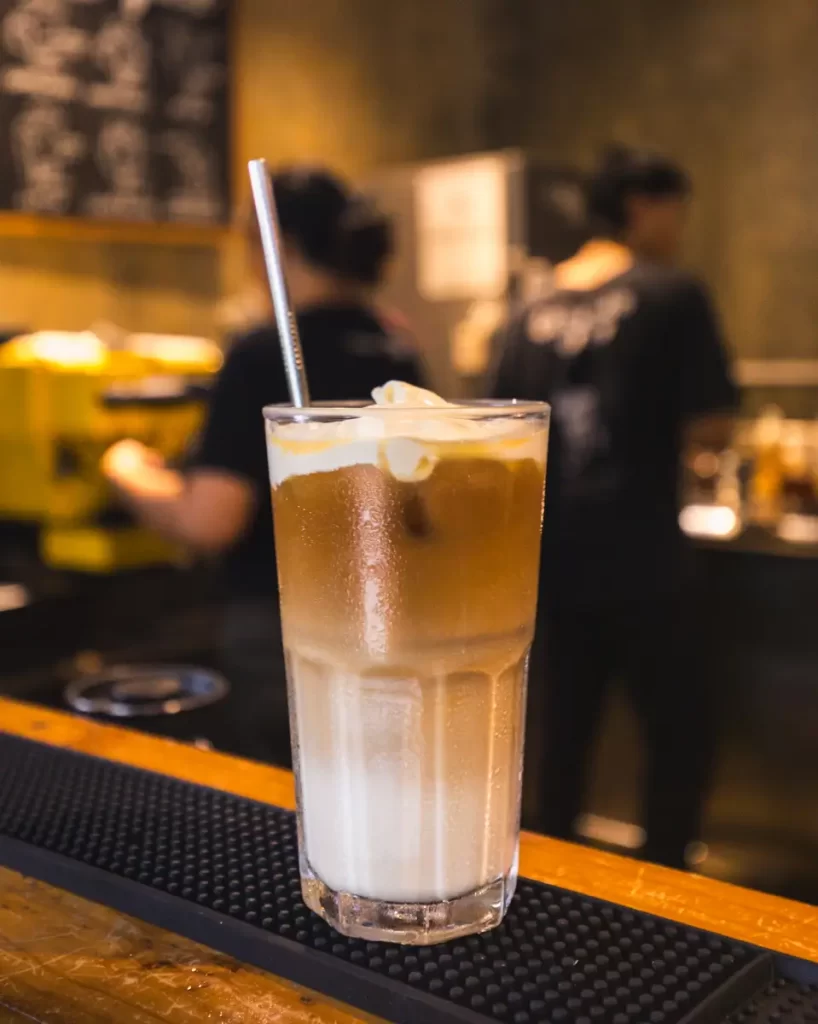
Common Crew Coffee in Panglao fits into a larger shift happening across the Philippines, a country that grows all four major commercial coffee varieties but where most people still drink 3-in-1 sachets or carry foreign-brand cups as lifestyle markers. After decades of underinvestment, local growers and roasters are finally getting more support, and a younger generation is pushing Philippine coffee to be taken seriously again. Common Crew is part of that movement, focusing on beans sourced from Filipino farmers, as well as a “Bohol Crafted” series of drinks that highlights other Bohol ingredients, like their Dark Cacao Latte, Alona Horchata, and Asin Tibuok + Cheese Cold Brew. (a must-try!) The interior design is attractive , though the number of digital nomads created a somewhat sterile environment at least when I visited. Perhaps I should have visited during one of their many coffee workshops.
14. Cutcutan White Beach
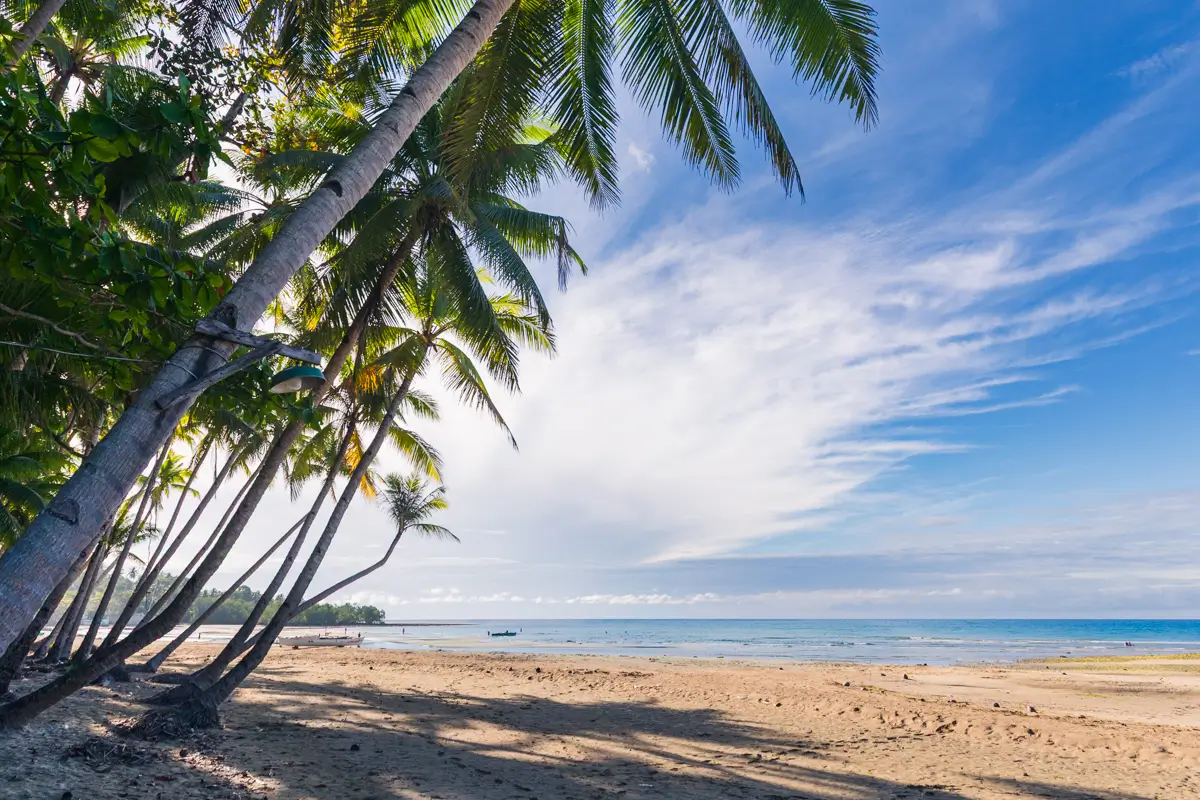
Cutcutan White Beach on Panglao’s southern coast is one of the quieter stretches of shoreline compared to the crowds at Alona, with a narrow band of pale sand, calm shallows, and a mix of small resorts and village houses scattered in among the palms. The seabed drops slowly enough that it’s good for casual swimming or wading, and you’ll likely see locals pulling in on their fishing boats. It’s as un-touristy a beach as you can find – in fact, finding it took a few minutes as there was no signage. I made my way to the Google Maps pin and asked a local where the right-of-way was down to the beach.
15. Punta Cruz Watchtower
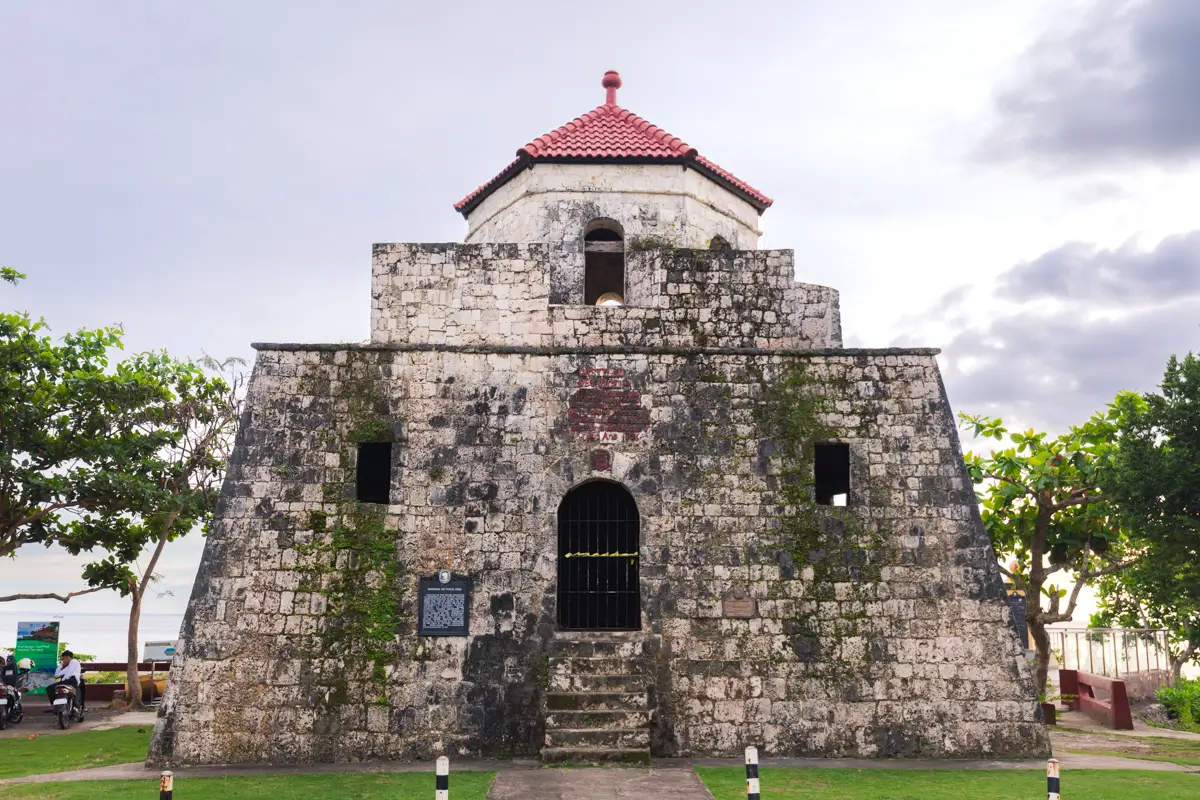
The Punta Cruz Watchtower in Maribojoc is one of Bohol’s most intact Spanish-era defensive structures, built in 1796 as part of a chain of coastal lookout towers meant to warn towns of incoming Moro raiders. Its unusual triangular plan is original to the design, giving sentries sightlines over the Bohol Sea toward Cebu and Siquijor while keeping the narrow slit windows easy to defend. The tower was manned through the 1800s and remained a landmark for sailors well into the American period. Local tradition ties the site to a protective cross said to have safeguarded the community, hence the name “Punta Cruz.” The structure survived heavy damage in the 2013 Bohol earthquake, but it has since been fully restored.
If you climb up to the top however, you’ll see the effects of the earthquake on the coastline below. The quake lifted this stretch of shore by about 1.5 meters and shifted the high-tide line roughly 50 meters seaward, exposing a wide bed of dead corals that used to sit underwater. This newly emerged 137-hectare terrace is part of the Loon-Maribojoc Geological Monument, recognized by the DENR as a significant geologic site.
16. Crescencia food and coffee
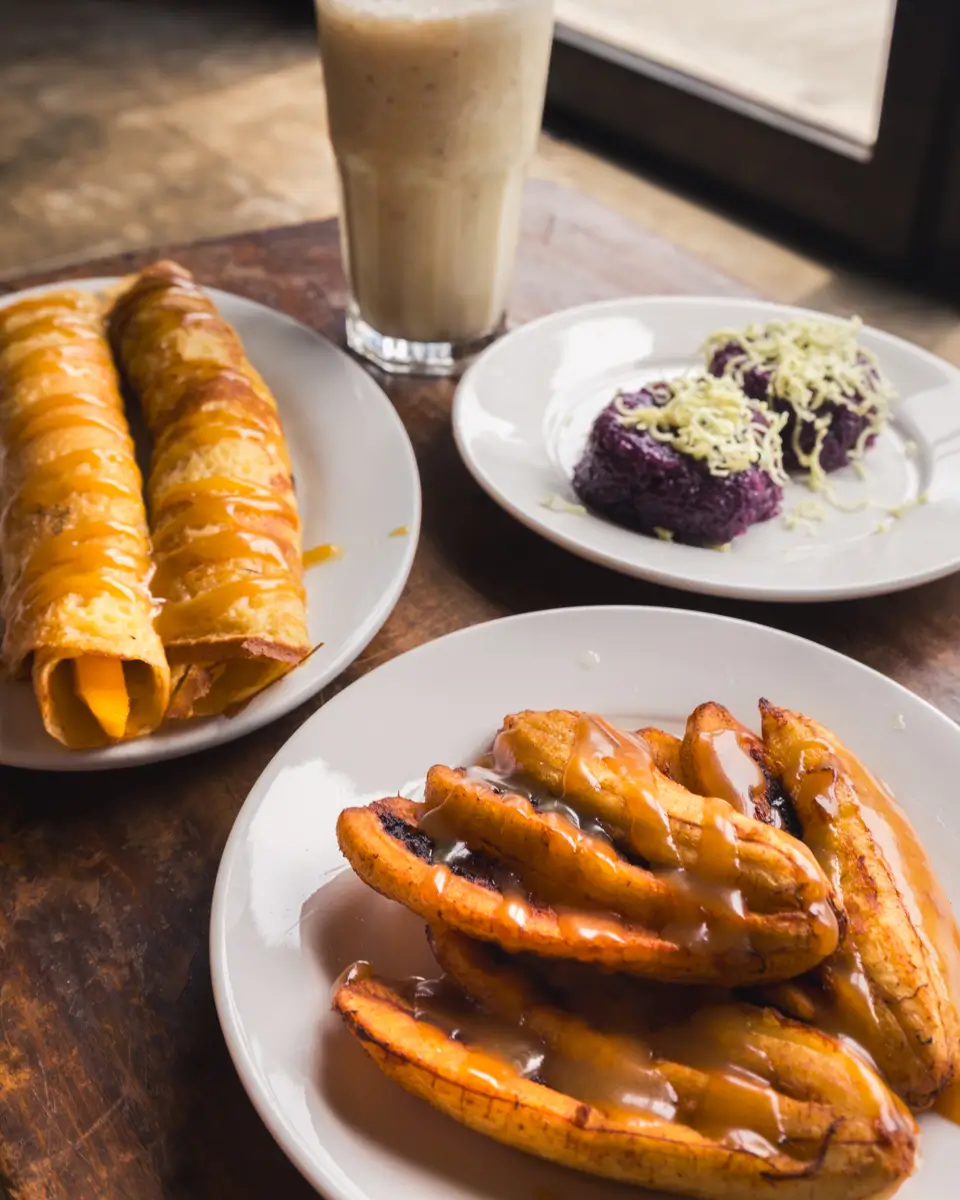
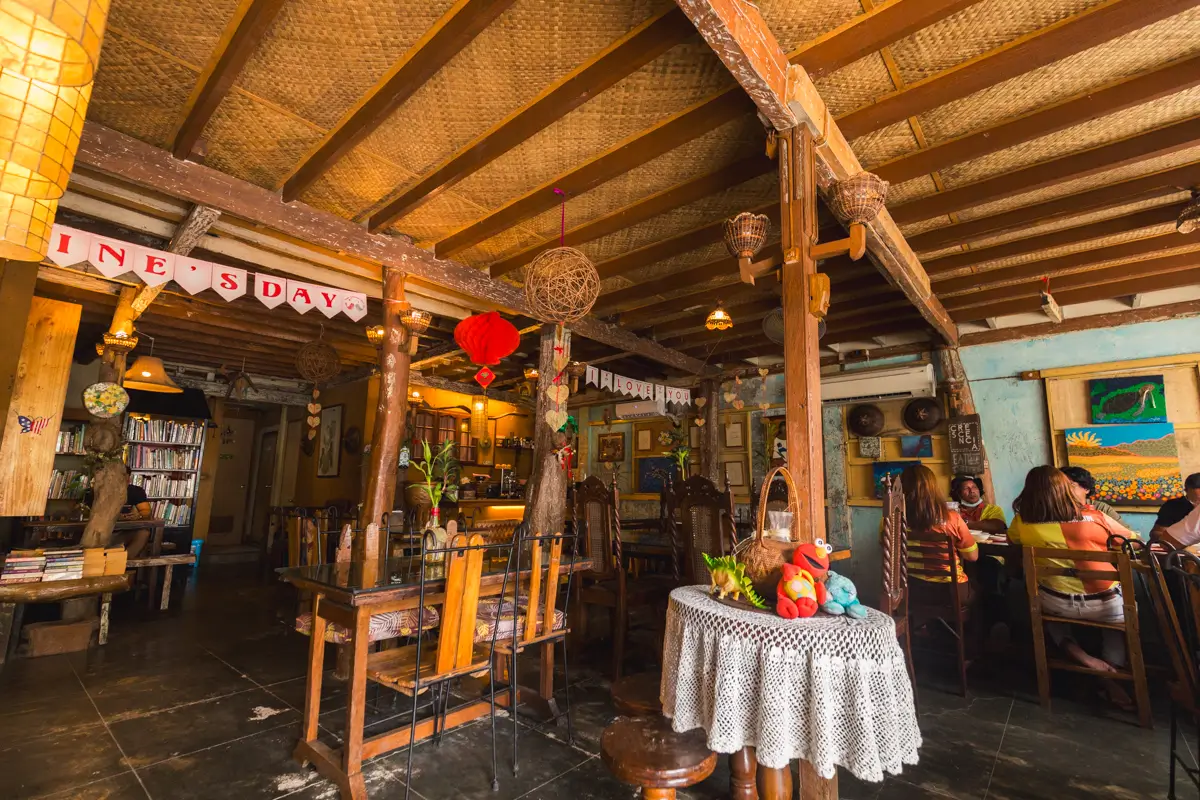
Crescencia Food and Coffee in Baclayon sits inside the ancestral home of the owner’s great-grandfather, a wooden house filled with old tables, carved furniture, and antique décor that gives the café a lived-in, family-home feel. It’s one of the most comfortable places on the island for merienda, the mid-afternoon Filipino snack break that usually leans toward sweets or light bites. Crescencia serves local coffee and merienda like apa, a sweet, chewy rice cake that is a staple snack in the province. The cafe also serves ube biko, a variant of the traditional sticky rice cake, made with the rich flavor of ube (purple yam) and topped with lunok, a coconut curd similar to latik. Another beloved offering is pinaypay, a deep-fried banana fritter made from saba bananas, sliced to resemble a fan and coated with sugar for extra sweetness. These delicacies are often paired with a cup of sikwate, a traditional Filipino hot chocolate made from local cacao. They also have a variety of more filling dishes (including a very solid dinuguan) and the service is excellent.
17. Mount Palingkod
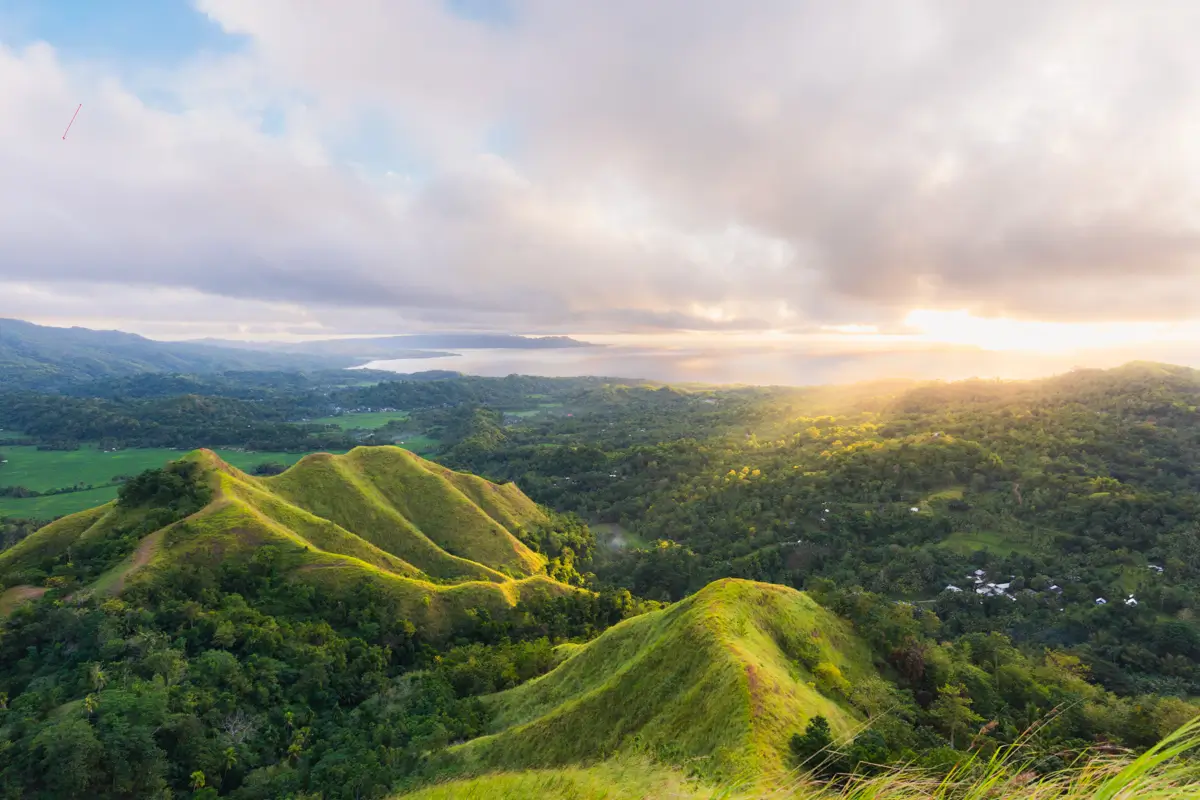
Mount Palingkod, located near Jagna, is a relatively obscure but fairly accessible peak that offers scenic views of the island’s countryside and coastline. The short twenty-minute trail to the summit is lovingly maintained by the landowner, so respect is essential. At the summit, the panoramic views are a reward, with sweeping vistas of Bohol’s rolling hills, the nearby Bohol Sea, and even the neighboring island of Camiguin on clear days. Fortunately the hike hasn’t been commercialized at all, and you’re able to enjoy the views without some big ugly concrete structure for you to stand on. I suggest leaving a tip for the landowner in appreciation of this.
18. Loboc River
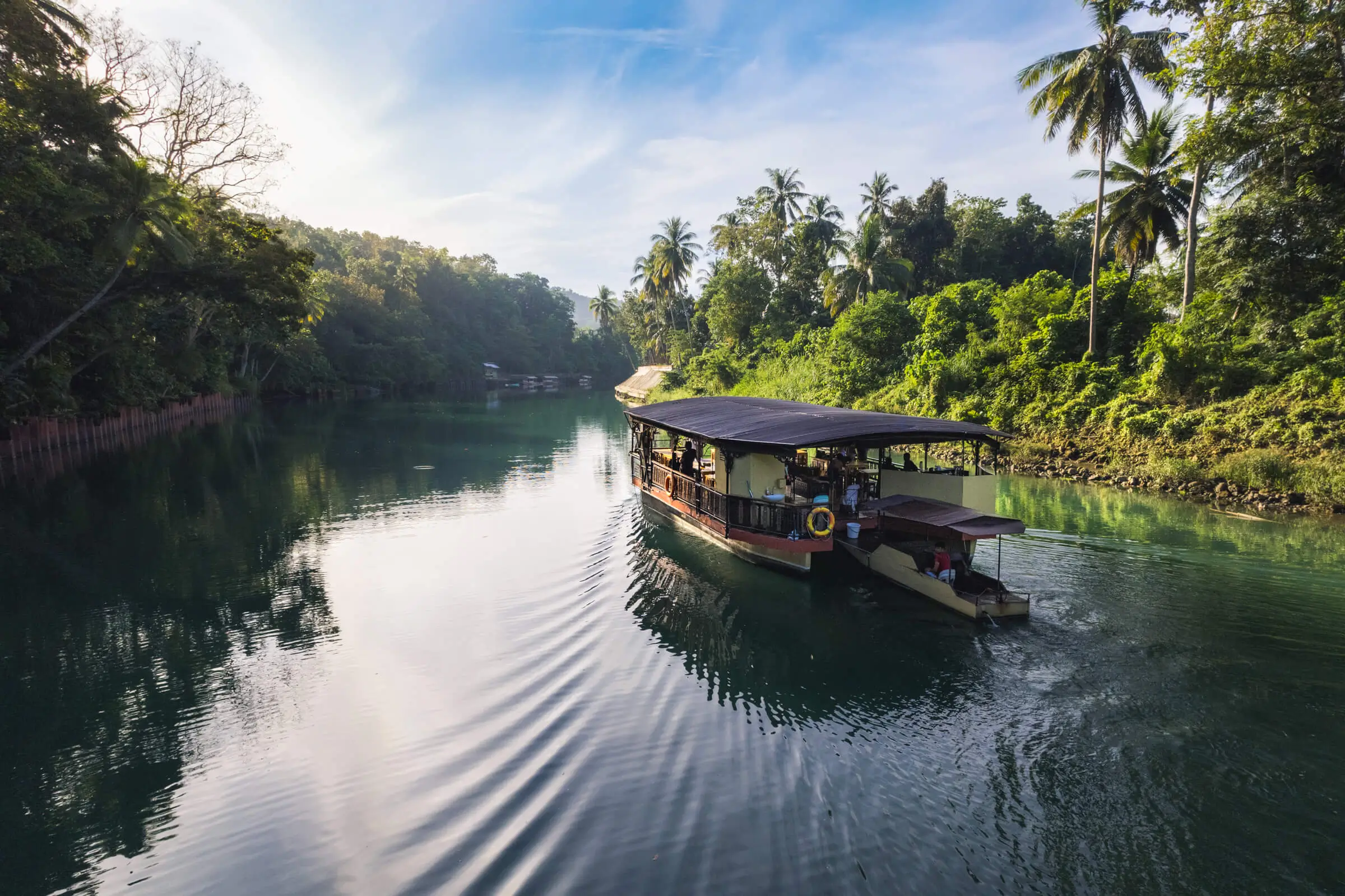
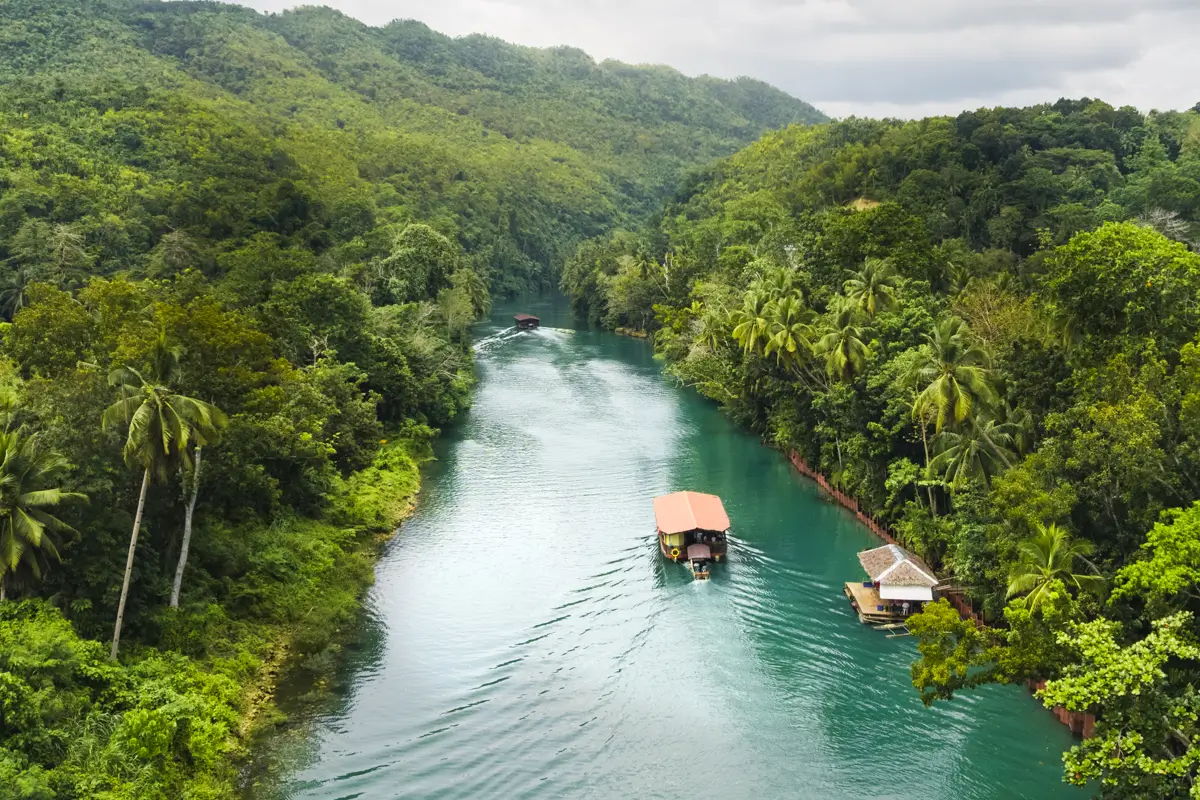
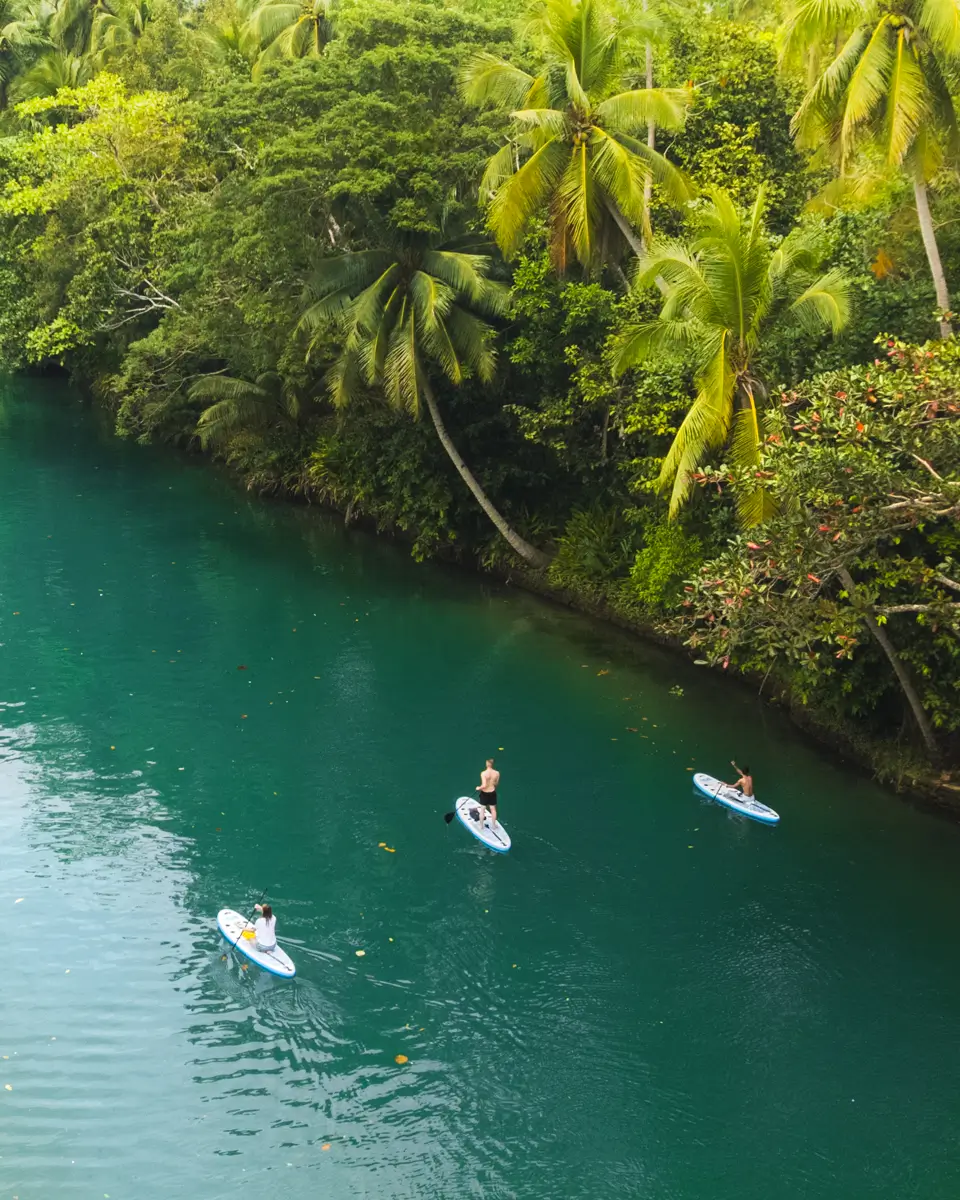
The Loboc River which runs from the center of Bohol all the way to its southen shore has served as a transport artery since the Spanish period, when Jesuits founded a mission here in 1602 and used the waterway to move between inland settlements, which explains why the modern town of Loboc still faces the river rather than the highway. Today travellers experience it in two main ways. The Loboc River Cruise boards visitors onto floating restaurants that follow the same upriver route once used by cargo canoes, serving buffet lunches and short musical performances, a tradition shaped in part by the town’s long choral history. Those who want something quieter can rent a stand-up paddleboard near the main bridge and move through sections of nipa and coconut forest enjoying the sounds of birds and other wildlife.
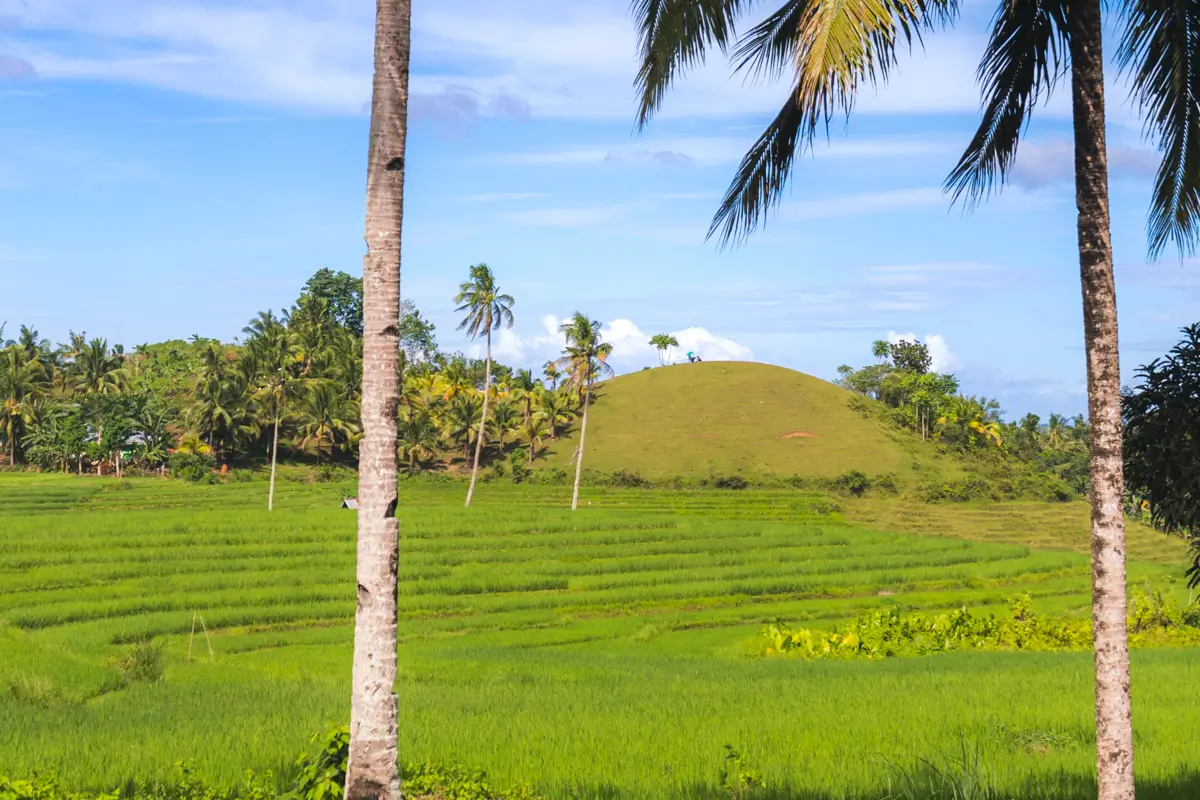
19. Cadapdapan Rice Terraces
Though they might not be as ancient as the Banaue Rice Terraces, The Cadapdapan Rice Terraces in Candijay are nonetheless worth your time. Farmers here carved the hillsides into stepped paddies to make wet-rice cultivation possible on steep terrain, shaping the terraces generation by generation so water could be channelled across the slopes through bamboo pipes and simple gravity-fed channels. The terraces wrap around the hillsides in long, uneven bands that follow the natural contours. Farmers work the paddies throughout the day, so please for the love of God be respectful. The best viewpoint is from the grassy hill in the center of the rice paddies. Nearby is Can-Umantad Falls, and your entrance fee for one also includes the other, so make sure to check out both.
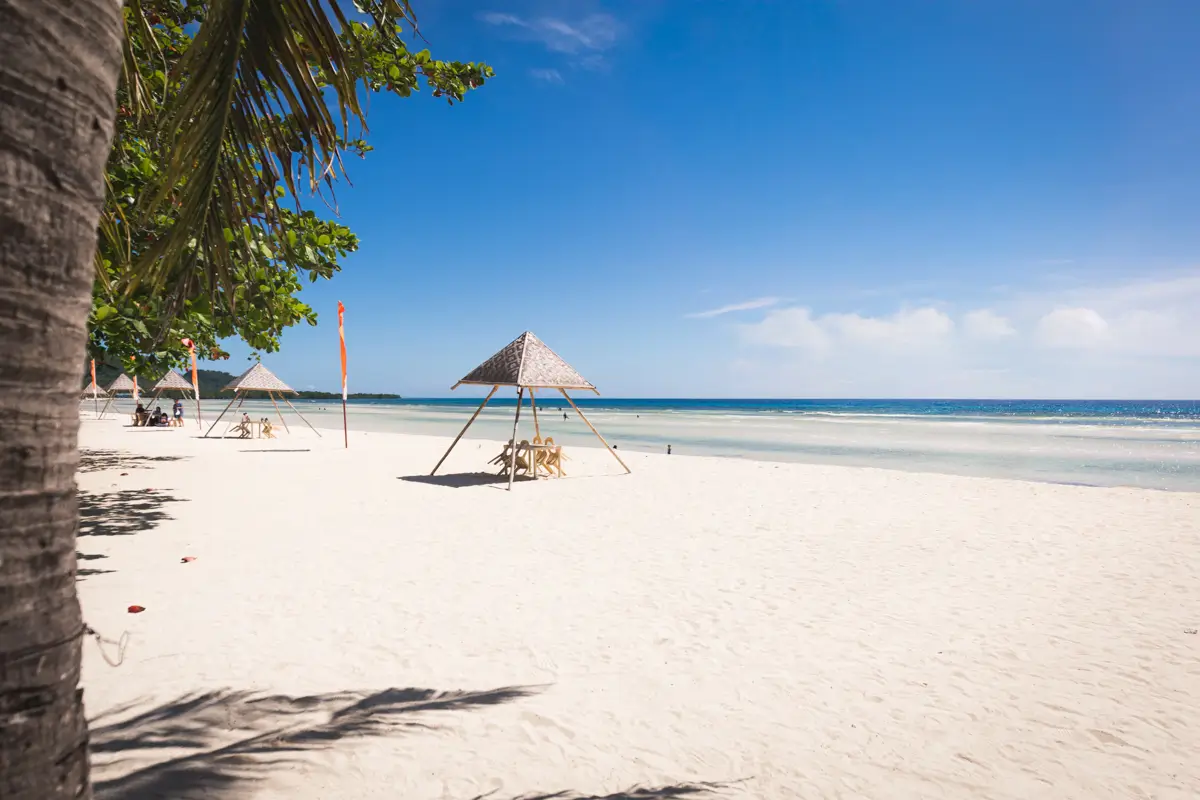
20. Quinale Beach
Quinale Beach in Anda is the kind of shoreline that makes you wonder why Panglao gets all the attention. The sand here is fine and pale, closer to powder than grains, and blindingly bright when it reflects the sun at midday. The gradual slope means you can walk far out before it gets deep. There’s none of the resort sprawl you see on Panglao, just a small (for now) cluster of restaurants near the main access point, plus the trees lining the park behind the beach. The only trick is timing your visit around the sun since there’s little shelter at mid-day, so bring water and arrive early or late.
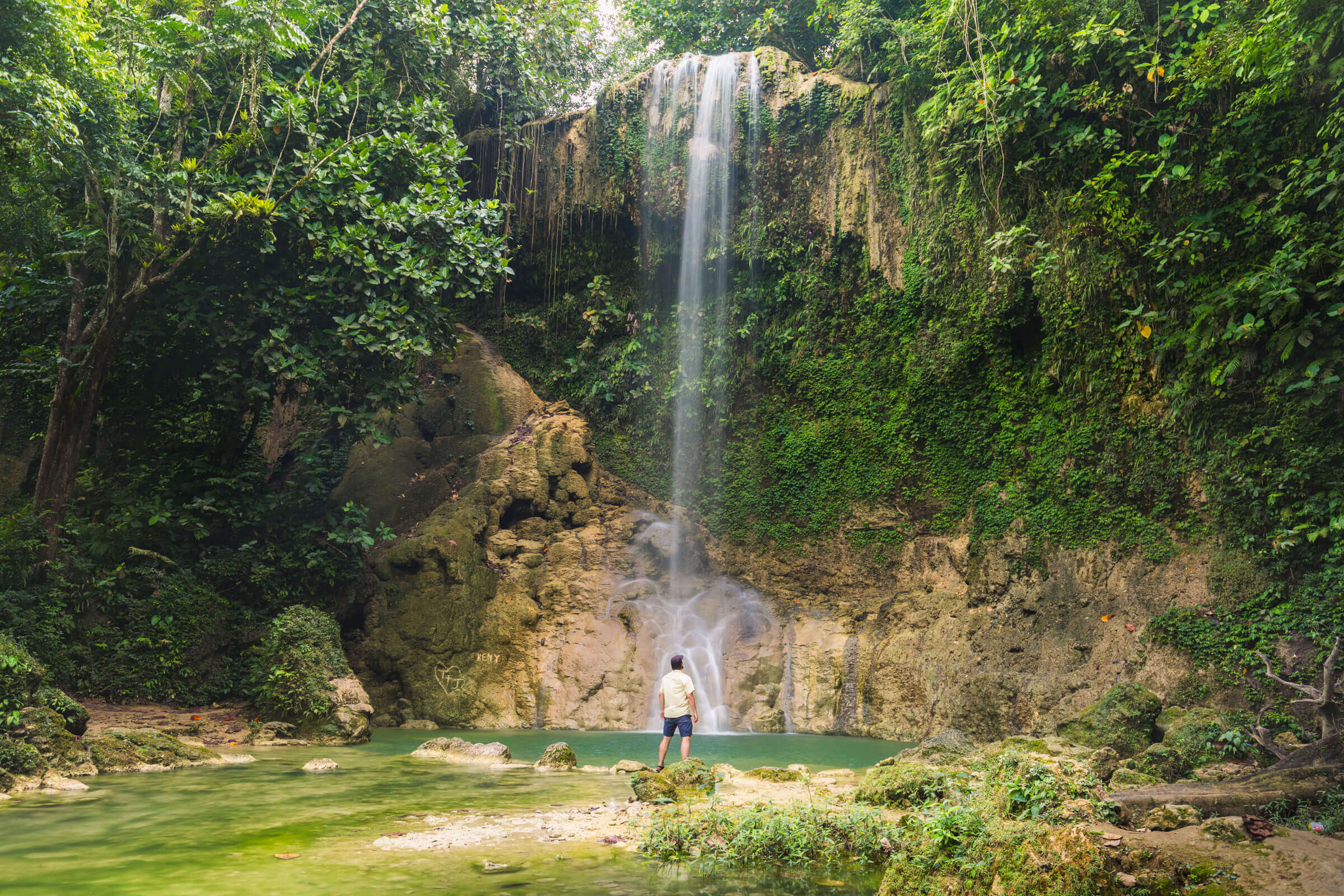
21. Kawasan Falls
No, this isn’t the Kawasan Falls in Cebu. Yes it’s the same name. (Kawasan translates to “cascade” in Bisaya)
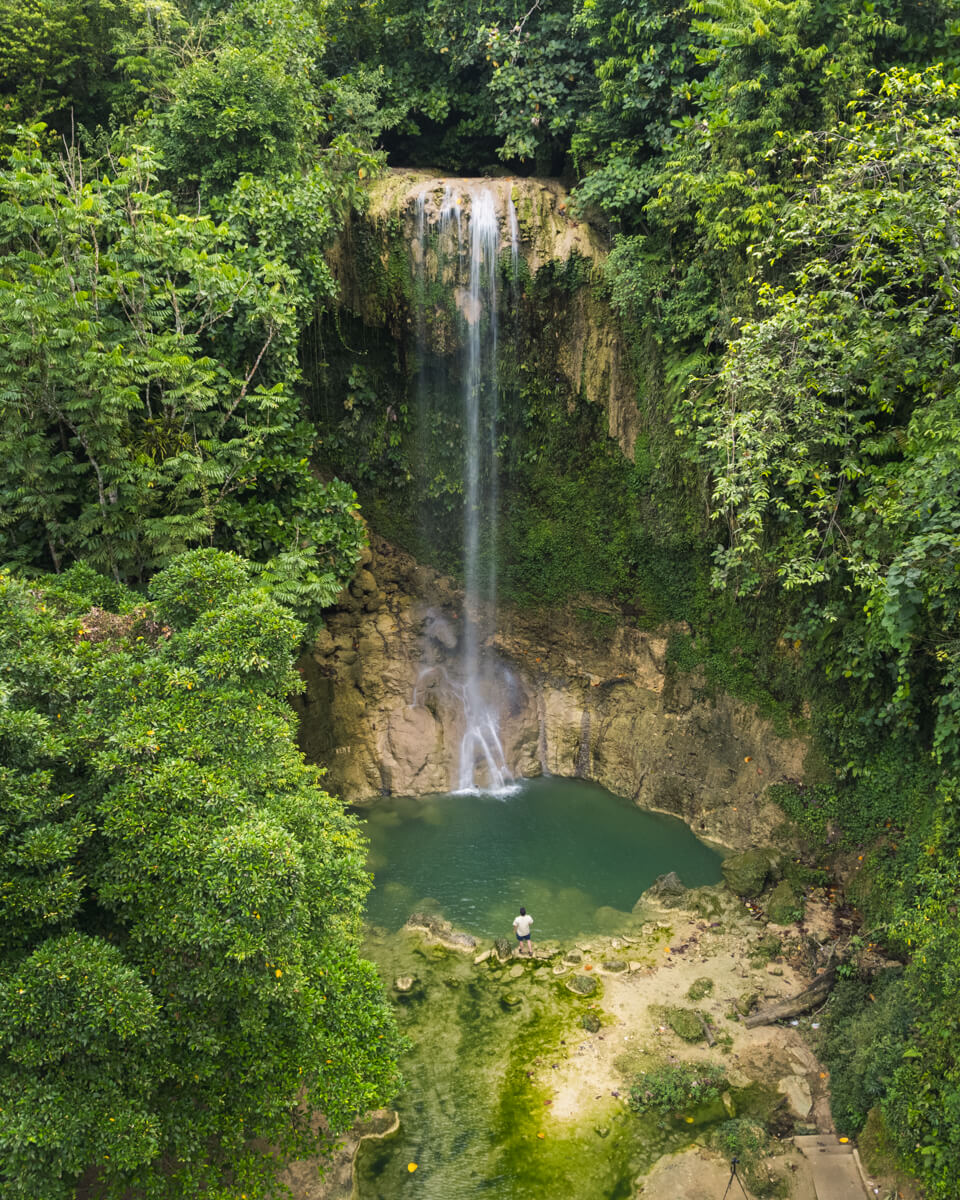
This Kawasan Falls, located in Balilihan, is only a short walk down concrete stairs from the parking area by the side of the road.I’ve visited the fall when it’s a wide curtain of water, and incredibly busy with people playing in the deep pool and jumping in. I’ve also visited it (as pictured here) when it’s a lot smaller, and sadly on that visit there was trash everywhere – I would call it the most filthy waterfall I’ve been to on Bohol. The section of river below the waterfall was choked with green algae – could it be the result of agricultural run-off? I shouldn’t speculate. The trees around the waterfall are beautiful, and the waterfall itself is impressive, but I just hope it’s better taken care of on your visit than it was on my last.
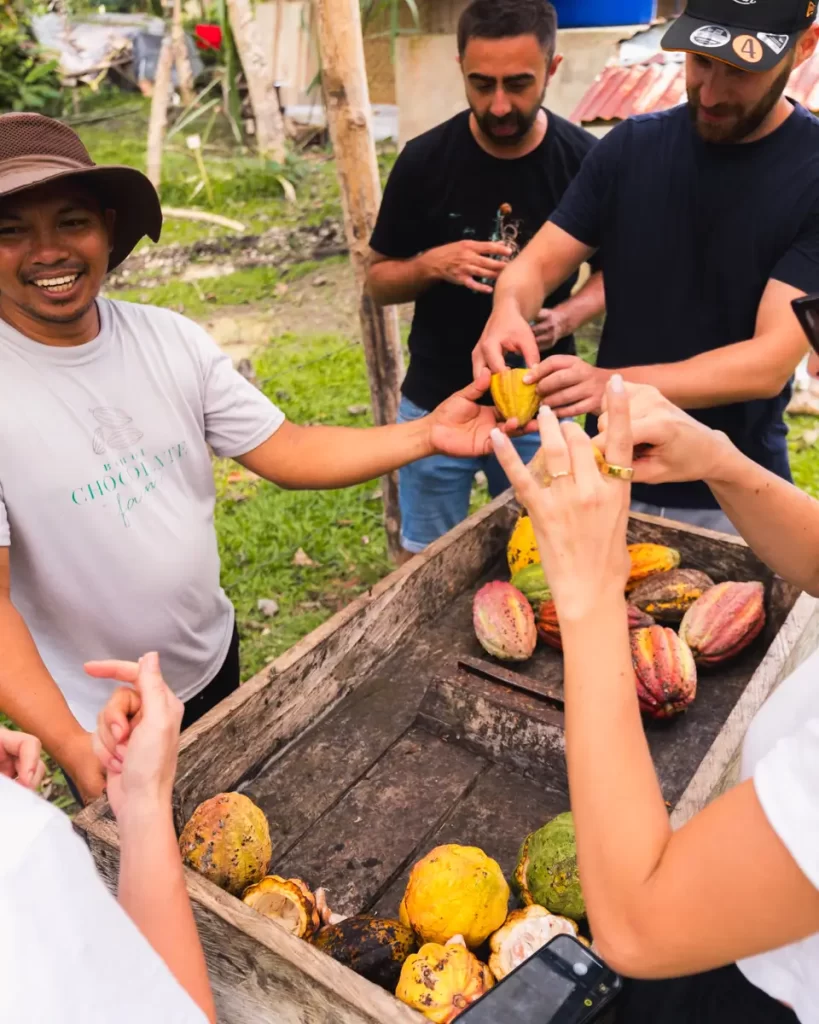
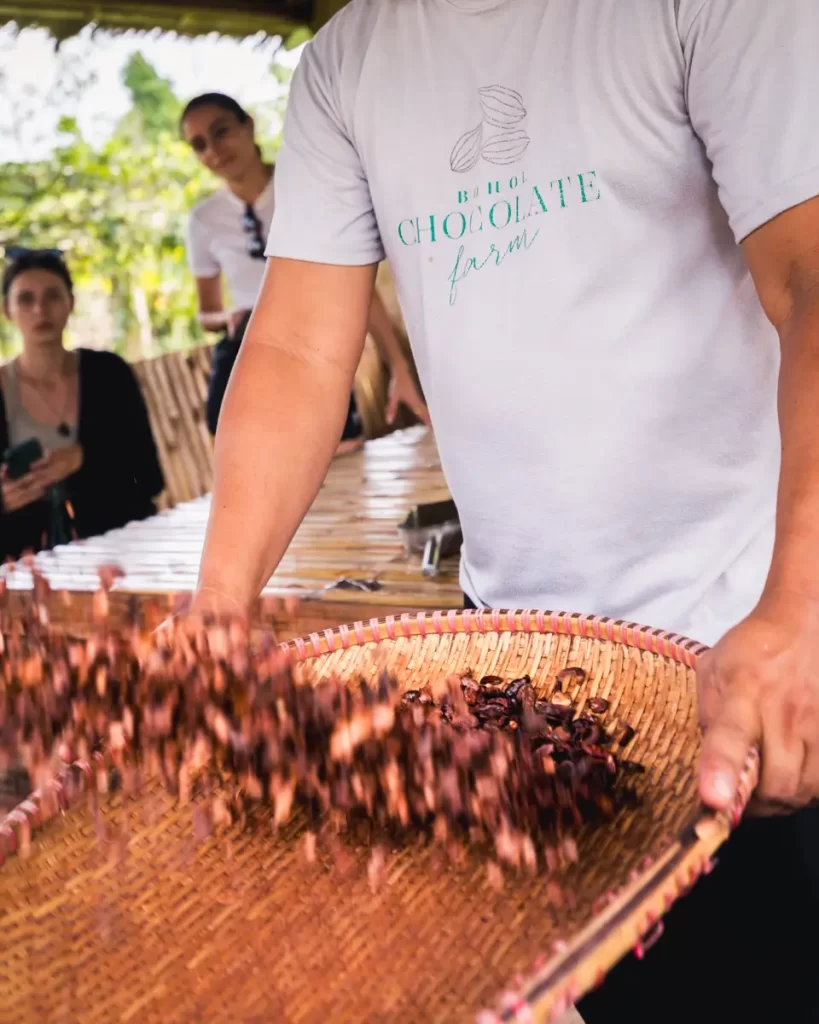
22. Bohol Chocolate Farm
Cacao has been grown in the central Philippines since the Spanish era, when seedlings from Mexico were introduced to households and small farms across Bohol. Tablea became the standard way to process it, pressed into rough discs used for sikwate and champorado, and many families in Carmen and nearby towns still make it in small batches.
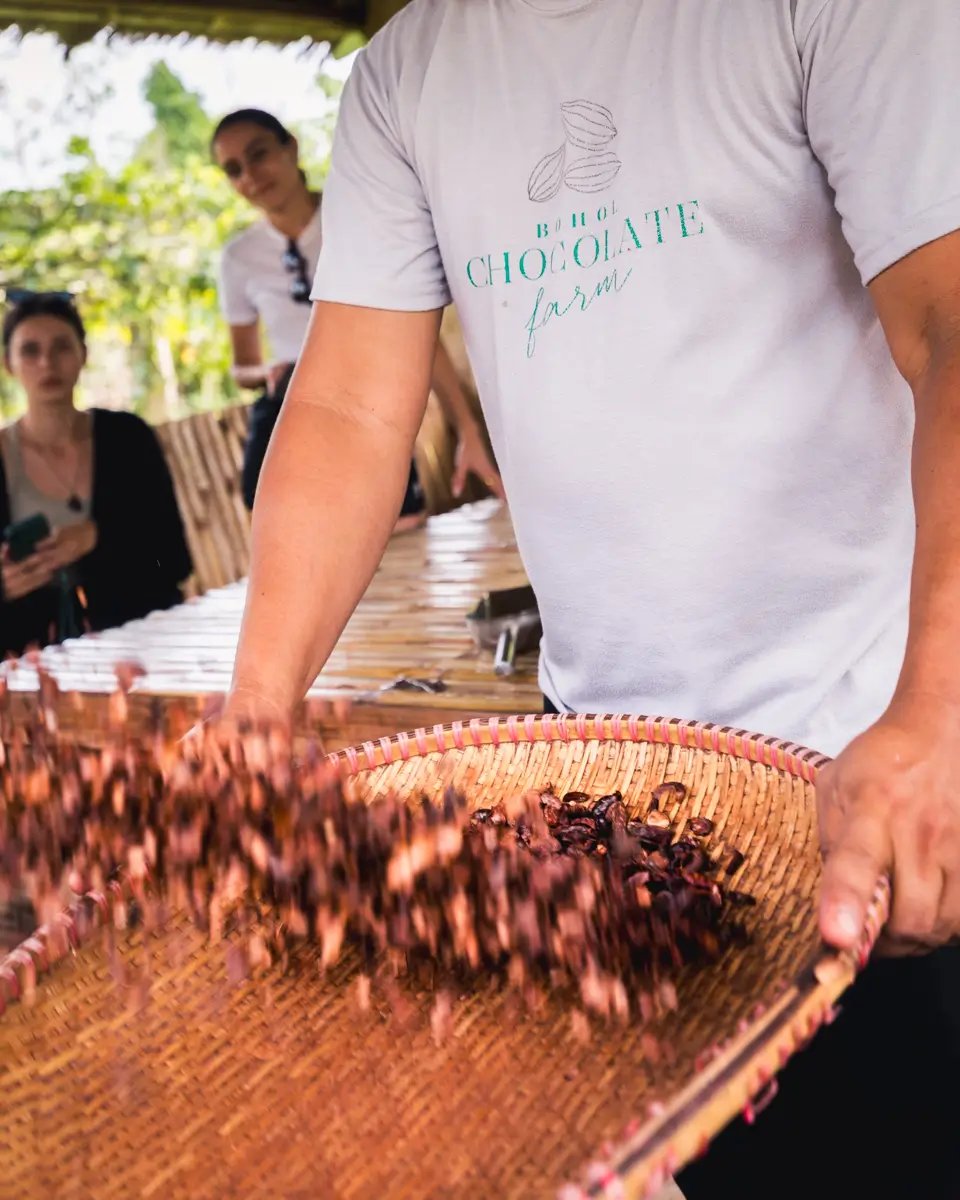
Not far from the Chocolate Hills (ha) is the Bohol Chocolate Farm, an unexpected highlight of my last trip to Bohol. The farm provides guided tours that start with a visit to the cacao nursery and orchard, where you can observe the growth stages of cacao trees (and taste ripe cacao fruit!). From there, it becomes more of a hands-on chocolate-making session, allowing participants to engage in winnowing, roasting, grinding, and molding their own chocolate bars. And of course, you can sample various cacao products, including cacao tea and freshly made chocolates.
My expectations were blown out of the water with this experience, and I would recommend it to anyone. The guide was charming and informative, and the whole process was genuinely very fun (and delicious!)
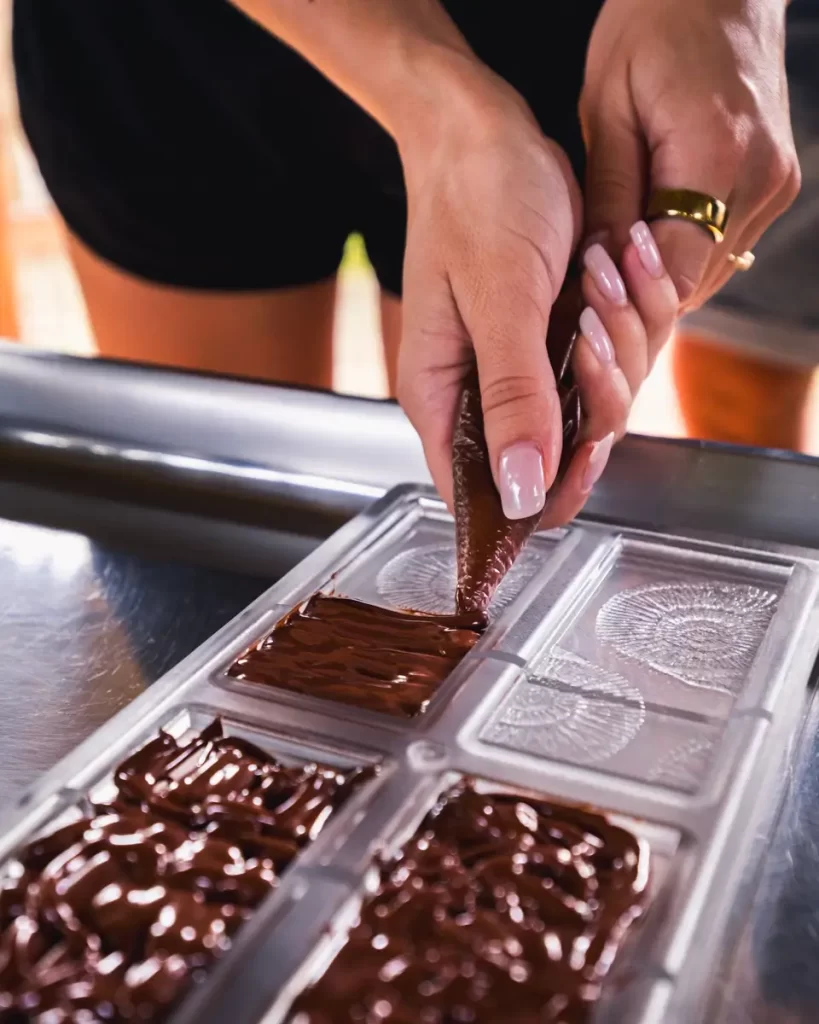
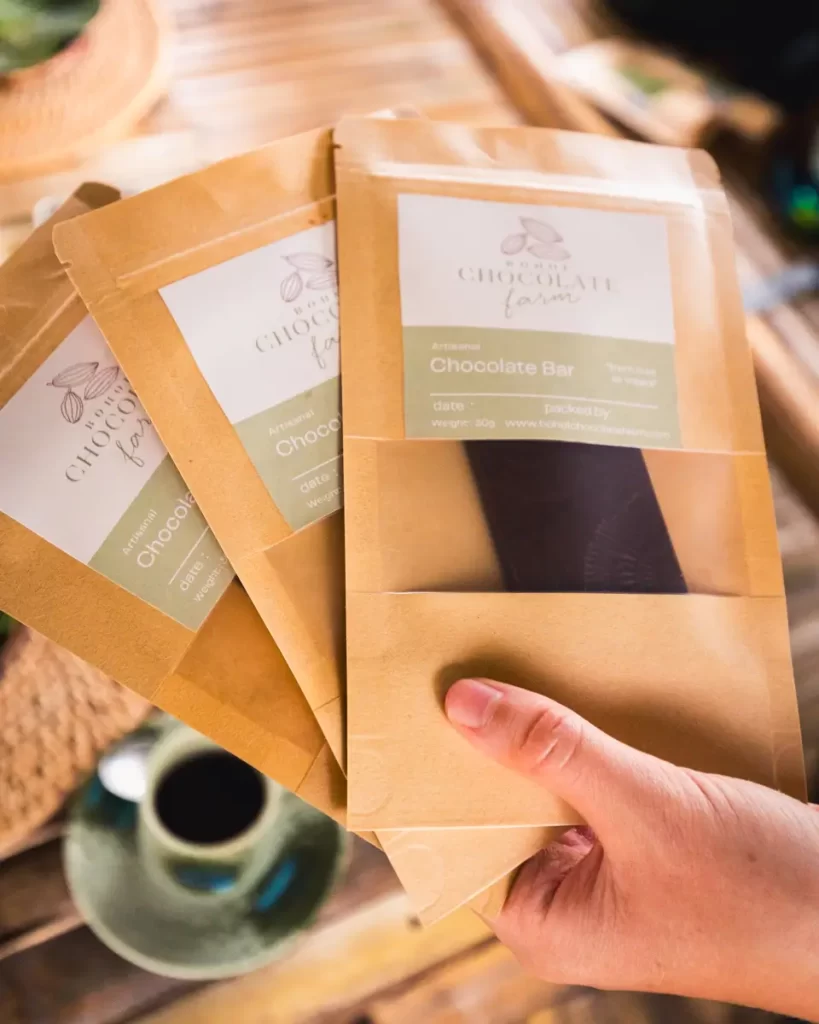
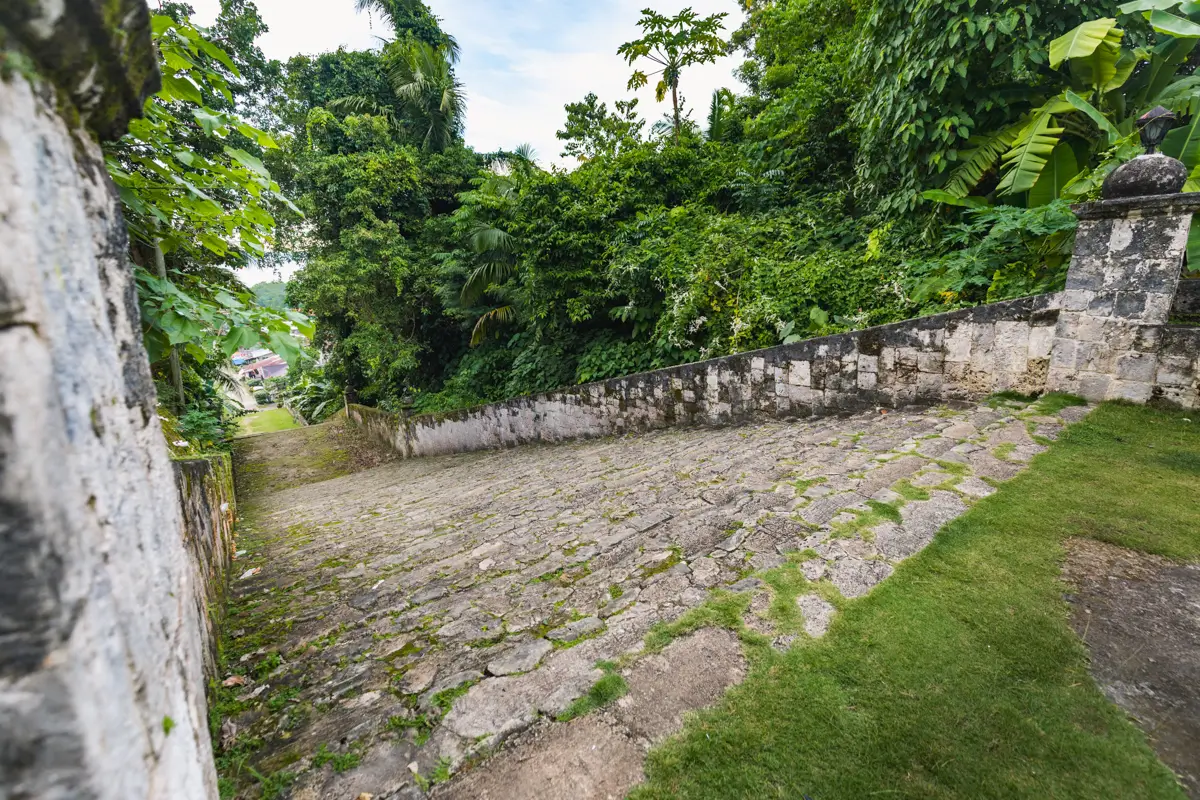
23. Inang-Angan Steps
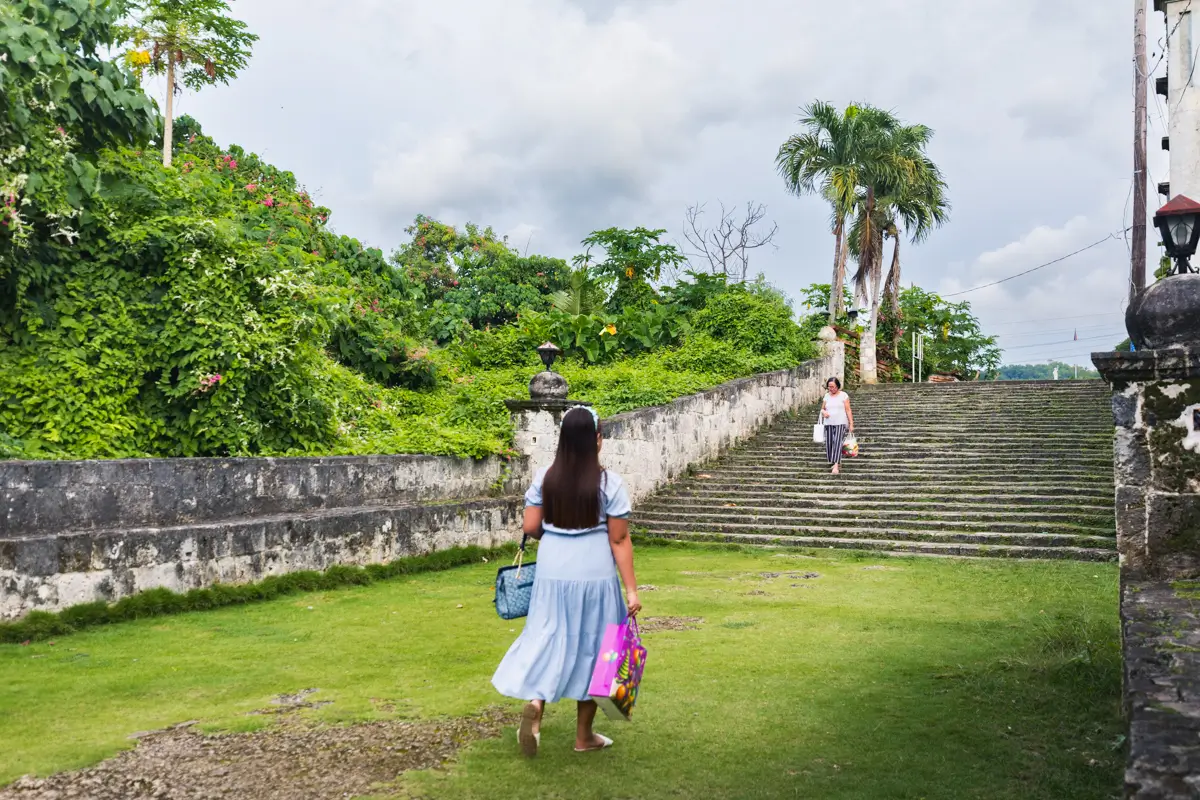
The Inang-angan, also known as the Coral-Stone Stairway, is a historic structure located in Loon, Bohol. Constructed between 1847 and 1849 under the direction of parish priest Fr. Antonio Yus, this grand stairway was built to improve connectivity between the coastal area of Napo (downtown) and the elevated region of Moto (uptown). The stairway comprises five flights with a total of 212 steps, each approximately six meters wide, meticulously crafted from coral stone blocks sourced from the nearby Bohol Sea. In 2010, the National Museum of the Philippines declared the Inang-angan a National Cultural Treasure, recognizing its historical and architectural significance. Despite suffering damage during the 2013 Bohol earthquake, restoration efforts have been undertaken to preserve the landmark.
24. Bohol Bee Farm
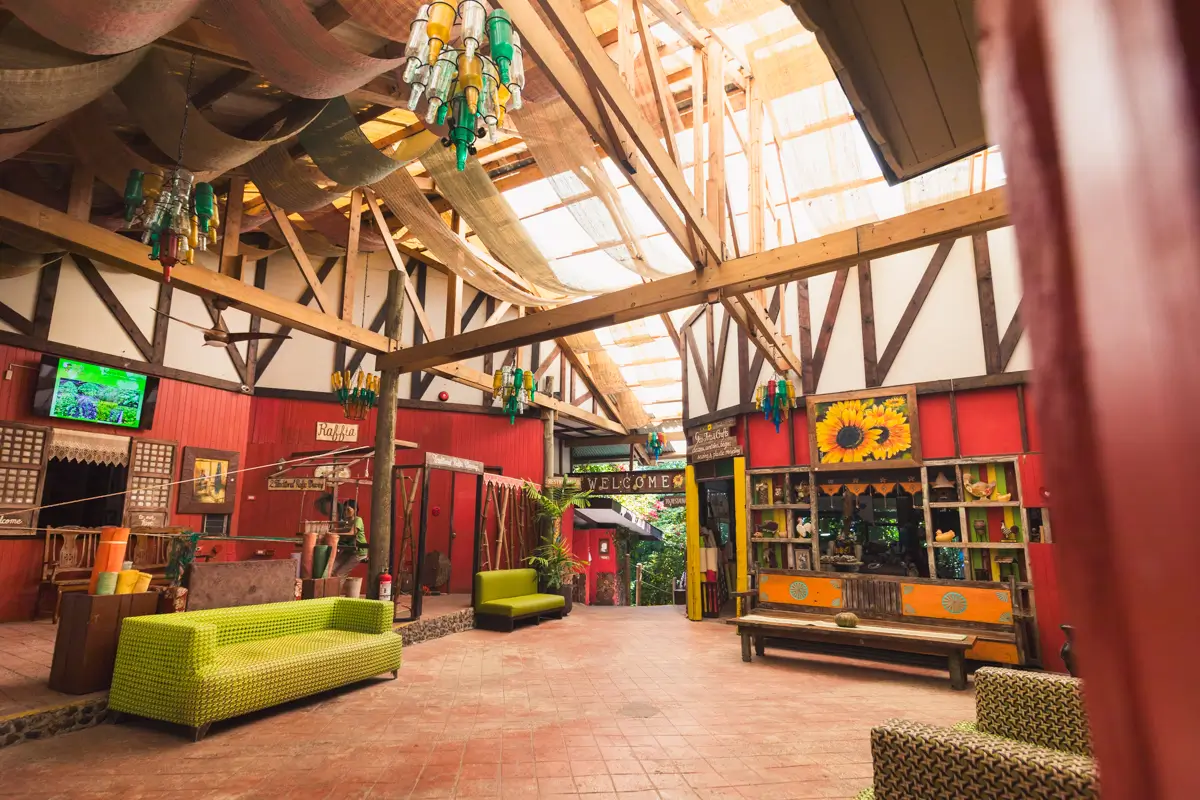
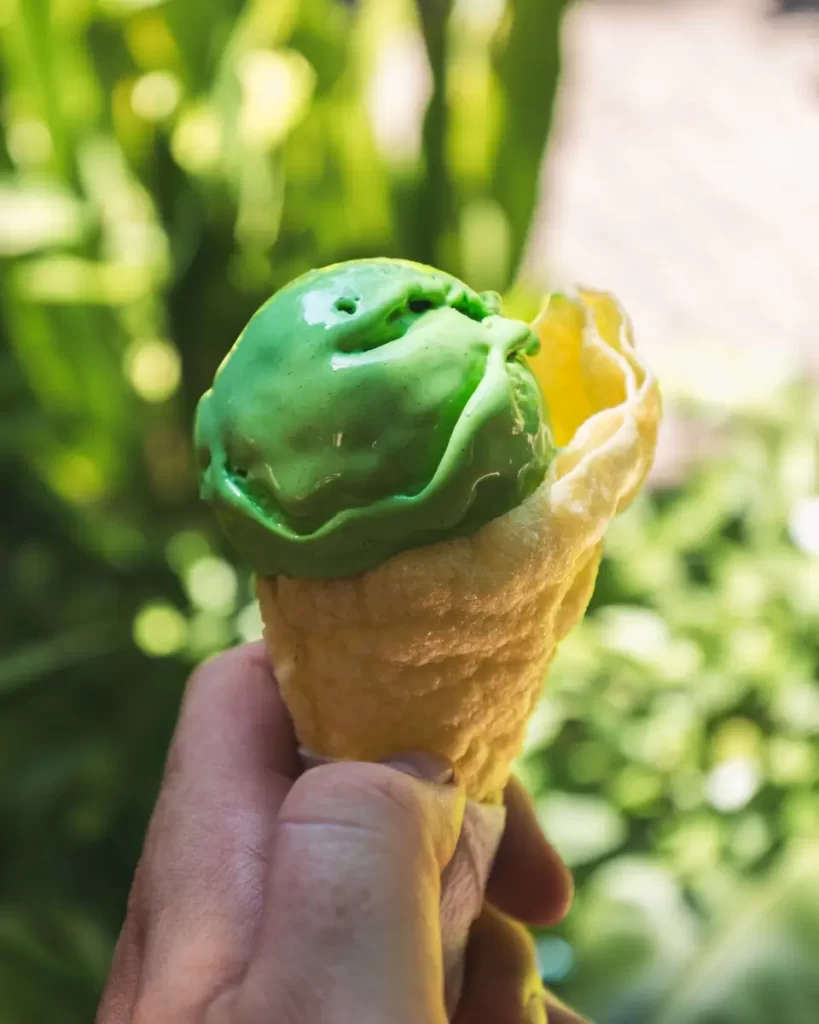
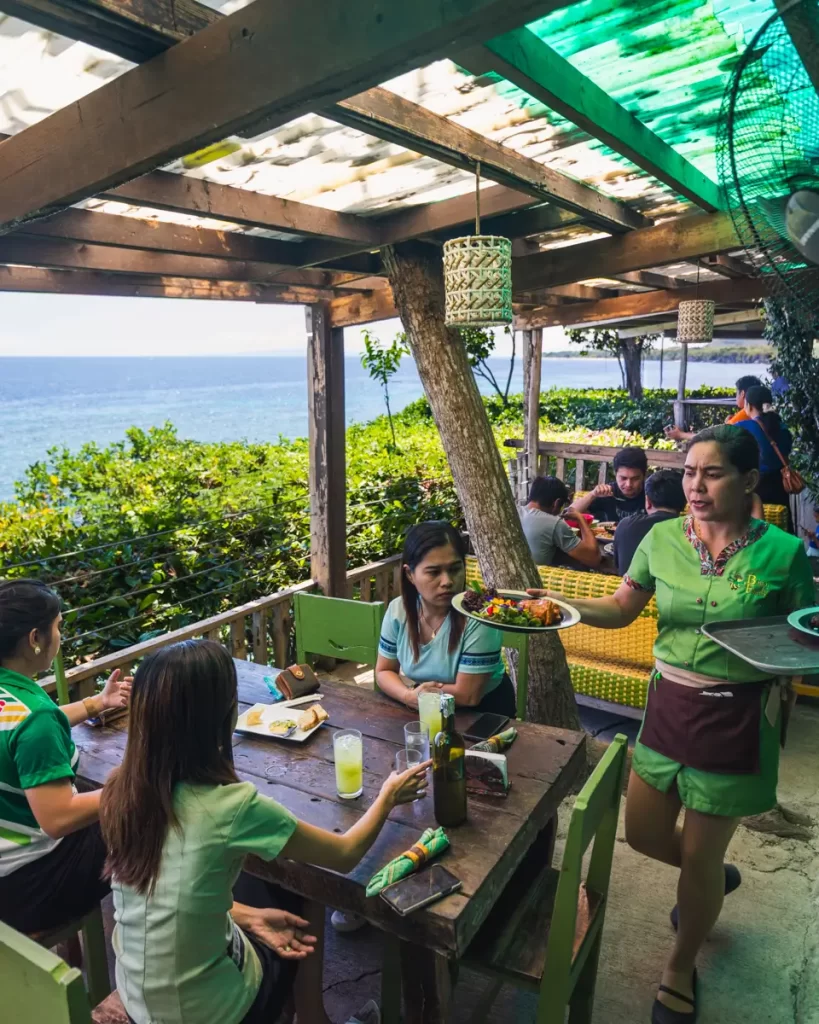
Bohol Bee Farm started on Panglao in the late 1990s as a small organic farm created by Vicky Wallace, before the island became the tourism hotspot it is today. What began with a few hives and garden plots has grown into a full complex with cottages, herb gardens, an ice cream stand, a café, and workshops that show how the farm produces its spreads, teas, and baked goods. Most visitors come for the food, which uses produce grown on-site, along with spreads flavoured with native ingredients. Their cassava cone ice creams are also worth trying, especially the malunggay, ube, or pandan flavours.
The farm sits on a cliffside with views over the Bohol Sea, and restaurant here is worth stopping at for the great view alone. It’s a popular stop on Panglao day trips, so mornings and late afternoons are quieter. Even if you’re not staying for a full meal, it’s a good place to pick up locally made jams, teas, and crafts to take home.
25. Ching’s Calamay
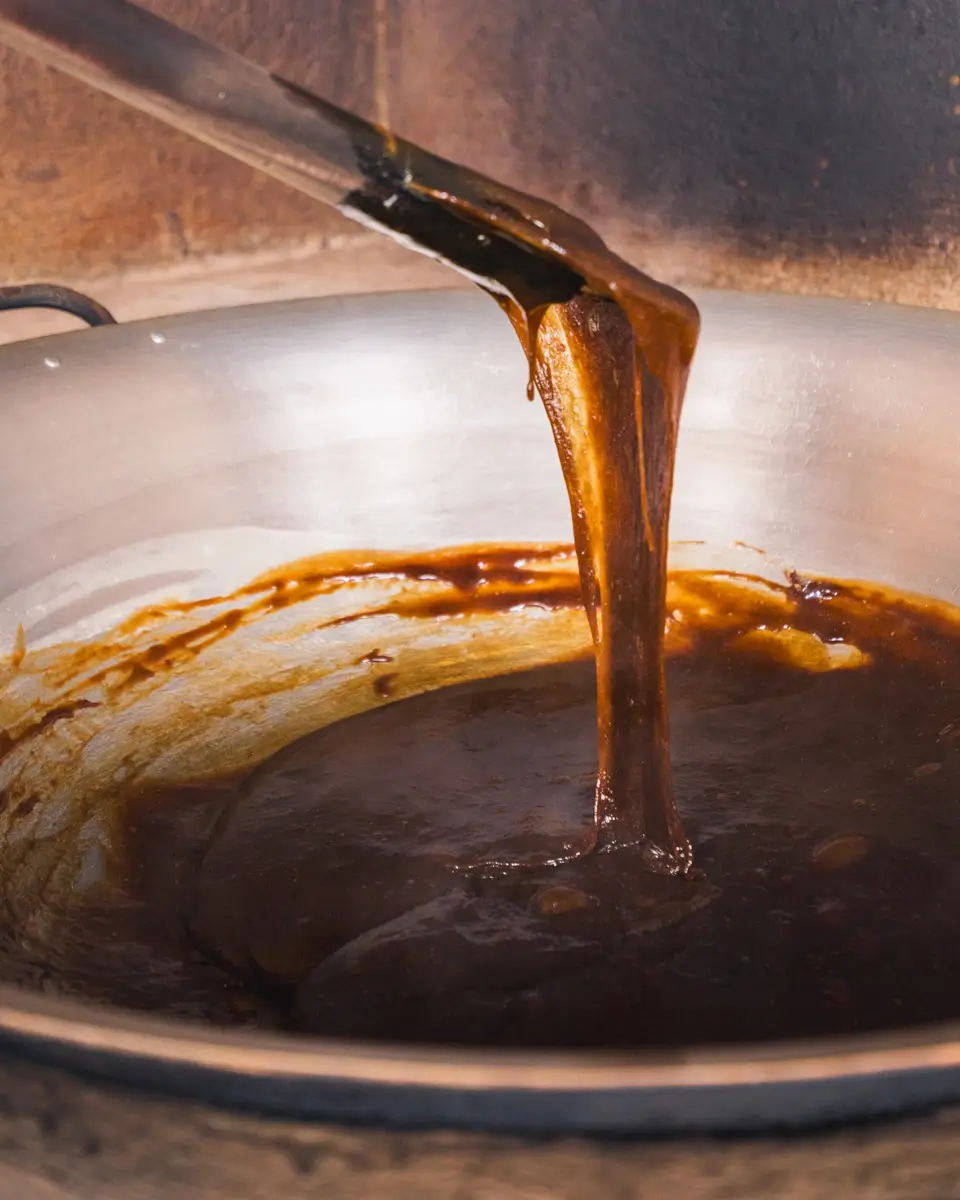
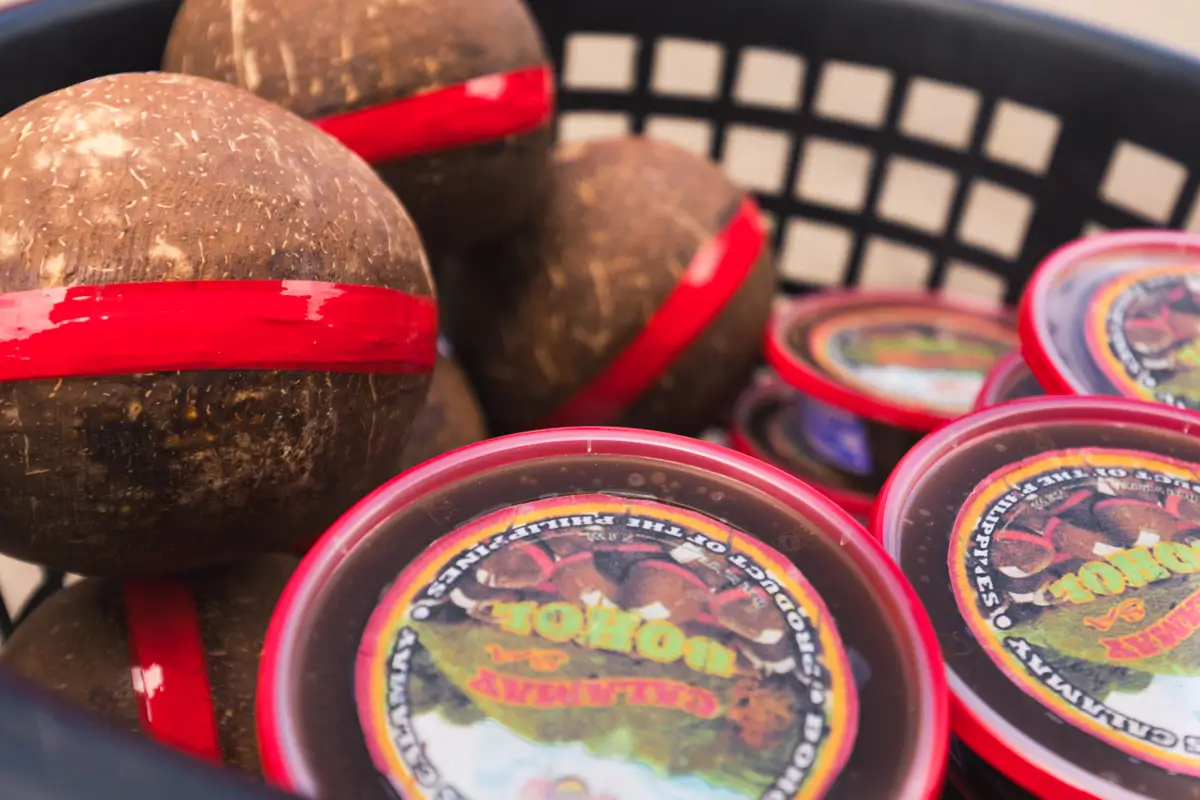
Calamay is one of Bohol’s signature delicacies, a sticky, glossy mixture of glutinous rice, coconut milk, and muscovado sugar cooked down until it reaches a thick, stretchy consistency. Versions of the dish exist across the Visayas, but Bohol’s style is instantly recognisable because it’s packed into coconut shells sealed with a red paper strip. The method goes back generations because the shells help the calamay keep longer and protect it during transport. You’ll see it sold at markets, bus terminals, and souvenir shops all over the island, but the town of Jagna is especially known for producing some of the best. The flavour is rich and caramelised with a hint of coconut, and locals usually slice it thin to eat with coffee or as a merienda snack. Travellers stocking up for the flight home should check the shells for cracks and pick the heaviest ones, which tend to be the freshest.
26. Doljo Beach
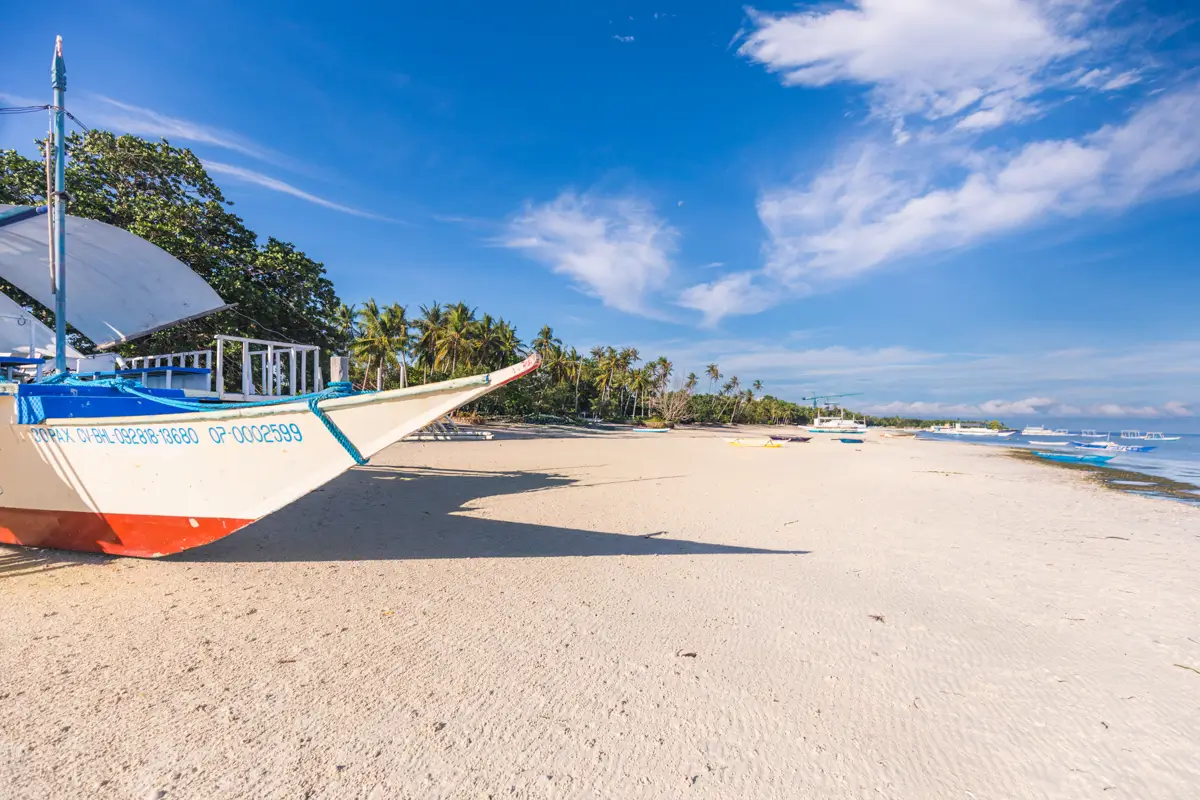
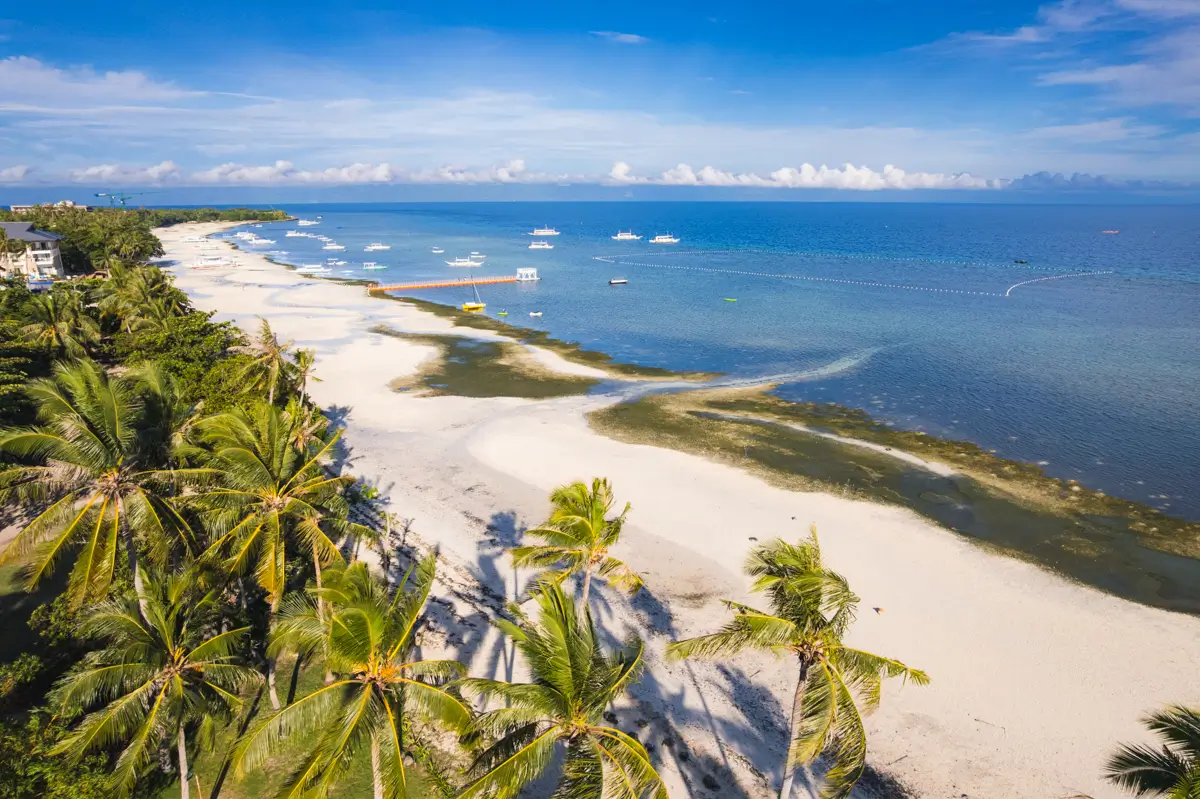
Doljo Beach sits on the far northwest tip of Panglao and feels noticeably quieter than Alona or Dumaluan, which is why it’s my favourite beach on Panglao. The shoreline runs long and straight with fine white sand, and being the only West-facing beach on Panglao, it’s the best place to be fior sunset. Resorts line a good chunk of the beach, but there are plenty of open sections where you can walk without crowds, and the vibe stays low-key even on weekends.
27. Lamanok Island
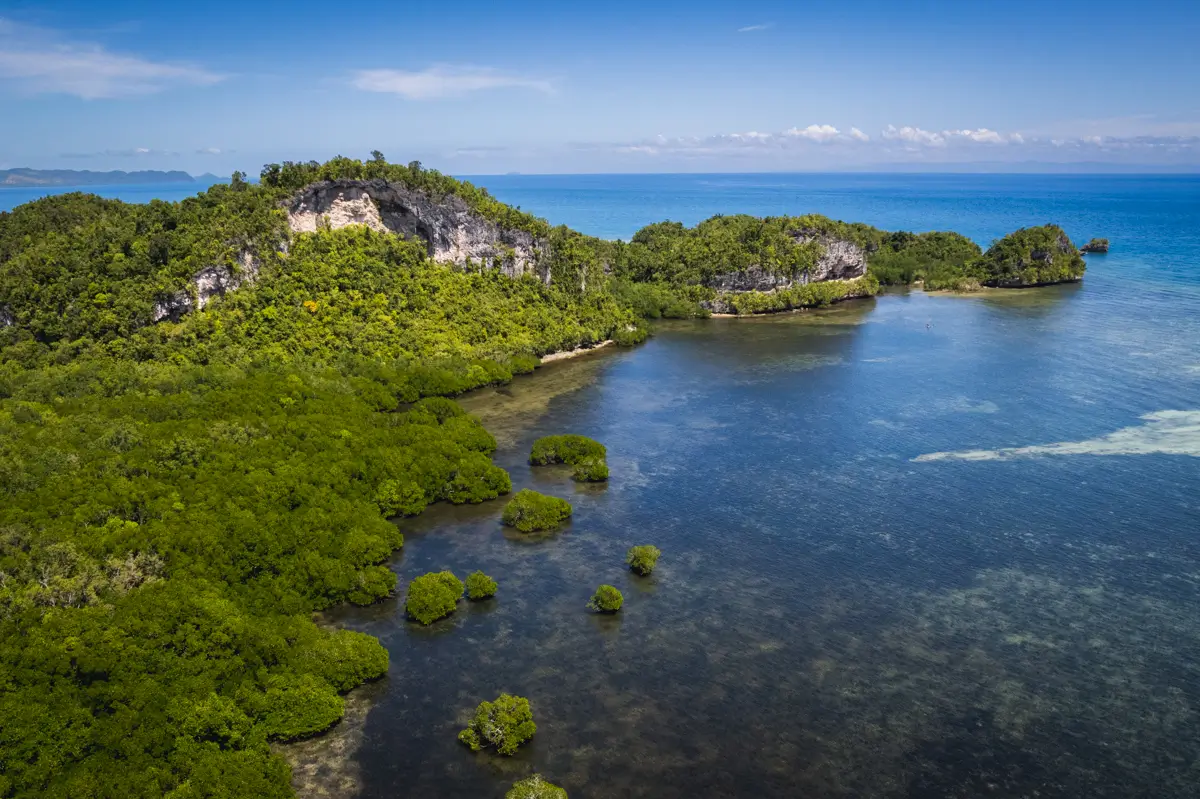
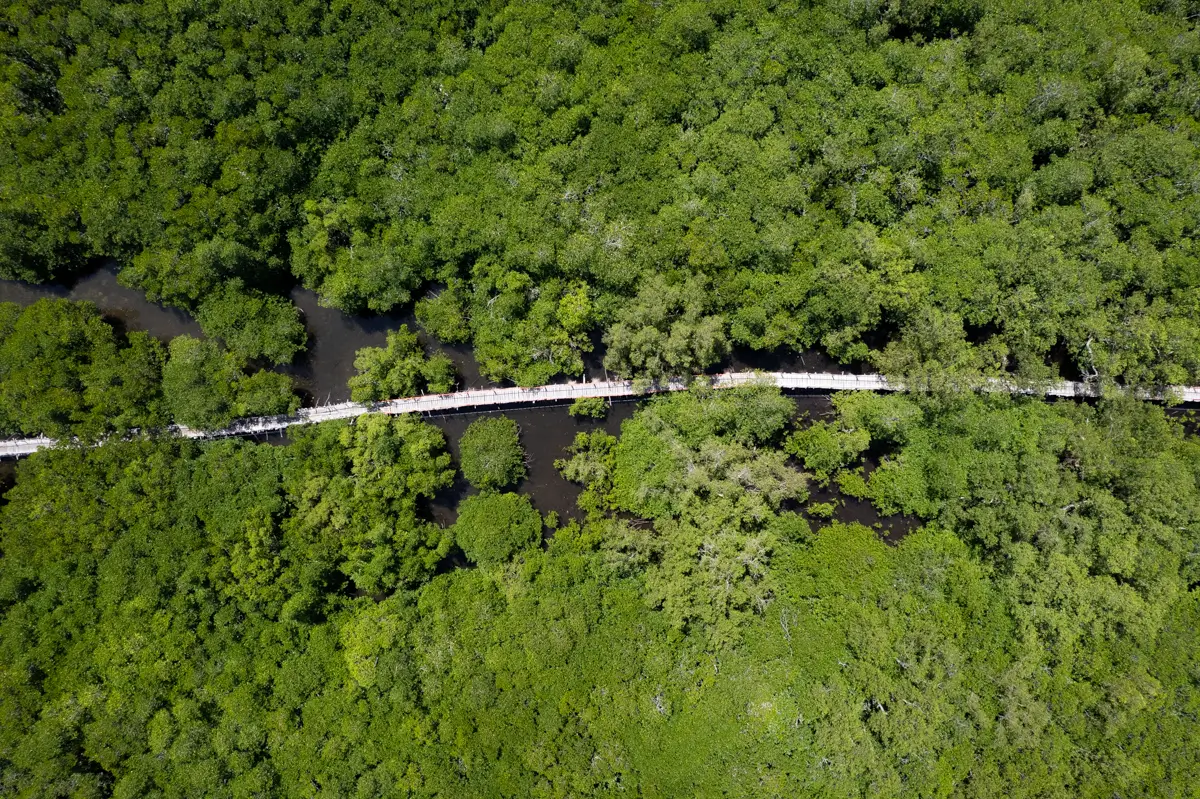
Lamanok Island is a small, uninhabited peninsula located off the coast of Anda, Bohol, Lamanok Island is famous for its ancient rock art, including red hematite handprints and other markings believed to be remnants of pre-colonial rituals, as well as caves with several boat coffins and fossilized giant shells. Guided tours offer insights into the island’s anthropological and spiritual significance, as well as its use as a site for pre-colonial animist and shamanic practices that some locals still honor today.
Visitors reach the “island” by crossing a long bamboo boardwalk through the mangroves and taking a small paddle boat across the channel. The cave systems open toward the sea in tight angles, and the path follows uneven terrain across roots and jagged karst, so sturdy footwear helps. The guide walks you through each chamber, explaining where offerings were placed, how the hematite markings were made, and the stories behind them.
28. Camugao Falls
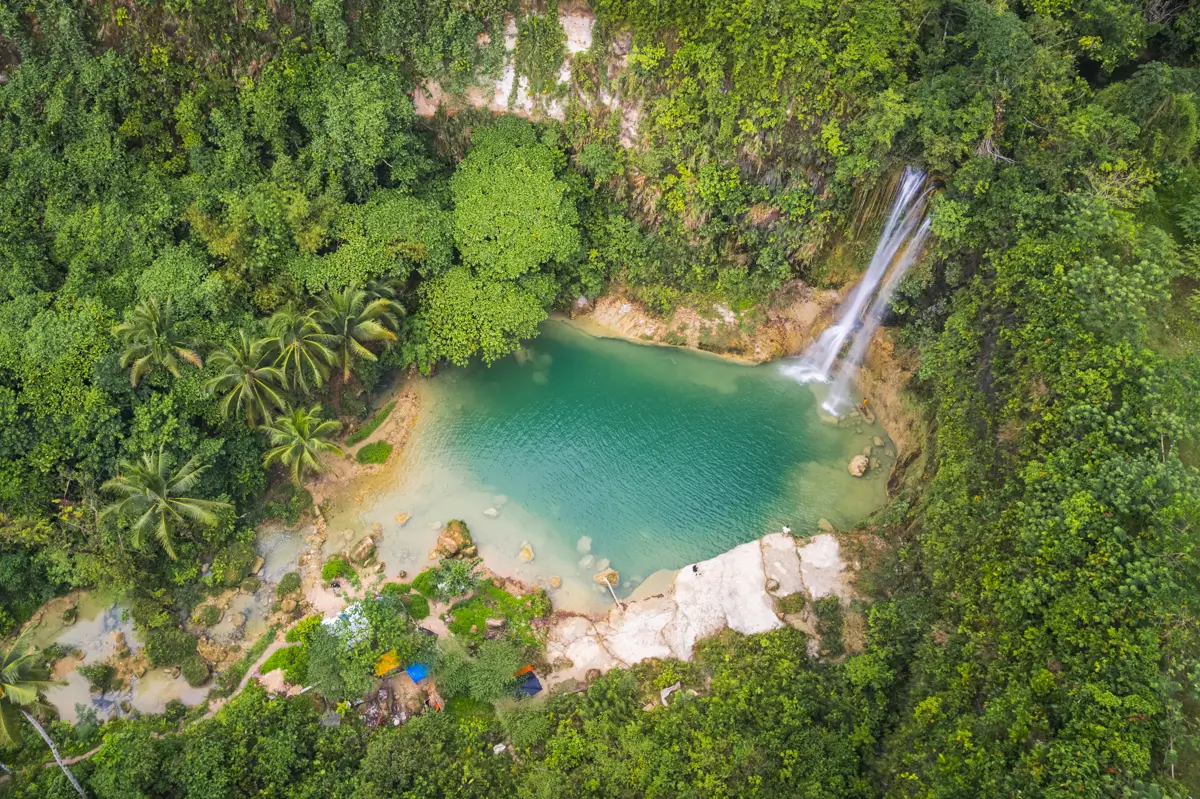
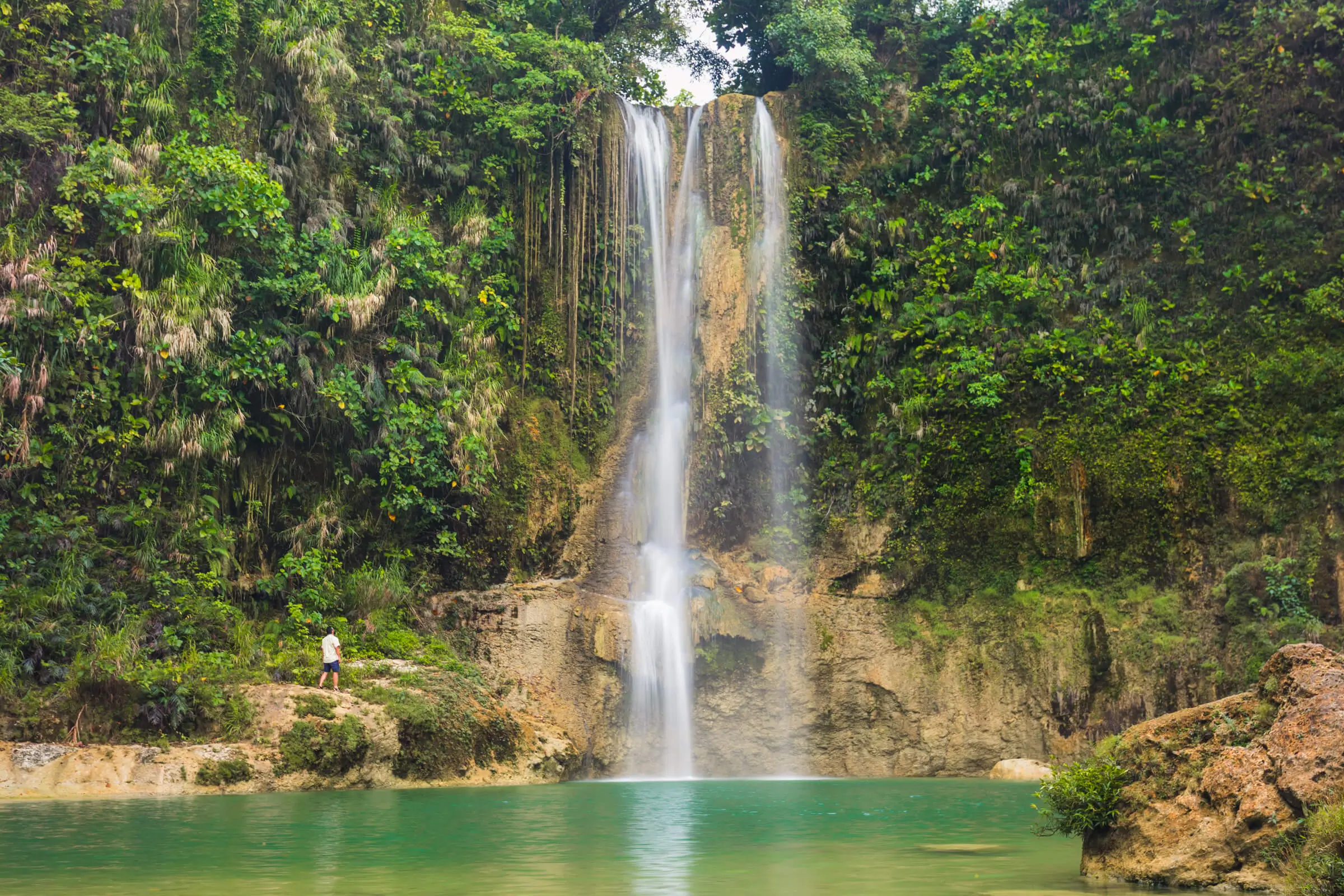
Camugao Falls in Balilihan is possibly my favourite waterfall in Bohol. Surrounded by farms, a deep gorge opens up revealing the waterfall and its jungle seemingly out of nowhere. The waterfall cascades from a height of about 20 meters into a circular basin with clear, cool water, perfect for a refreshing swim or simply relaxing by the edge. Reaching the falls requires a short but very steep descent along a forested trail through the jungle, which is well worth the effort.
29. Panglao Watchtower
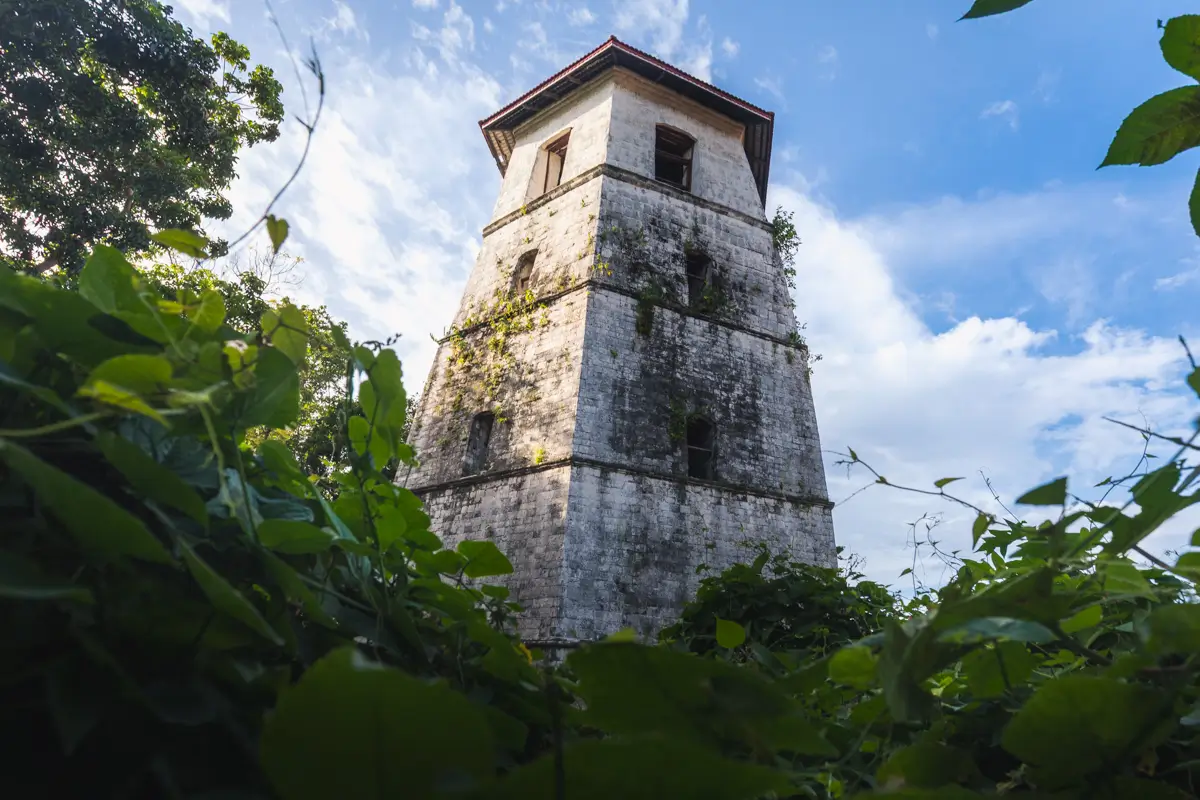
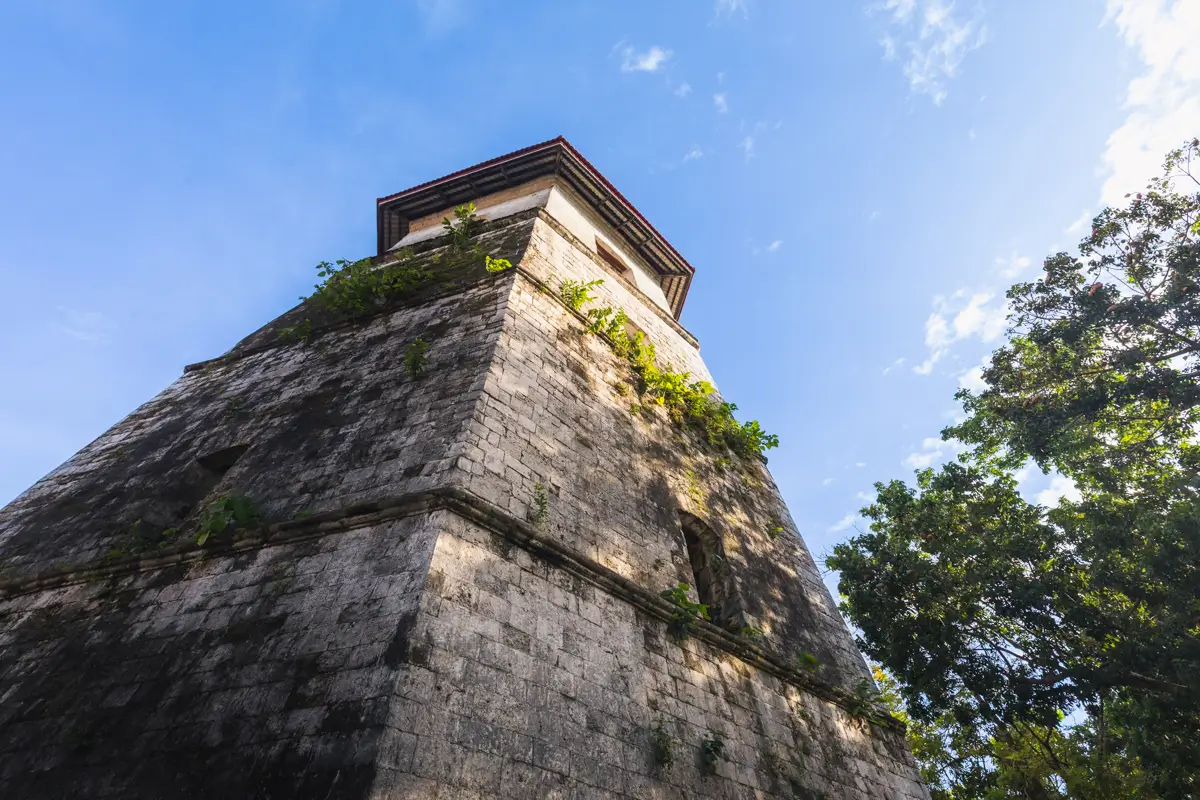
The Panglao Watchtower beside the San Agustín Church in Panglao is one of the tallest Spanish-era watchtowers in the Philippines, built in 1851. The five-storey octagonal tower was constructed from coral stone and designed as a coastal lookout, with narrow slit windows on each level so sentries could monitor approaching ships and signal the town if pirates were spotted offshore. A small balustraded belfry tops the structure, originally used to ring warnings across the settlement. The church complex around it has shifted over the centuries, but the tower remains in solid condition, and you can clearly see the coral blocks and lime mortar that held up through multiple earthquakes.
30. Bilar Manmade Forest
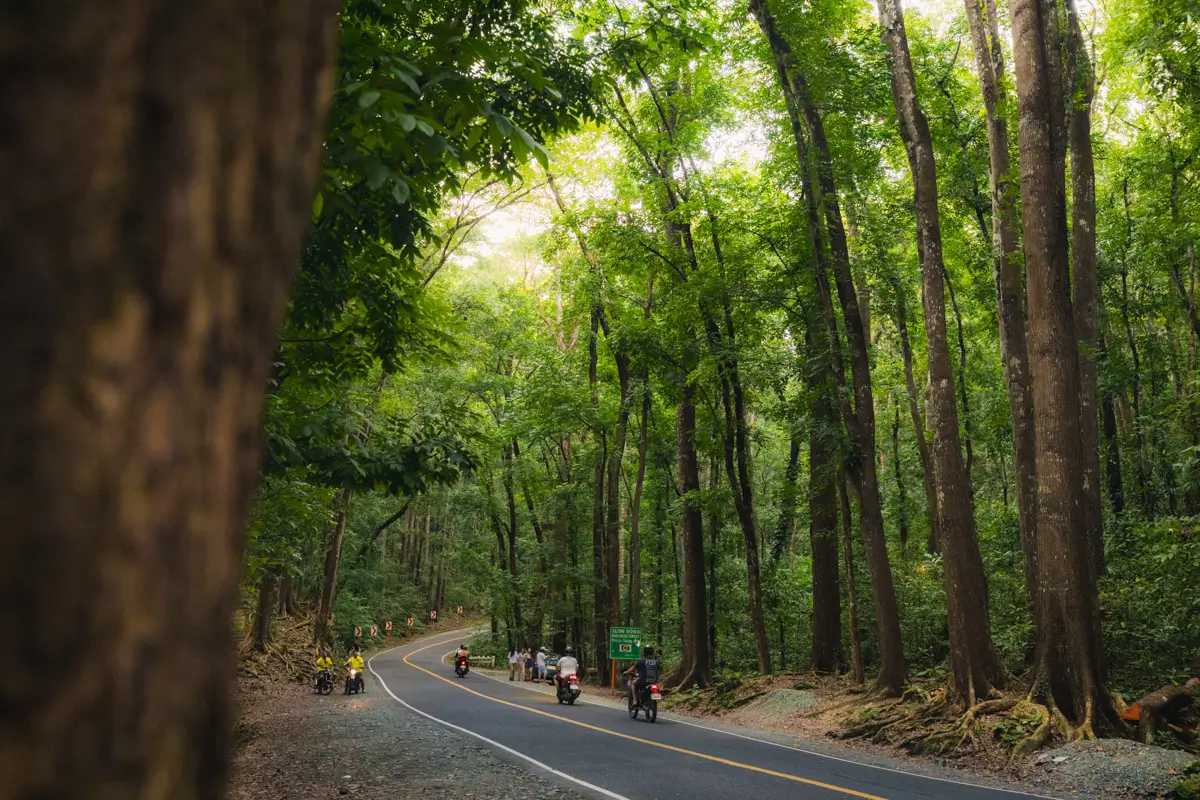
The Bilar Man-Made Forest is a two-kilometre corridor of mahogany trees planted in the late 1950s and 1960s as part of a government-led reforestation effort meant to stabilize the hills between Loboc and Bilar. Assuming that mahogany was a native tree due to naming confusion, (The Philippine lumber industry had long been branding several local hardwoods as “Philippine mahogany” to appeal to export markets) Bohol schoolchildren and volunteers were tasked with planting mahogany non-native saplings across the slopes. The result is the tunnel-like road you see today, with tall, straight trunks and a dense canopy that crowds out most light.
While it photographs well, the ecological trade-offs are significant: mahogany acidifies the soil, suppresses undergrowth, and leaves little habitat for native birds, insects, tarsiers, or plants, creating what biologists describe as a “biological desert.” Visitors stop for quick photos and to take in the eerie and chilly atmosphere of the forest, but it’s worth noting that the forest’s popularity often overshadows the ongoing work elsewhere in Bohol to restore native species that actually support the island’s ecosystem.
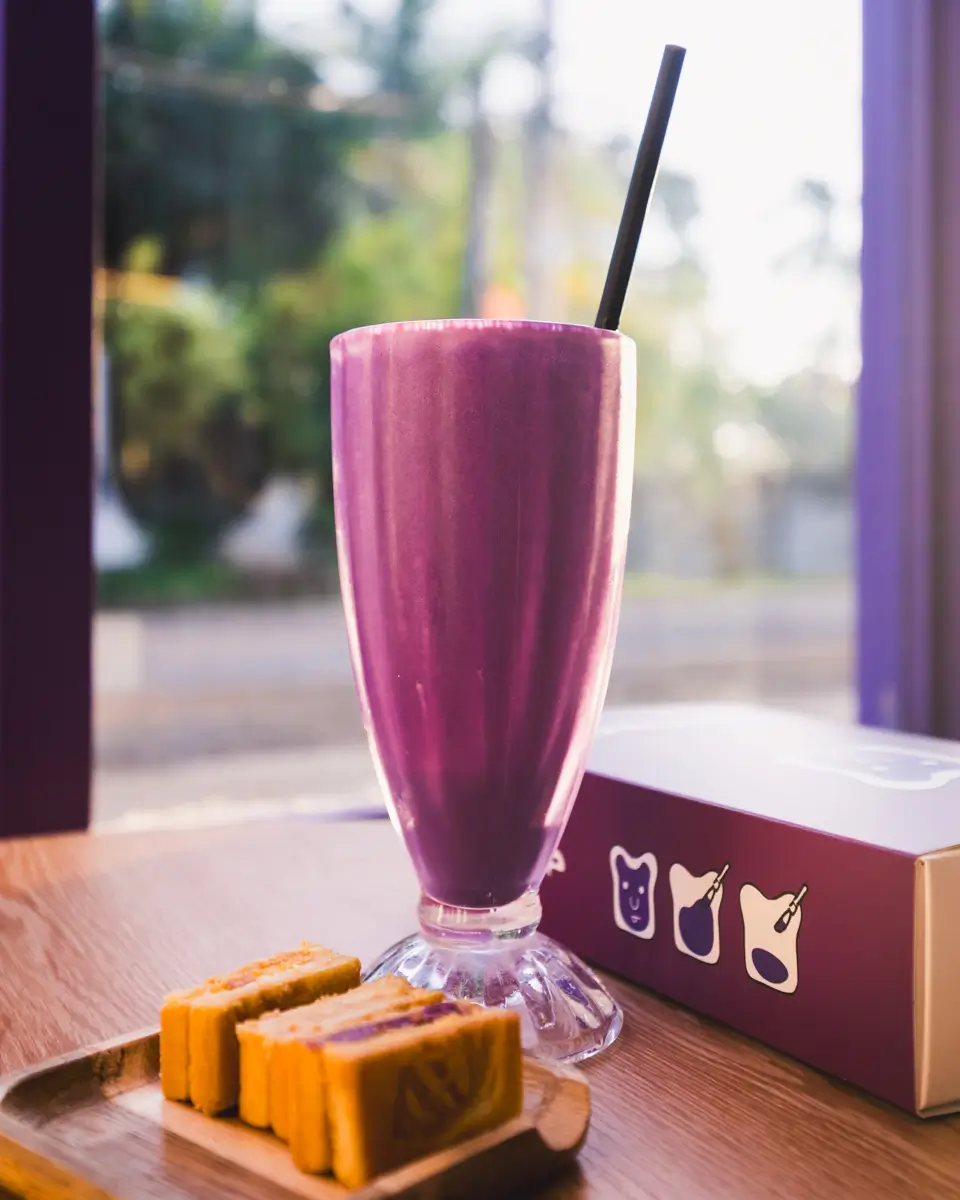
31. Ube Kinampay
Ube kinampay is Bohol’s signature variety of ube, a purple yam that Filipinos use the way other countries use vanilla or chocolate. Ube isn’t a sweet potato and it isn’t taro; it’s its own species with a naturally vibrant purple flesh and a flavour that’s earthy, nutty, and lightly sweet. Kinampay, grown in the limestone soils around Carmen, Corella, and Balilihan, is considered the best of the best. It’s denser, more aromatic, and far more intensely coloured than the ube found elsewhere in the Philippines, and records of its cultivation in Bohol go back to the early 1900s. You’ll see kinampay used a million ways on the island, turned into halaya, folded into puto, churned into ice cream, and mixed into drinks. If you want to take some home, your best bet is jars of ube halaya from local producers at public markets; though do your research; many versions rely on food colouring instead of real kinampay. Sadly, even anything that does contain real ube will likely also use food colouring, as people have become so used to it as to expect the brightest purple possible.
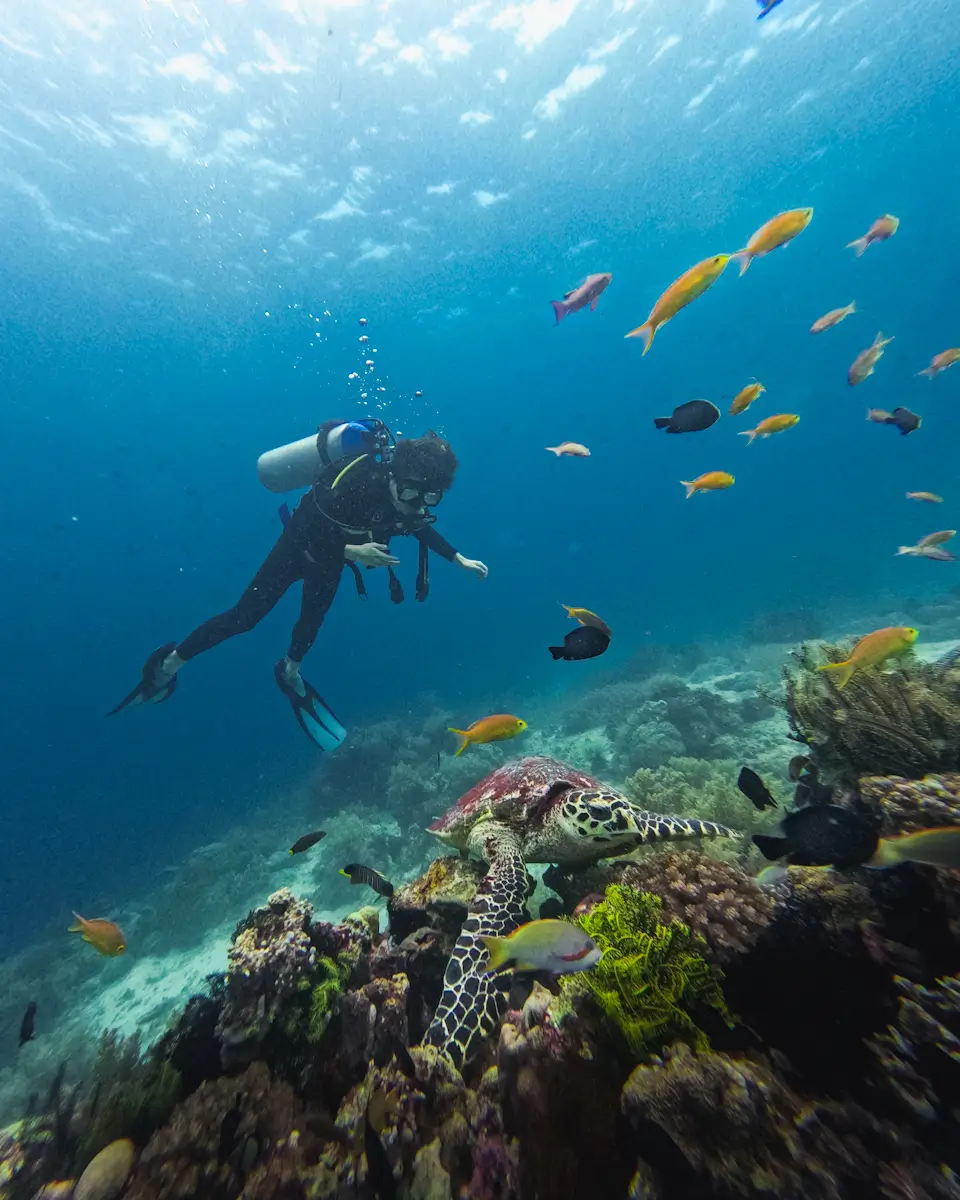
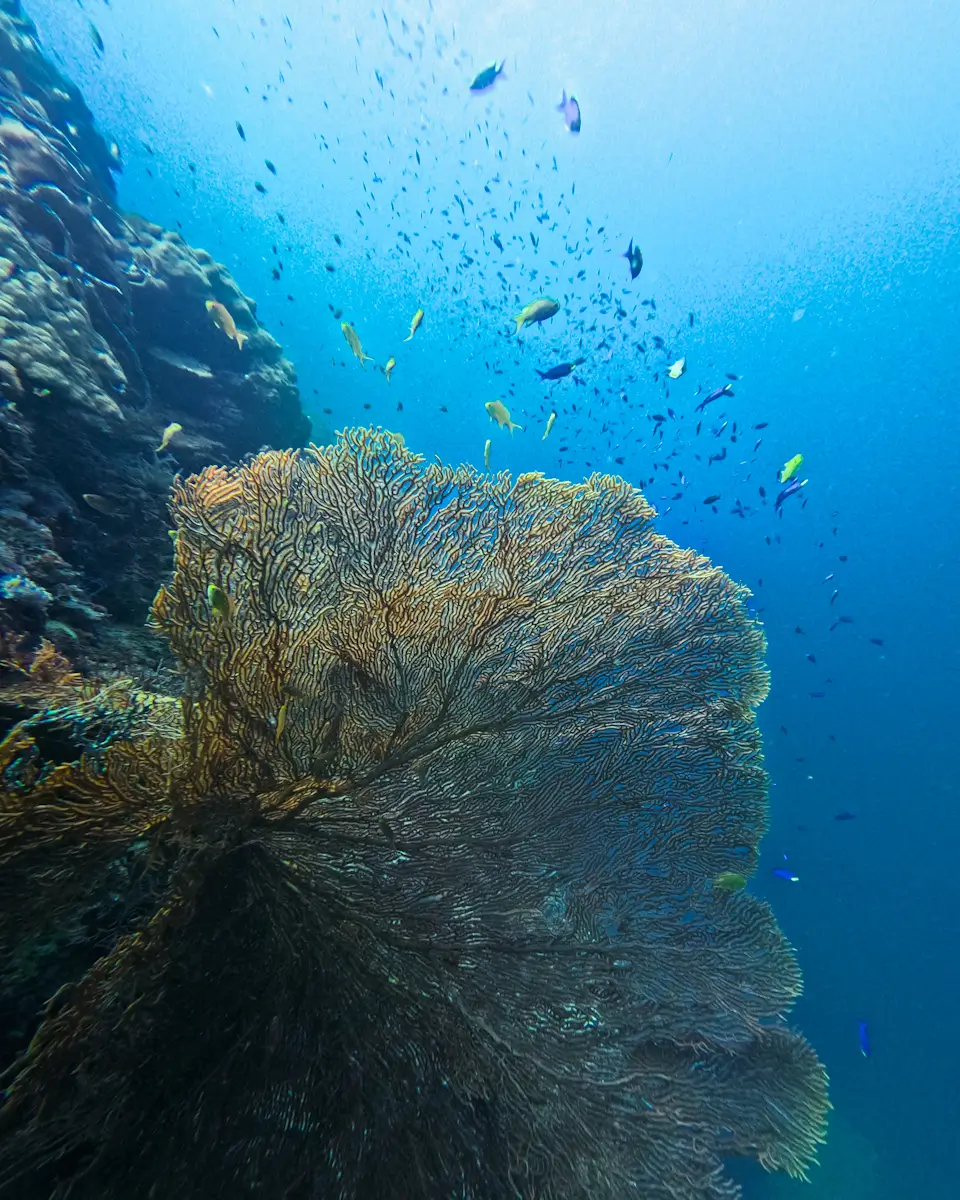
32. Scuba Diving
Scuba diving is an unforgettable way to see far more of Bohol’s marine life than you ever will as a snorkeller, and it fits naturally into most itineraries whether you base yourself on Panglao or Anda. Divers travel from all over the world to explore the reefs around Balicasag and Pamilacan off Panglao, and the quieter eastern coast near Anda has steep drop-offs, caves, and coral walls that feel far less trafficked. Skipping diving here means missing out on what many travellers consider the real highlight of Bohol. Even beginners can join introductory dives, which cover the basics and get you safely underwater among schools of jackfish, healthy coral gardens, and the occasional turtle or reef shark. Because Balicasag in particular is so busy with snorkelling tours, diving is the best way to move away from the surface crowds and explore the deeper, calmer sections of the reef.
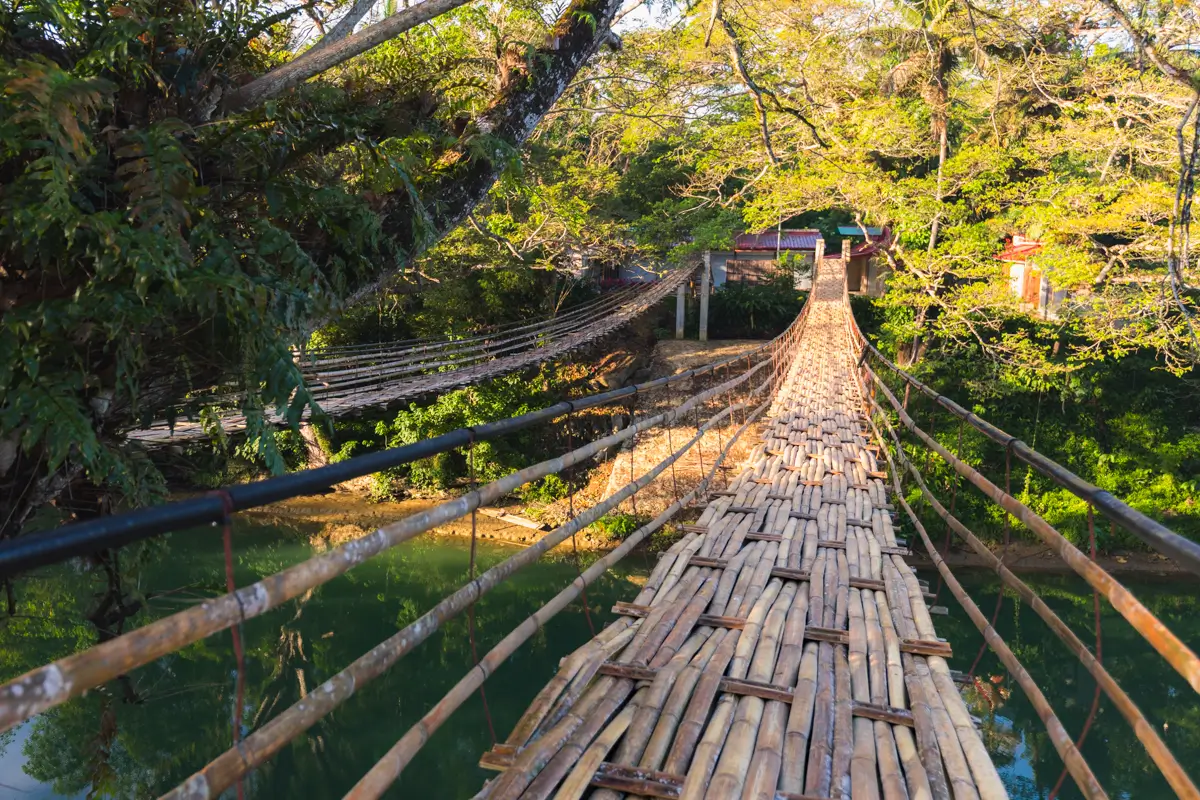
33. Sevilla Twin Hanging Bridge
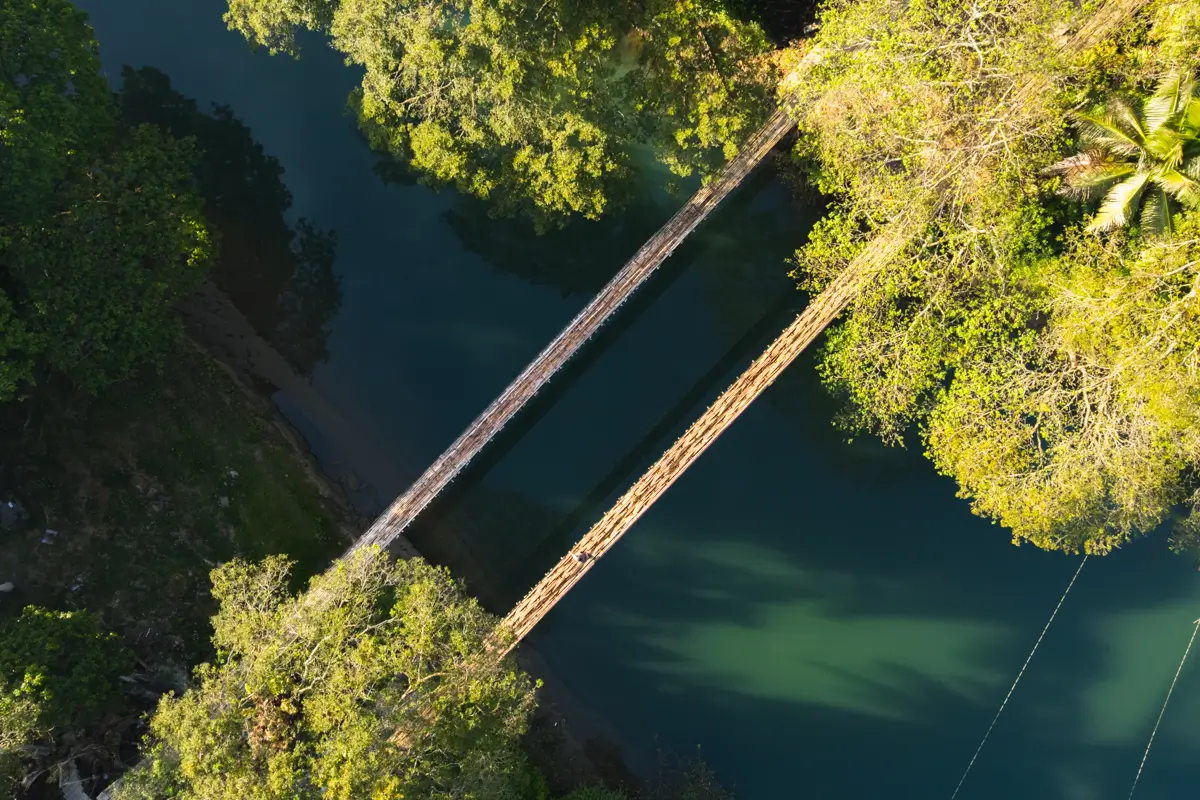
The Sevilla Twin Hanging Bridge in Loboc is one of Bohol’s classic stopovers, a pair of long, swaying footbridges made of woven bamboo planks stretched across the Loboc River. The original bridge was built decades ago as a practical crossing for locals, and a second bridge was later added to handle two-way foot traffic once visitors started showing up. Both span a wide bend in the river with enough height that you can look straight down into the jade-green water while the bamboo flexes and creaks underfoot.
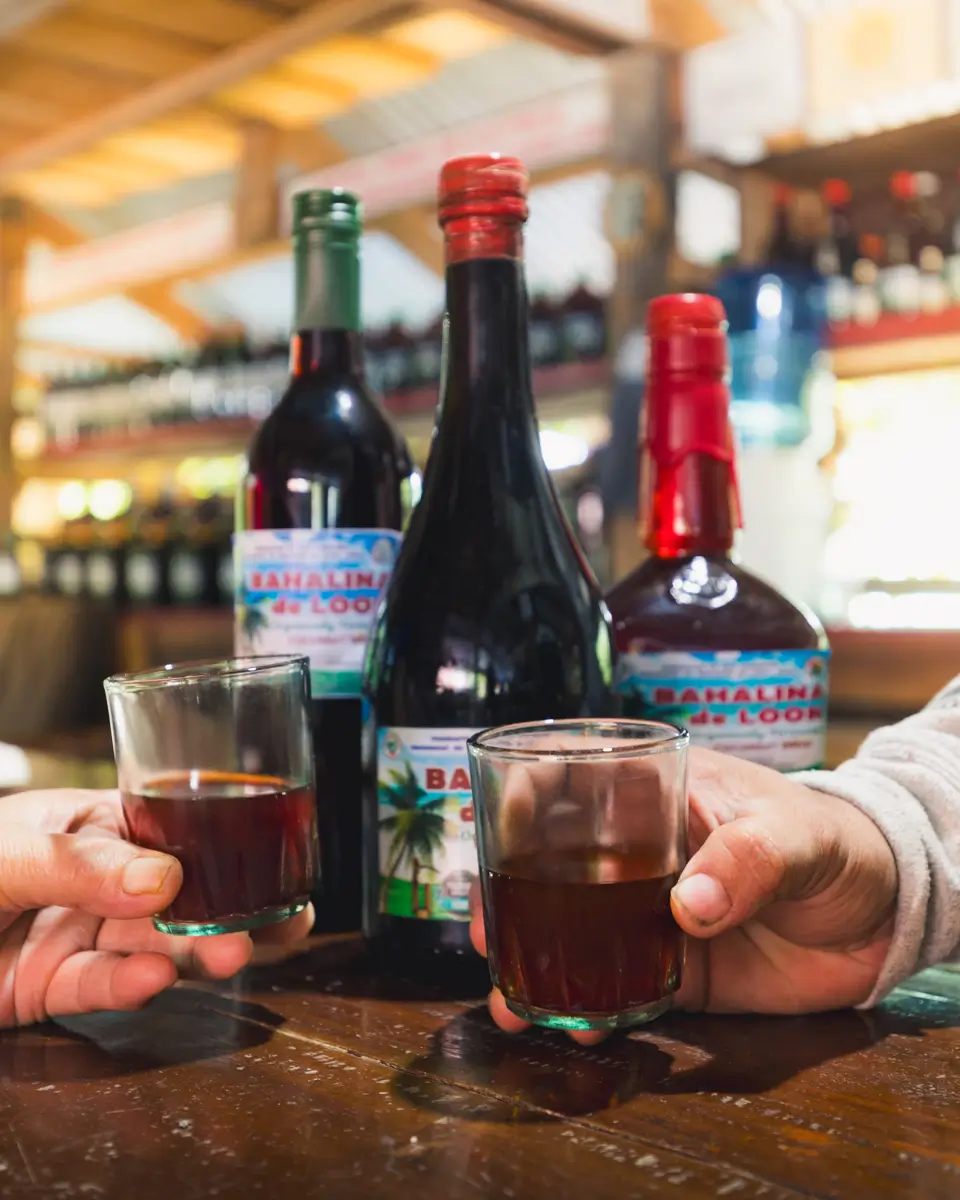
34. Bahalina de Loon
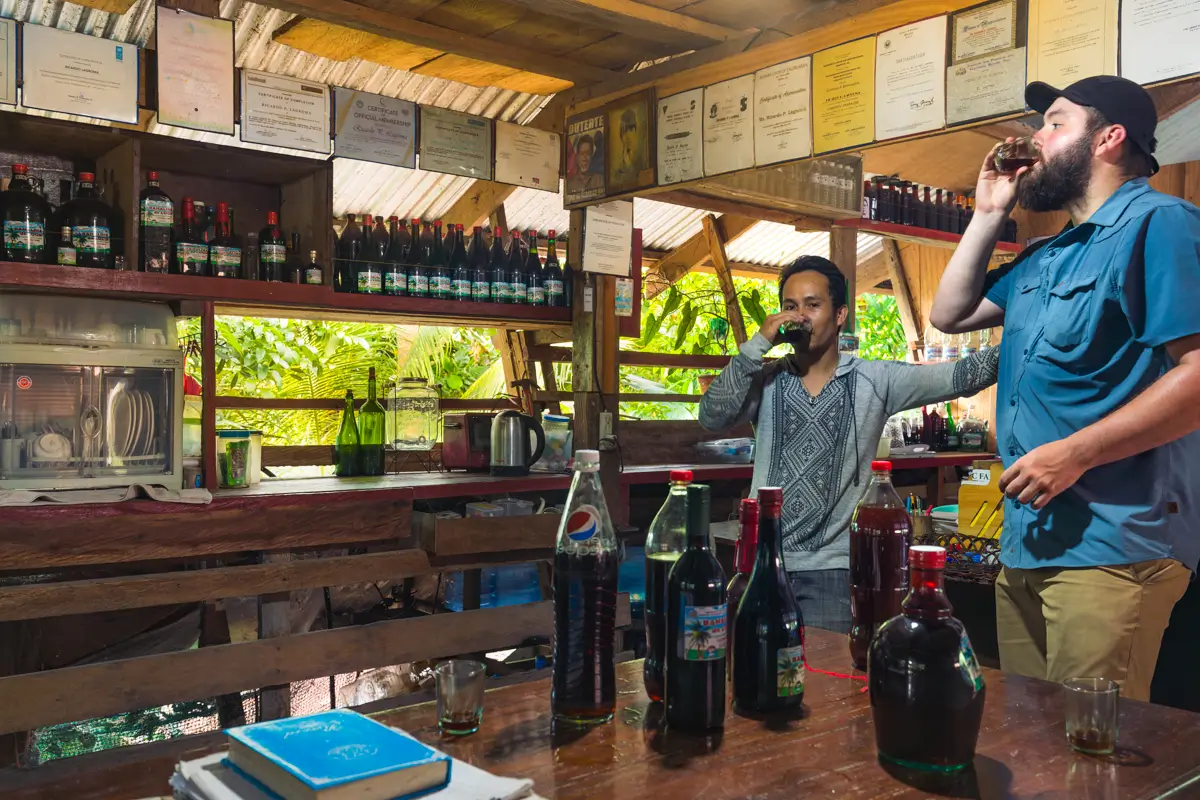
All around Bohol it’s typical to find locals drinking bahalina: a deep reddish coconut wine made from aging tuba. Tuba is fresh fermented palm sap wine collected straight from the tree by a manananggot, who climb the trunks each day to tap the unopened flower stalks. Combined with barok (mangrove bark) and left to age for months, traditionally in earthenware jars called banga, but nowadays more commonly in glass or plastic, the sap slowly develops into bahalina, which is particularly popular in Bohol, and can be found sold by the side of the road throughout the province. Loon is home to the island’s largest bahalina facility, Bahalina de Loon, where if you ask nicely it’s possible to try different ages of bahalina side-by-side. Just make sure to leave a generous tip, as it’s not by no means an official tourist attraction. If you just want to find a bottle of Bahalina to try, I suggest asking around at the nearest public market, and someone will surely be selling it.
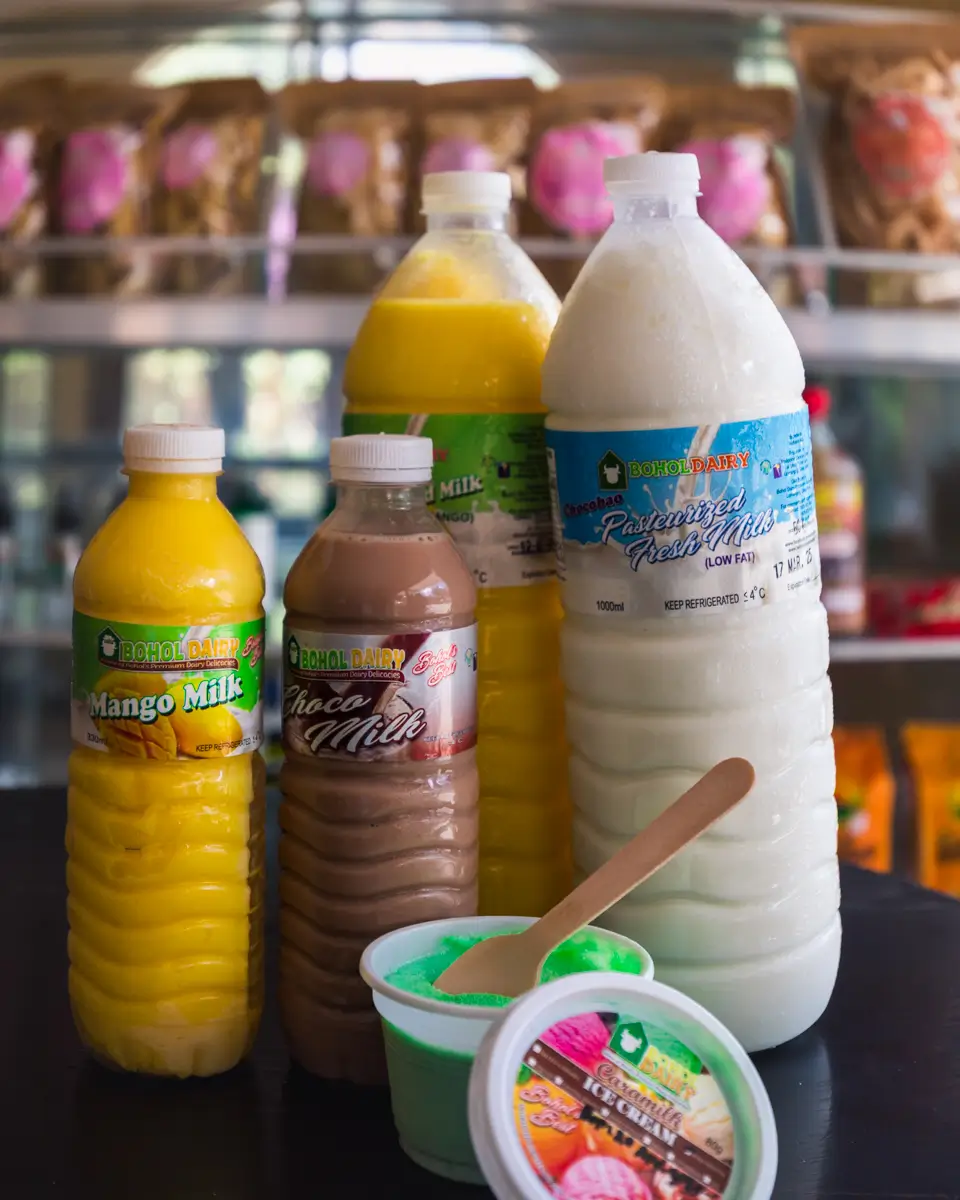
35. Dairy Box
Dairy Box in Carmen opened in 2017 as part of a national program by the Philippine Carabao Center and is managed by the Tamboan Farmers Multipurpose Cooperative. It sells dairy made from the carabao, the water buffalo you’ll see in fields across the Philippines and a longtime work animal whose milk is richer and creamier than cow’s milk. The small highway-side shop sells fresh carabao milk, yogurts, ice cream, and a handful of locally made snacks. It’s right near the Chocolate Hills, making it a must-stop for refreshments on a long hot day of travel between Bohol’s attractions.
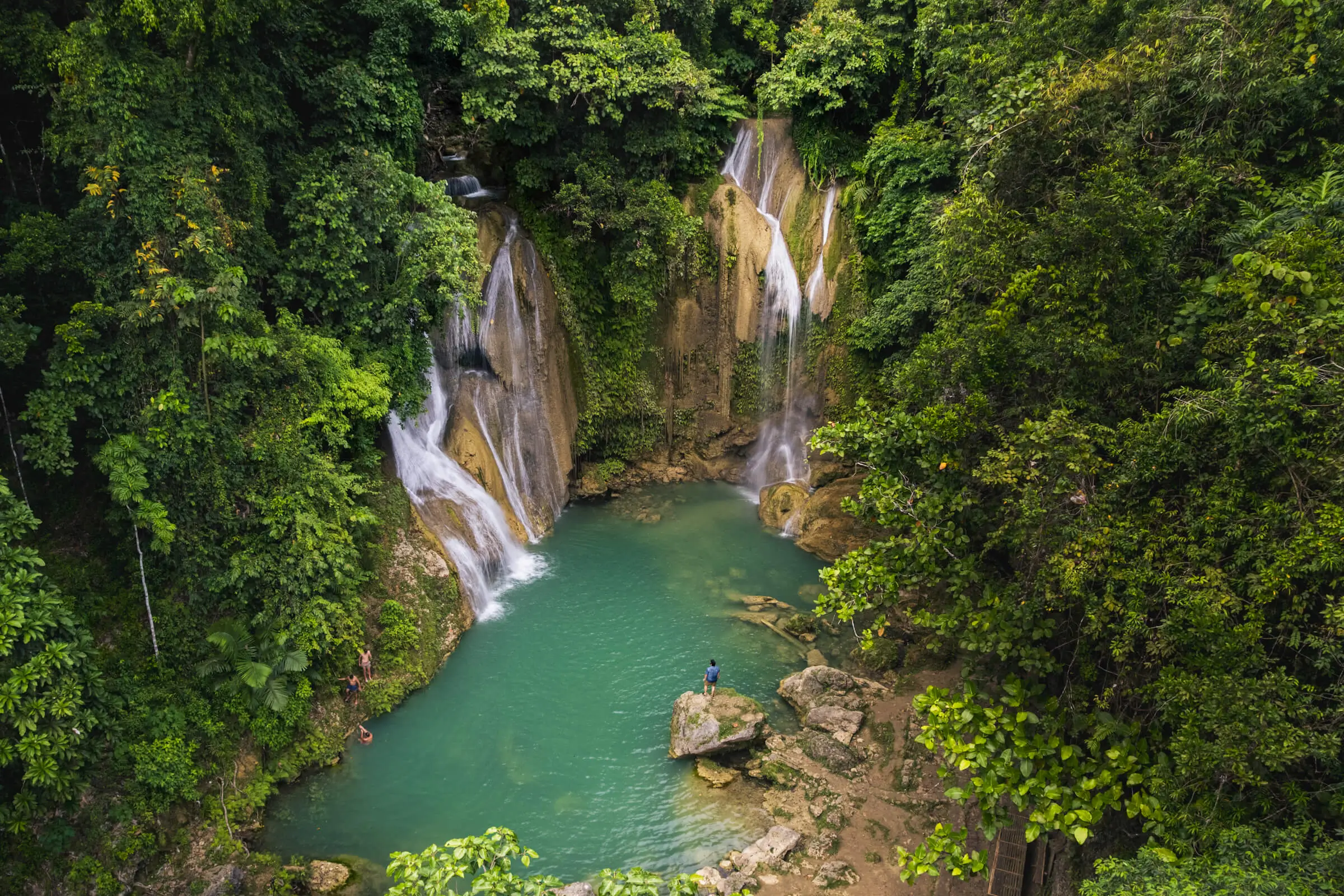
36. Pahangog Falls
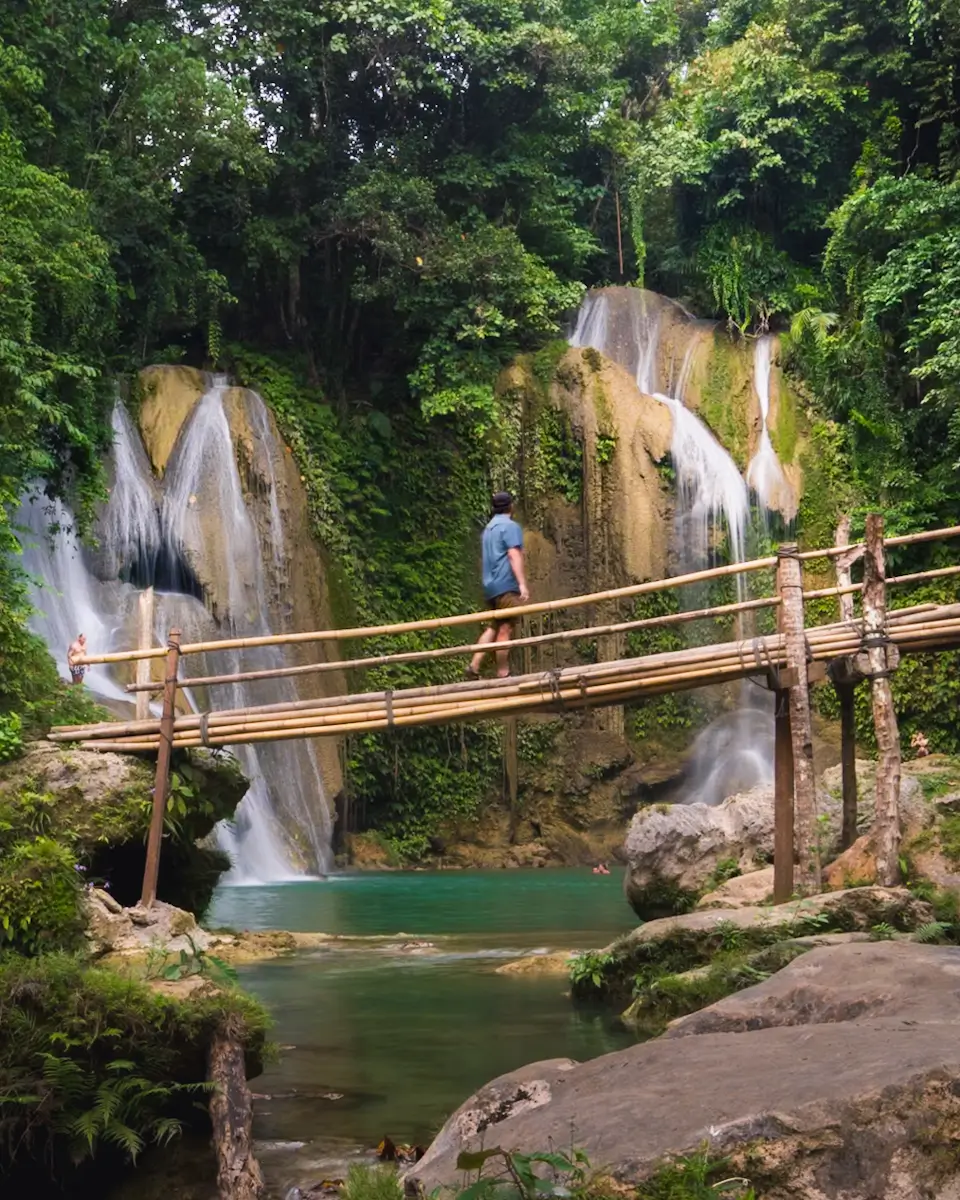
Pahangog Falls in Dimiao, also called Twin Falls, is one of Bohol’s prettiest waterfalls, tucked deep in a forested ravine where two streams spill side by side into a wide turquoise basin. The path in leads through the jungle and thend down a steep set of concrete steps that takes about ten to fifteen minutes to descend, and at the bottom you can swim in the main pool or climb up to a variety of different points to jump off of. It’s minutes from Ingkhuman Falls, Ipo Falls, and Dam-Agan Falls, making it easy to spend a day visiting waterfalls without travelling far between them. Just make sure to mentally prepare yourself for the steep stairs back up.
37. Nova Shell Museum
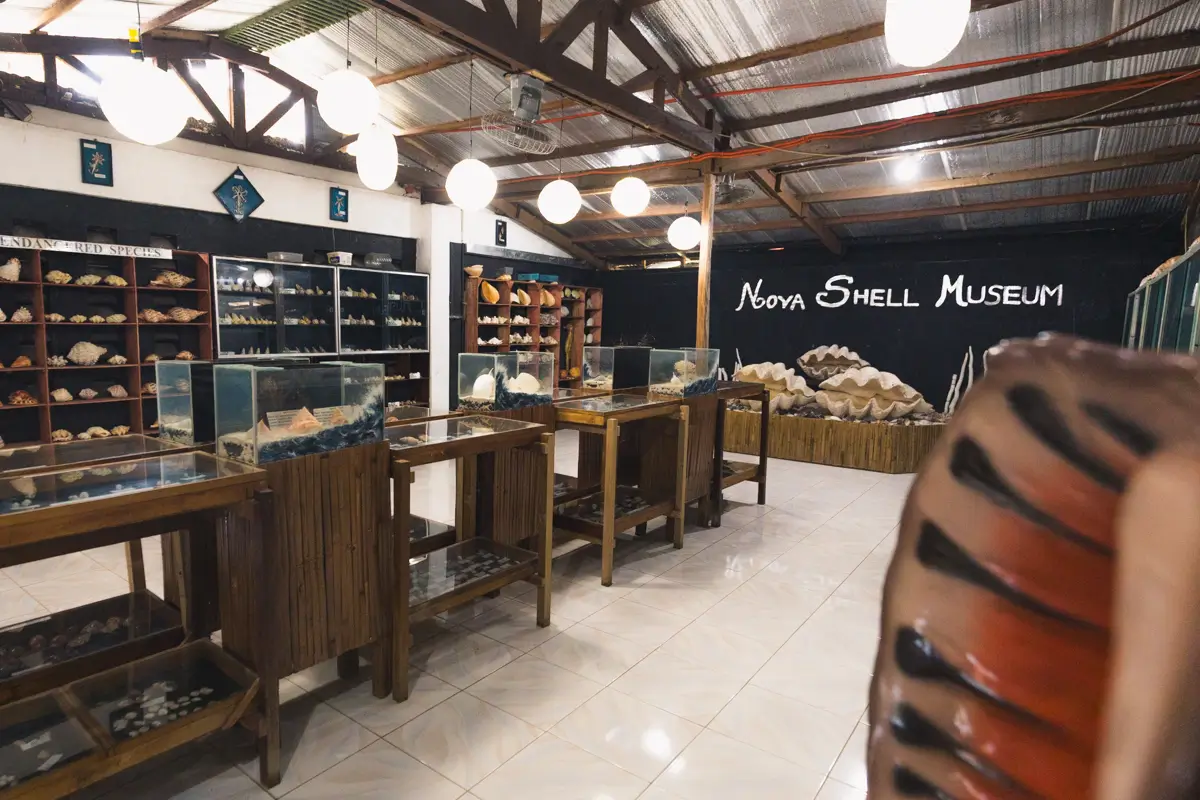
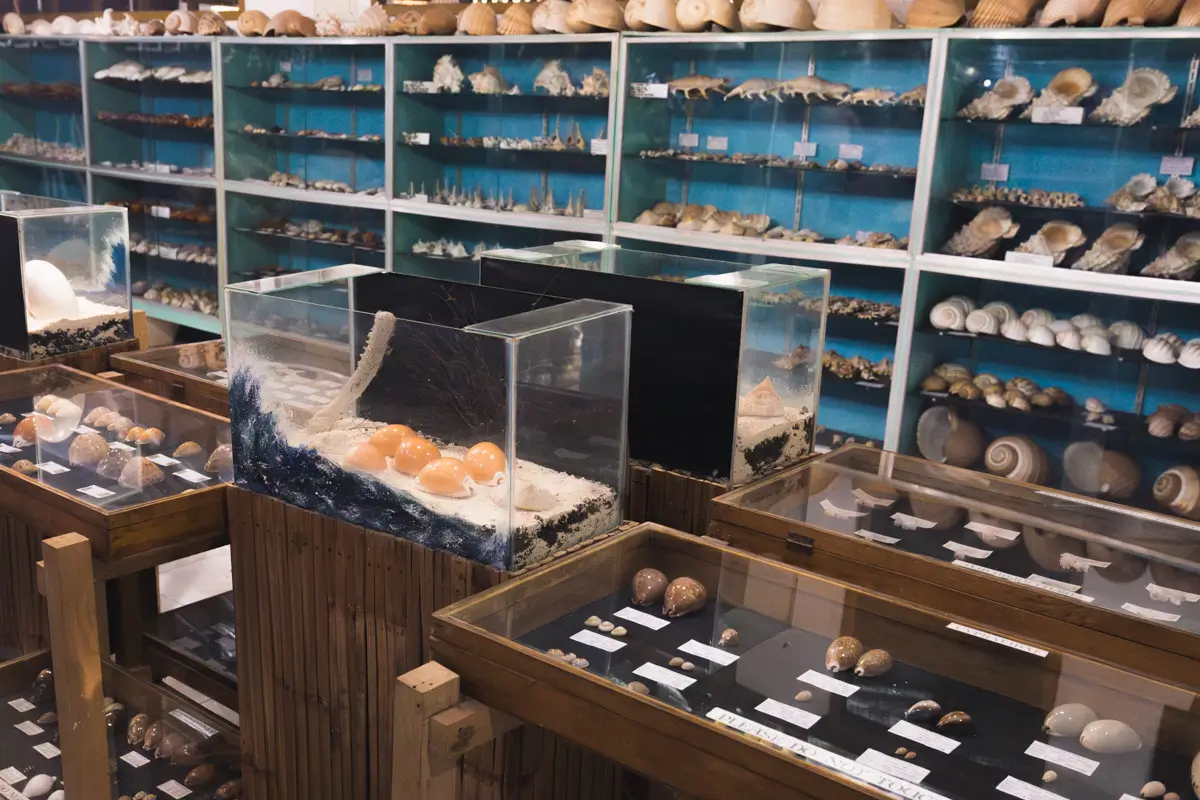
Nova Shell Museum in Panglao was founded by Quirino Hora, a lifelong shell collector whose decades of diving and shoreline exploration built one of the largest private shell collections in the Philippines. Hora supplied specimens to researchers for years, and several newly described species were later named after him, including Bursa quirihorai and Primovula horai, both recorded from waters around Panglao. Inside, the rooms are lined with cases of tiny cowries, oversized tritons, cone shells, nautilus, and hundreds of lesser-known species.
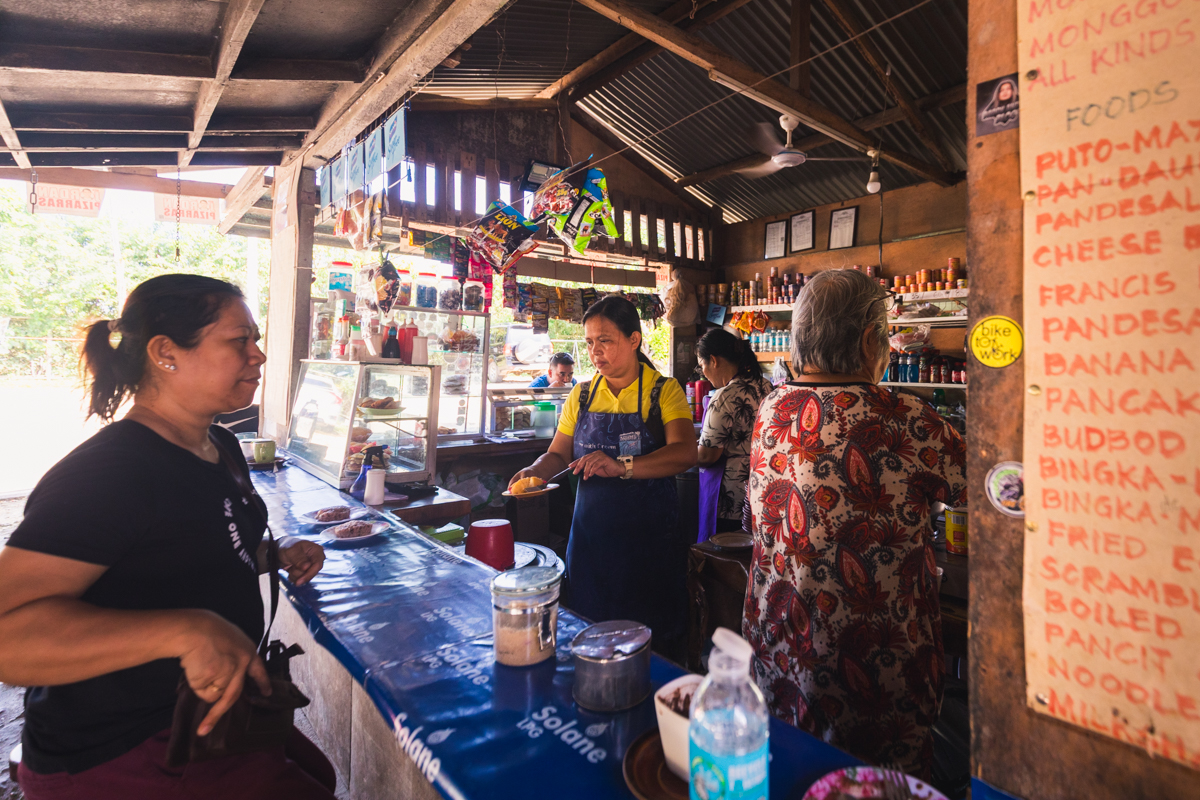
38. Daday’s Sikwatehan
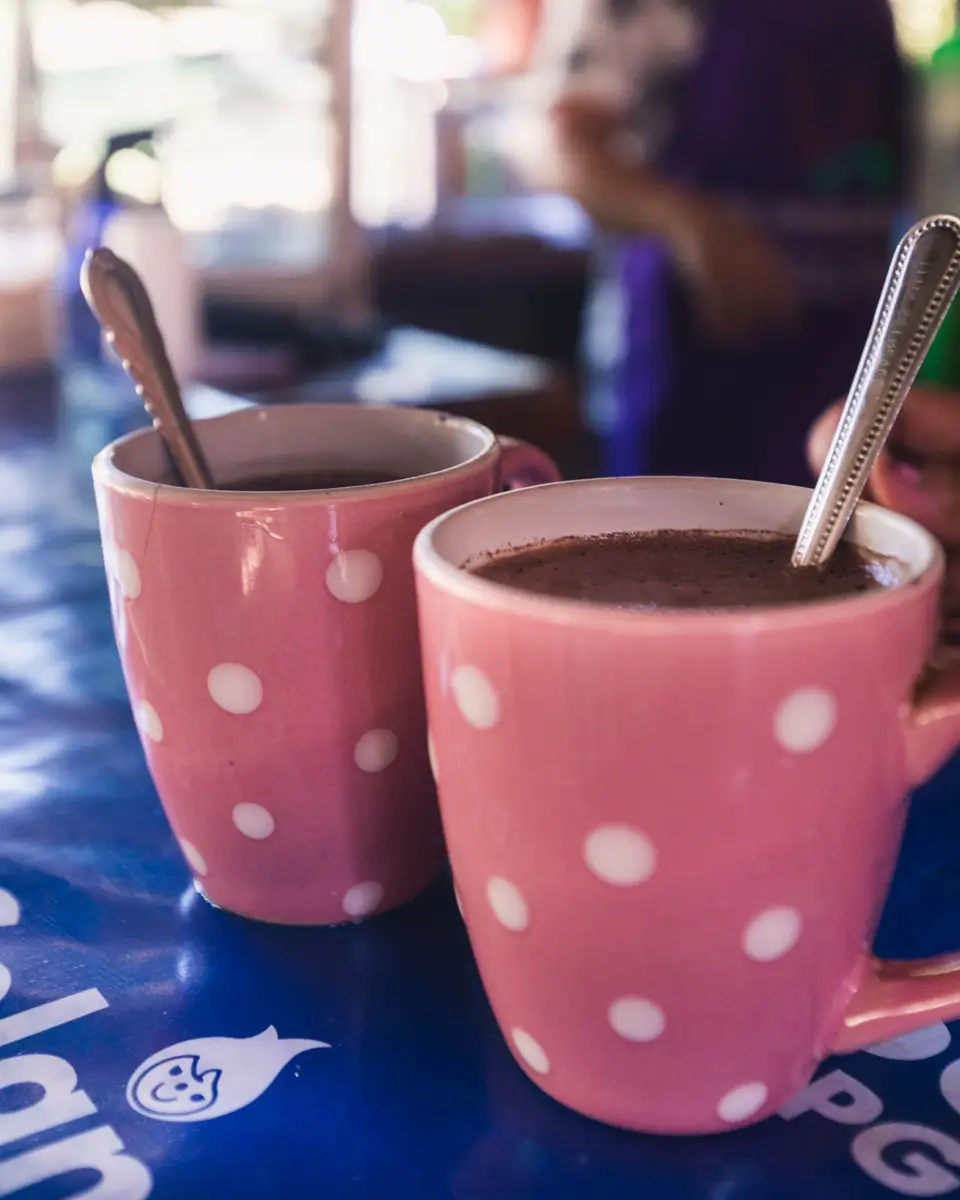
Sikwate is the Cebuano and Boholano version of traditional Filipino hot chocolate, made by whisking tablea pure cacao tablets with hot water in a batirol until it thickens into a dark, slightly gritty drink with no milk and no added sugar unless you stir it in yourself. It’s one of the oldest cacao traditions in the country, brought by the Spanish galleon trade and maintained by smallholder farmers who still ferment, dry, and grind the beans by hand. Bohol produces some of the best tablea in the Visayas, so it’s worth trying sikwate here while it’s fresh and intensely aromatic.
Daday’s Sikwatehan in Jagna is my favourite to do that, a simple roadside stop where the drink is whisked to order and served with local kakanin like puto and suman. It feels intensely Filipino in the best way, with a lively community atmosphere that has all the warmth of a great café without any of the pretension.
39. South Farm
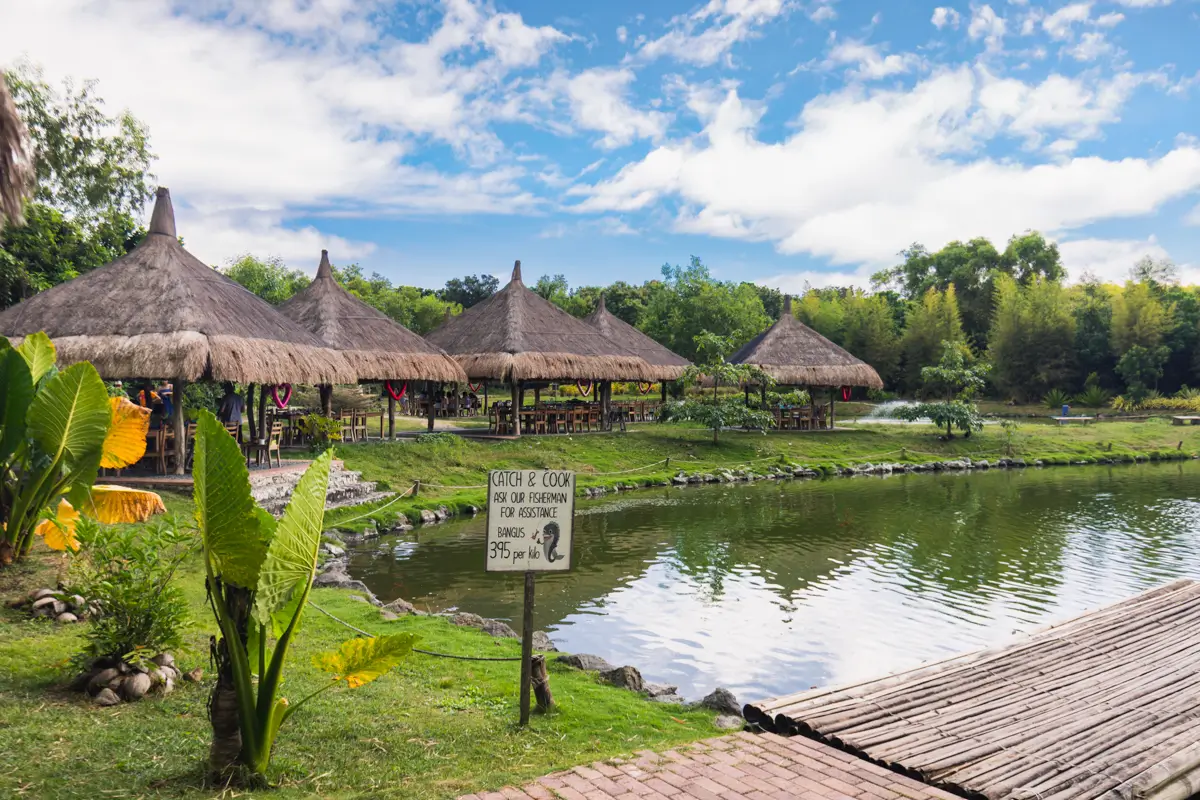
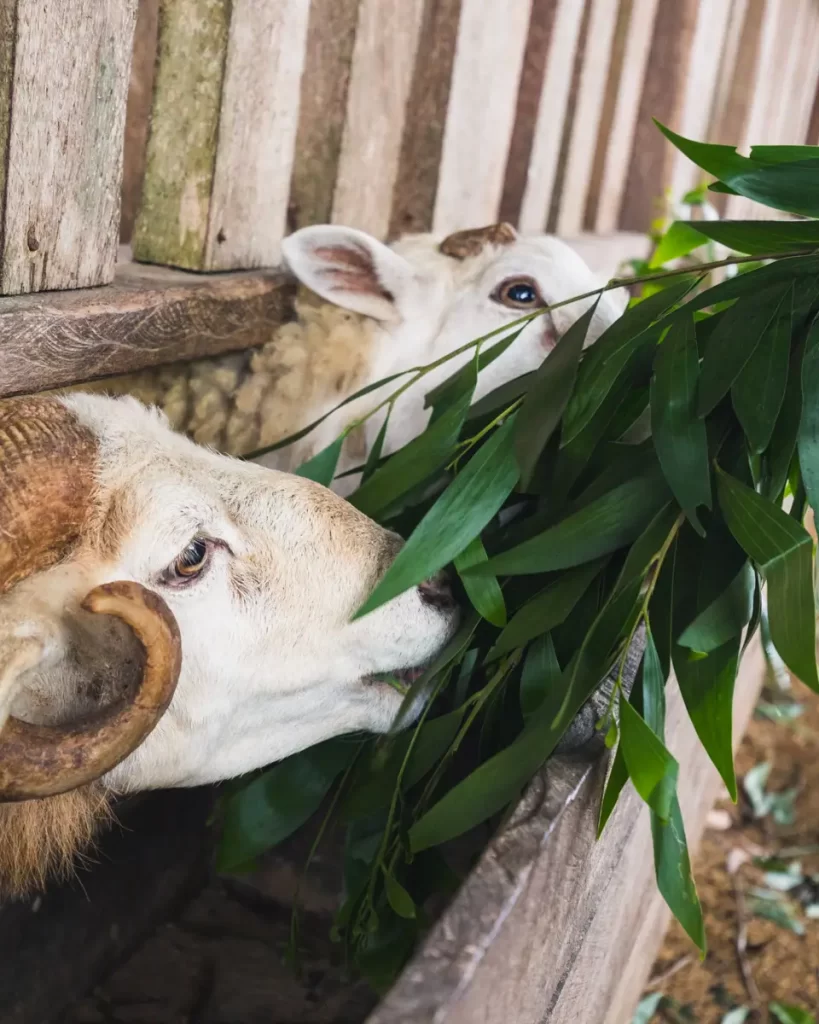
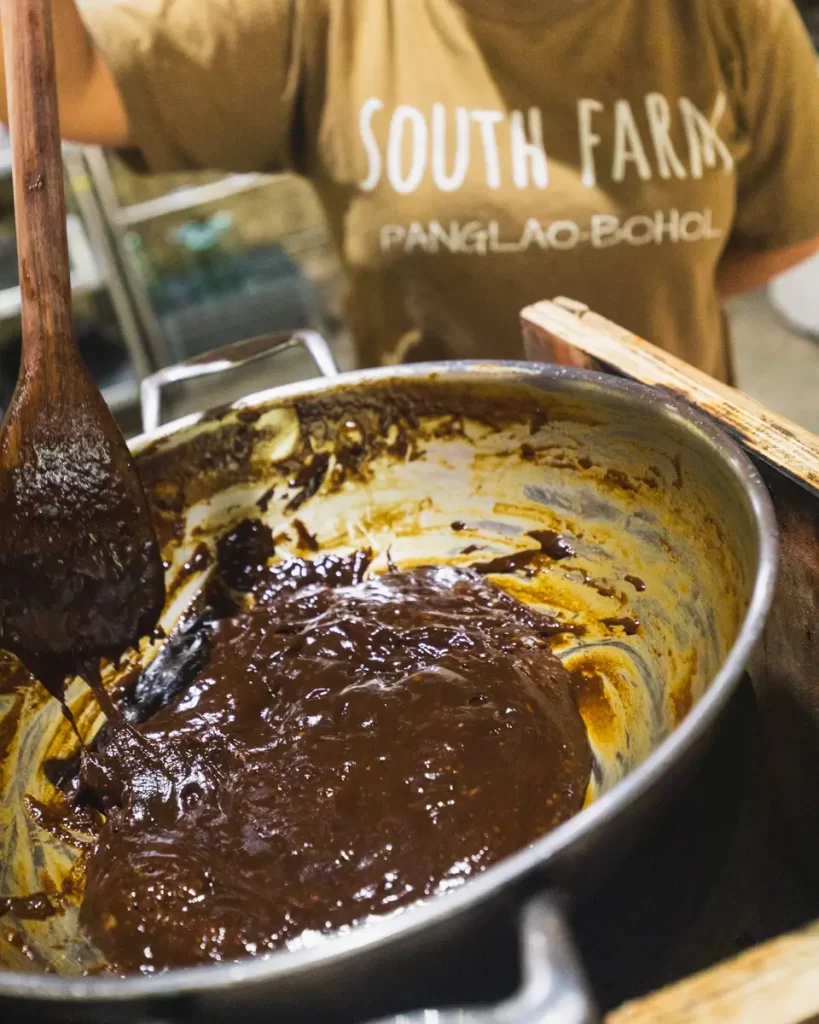
South Farm in Panglao is a nine hectare agri-tourism property developed as the production hub for nearby Oceanica Resort Panglao and North Zen Villas, supplying vegetables, herbs, and other ingredients grown on site. It’s also open to the public as a family-friendly agritourism destination, with landscaped gardens, planted fields, and walking paths alongside a petting zoo, tilapia fishing, pottery workshop, and restaurant. The site also hosts kid-friendly craft and food workshops, so check the schedule.
40. Alupe
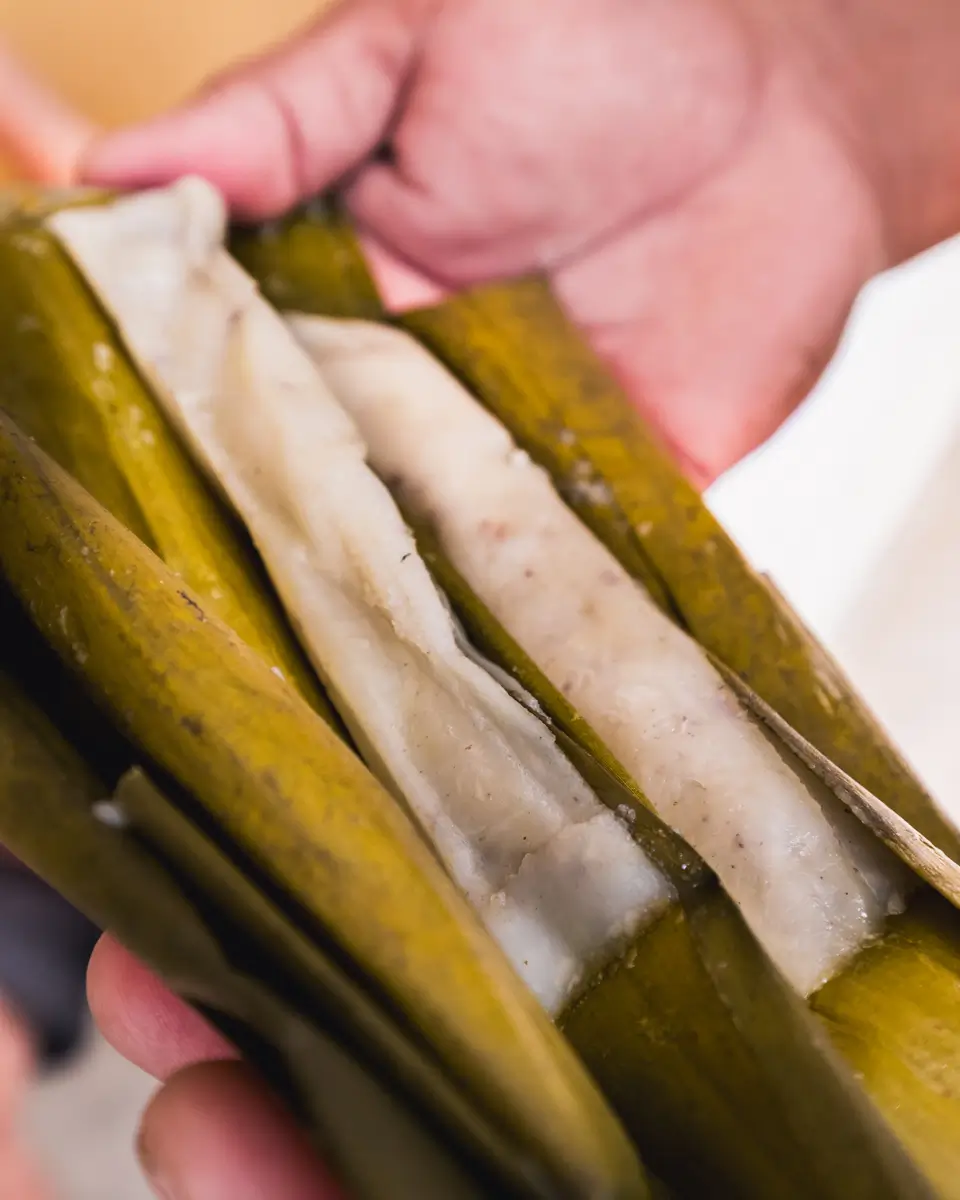
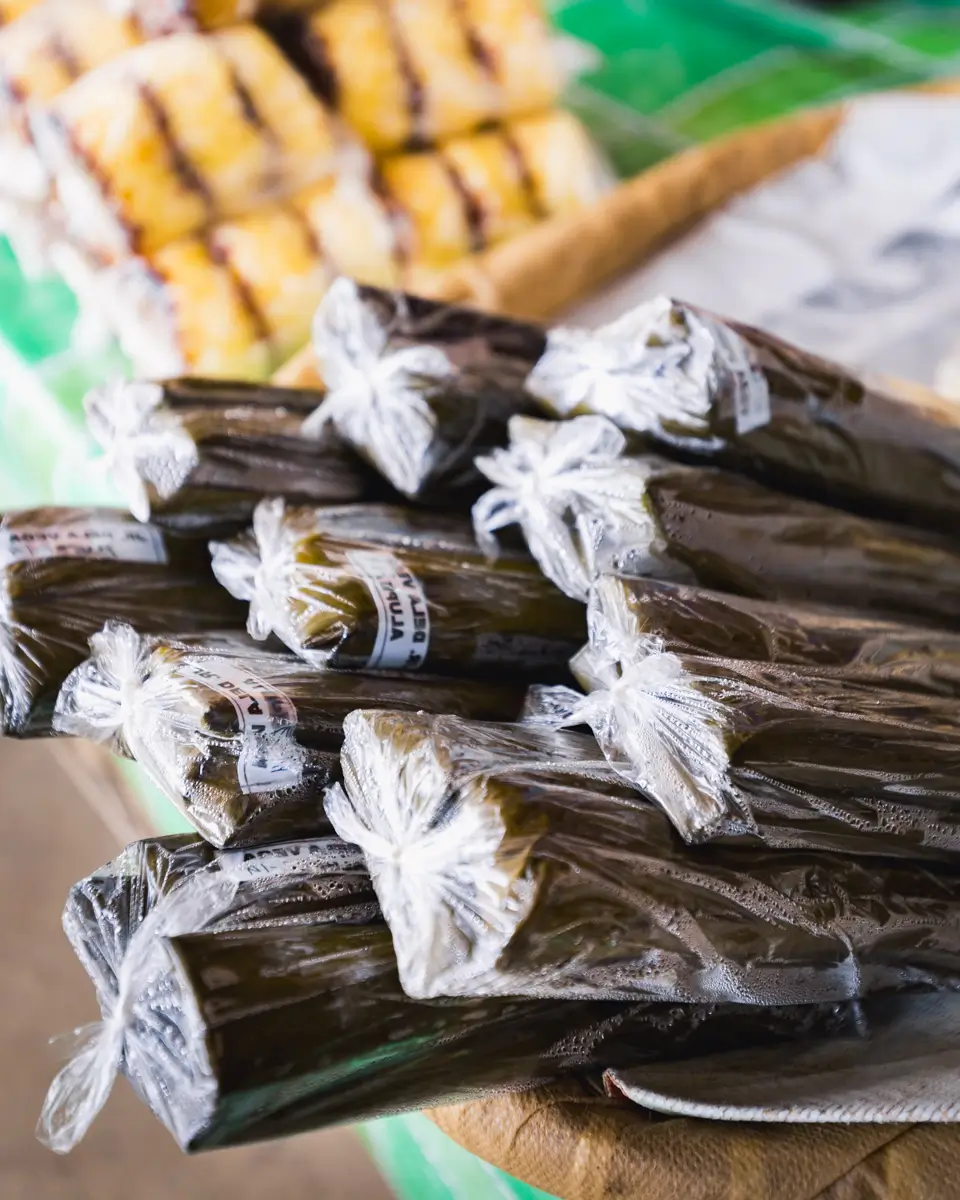
Public markets in Bohol are ideal for tasting kakanin, a broad category of Filipino rice and root-crop snacks with origins in precolonial cooking, when glutinous rice, coconut milk, and native tubers like cassava were steamed or wrapped in leaves for travel and ritual use. In the Visayas, kakanin tends to lean on cassava and coconut because both grow easily in coastal and upland areas, so stalls across the island put out trays of biko, suman, puto, and cassava sweets. A local favourite is alupe, a cassava cake made from grated cassava mixed with coconut and sugar, wrapped in banana leaf, and cooked until firm and slightly sticky. Pilar Public Market is one of the most reliable places to find it, but it’s worth visiting any public market to try the local kakanin.
41. Cambuhat Oyster Farm
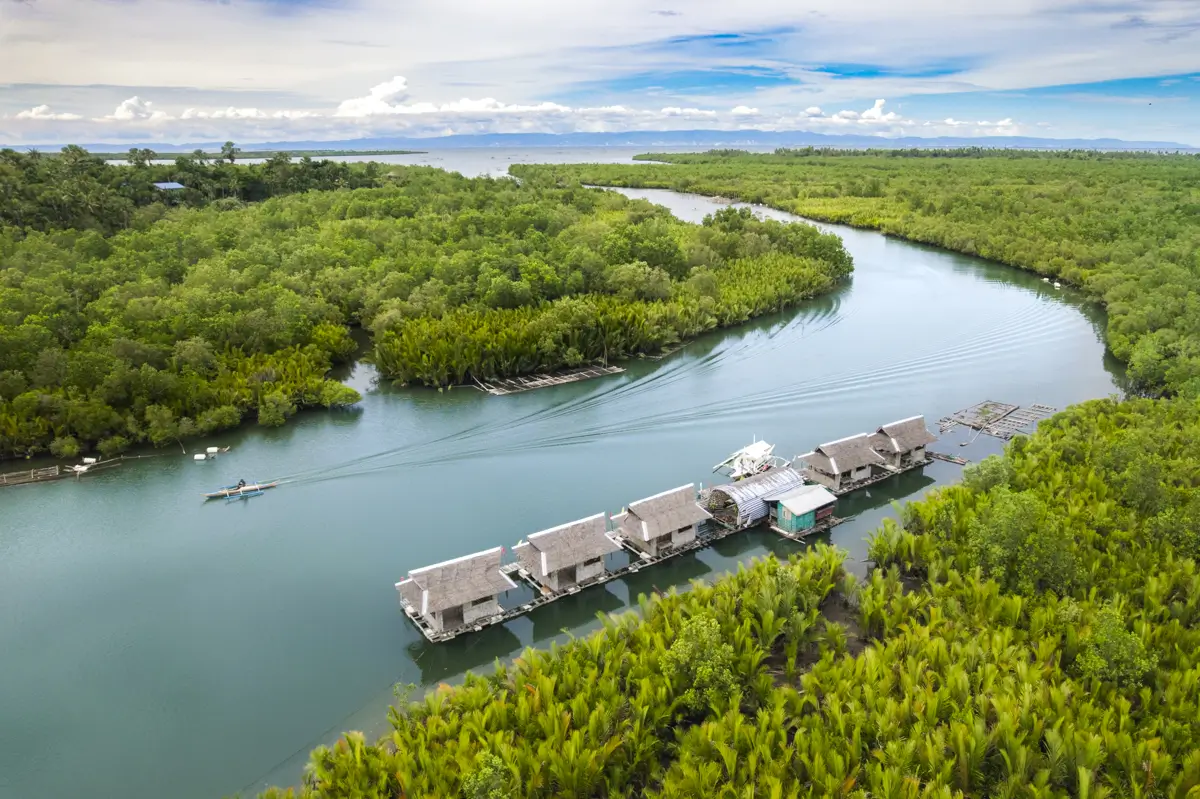
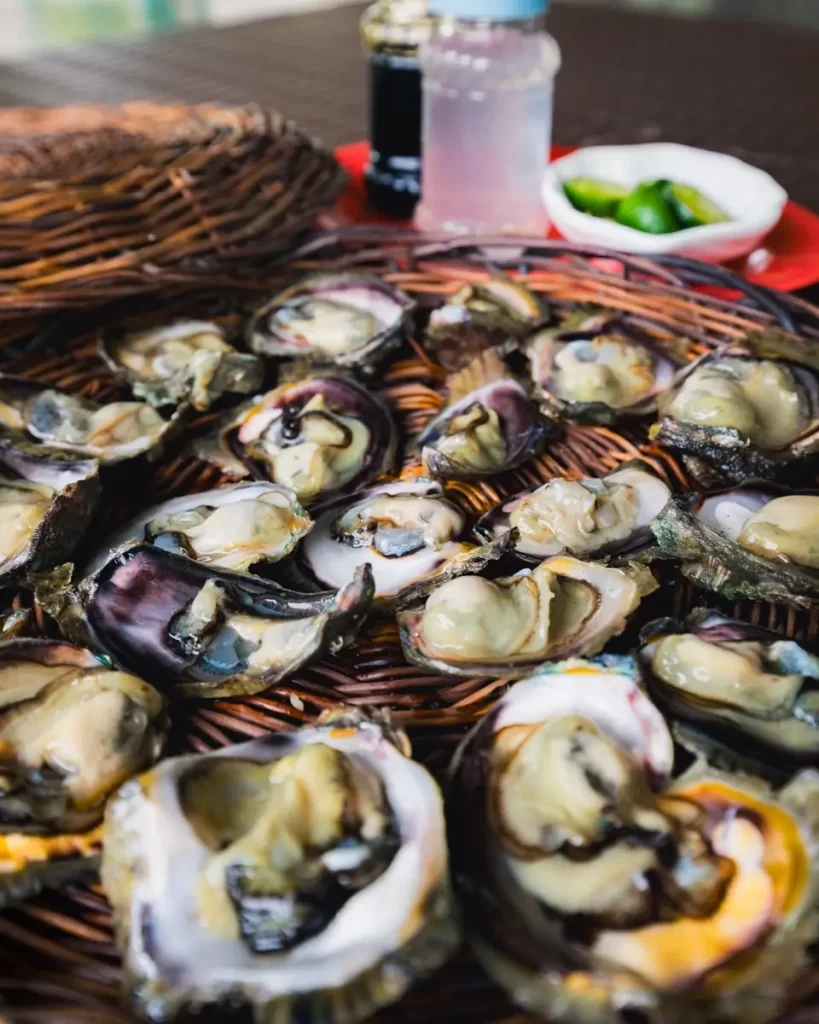
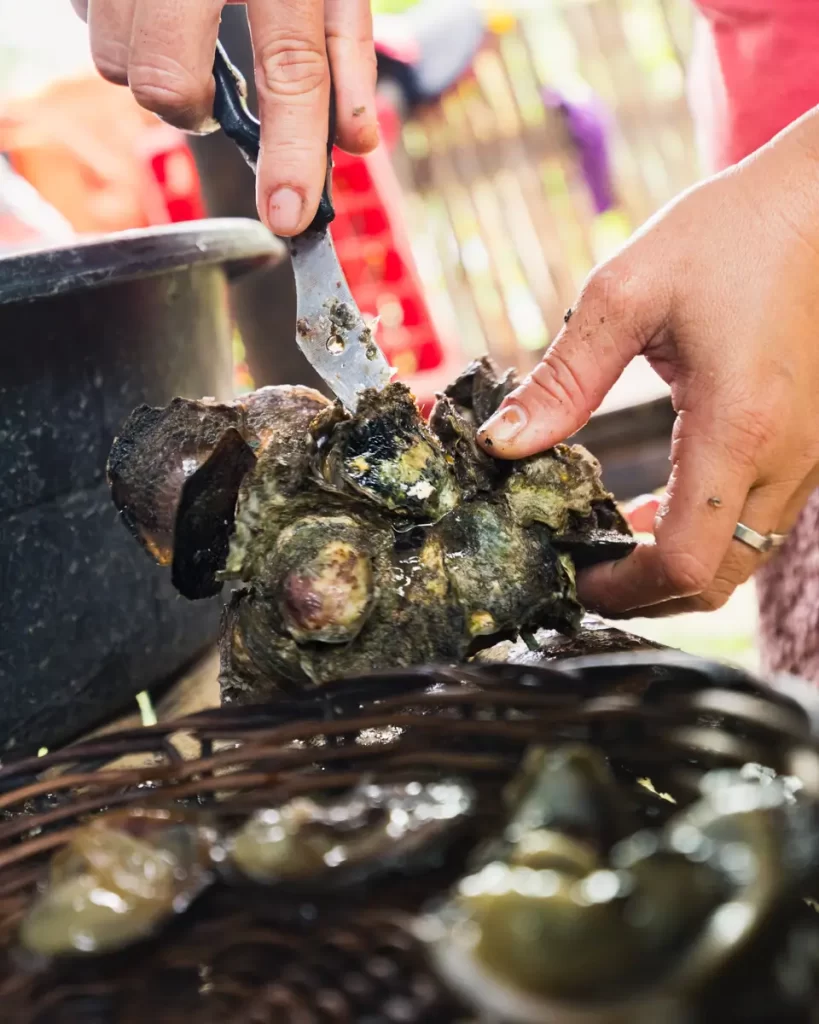
Ask my what my favourite thing to do in Bohol is and this will be your answer. Cambuhat Oyster Farm in Buenavista is a community-run aquaculture project where locals farm oysters in the Cambuhat River. Buy farm-fresh shucked oysters by the basket or the bucket, (yes, the bucket!) and watch as they’re pulled out of the water fresh for you. If you want to do more than eat, it’s also possible to ride a paddle boat through the quiet mangrove channel to reach the farm’s bamboo platforms, where you can see the oysters seeded on ropes. These were the best and the most affordable oysters I’ve had in my life. Don’t miss it.
42. National Museum of the Philippines
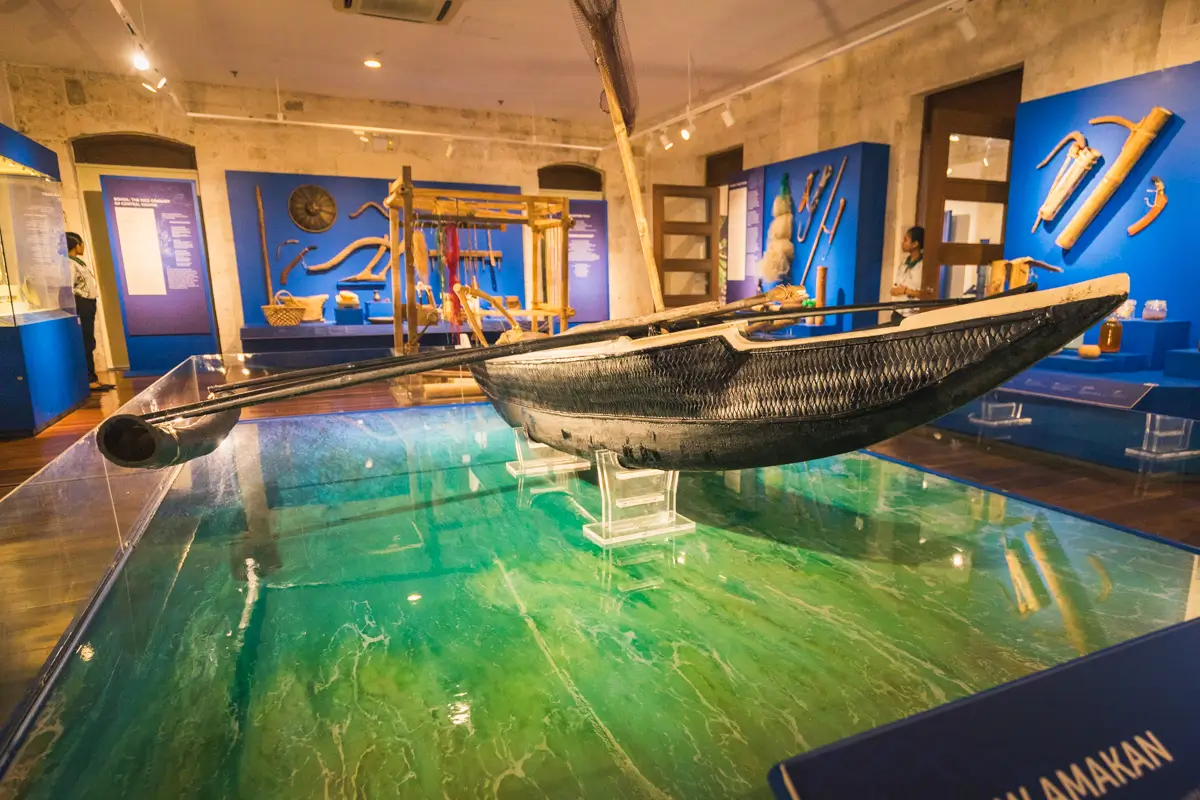
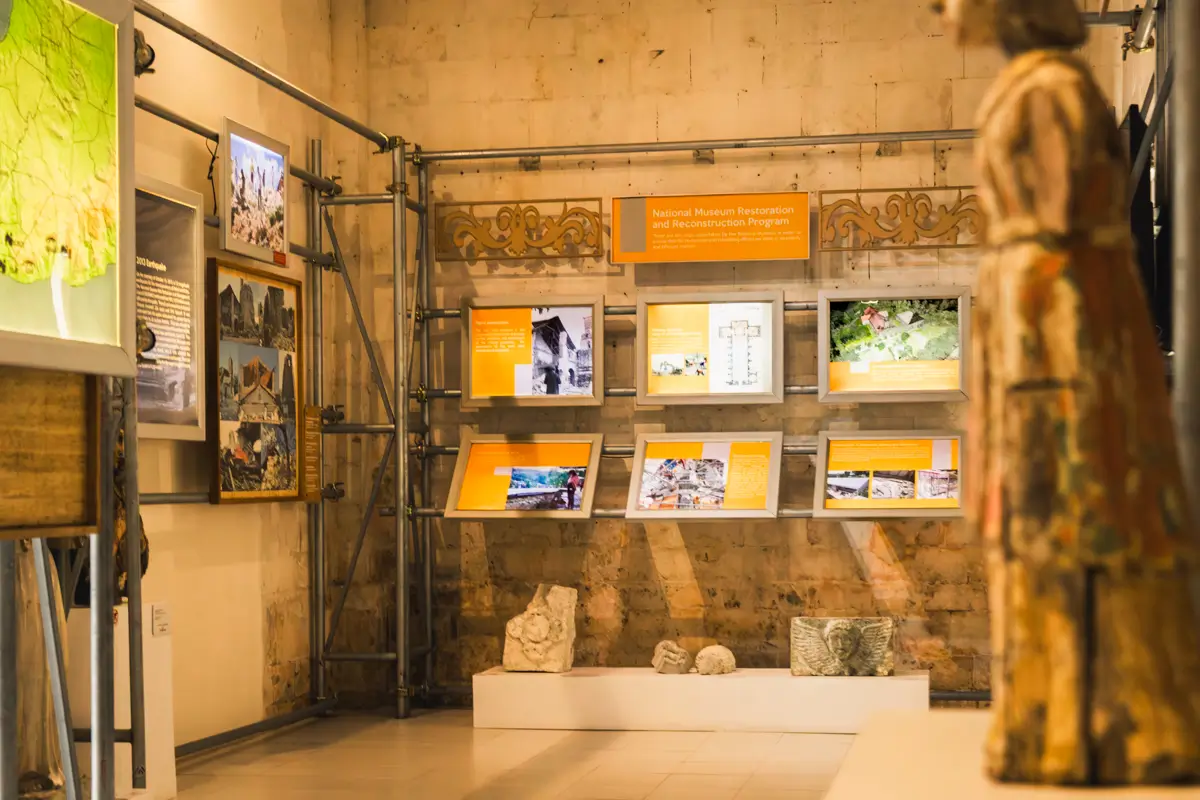
National Museum of the Philippines Bohol, right in central Tagbilaran beside the cathedral, occupies the restored former Provincial Capitol, an 1860s coral-stone building that once served as tribunal and military quarters. Exhivits cover a mix of archaeology, natural history, and local cultural exhibits, including a permanent gallery on National Artist Napoleon Abueva and a section documenting restoration work after the 2013 earthquake that damaged many of Bohol’s heritage churches. I was especially impressed by the “Paglawig (Journey): The Boholano Way of Life.” exhibition, which featured Boholano boat-building, fishing, farming, metalsmithing and jewelry making, basket and raffia weaving, and the production of asin tibuok. The Natural History Gallery felt weaker in comparison, mostly a line-up of labelled plants and rocks without much context, but the cultural galleries make the visit worthwhile. As with the other National Museum branches in Manila, Cebu, and Dumaguete, entrance is free.
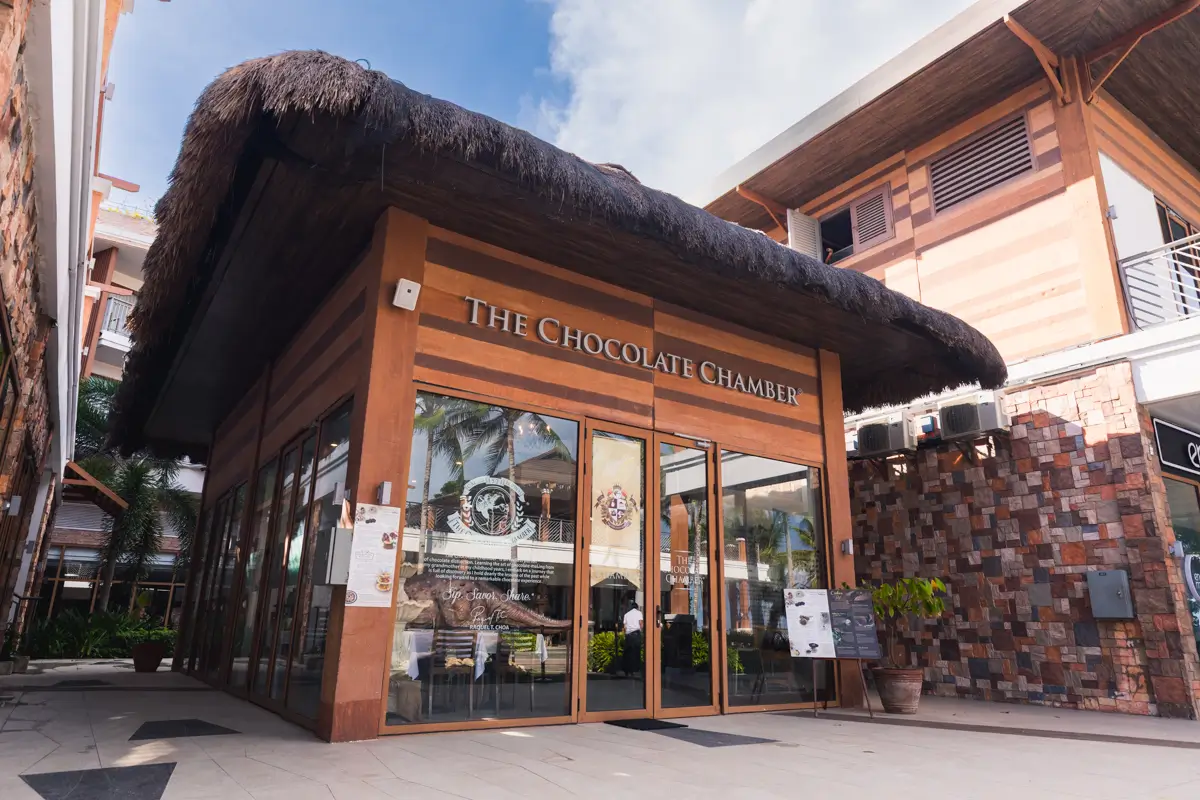
43. The Chocolate Chamber
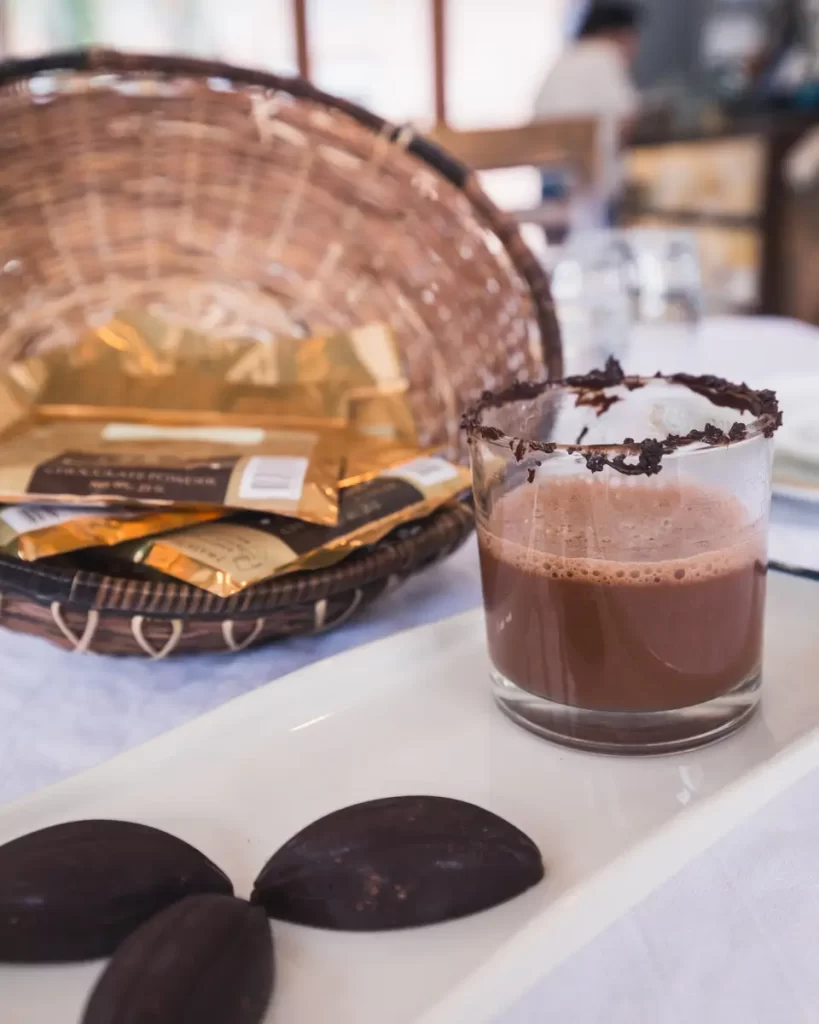
If you’re only familiar with hot chocolate as the sweet, milky stuff that comes from a packet, then the sikwate (aka tsokolate) at The Chocolate Chamber might be a bit of a surprise. Cacao came here in the 1600s on the galleon trade from Mexico, and while Spain brought the beans, it didn’t bring the sugar-and-cream version Europeans were sipping by then. Filipinos made something much closer to what the Maya and Aztecs were drinking—roasted cacao pounded into paste, formed into discs, and whisked into hot water with a batirol.
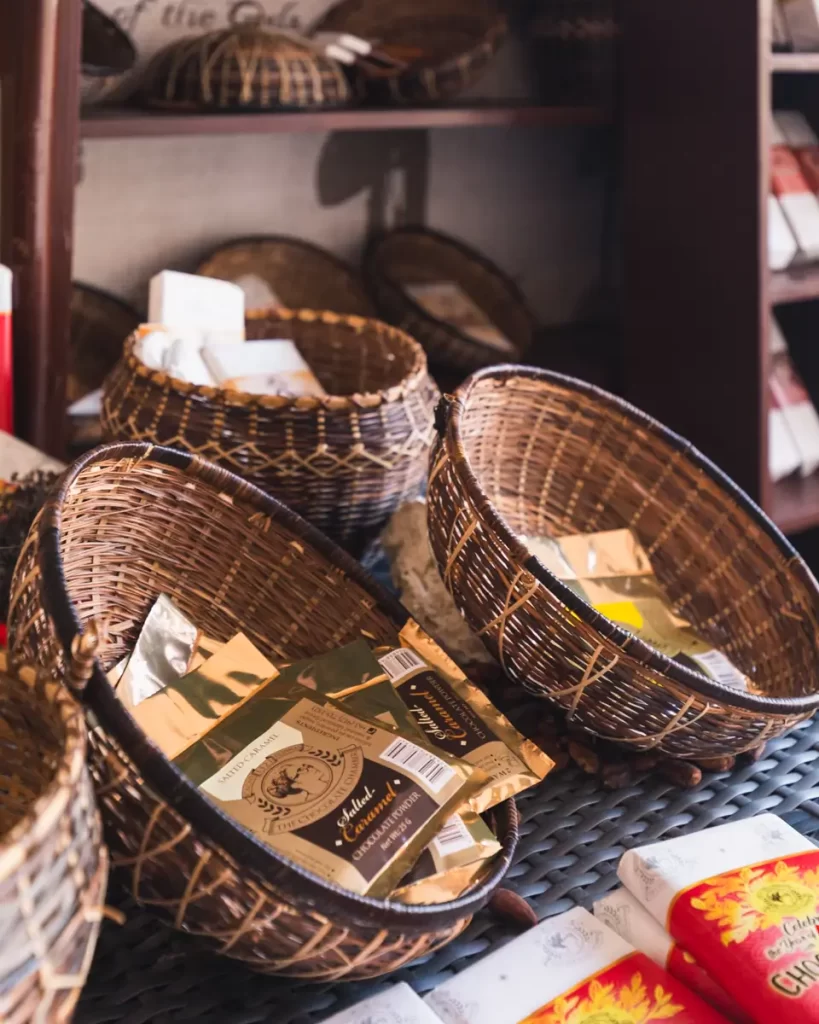
Sadly the tradition is dying out, especially in the cities. The Chocolate Chamber is trying to change that. Come here for their delicious sikwate as well as a variety of other decadent chocolate treats to nibble on while you sip.
The Chocolate Chamber’s founder learned the process of making sikwate from her grandmother in Balamban, and I love that the tradition is being passed on. I’m a big fan of the products but unfortunately the small cafe, much like their branch in Cebu, doesn’t quite get full marks from me. Next to my table was a dirty-looking chocolate fountain that had been turned off and was full of stagnant brown liquid. My half-filled glass of sikwate was supposed to have a chocolate rim, which I guess technically it did but… just look at the picture of how it arrived. In general it just kind of felt like the woman working at the time didn’t really care, and that also was reflected in the uninterested customer service. Maybe it was a one-off. If you’re staying on Panglao and interested in trying the local sikwate it’s still worth a try, but my preference would be for the more local experience at Daday’s Sikwatehan.
44. Cabagnow Cave Pool
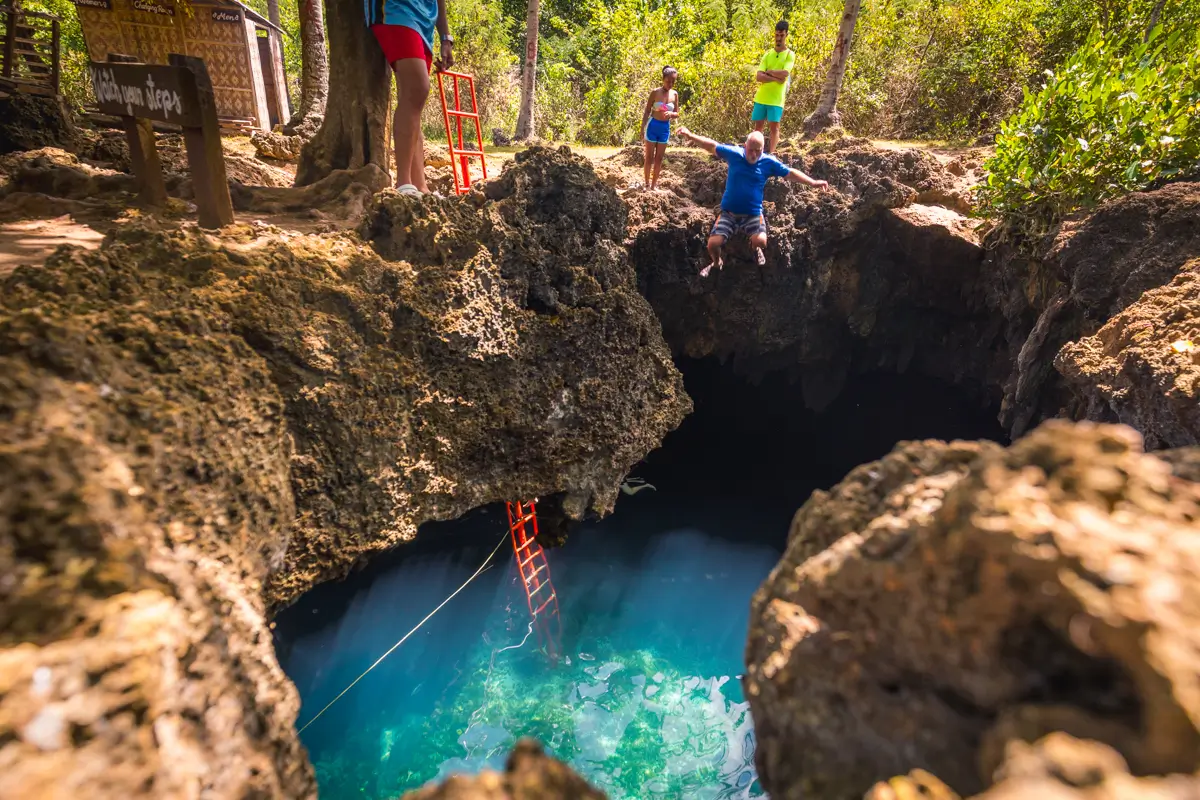
One of the perks of staying in Anda is easy acces to Anda’s cave pools, a network of freshwater sinkholes scattered through the town’s limestone interior, formed where underground rivers have carved out chambers that eventually collapsed at the surface. All of them draw from the same aquifer that runs beneath Anda, so the water stays cold and clear even in the hottest months. Most sit a few minutes off the main coastal road and are easy to reach by tricycle or motorbike. Visitors typically hop between two or three in an afternoon, but I prefer getting there early before they get too busy.
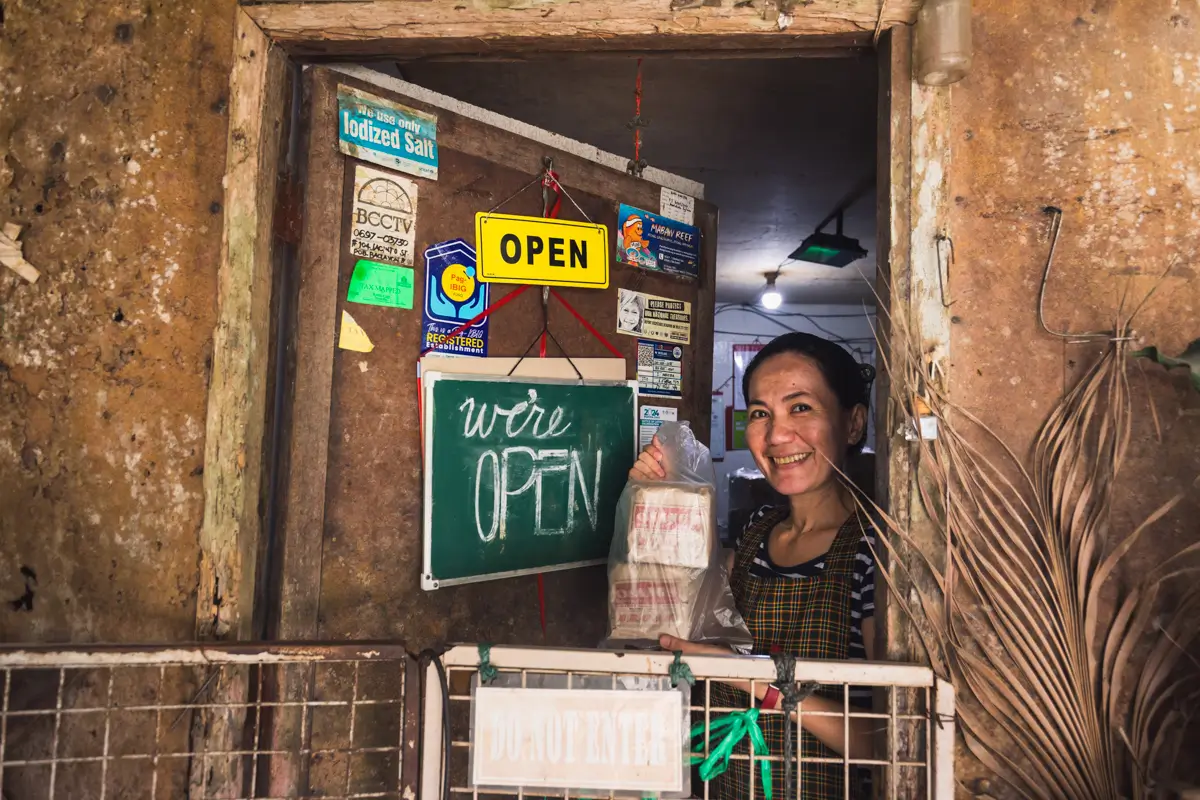
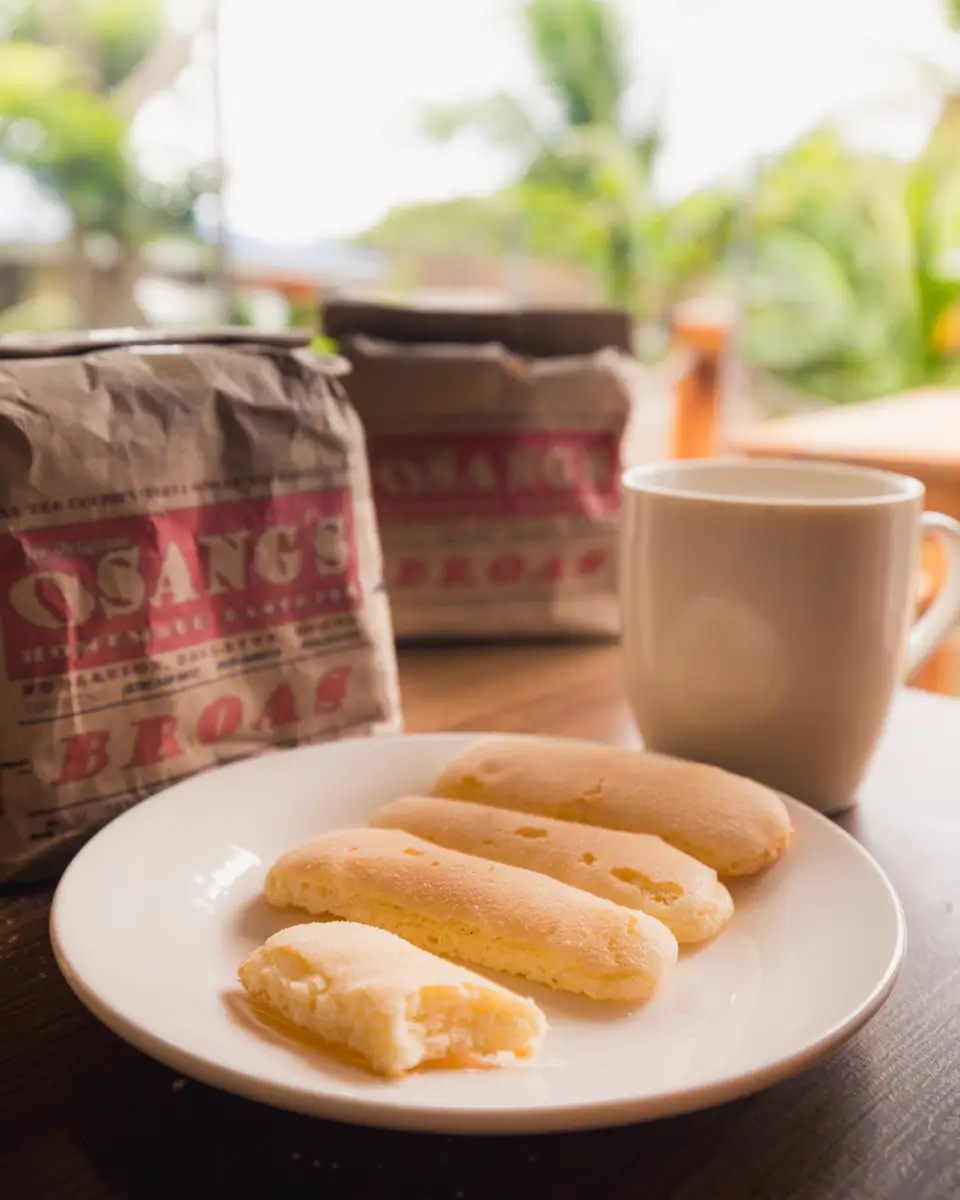
45. Broas from ‘D Original Osang’s Homemade Bakeshop
Broas from D Original Osang’s Homemade Bakeshop in Baclayon are one of Bohol’s most recognisable traditional snacks, a type of Filipino ladyfinger that’s lighter and crisper than the European version. They’re long, thin biscuits made from egg whites, sugar, and flour, baked until they turn pale gold and almost hollow inside. Osang’s has been making them for decades in an old ancestral house near Baclayon Church, and the bakery still uses a pugon wood-fired oven. Locals treat broas as a merienda staple, usually dipped into sikwate or coffee so they soften without falling apart.
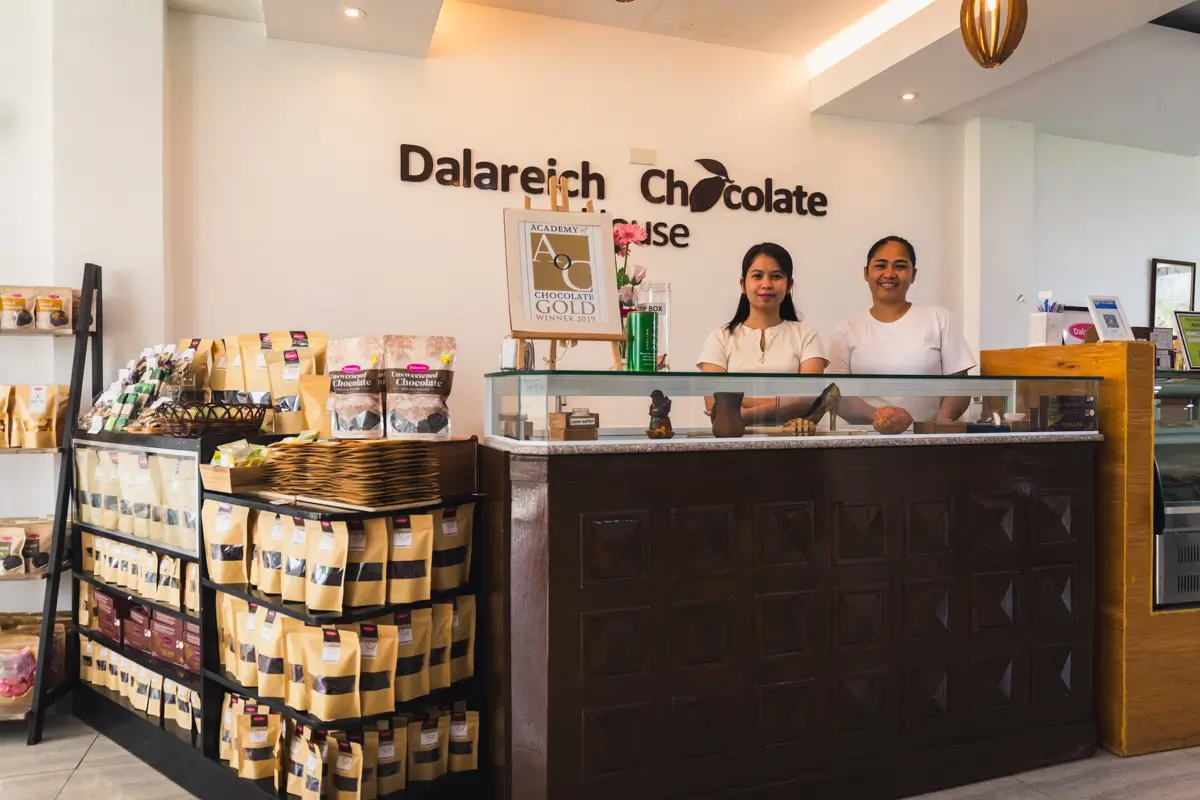
46. Dalareich Chocolate House
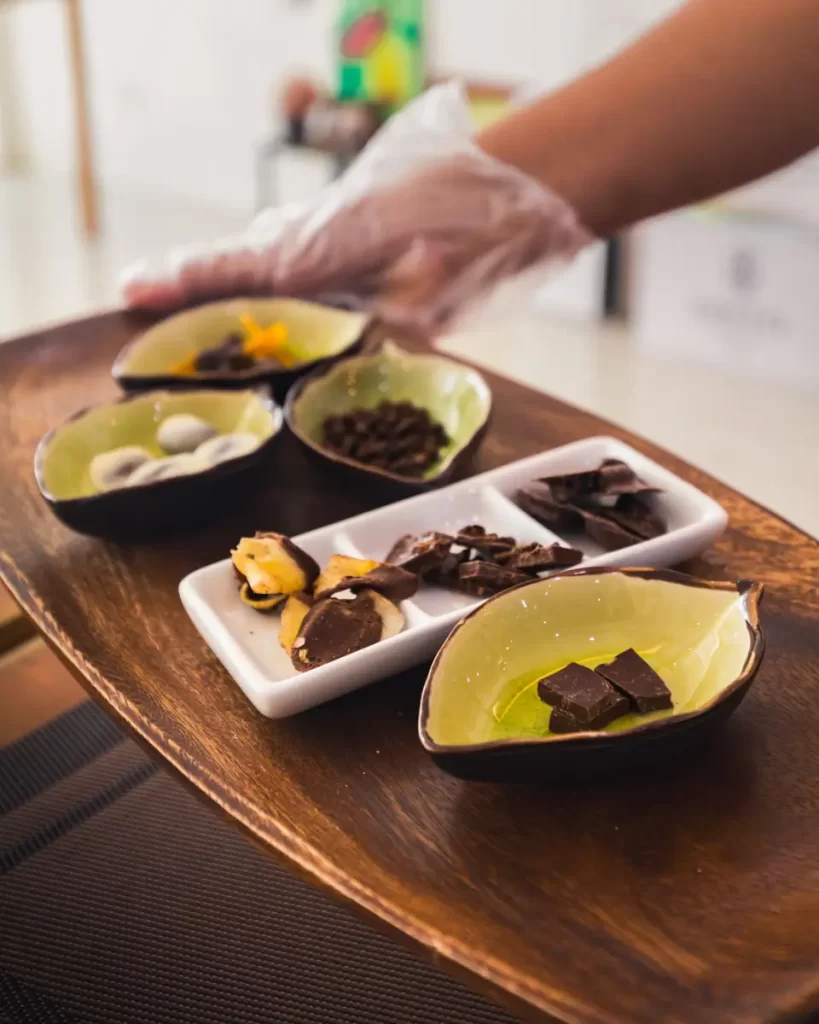
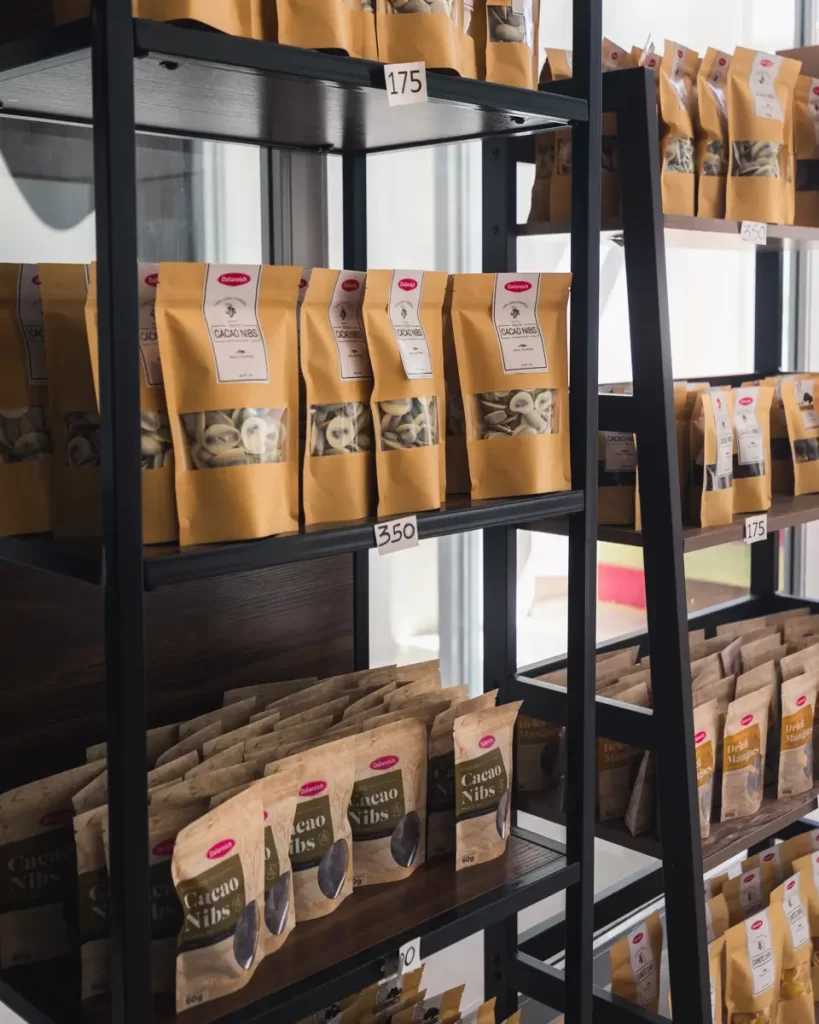
Dalareich Chocolate House in Tagbilaran, run by the Dalareich family, who began making tablea in their home in the 90’s, is one of my absolute favourite places to try chocolate in Bohol. The current shop and micro-factory opened in 2017 and remains under-the-radar. Just show up to the inconspicuous building and ring the bell, and someone will bring you up to the second-story shop. Shelves carry unsweetened tablea, dark-chocolate bars, cacao nibs, and chocolate-covered mango and pineapple made with beans sourced from Boholano farmers, many of whom the family works with directly to improve fermentation and revive older cacao plantings. The staff here were incredibly friendly, and the visit came with a free sample of many of their offerings. (A savvy move because once you try a few there’s no way you’re not buying a couple bags.)
47. Pangas Falls
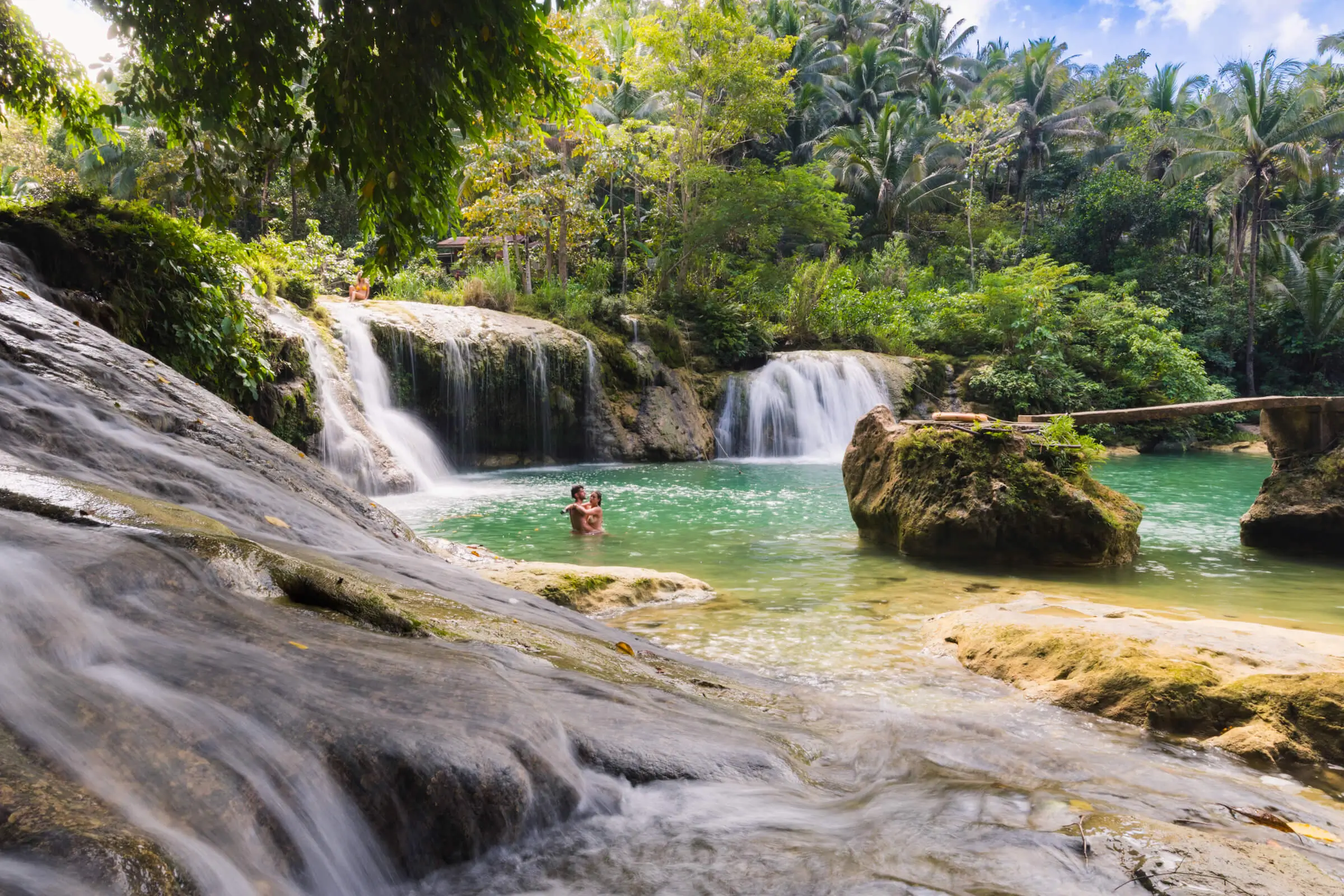
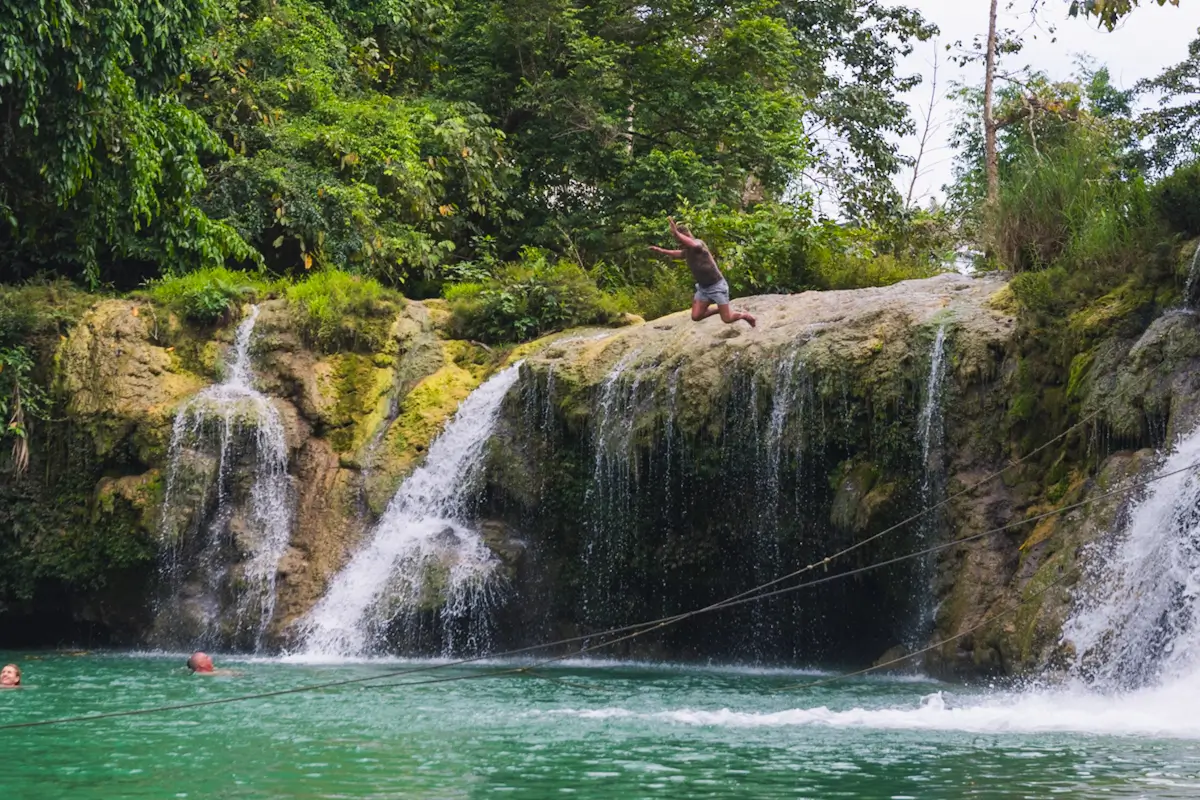
Pangas Falls in Batuan is one of Bohol’s quieter waterfalls, and while it’s not as impressive as Can-Umantad or Camugao, it’s nonetheless a great place to beat the heat. It features a nice cliff jump and a wide river where it’s possible to swim and spot fish, plus it’s located near the Chocolate Hills in the center of the province.
48. Loay Blacksmiths
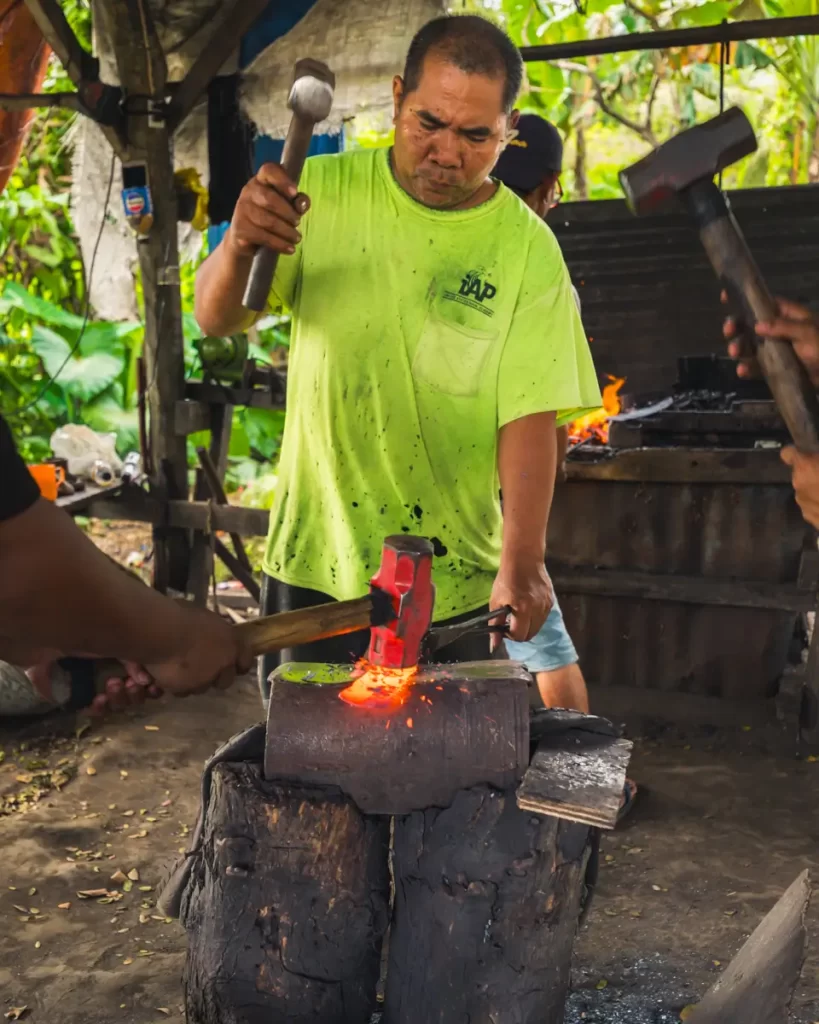
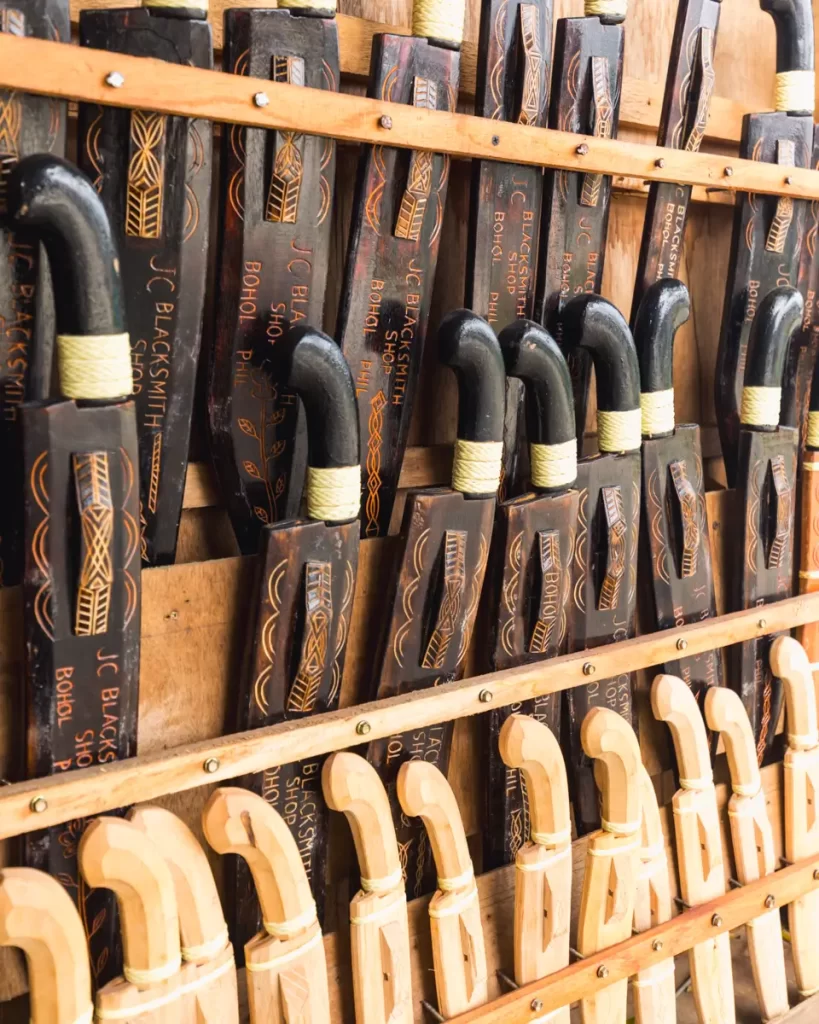
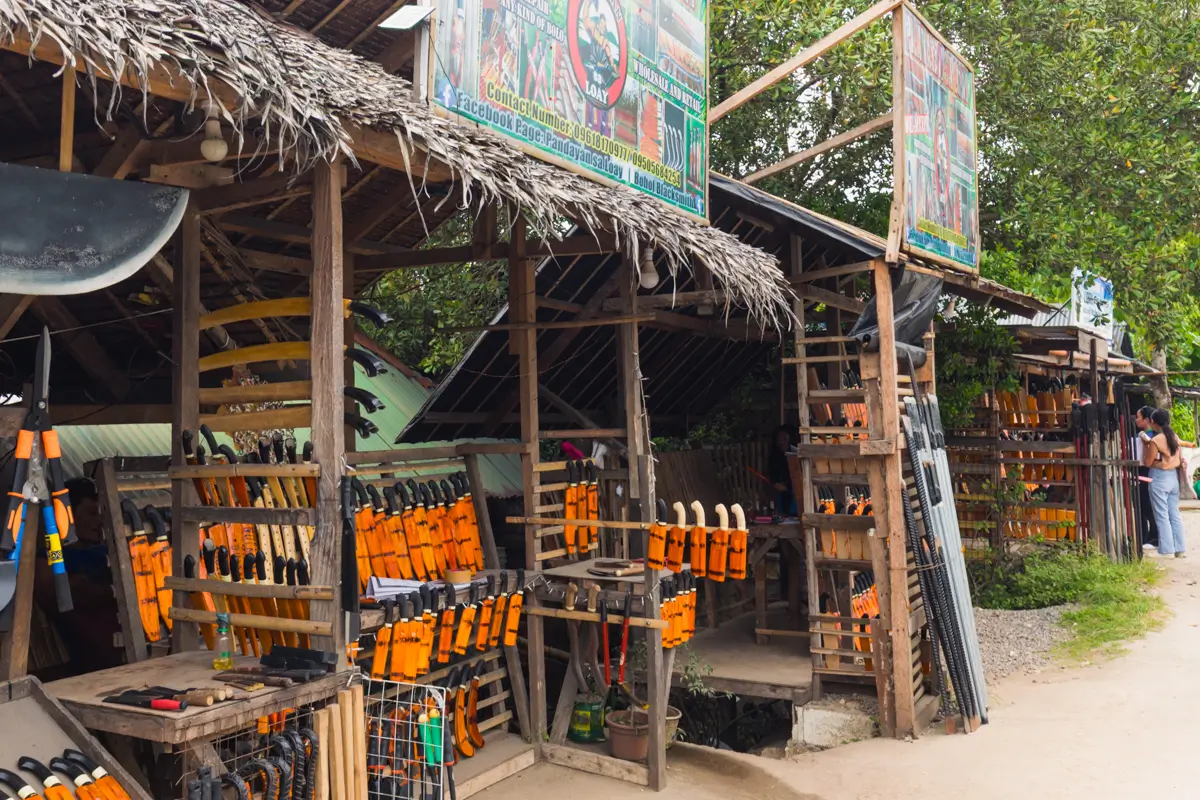
Loay has been known for blacksmithing for generations, with artisans in Barangay Katipunan producing blades, bolos, and farm tools using the same charcoal forges and hammer-and-anvil methods their parents and grandparents used. The craft ties back to the town’s metalworking tradition in the Spanish period, when smiths supplied tools and weapons to surrounding communities. Today the workshops sit right along the highway, and you can stop to watch smiths heat, shape, and temper steel in open-sided sheds while sparks scatter across the floor. Finished pieces hang from the walls or sit stacked in bins, from heavy-duty bolos to smaller utility knives used across rural Bohol.