
Moalboal on Cebu’s southwest coast is the backpacker heart of southern Cebu, known for its sardine run, coral reefs, and easygoing beach nightlife.
Moalboal sits about three hours from Cebu City and has rapidly grown from small fishing town to Cebu’s most popular tourist destination. The tourist area, Panagsama Beach, is its own world – built up with hostels, bars, and tourist cafes serving pancakes and smoothie bowls. It’s separate from the actual townsite of Moalboal a few kilometres away, which most tourists forget even exists. (For all intents and purposes, whenever someone refers to Moalboal, they’re referring to Panagsama). Despite the development, Panagsama is compact and easy to get around, with nearly everything reachable by tricycle or motorbike if not simply on foot.
Spanish records mention settlements in this area as early as the 1600s, when coastal villages here traded with neighbouring islands and supplied dried fish and sea products. Like much of southern Cebu, Moalboal remained mostly agricultural and fishing-focused until scuba diving brought new attention in the 1980s. The sardine run – an immense, year-round school of fish just offshore – turned it into a mainstay on the Visayas dive circuit, drawing visitors from Dumaguete, Bohol, and beyond. Since then, its location has made it the most convenient hub for visiting waterfalls, caves, and mountain trails across southern Cebu.
From Moalboal, travellers can rent a scooter and reach Kawasan Falls in less than an hour, continue further south to Osmeña Peak or Dao Falls, or follow the coastal road all the way to to Santander and Oslob. Boats run daily from Moalboal to Pescador Island for reef diving, and snorkelers can watch sea turtles and sardines just metres from the shore. While Panagsama itself can feel overrun, its central location makes it the best base for seeing the rest of southern Cebu without needing to change hotels every night.
In this guide, I’ve detailed all the best things to do in Moalboal and Southern Cebu. If I’ve missed something (and I probably have), feel free to let me know.
When is the Best Time to Visit Moalboal?
Like the rest of Cebu, Moalboal is affected by somewhat distinct dry and wet seasons, though not as pronounced as the rest of the country, so there’s some flexibility as far as when you can visit. It might be more accurate to think of them as drier and wetter seasons. That said, the months from November to April are the most dry, making them the best time to enjoy the beaches without worrying about rain.
Even during the wetter months, the rain is typically short and happens later in the day, so usually doesn’t do too much to disrupt plans. Despite the less predictable weather, Cebu is less affected by typhoons compared to other areas in the Philippines, making it a relatively stable destination year-round.
How to get to Moalboal
Private Car or Van: Renting a private car or booking a van is the quickest and most comfortable way to reach Moalboal from Cebu City. The drive takes about 2.5 to 3 hours, following scenic coastal highways that offer glimpses of Cebu’s countryside and shoreline, with the added benefit of being able to stop and admire it. Private vehicles can be arranged online through rental services, or you can negotiate a price with nearly any taxi driver in Cebu City. Expect to pay up to 5000 PHP.
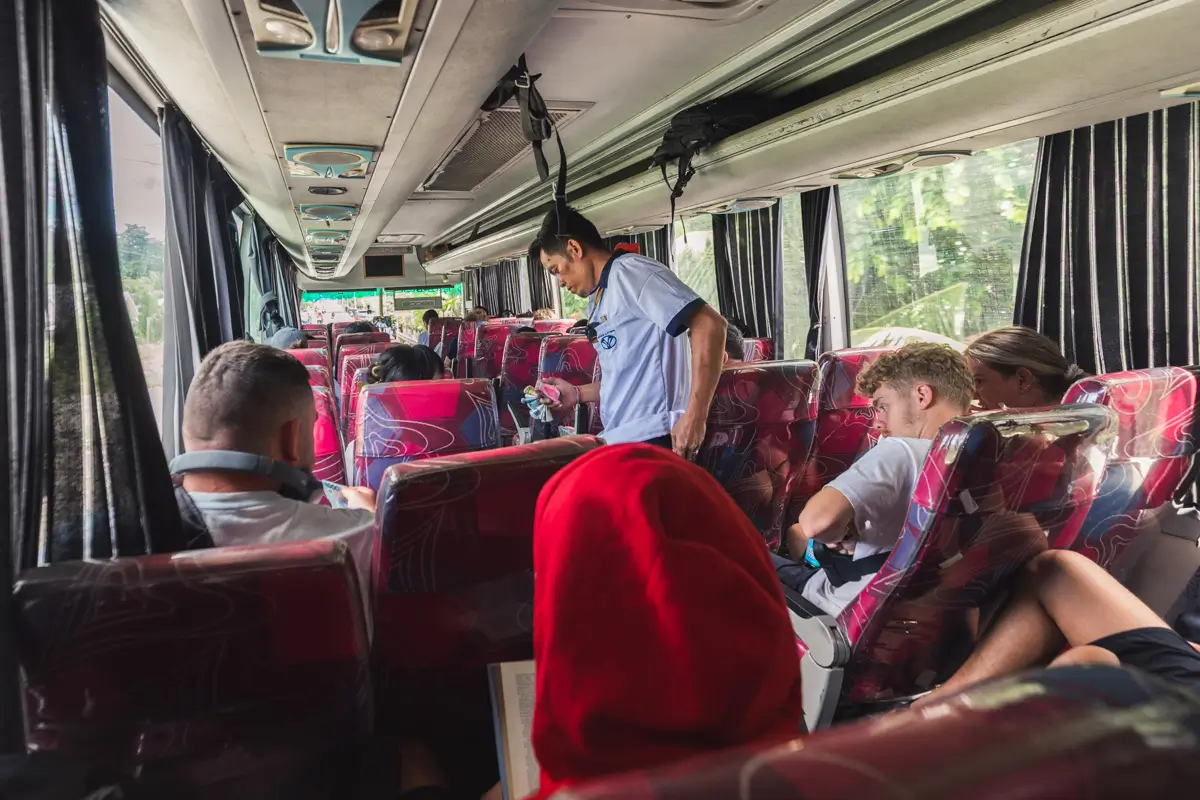
Buses: For budget-conscious travellers, public buses are an affordable and reliable way to reach Moalboal. Head to the Cebu South Bus Terminal early in the morning, where buses bound for Moalboal depart regularly. The Ceres Liner offers two options: air-conditioned buses or non-air-conditioned ones. The route is the same, taking approximately 3 to 4 hours, depending on traffic and stops, and are not that much different in price – around 200 PHP, so unless you’re in a hurry and want to just grab whichever bus shows up first, it’s worth waiting for an air-conditioned one. Once you reach Moalboal (wait to get off until the second bus stop in front of the Jollibee), local tricycles are available to take you to your accommodation.
How to get Around Moalboal (and Area)
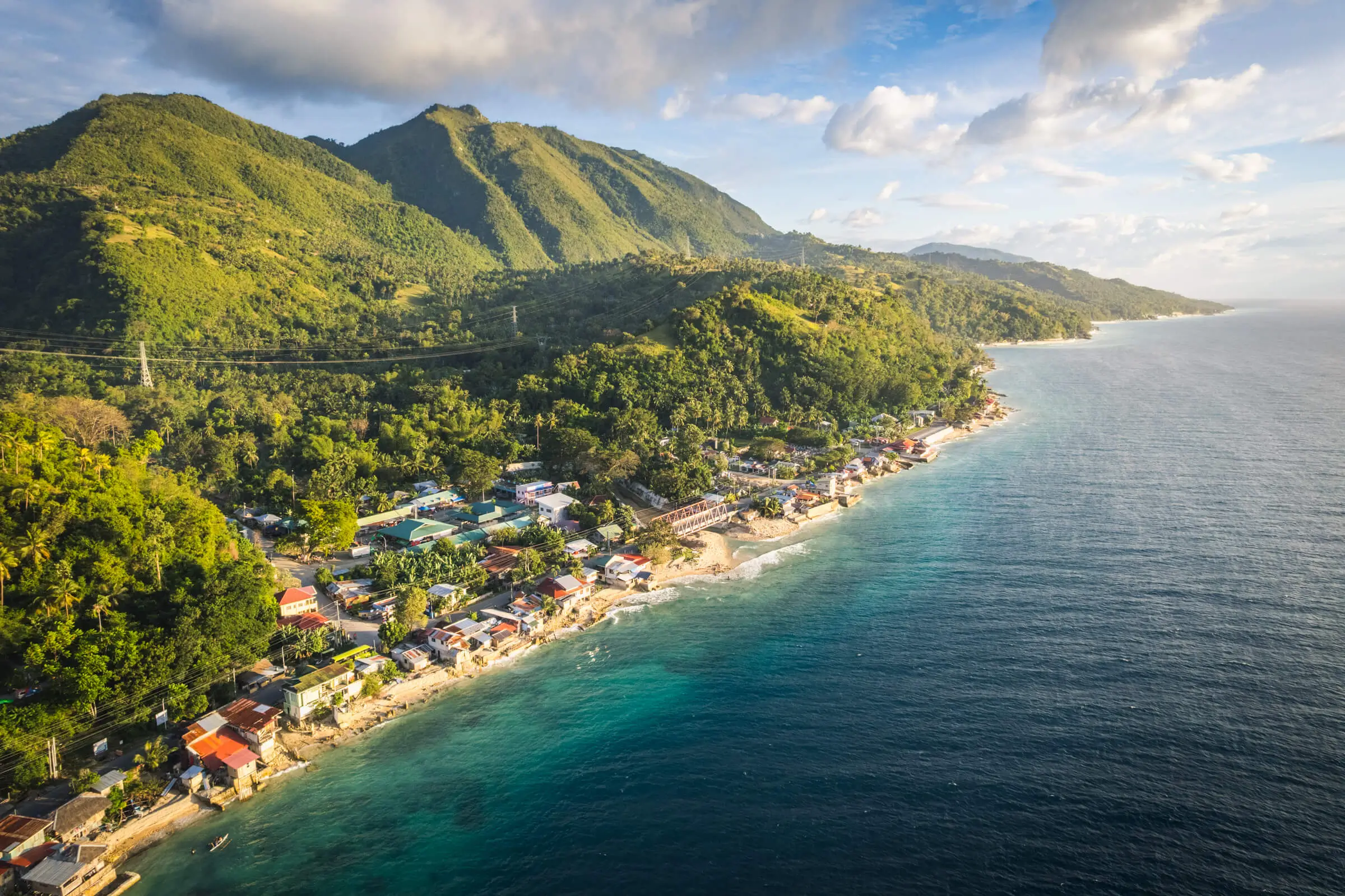
Within Moalboal – There’s no taxi or Grab service in Moalboal, so most visitors rely on tricycles to move between Panagsama, Moalboal town proper, and White Beach. They can be flagged down easily on the main road, and fares usually range from 20 to 50 pesos for short hops or up to 150 pesos for longer rides. There’s no set rate, so it’s worth confirming the price before you get in. If you plan to move around more freely or stay outside Panagsama, renting a scooter is the best option. Daily rentals cost around 500 pesos and can be organized through your accommodation 99% of the time.
Exploring Southern Cebu – To visit waterfalls, viewpoints, or beaches farther afield, you’ll need your own transportation. Scooter rentals are the most flexible option for day trips to Kawasan Falls, Lambug Beach, or Osmeña Peak, all within an hour or two’s ride. If you’re not comfortable driving, local drivers can be hired for half-day or full-day rates. It’s possible to find a driver on Facebook, book a car through your accommodation, or find someone in-person in town. Local buses also run along the main highway connecting Moalboal to Badian, Alegria, and Santander, but they don’t get you any closer to the waterfalls or beaches than the highway, so I wouldn’t recommend this option.
Where to Stay in Moalboal
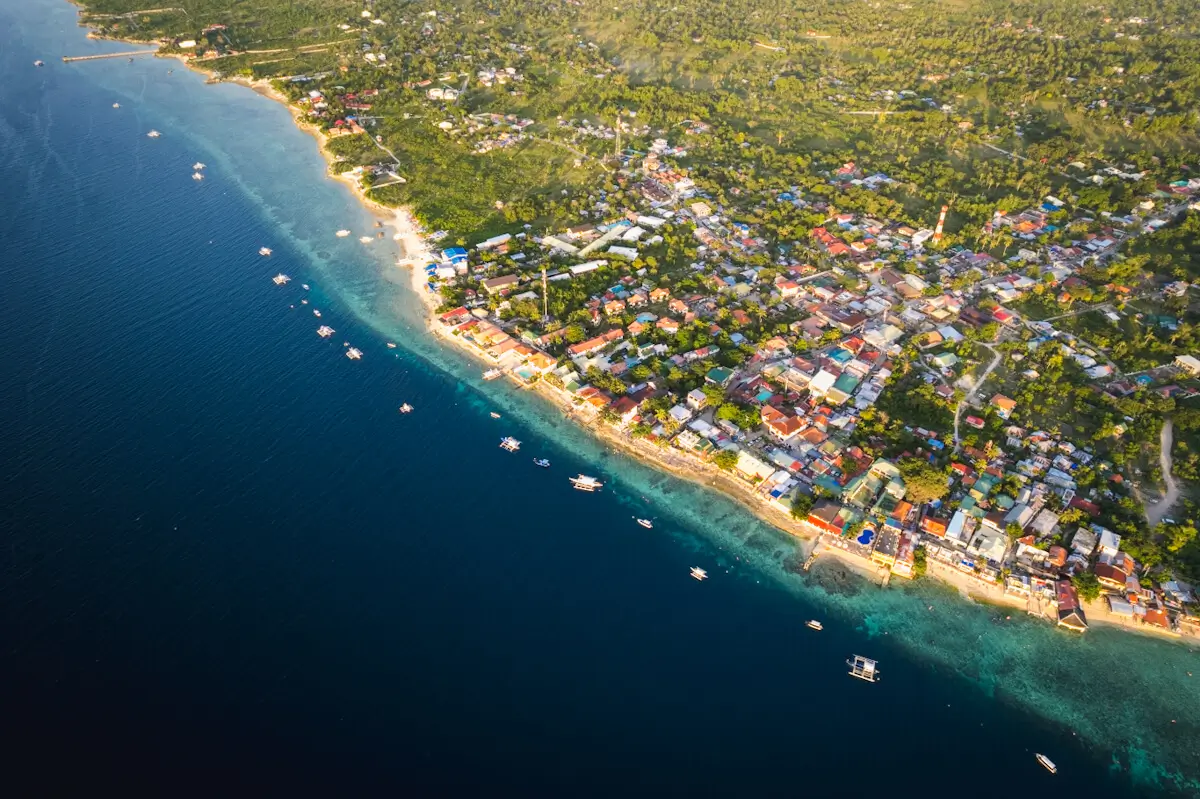
Panagsama Beach – This is Moalboal’s main tourist strip and where most visitors stay. It’s a dense row of rapidly multiplying hostels, dive shops, and small bars pressed up against the shoreline. There’s barely any real beach here, just narrow paths between concrete guesthouses and the occasional set of stairs leading into the water. What it lacks in scenery it makes up for in convenience, with direct access to the sardine run, dozens of dive centres, and all of the tourist restaurants and bars you could possibly desire. Accommodation is mostly budget to mid-range, with a few small resorts tucked just off the main lane. It’s the best base if you want everything within walking distance and don’t mind the noise or crowds.
Outside Panagsama – Once you leave the main strip, the pace slows immediately. Guesthouses, villas, and small resorts are scattered both north and south of the main road, often set among coconut groves or on quiet stretches of coast with better swimming access. This is what most of Panagsama looked like just a decade ago. You’ll find a wider range of options here, from simple cottages to higher-end stays with sea views. It’s a good choice if you want more space, quieter nights, and don’t mind either renting a scooter to get around, or are willing to rely on flagging down tricycles.
My Tips for Visiting Moalboal
1. Learn how to pronounce it. In all my travels in the Philippines, I have found no single place more commonly mispronounced by foreigners than Moalboal. No, it’s not “mall-ball”, and it’s not “moll-boll” either. It’s actually four syllables – “muh-wall-buh-wall”. It’s usually spoken fast enough that to many tourists it ends up sounding like only two; “mwalbwal”. If you’re not sure if you’ve got it right, go ahead and ask a local – I’m sure they’ll appreciate the fact that you care enough to get it correct.
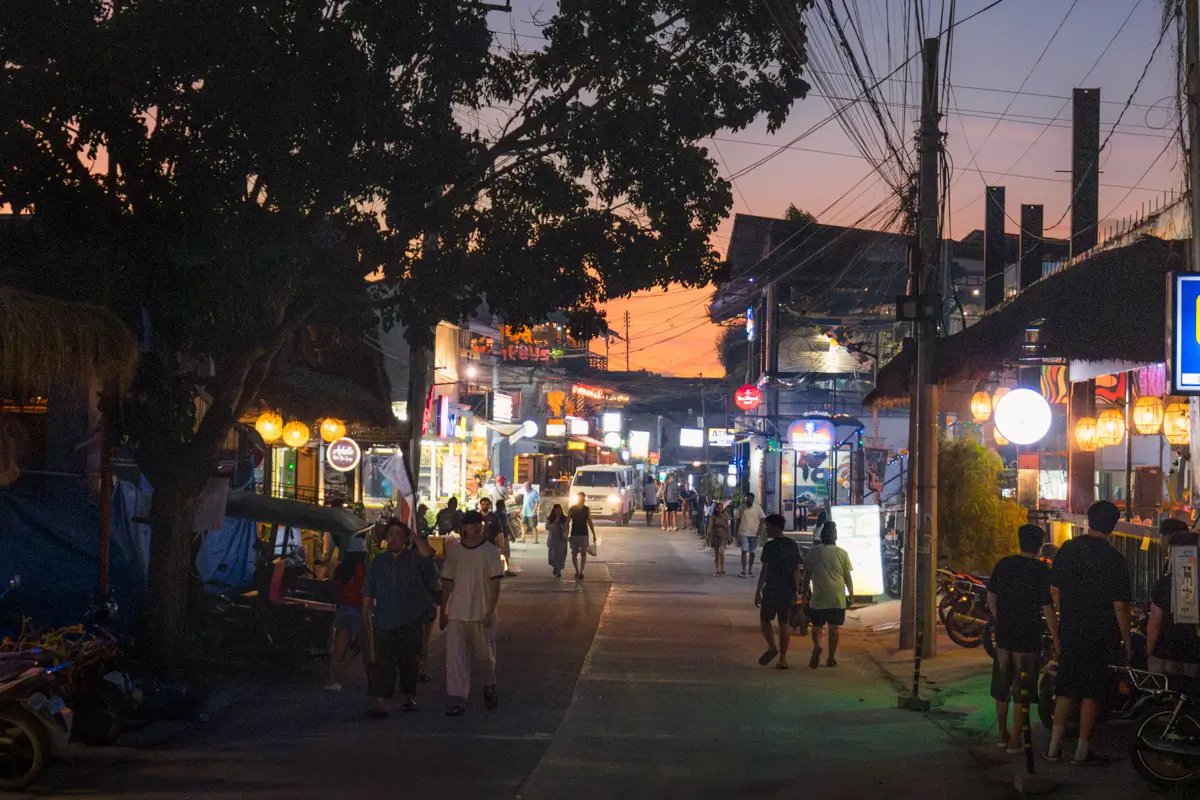
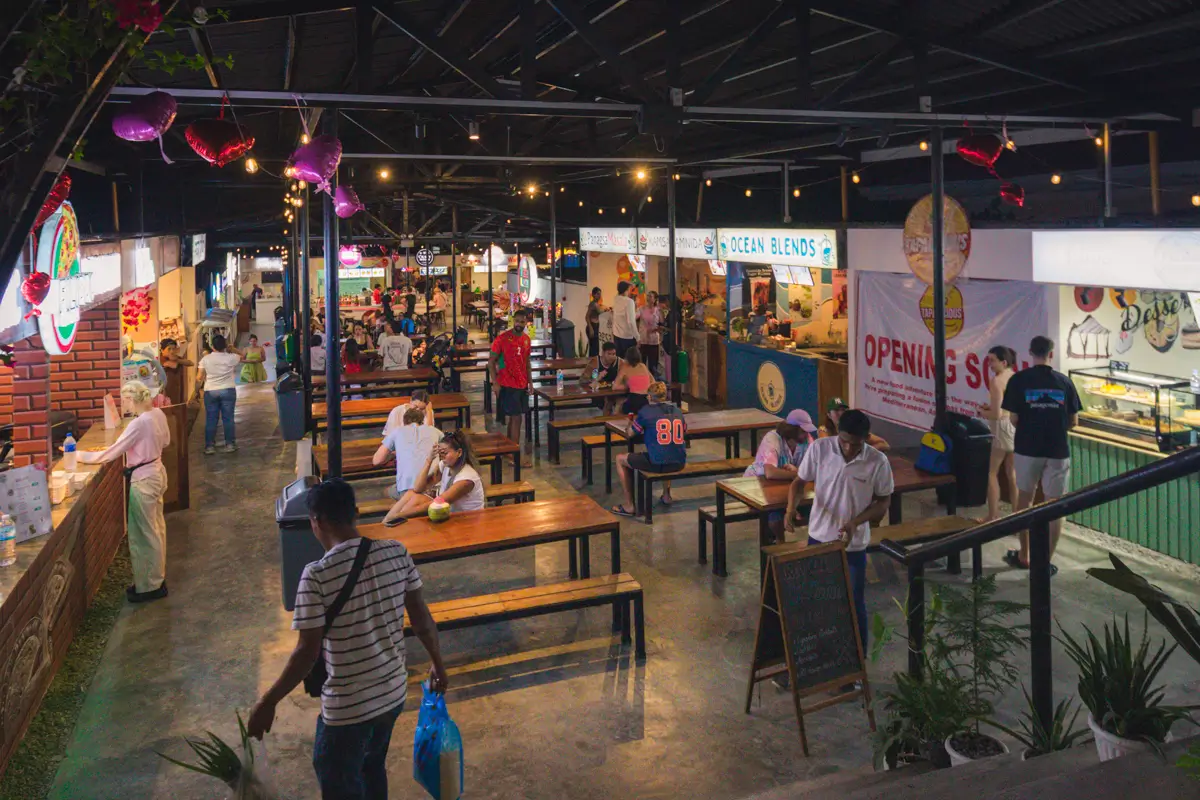
2. Prepare for a tourist town. If you’re looking for a genuine Filipino experience, maybe keep looking. Moalboal (or at least the touristy Panagsama area) is as touristy as touristy can get. One of the most egregious examples is El Mercado de Moalboal – a super popular open-air hawker center that features a few dozen vendors selling everything from Thai to Greek to Australian to pizza – with only two vendors selling anything Filipino! The rest of Panagsama is much the same. The worst part is that I’ve spoken to a number of naive tourists who during their time in Moalboal ate so much pad thai, pizza, and japanese curry that they genuinely believed that this was Filipino food they were eating, and had no idea there was anything they were missing out on.
In tourist towns, everything has been specifically designed by locals to try and give you – the tourist – exactly what they think you want. More often than not in the Philippines this is usually either a shoddy emulation of vapid Bali-esque Instaggramability or faux-banana-pancake-trail-boho-backpacker-vibes. It’s not all bad news though – if you’re willing to explore outside the touristy Panagsama strip, I’ve got a few great recommendations for some fantastic Filipino places you can visit.
3. The food stinks. This is sort of an extension of the last point, as this is largely a result of the fact that Moalboal is a tourist town. Most tourist towns around the world are full of overpriced and mediocre food, since after all repeat customers aren’t a part of the business model. Moalboal is the exception to the rule in that a great deal of the food here isn’t just mediocre, it’s genuinely terrible. Specifically avoid the restaurants with views right onto the ocean – they’re consistently awful (except Chili Bar). I’ve had experiences from soup full of ants to still-frozen-on-the-inside meat. Check Google reviews if you don’t believe me.
That said, food quality on Panagsama in general is poor. And I don’t just mean because it’s not authentic Filipino food. (Although really, why would you expect a Greek or Mexican restaurant in the middle of the Philippines to be anything close to what you’re hoping for?) Oddly enough, it seems that when tourist restaurant menus are split between Western and Filipino food, it’s the Filipino food that is of the worse quality. Sadly, a number of visitors to the Philippines only try Filipino food in tourist restaurants, and leave the country thinking the cuisine sucks, when it was actually just their restaurant choice. As a rule of thumb, if a menu features burgers and pizza as well as a “Filipino food” section, the burgers and pizza are unfortunately the safe(er) bet. If you want to eat Filipino, find a menu that is 100% Filipino.
Best Things to do in Moalboal
From Panagsama Beach in Moalboal, you can snorkel with sea turtles and sardine schools straight from shore, relax at casual seaside bars and eateries, or join day tours that don’t require your own transport. Everything in this section is easy to reach on foot, by tricycle, or through a local operator.
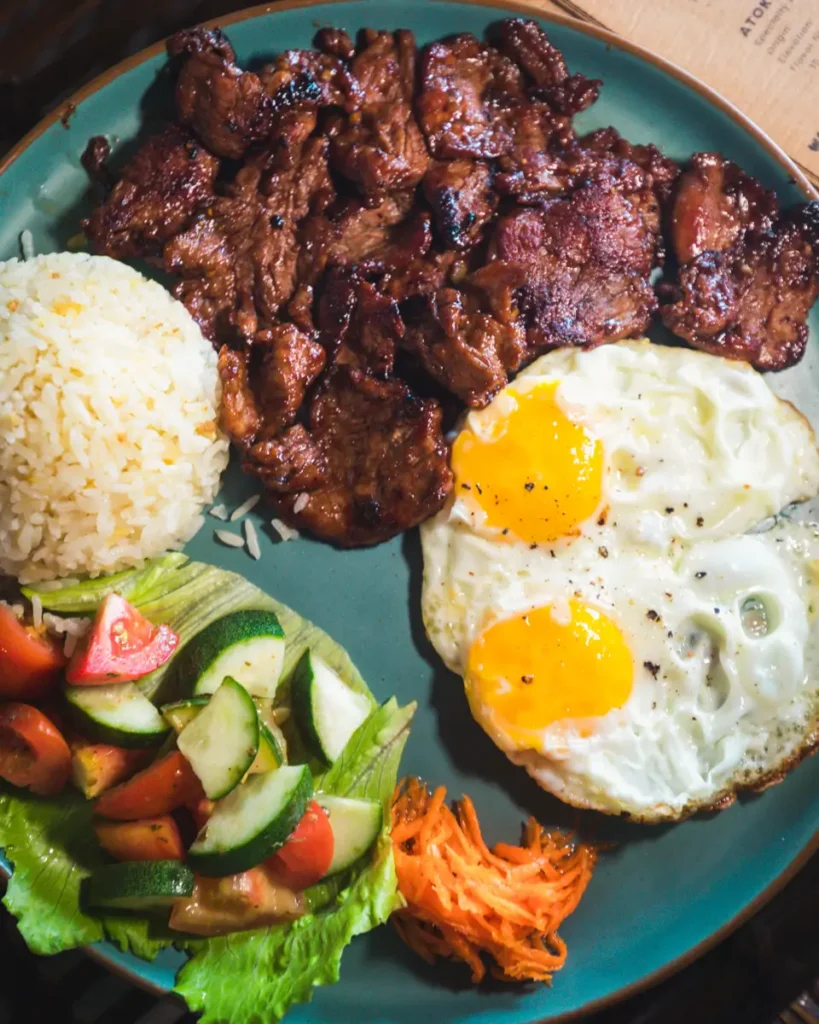
1. Silog from Bawud Cafe
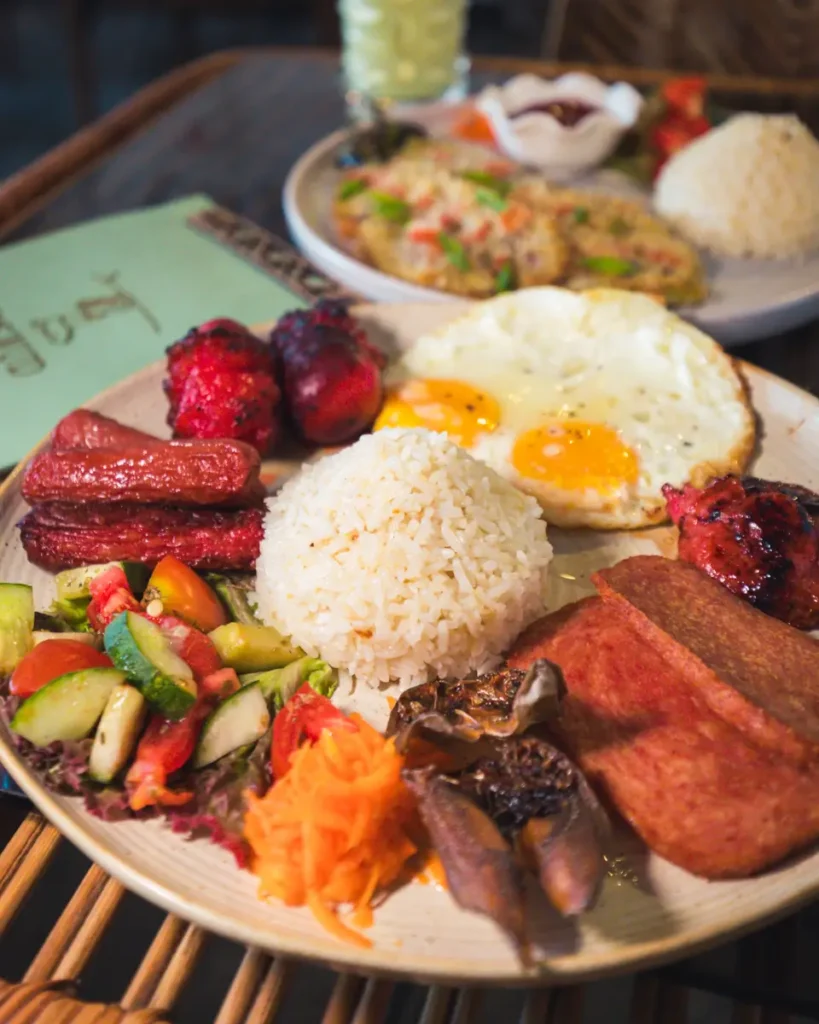
Silog is one of the best ways to start your day in the Philippines; a classic Filipino breakfast built around three parts: sinangag (garlic fried rice), itlog (fried egg), and a protein that gives each variation its name. Tapsilog uses tapa, thin slices of cured beef; longsilog comes with longganisa sausages; and tocilog comes with sweet cured pork called tocino. Bawud Cafe is the best option in Moalboal for whatever your preferred silog is, as well as to try tortang talong (eggplant omelette) in addition to Western-style breakfast options. The Philippines grows great coffee, but most Filipinos still drink instant powdered coffee, so finding a place in the province that brews local beans well is rare. Bawud does a proper pour-over and is maybe the only spot on Panagsama serving coffee grown and roasted in the Philippines. They’ve been open since 2023 and recently added a second branch in Siargao.
2. Sardine Run
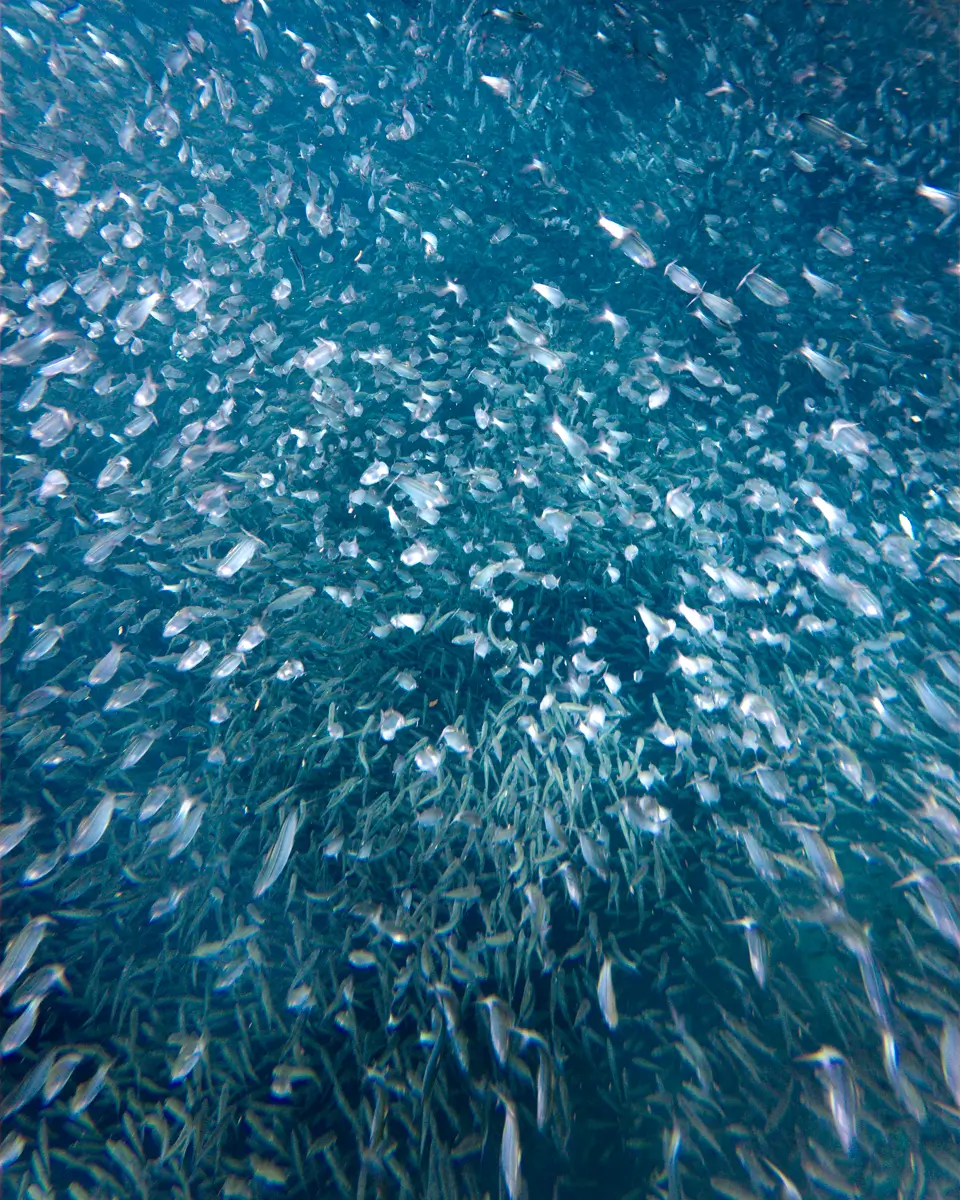
The sardine run in Moalboal takes place just a few metres off Panagsama Beach, where a resident school of millions of sardines moves as a single shifting mass that darkens and brightens the water as it changes direction. If you opt to take the boat tour in Moalboal you’ll be taken here for your second stop, but the sardine run is also accessible straight from shore, which is why you’ll see snorkelers, freedivers, and large groups of pasty tourists in life-jackets all sharing the same stretch of reef. Because the site is so accessible it can also get crowded, so it’s worth making it out early.
3. Pescador Island
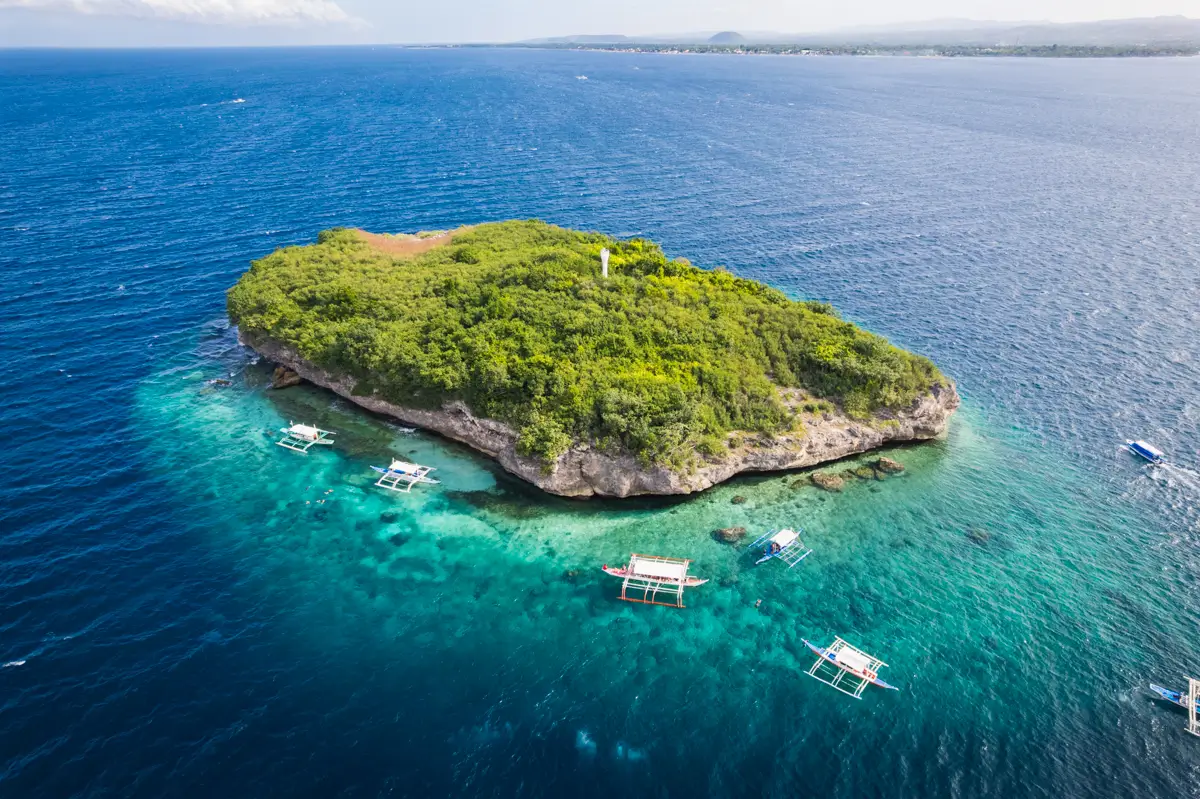
If you plan on taking a boat tour while you’re in Moalboal, head to the tourist information center to hire a boat. Before too long you’ll be headed to the first destination: Pescador Island.
Pescador Island remains one of the area’s best-known dive and snorkel sites, even though recent typhoons have damaged most of the shallow coral and left the reef far less intact than older guidebooks suggest. The island itself is tiny and uninhabited, with the draw being the cylindrical reef wall that drops straight into deep blue water. Divers come for the topography as much as the marine life, with vertical overhangs, cracks, and a small “cathedral” chamber where light filters through when conditions are right. Snorkelers can float in the shallows where rare corals still survive. If you plan on staying near the surface of the water make sure to check the tide chart and try to get here at low tide.
4. Bakeshops
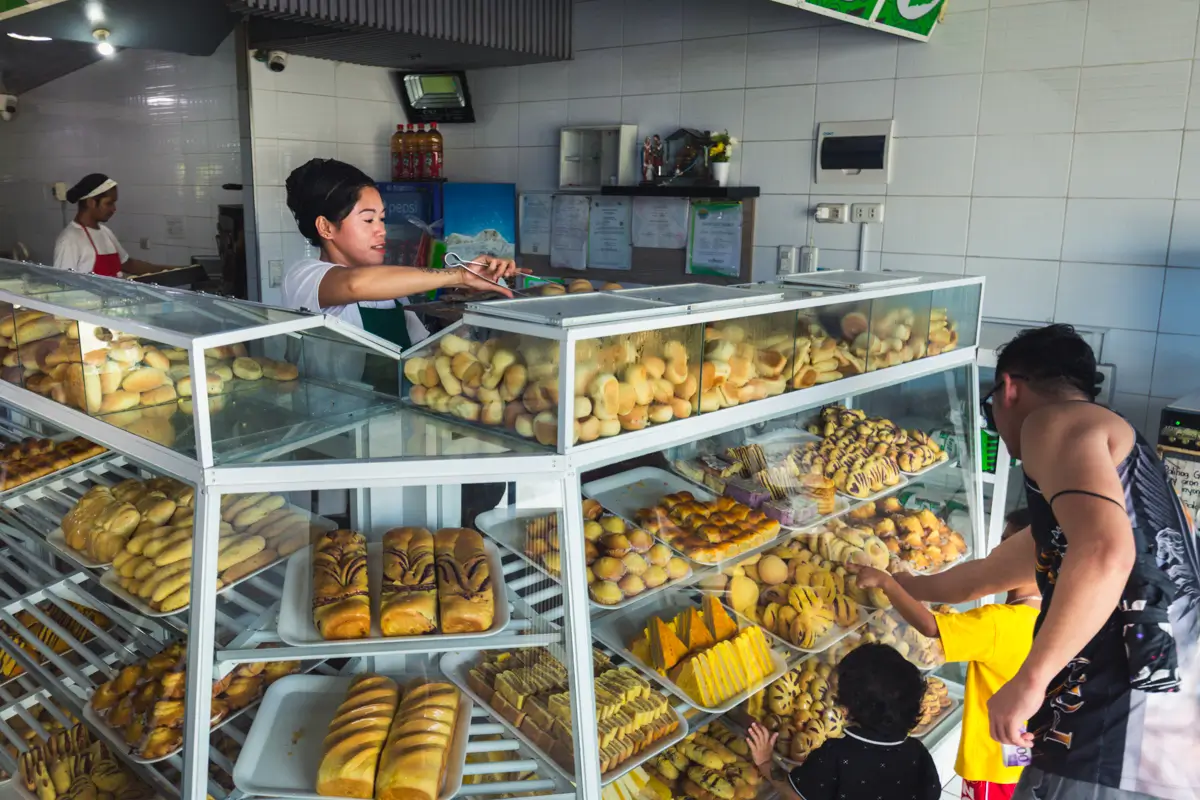
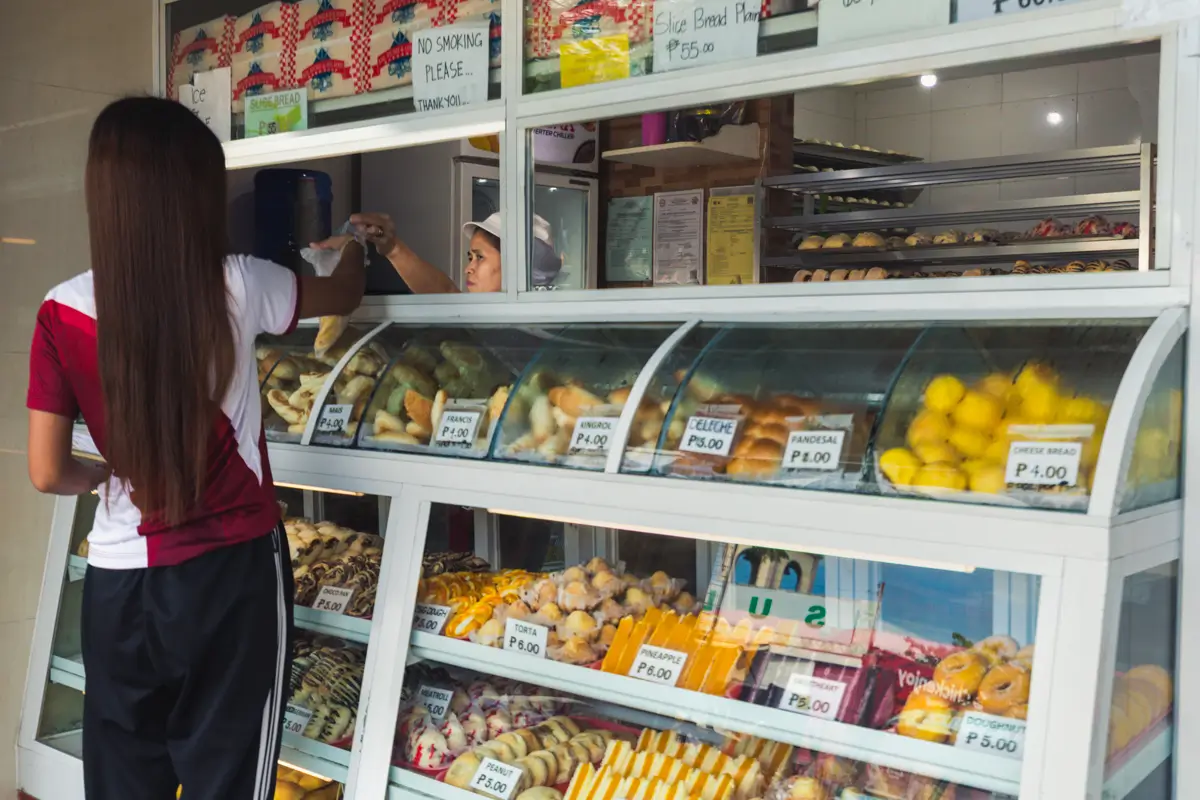
Panaderias grew out of Spanish-era baking traditions introduced in the 1600s, when wheat bread became a status food in coastal towns and galleon ports. Local bakers adapted those techniques using cheaper ingredients like margarine and refined sugar, shaping what eventually became the soft, lightly sweet breads now considered Filipino staples. Every town in the Philippines, no matter how small, has at least a couple bakeshops, and it’s up to you to figure out your favourite. I would recommend the couple conveniently located right across from the Jollibee where the Ceres buses stop. They always have a few dozen varieties of Philippine breads ranging from 3 to 15 PHP per piece. If it’s your first trying Filipino breads, I suggest trying pandesal, pan de coco, fig pie, cheese rolls, and ensaymada. If you’re heading out on a boat trip or chasing waterfalls, grab a paper bag of whatever looks good and snack on it throughout the day.
5. Smooth Cafe
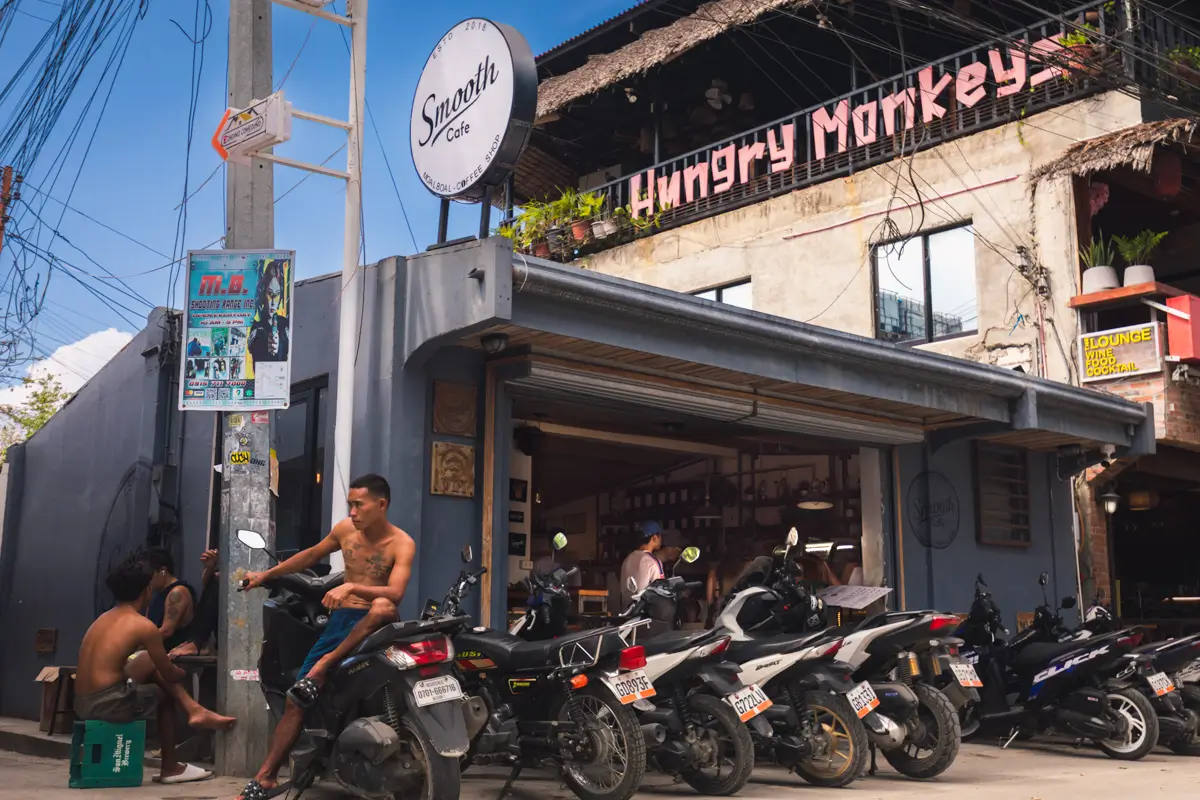
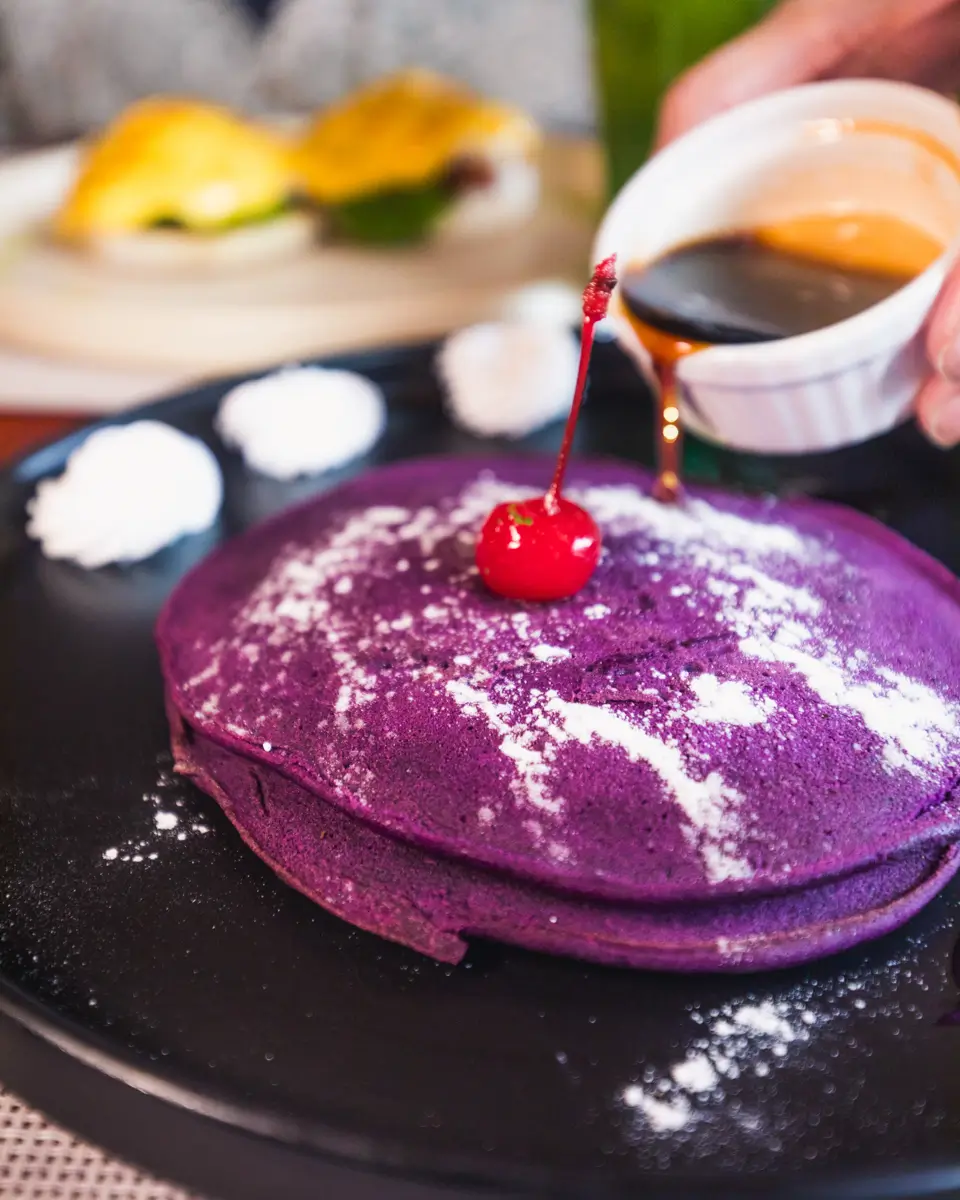
Ube is a purple yam native to the Philippines, and it’s one of the country’s most iconic ingredients. It’s denser and earthier than sweet potato and carries a flavour that’s subtly nutty and creamy – I describe it tasting something like vanilla macadamia custard. It’s common throughout the Philippines in all kinds of sweets, but in Moalboal it’s actually surprisingly hard to find. Smooth Cafe does an ube-infused stack of pancakes, and while it’s not like the ube really shines through, it’s still one of the few opportunities in Moalboal to say you’ve had the ingredient.
6. Basdaku Beach
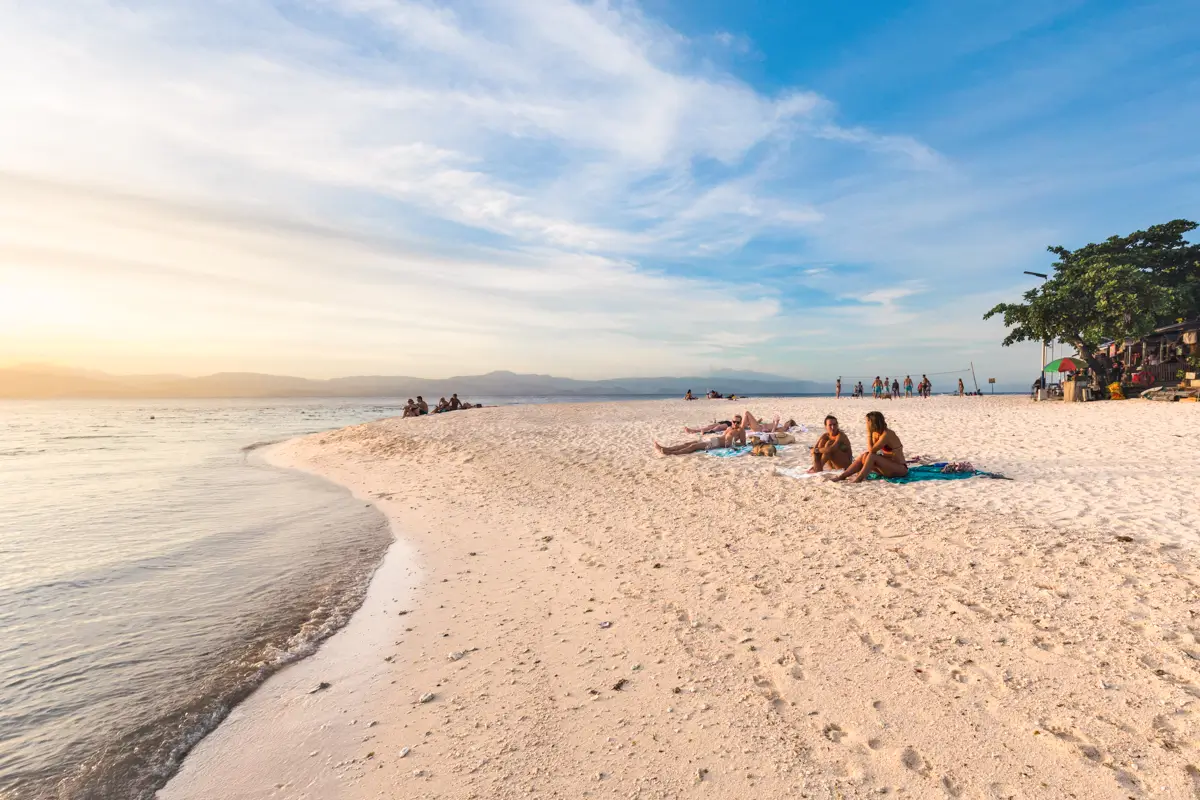
Basdaku is derived from the Cebuano words bas and daku which means ‘sand’ and ‘big’, respectively. That’s a little too tricky for most foreigners though, so more and more it’s just called White Beach.
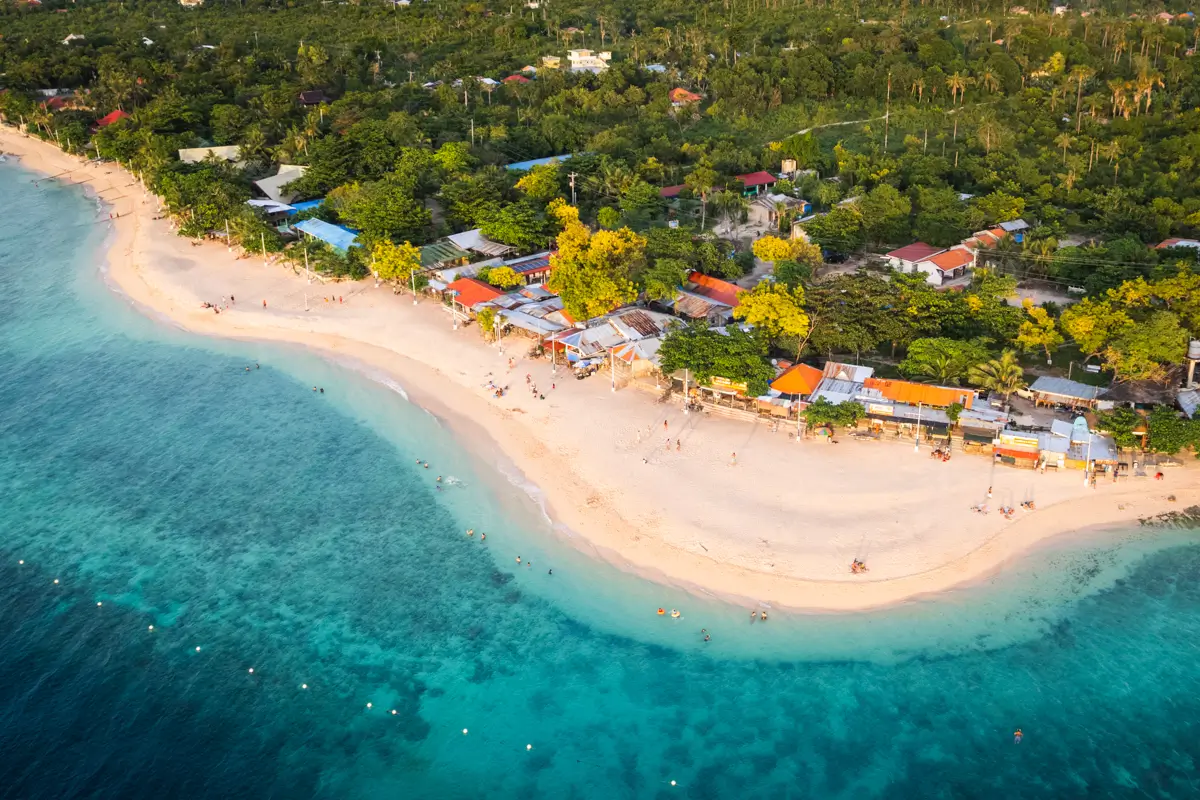
Basdaku Beach is a kilometer-long stretch of powdery white sand about twenty minutes north of Panagsama. Unlike the developed Panagsama Beach, Basdaku offers more of the typical beach experience you probably came to the Philippines for. The beach is lined with modest resorts, bamboo cottages, and local eateries, but walk for ten minutes in either direction and you’ll mostly be by yourself. Views are fantastic across the Tañon Strait which separates Cebu from the island of Negros, and on a good day you may even see the plume of smoke from Mount Kanlaon, an active stratovolcano and the region’s highest peak.
7. The Boundary Cafe for Chicken Pandan
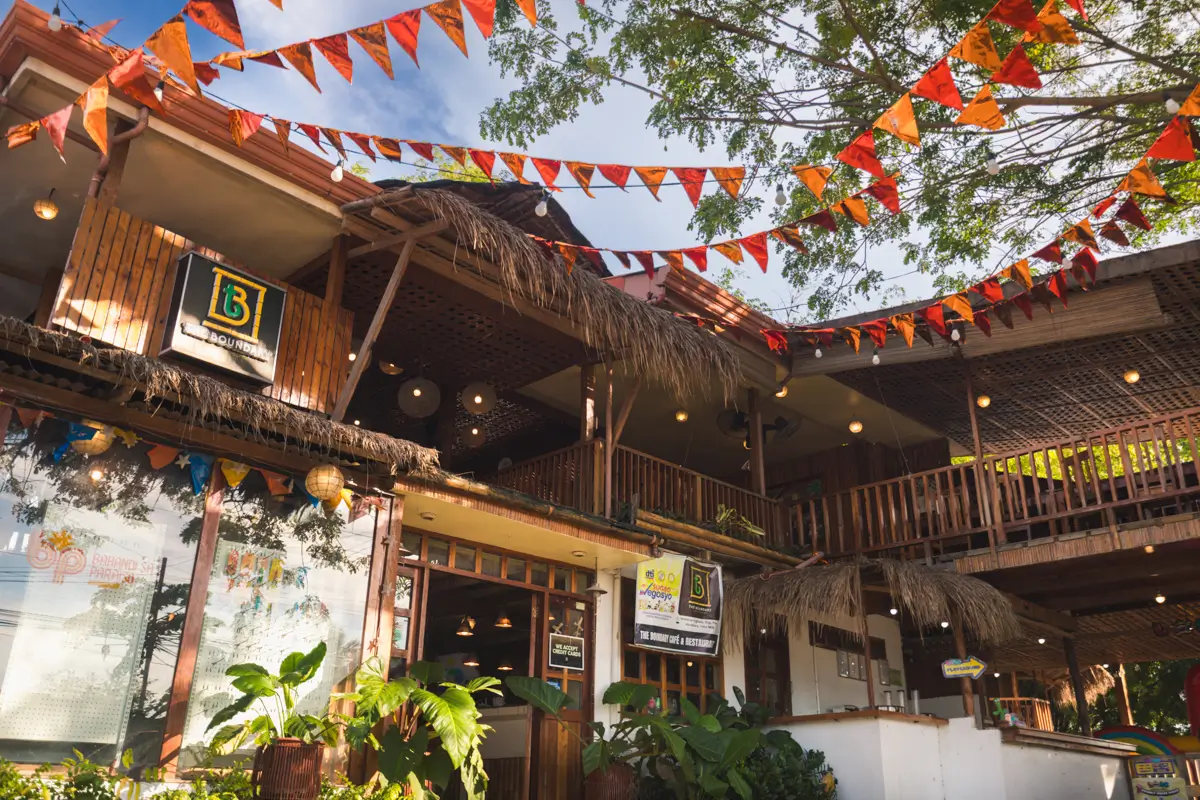
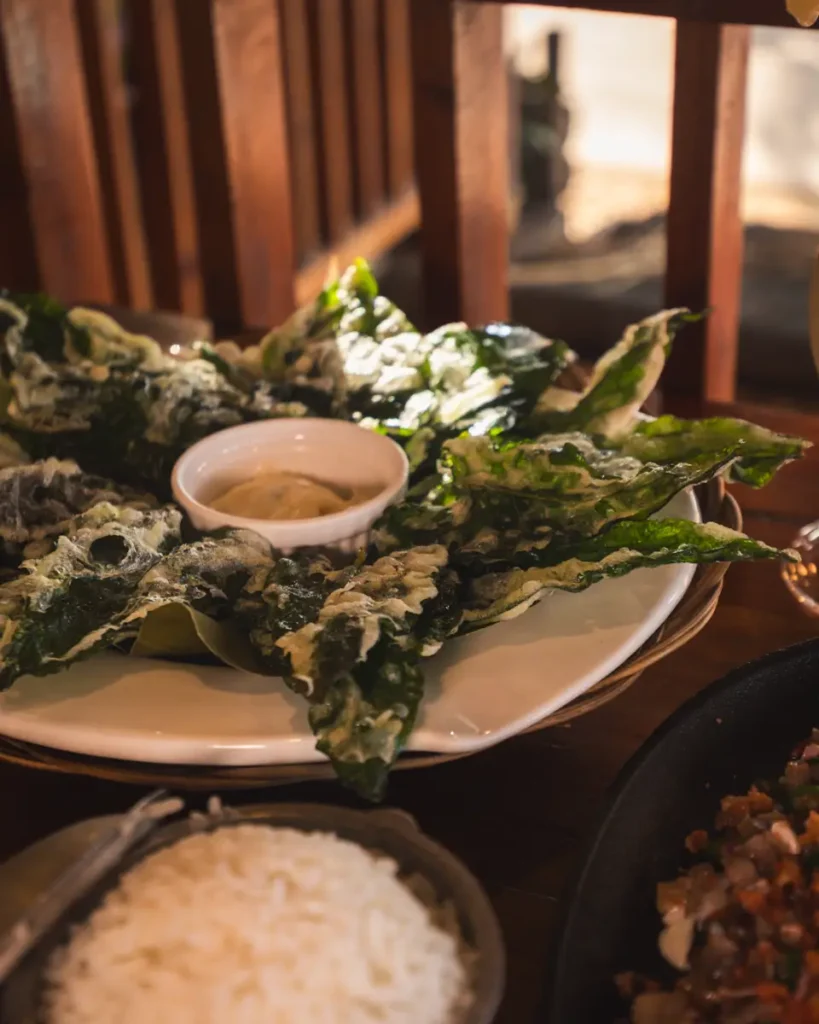
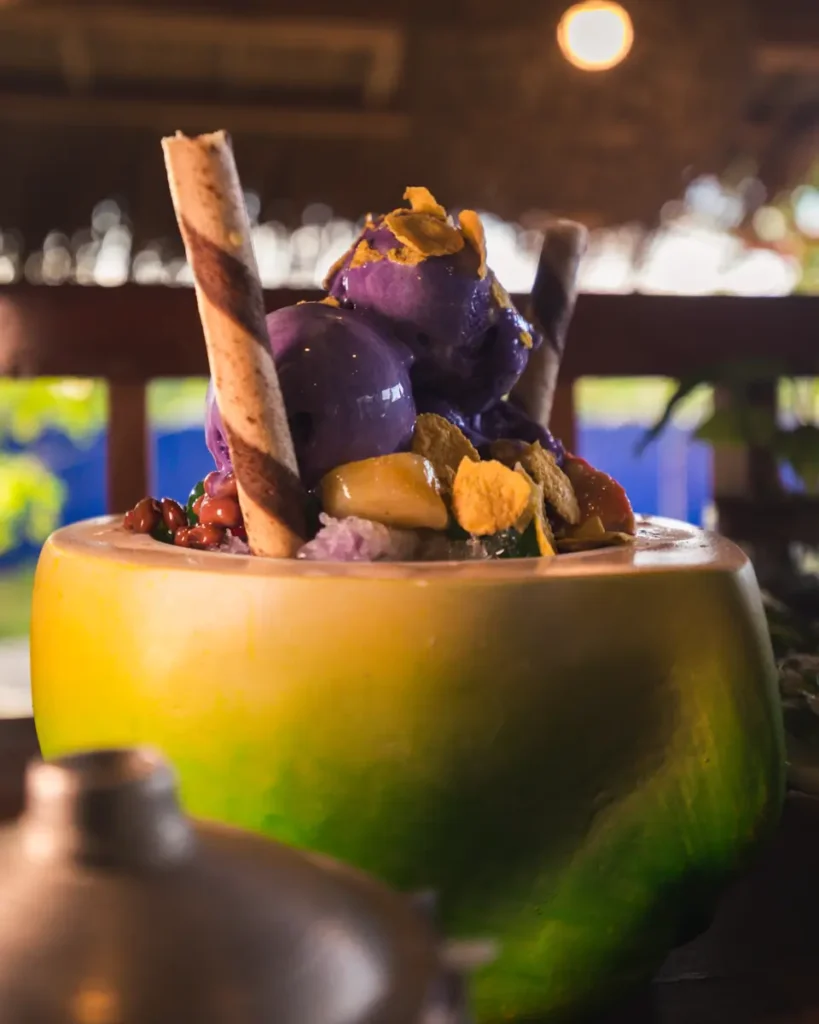
The Boundary Cafe & Restaurant opened in 2021 on the literal boundary between Moalboal and the neighbouring municipality of Alcantara, and has since become a local favourite for their creative Visayan dishes. Highlights include their crispy kaongkong (water spinach), utan (vegetable soup) and pandan chicken, but you can rely on them to deliver any of the Filipino classics well: everything from sisig to kare-kare to bicol express. Desserts include binignit (Visayan coconut-and-root-crop stew traditionally eaten during holy week), and the best halo-halo in Moalboal.
In 2025 The Boundary added a second branch right on Panagsama, making it one of the only Filipino-focused restaurants on the tourist strip. The original roadside location is larger and has a calmer, more open setting, but the Panagsama branch serves the same menu, so it’s mainly a question of which one you’re closest to when hunger hits.
8. Moalboal Public Market
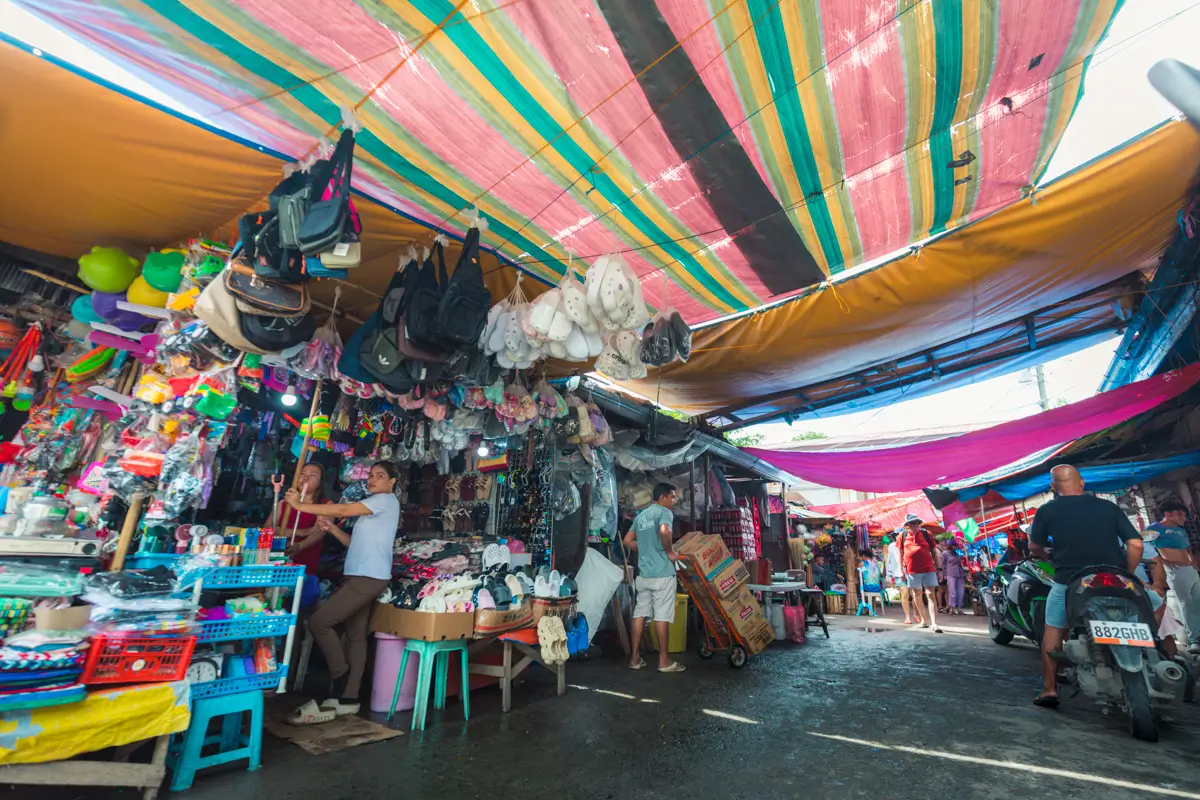
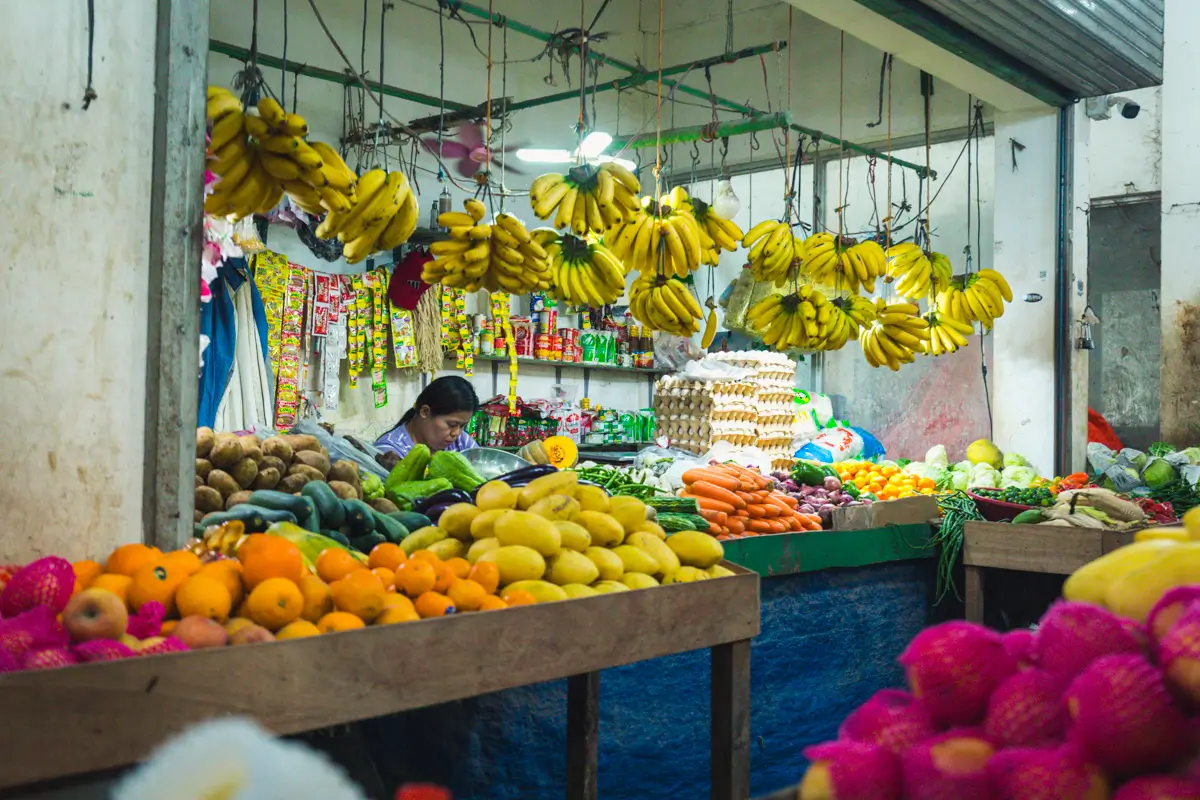
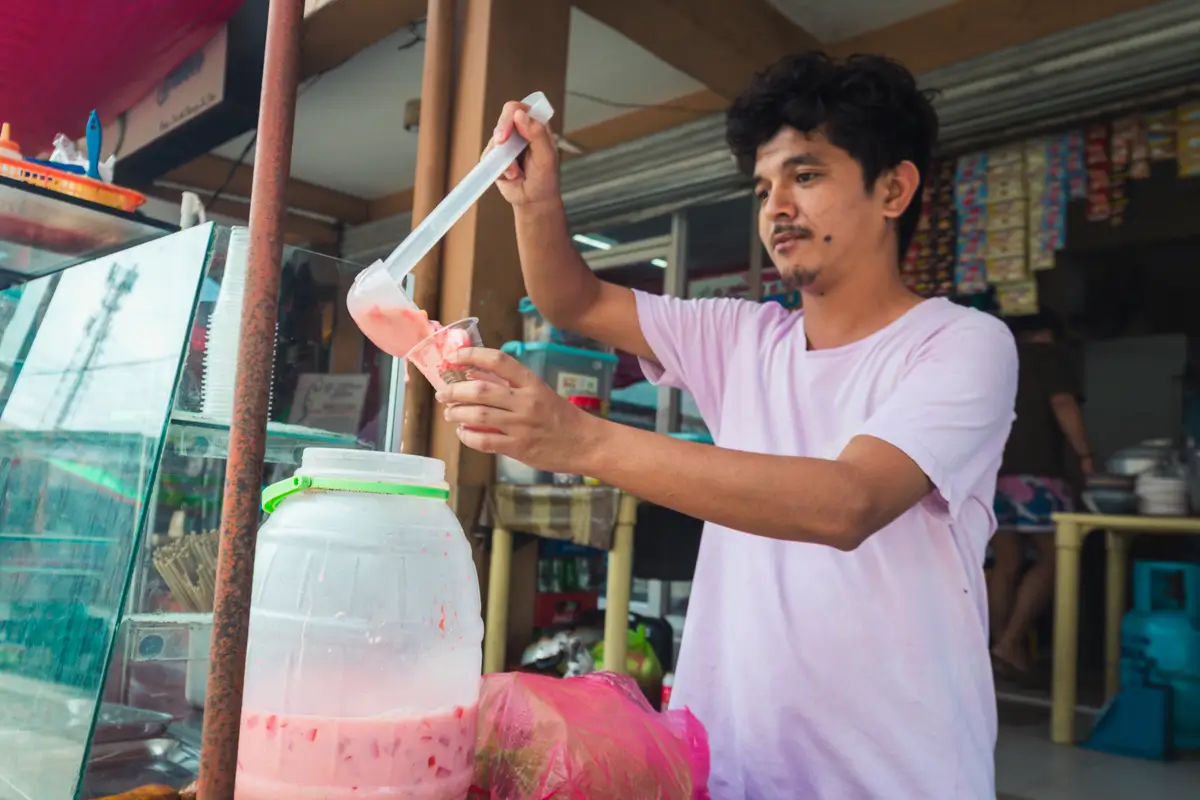
In my opinion one of the best things to do no matter where you are in the Philippines is to check out the local palengke, or public market. People come here daily for fresh fish, vegetables, fruit, rice, and cooked food, with each crowded section run by small independent vendors. There are practical reasons to visit. I’ve visited my fair share of public markets in order to pick up a pair of sunglasses or a plug-in fan for a hostel room where someone keeps turning off the aircon for some reason, but you can also find kakanin, Filipino rice and root-crop snacks with origins in precolonial cooking, where glutinous rice, coconut milk, and native tubers like cassava are steamed or wrapped in leaves for travel and ritual use. In the Visayas, kakanin tends to lean on cassava and coconut because both grow easily in coastal and upland areas, so you’ll likely find biko, suman, puto, and cassava sweets. Come at the right time and you’ll also find vendors frying pinaypay (banana fritters) and banana cue or roasting peanuts in metal drums, or start your day with puto and sikwate (Filipino hot cocoa). I consider trying fresh local fruits one of the best things to do in the Philippines, so it’s a shame that so few of the cafes or restaurants on Panagsama really utilize the interesting tropical fruits much in their menus, opting instead for the more familiar occasional apple, orange, banana, or mango. Wowie. Adventurous. Fortunately it’s super easy to buy fresh local fruit from the fruit stalls located within the public market, where vendors sell everything from ripe mangoes, bananas, lanzones, mangosteen, and watermelons, to seasonal fruit like marang or rambutan when they’re available. My tip? Find something you’ve never seen before in your life. It’ll probably blow your mind.
9. Panagsama Beach (Sea Turtles)
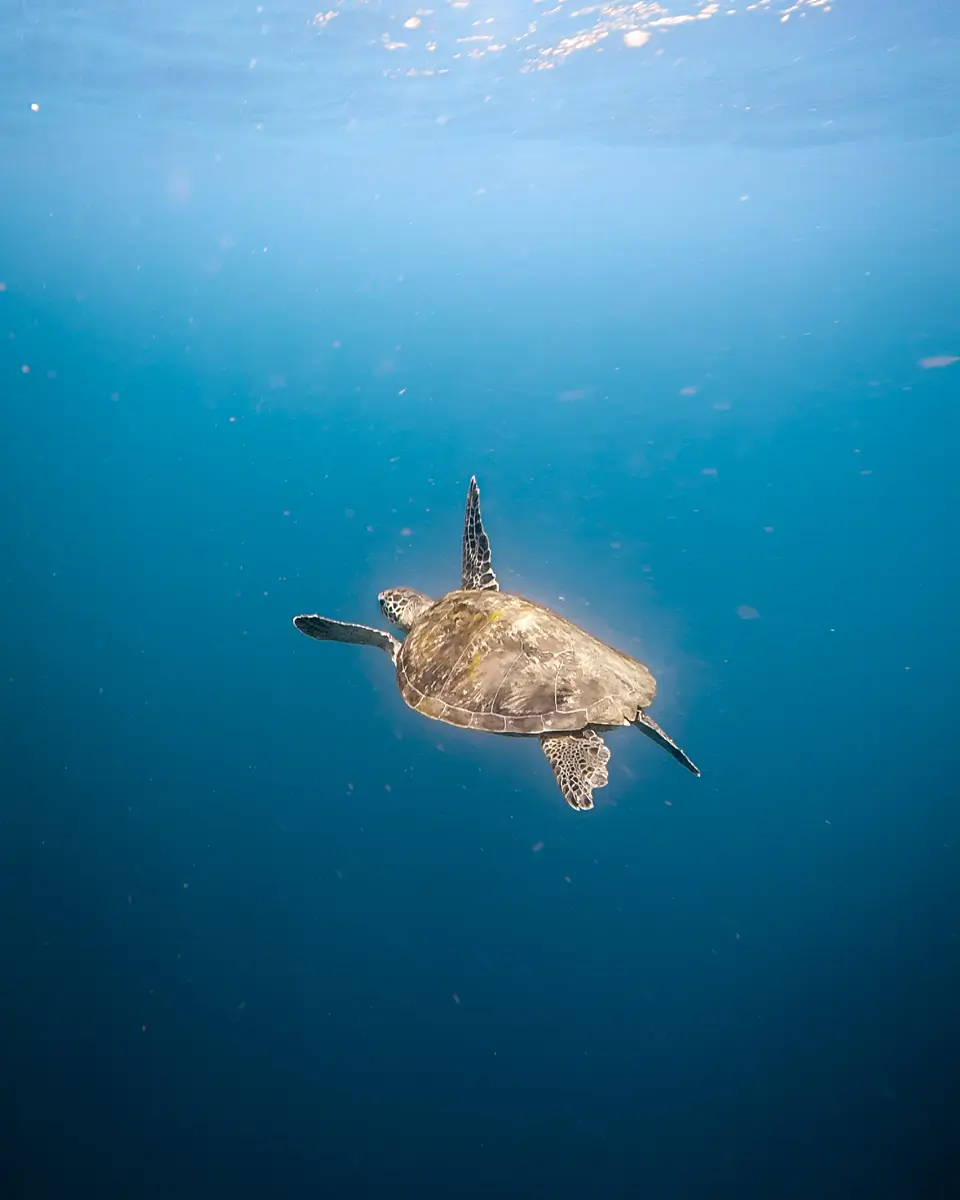
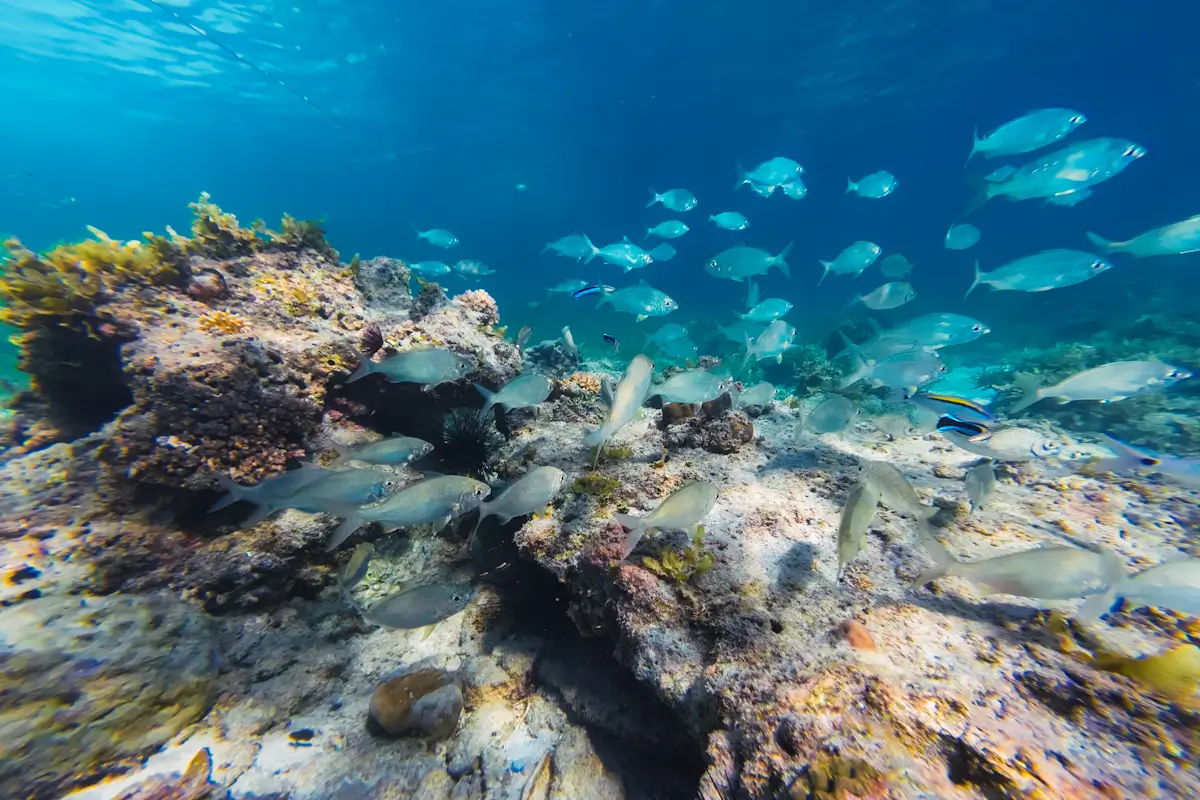
Panagsama Beach isn’t a long sandy strip like Basdaku Beach but a narrow, rocky shoreline in front of Moalboal’s main tourist area. What might have once been more of a beach has been built over by restraurants and bars, so while technically there a few short stretches of sand at low tide, they’re definitely not worth going out of your way for. What does make Panagsama worth visiting is the reef only a few metres from shore, where the seabed drops into a wall covered in corals and schools of fish. Follow your way along the drop-off and you’ll find the sardine run. Sea turtles graze throughout the day and are almost guaranteed, though there’s no guarantee of you having your sighting to yourself. The best time to go is early morning before the tour boats arrive and obnoxious tourists crowd around sticking a dozen GoPros in sea turtles’ faces. Renting a mask easy is from one of the shops near the shoreline. I suggest swimming straight out from the small sandy area next to Chili Bar, from here once you reach the drop-off you can head right to see the sardine run, or go left and stick to the shallows to try and spot some turtles.

10. Lola Tanciang’s Sutukil
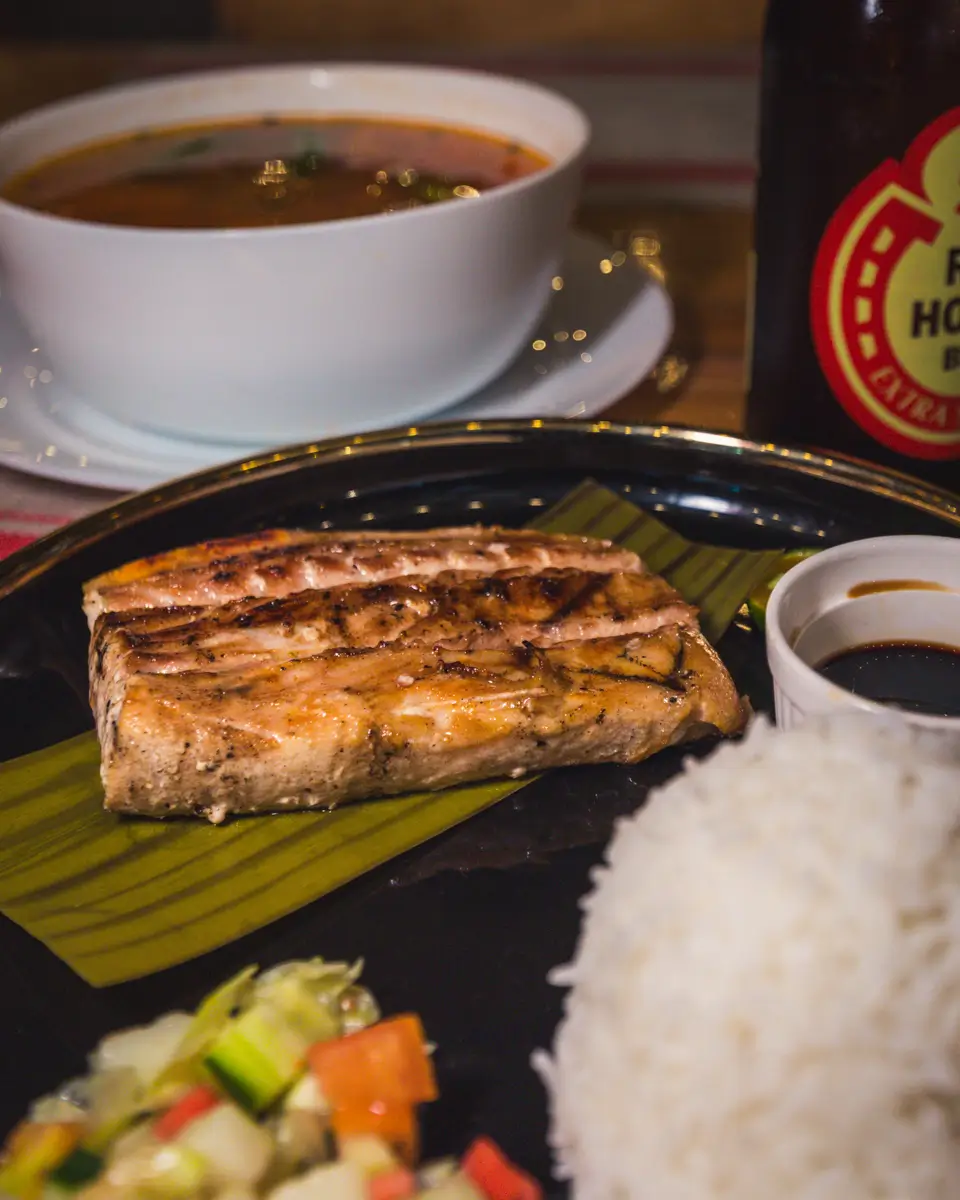
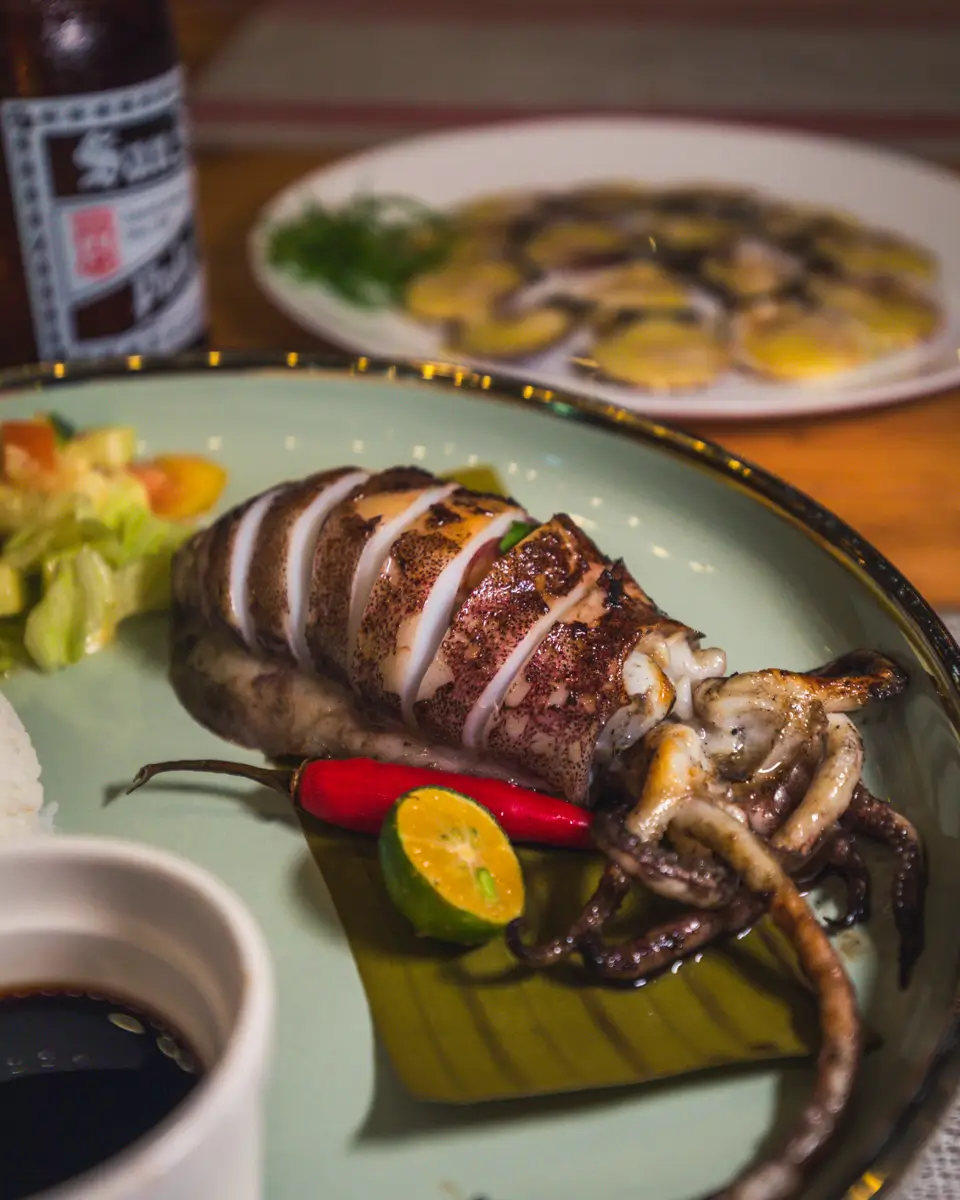
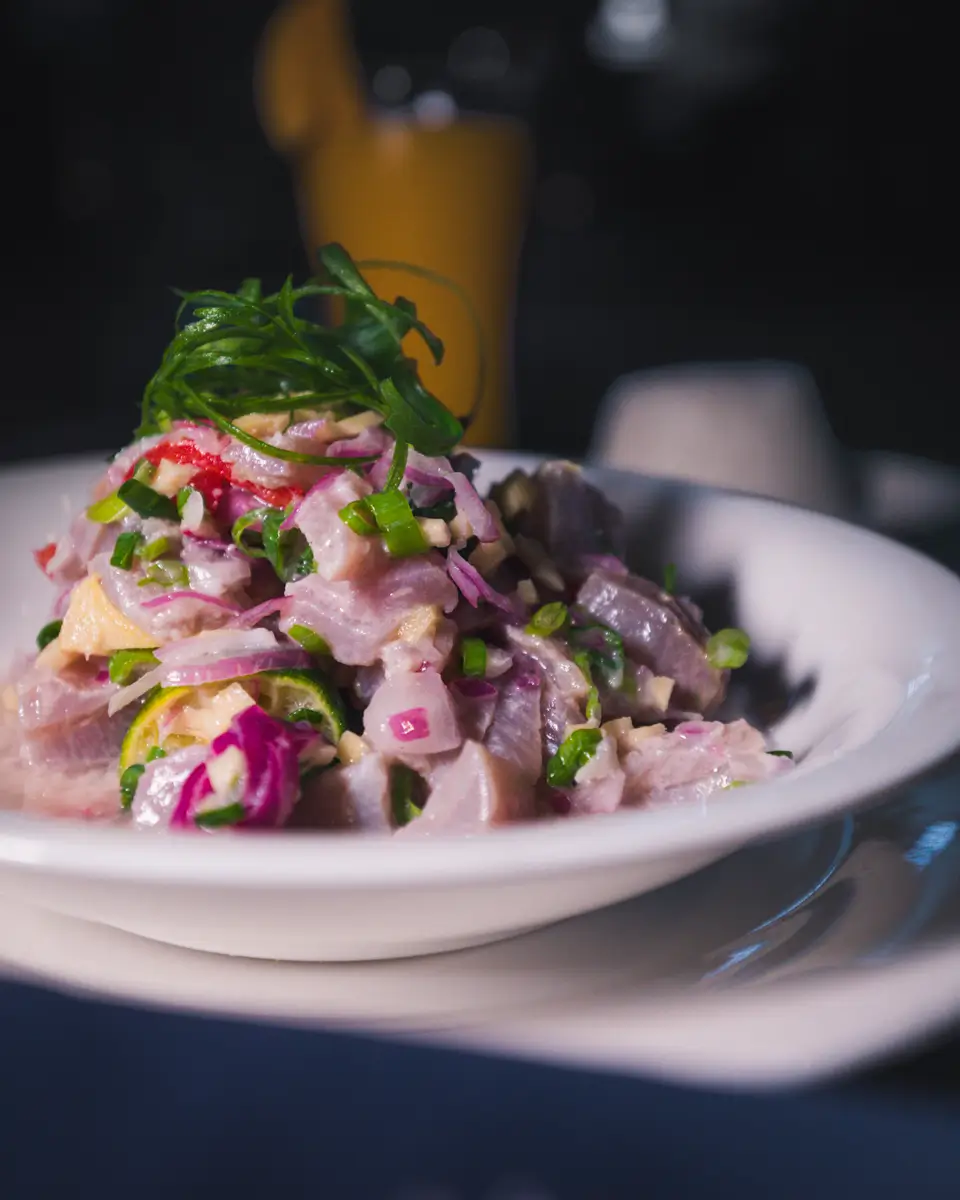
You’re not going to come all the way to Moalboal and avoid seafood, right? Lola Tanciang’s is the town’s go-to spot for it, a sutukil restaurant where everything is cooked straight from whatever came in that morning.Sutukil is a trio of cooking methods that means fresh seafood cooked three ways: sugba (grilled), tuwa (in a light broth), and kilaw (a raw marinated dish). For sugba, I suggest the grilled tanigue or grilled squid, for tuwa the larang (coconut milk-based fish soup), and then of course the kinilaw.
Worth noting is that generally I’m used to my kinilaw being mostly fish, with maybe some thinly sliced cucumbers and onion. In Moalboal it’s common to see really huge chunks of cucumbers and onion, sometimes as much onion as fish, which is definitely not my preference. I’m not sure if it’s just the local style or a way to inexpensively pad out the dish. You can just leave what you don’t want. The fish is the good part. One local place even adds a full scoop of fried corn, a very strange (and very obvious) filler move.
Lola Tanciang’s is also the place to try a boodle fight – a Filipino feast that started as a military tradition where soldiers ate together off banana leaves for speed and camaraderie, and eventually became a staple at birthdays, town gatherings, and beach trips. Everything is laid directly on the table over banana leaves, and you get a mix of grilled fish, shrimp, squid, chicken inasal, lumpia, pancit, and heaps of rice, with sliced fruit on the side. You eat with your hands, passing dishes around and pulling from whatever looks good. Just make sure to order in advance and come with a group.
11. Canyoneering the Matutinao River
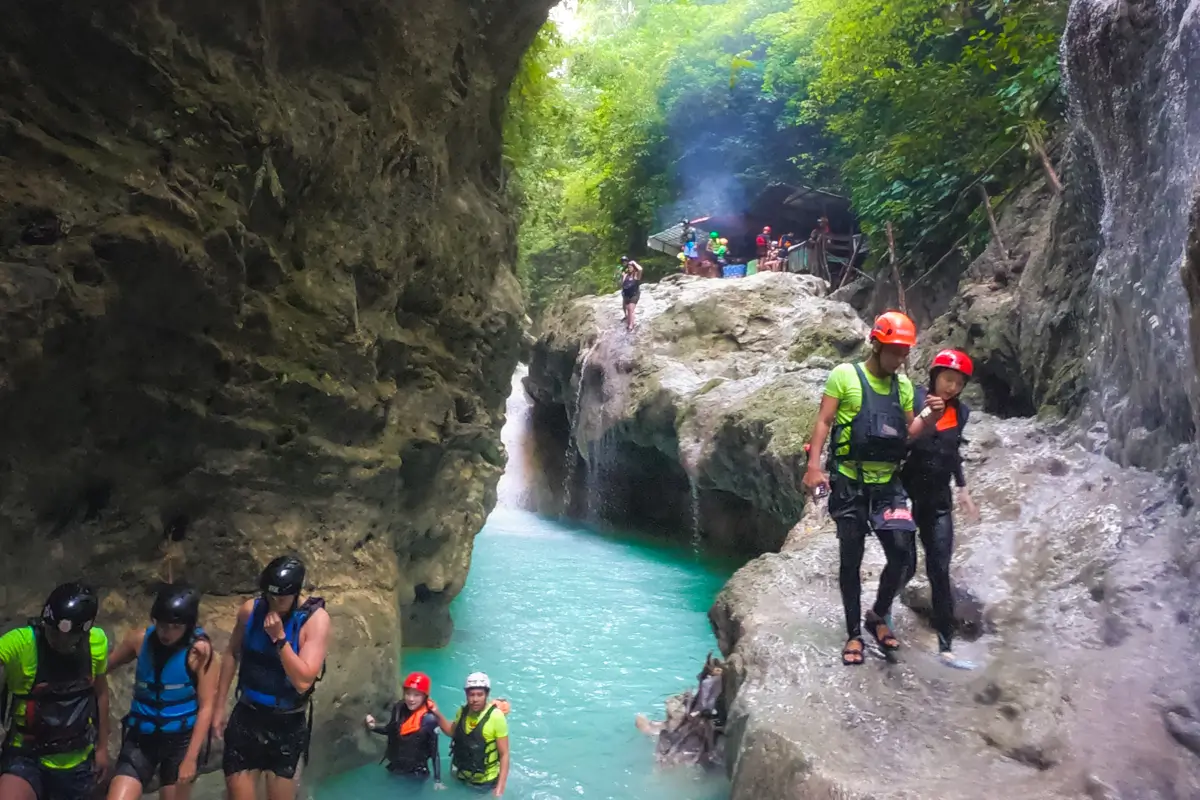
Canyoneering along the Matutinao River to Kawasan Falls is one of Cebu’s most iconic adventure experiences, combining hiking, swimming, cliff jumps, and natural water slides through a verdant gorge. The route typically ends at Kawasan Falls, possibly the most well-known waterfall in the country. The river is famous for its unreal turquoise colour, fed by freshwater springs and filtered through limestone, and it was even awarded the cleanest river in the Philippines way back in 2002. It’s less clean nowadays. Suit up with a helmet and life vest, move downstream with a guide, and navigate the canyon by jumping, sliding, and swimming.
What’s not always explained is that there are now several different “official” canyoneering routes instead of one unified system. The reason is a long-running barangay and municipal dispute between Alegria and Badian over control of access points and fee collection. Both municipalities claim rights to different sections of the same river, and over time each opened its own regulated entry routes. The result today is three parallel options that all use the same river but differ in starting points, crowd levels, number of jumps, and how much hiking you’ll do.
The Badian canyoneering route to Kawasan Falls is the version most people end up on, largely because of the zipline. If you take the zipline (for an additional fee), it cuts the approach down to about ten minutes and drops you right at the river. If you skip it, the downside to this route is a long 30 to 45 minute walk before you even reach the river. Once you’re in the canyon, the route includes seven jumps and a single slide, all leading down to the main Kawasan Falls. The zipline is a great draw, but if you’d rather walk in then I’d suggest the next route.
The Alegria canyoneering route to Kawasan Falls starts slightly upriver from the Badian entry point, on the Alegria side of the river. The big advantage here is the shorter walk in, usually just five to ten minutes before the first jump. You also get a couple of extra jumps and an additional slide compared to the Badian route, before you pass the Badian entrypoint and follow the exact same canyon downstream to Kawasan Falls. If you want the full Kawasan finish but with less hiking and a little extra action early on, this is generally the better choice.
The Alegria Wonderfalls canyoneering route is completely different. Instead of ending at Kawasan, it stays entirely upriver and finishes at Kanlaob Falls, which is actually the starting point for the Alegria-to-Kawasan route. Because it never connects to the main Kawasan section, it’s much quieter and sees far fewer tour groups. The route has seven jumps and one slide, takes about two to three hours, and is ideal if you want the canyoneering experience without the crowds. The trade-off is that you won’t see Kawasan Falls itself, but it’s also possible to visit the waterfall on your own anyway. If you’re up for a longer day, it’s possible to book a combination tour that takes you all the way through the Wonderfalls route as well as the regular Kawasan route, so you get to experience everything.
Most photos or videos you see will show a dozen groups of a dozen plus people each crammed in the canyon, queuing up for their turn to be filmed jumping off a waterfall. Do that if you’d like – but it’s also possible to have the river to yourself. If you’d prefer more “thrilling nature experience” and less “Disneyland but wet”, book a private guide online for just yourself and whoever you’re travelling with, and go as early in the morning as possible.

12. B. Ice Cream
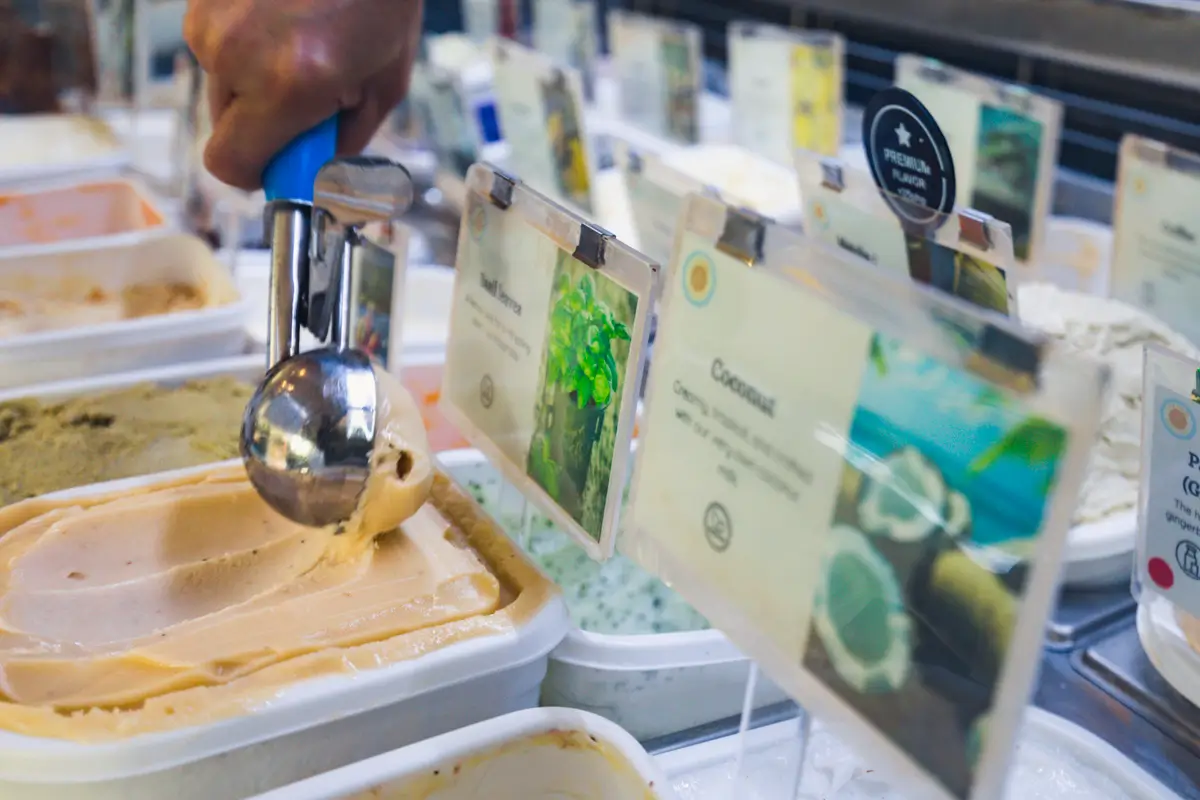
On a hot sunny day there’s nothing better than a cold ice cream, and nowhere in Moalboal does it better than B. Ice Cream, which focuses on making ice cream and gelato on-site using a lot of local fruit, with flavours like mango, lakatan banana, coconut, pineapple, papaya, green mango, passionfruit, ube, calamansi, and a dark chocolate made from Davao tablea, alongside a handful of more familiar Western-style options. Since opening in 2023 it’s quickly become a local favourite, and in 2025 the owner expanded with a second branch in Dumaguete.
13. Animal Welfare Outpost
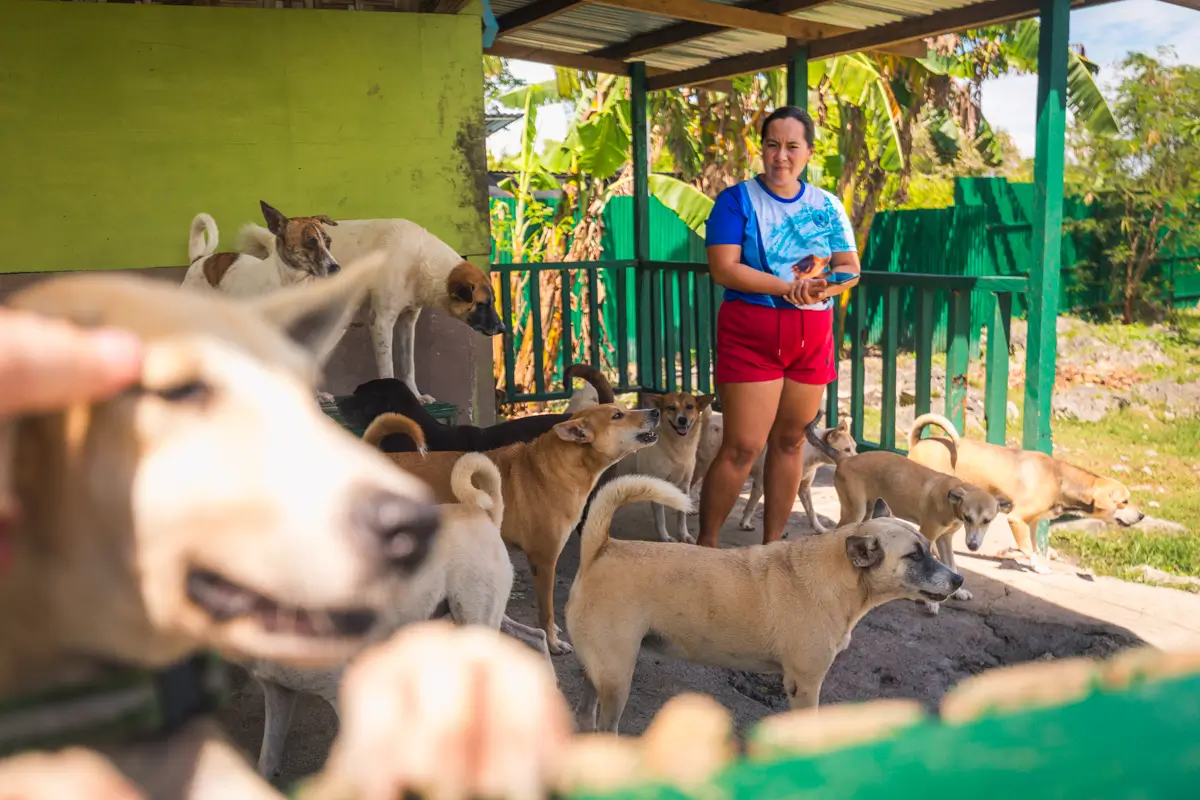
Founded by local couple Lyndon Dionaldo and Ala Danielle Lorenzana, Moalboal Animal Welfare Outpost began as informal street feeding program in 2018 and evolved into a full rescue operation during the COVID lockdowns, when moving freely to visit dogs became impossible. Today they care for over a hundred dogs across two small shelters, with separate pack areas, quarantine space for medical cases, and basic on-site treatment. The work involves cooking food daily, treating skin disease, managing spay and neuter follow-ups, cleaning, and playing with the dogs. The outpost isn’t government funded and operates entirely on donations, but has already helped place hundreds of dogs into permanent homes.
One of the least-talked about things to do in Moalboal is visitign the shelter and spending time cuddling the pack of friendly puppies. Visits include a tour of the grounds, and when I visited Ala was happy to tell me the stories behind a number of the dogs I got to meet. For those with more time, volunteering can involve days or weeks of hands-on help with feeding, bathing, and cleaning. Donations are always needed, especially outside peak tourist season. If you want to visit, it’s preferred to message them ahead of time so they know you’re coming.

14. Tuba
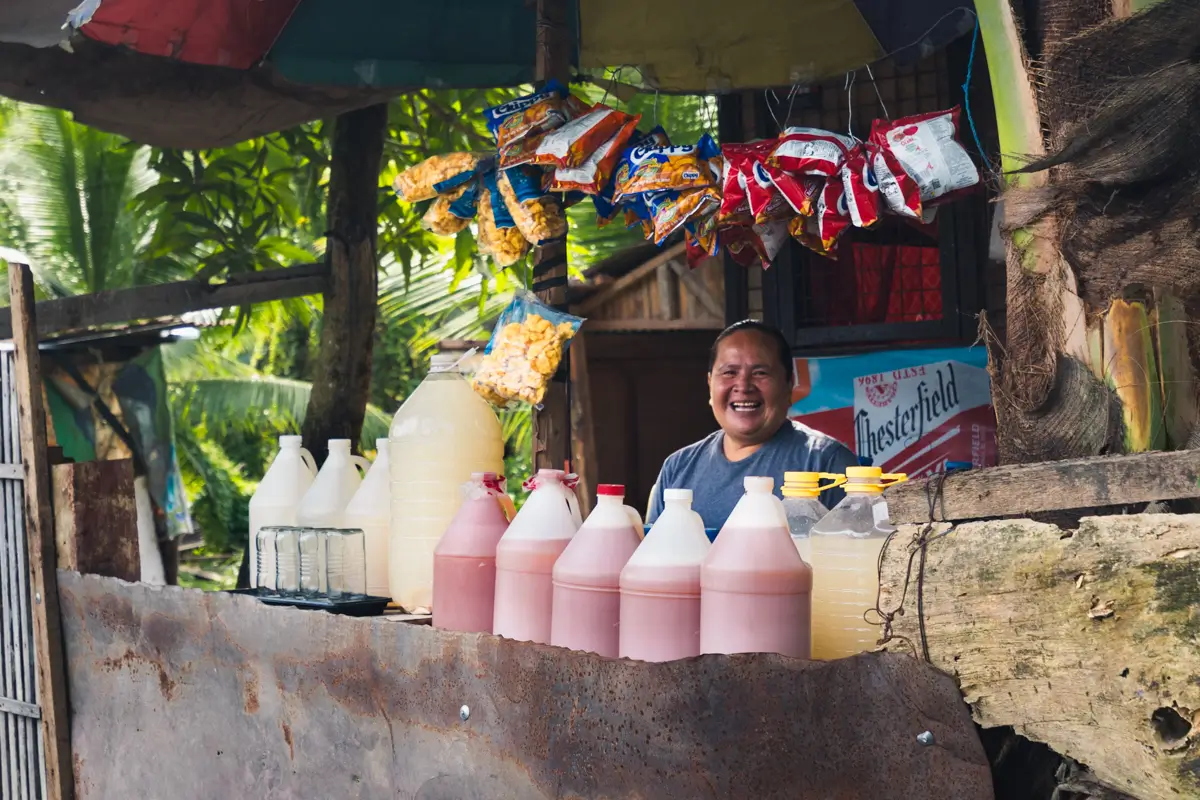
Palm wine is one of the world’s oldest fermented drinks, made by tapping the sap of palm trees and consumed in some form across Africa, South and Southeast Asia, and parts of the Pacific. The basic idea is the same everywhere: fresh sap wild ferments quickly , turning into a lightly alcoholic drink within hours.
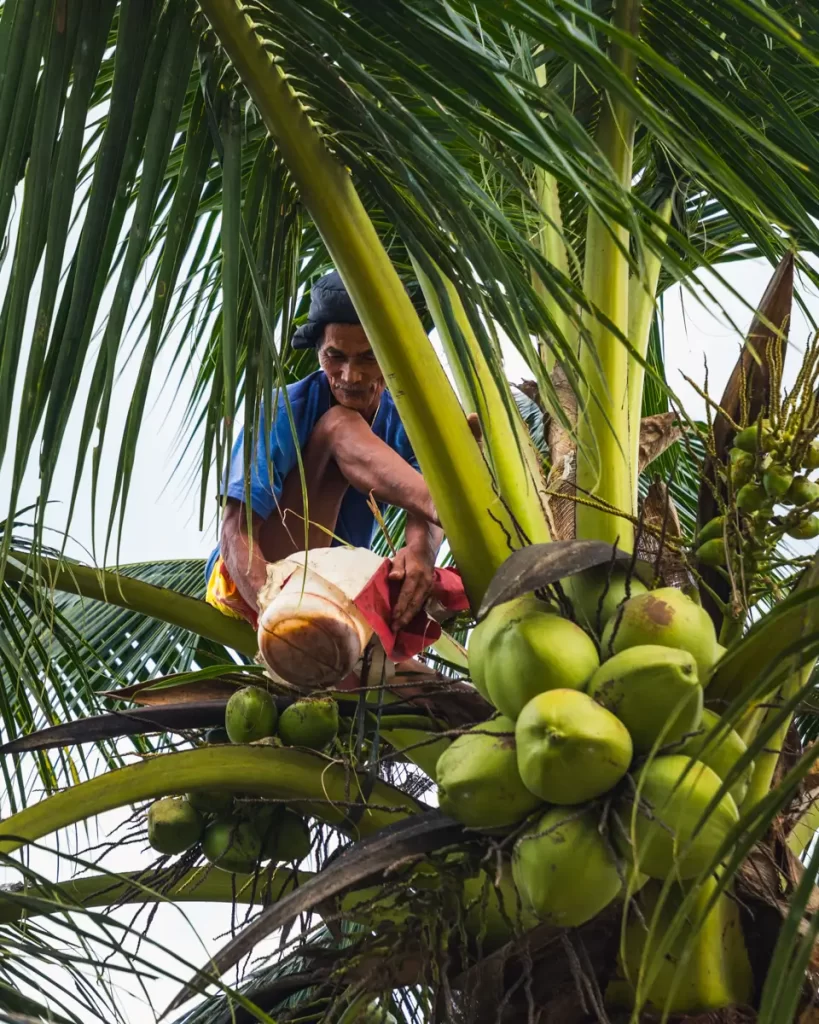
In the Philippines, the local palm wine is tuba. It’s made from coconut palm sap collected by a mananggiti, who climbs the trees at dawn and dusk to tap the flower stalks and gather the sap before it overferments. In the Visayas, barok (mangrove bark) is added, providing tannins, earthiness, and a brown colour. Fresh tuba is still actively bubbling, cloudy, lightly sweet, and funky, with low alcohol that increases the longer it sits. By the next day it becomes noticeably sharp and acidic, edging toward vinegar. Around Moalboal, the best way to try it is to buy it straight from the occasional roadside sellers or by asking around at the public market. If you’re not sure where to find it, your best bet is just to ask any local. They’ll know where to go.

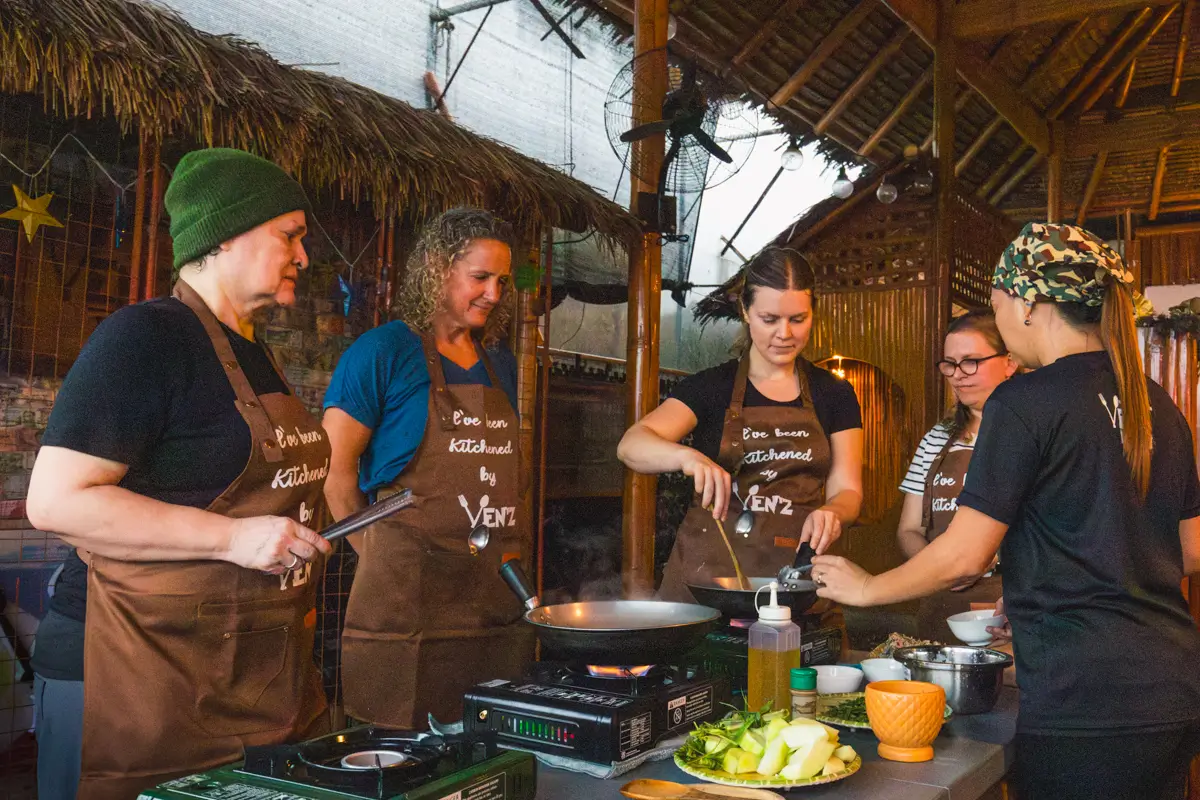
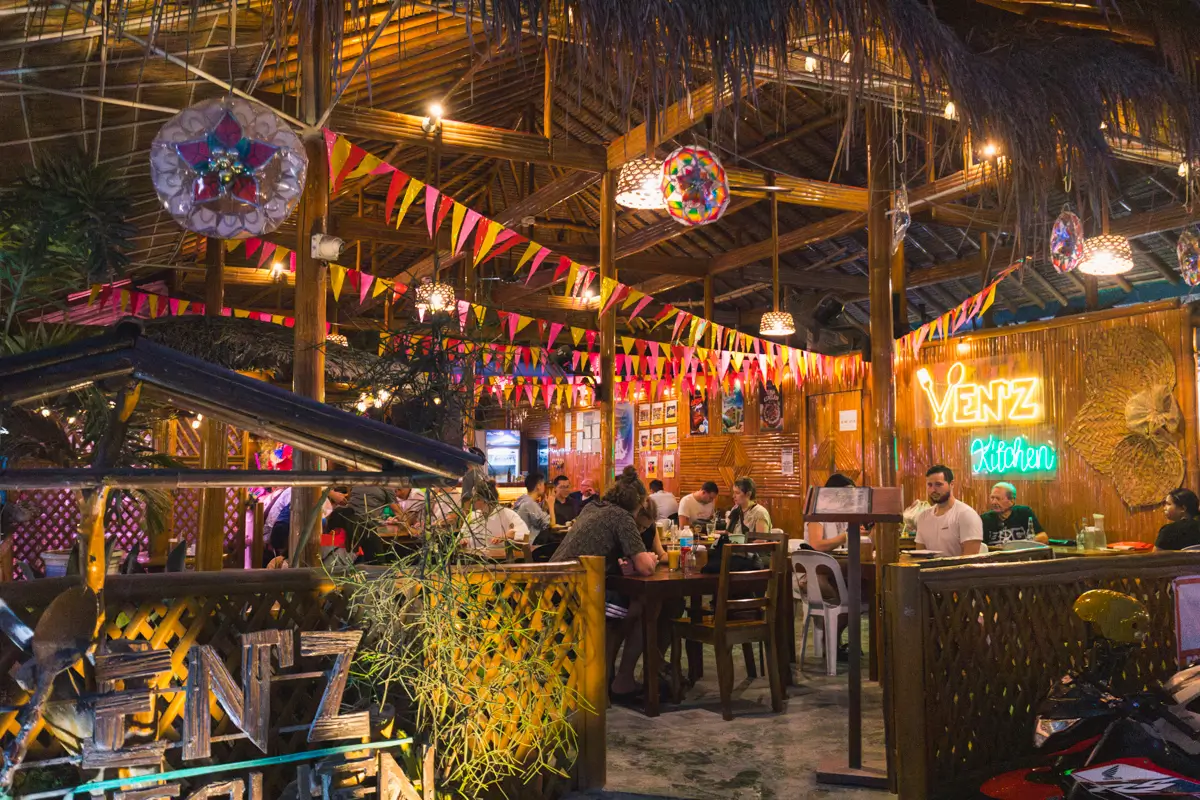
15. Ven’z Kitchen
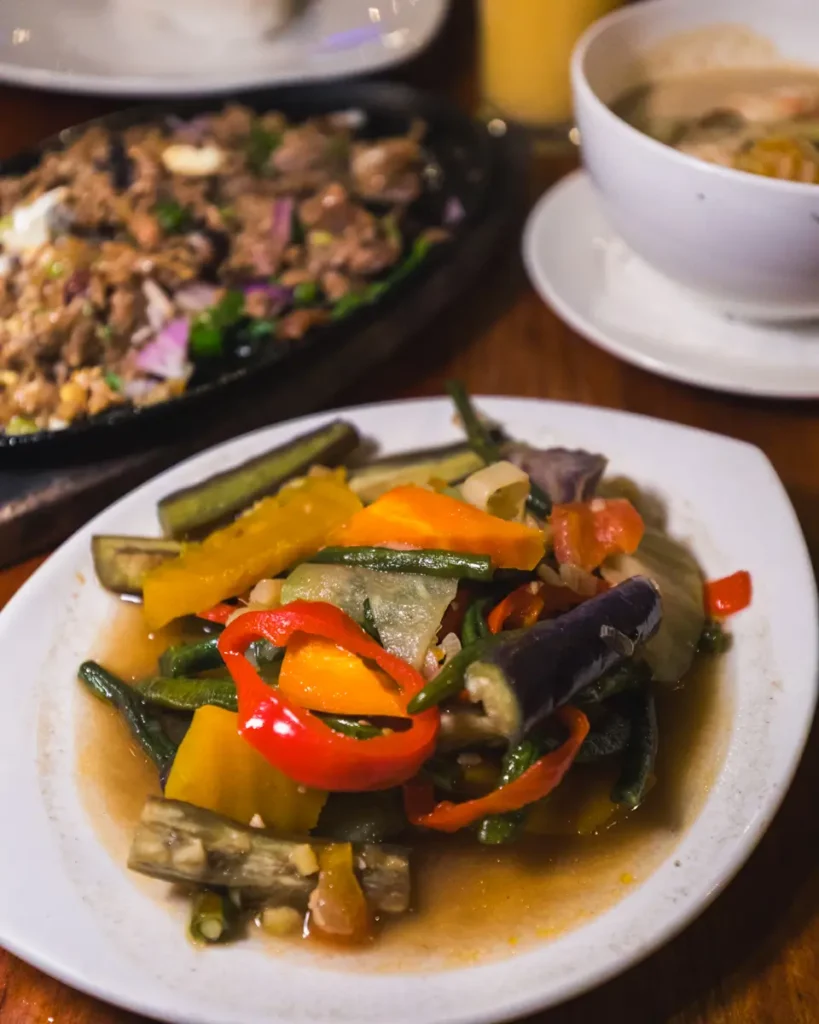
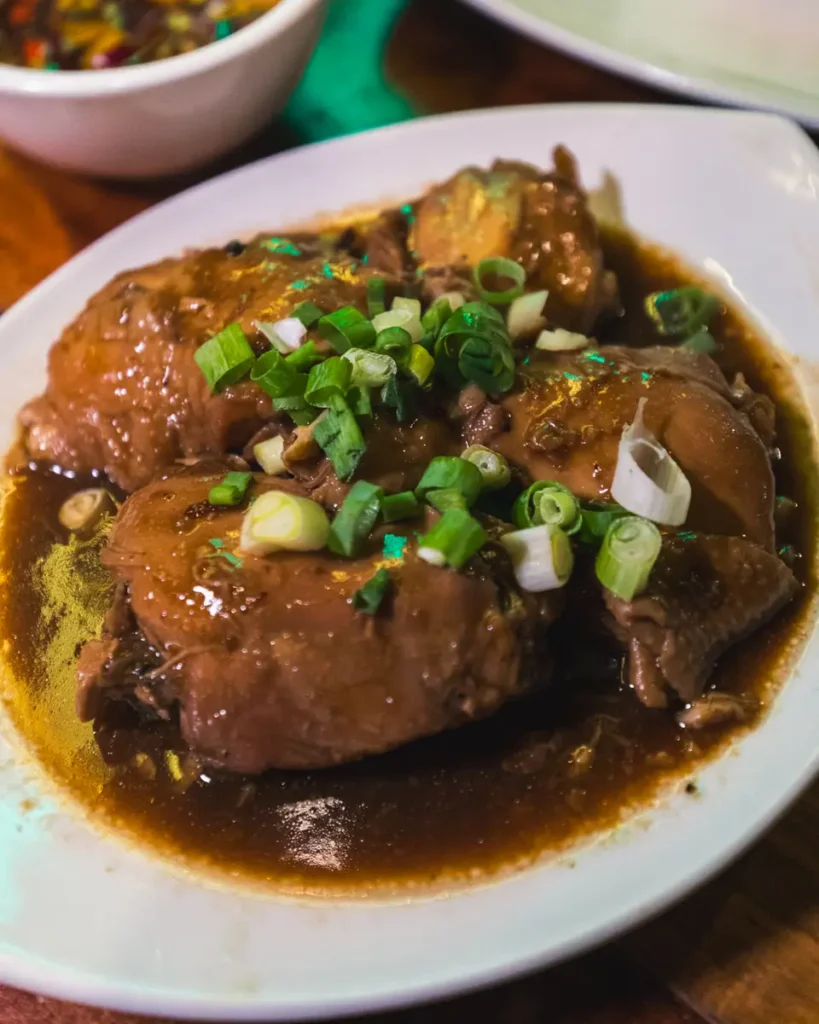
Ven’z Kitchen opened in 2016 and has become one of the most reliable places in Moalboal for straightforward carinderia-style Filipino food. It’s also the best option in town if you’re vegetarian or vegan and still want to eat Filipino dishes rather than Western substitutes. The menu is clearly divided into vegan, vegetarian, and meat sections, with plant-based versions of classics like ginataang talong, monggo, vegetable kare-kare, and coconut-based vegetable stews. Meat eaters are equally well covered with bicol express, pork humba, sinigang, crispy pata, and other familiar comfort dishes.
Ven’z Kitchen is also unique in that it runs some very worthwhile Filipino cooking classes at 2500 PHP per person. The experience begins with a tour of the local public market to shop for ingredients and have a traditional breakfast, followed by hands-on cooking back at the kitchen, where you prepare several Filipino dishes from start to finish. The specific dishes vary, but unless vegetarian or vegan has been requested, there’s one chicken dish, one pork, one veggie, and a fresh fruit platter provided. The class ends by sitting down to eat what you’ve cooked, and the charming owner sends you the recipes to take home with you. It’s best to message them on Facebook ahead of time to check availability and arrange a class.
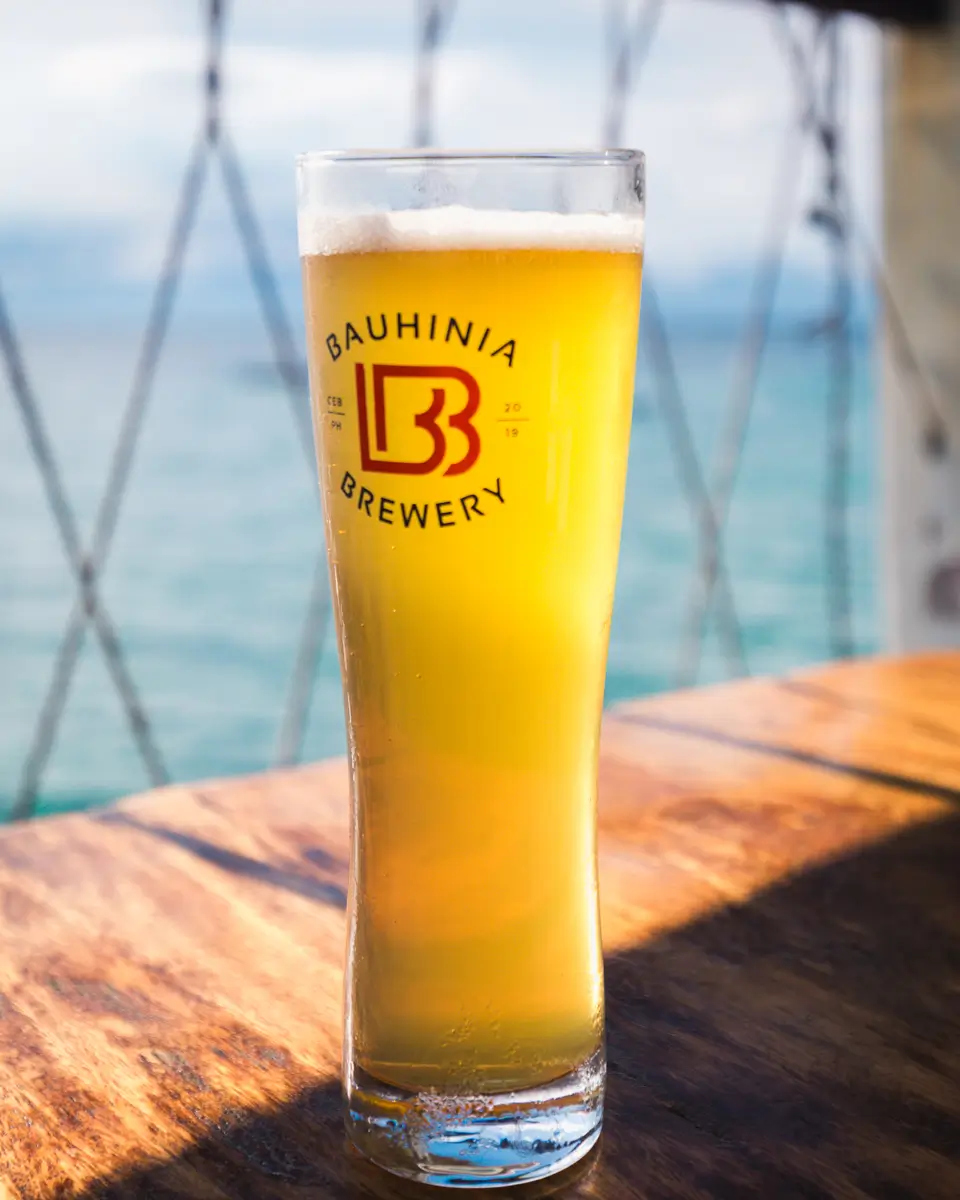
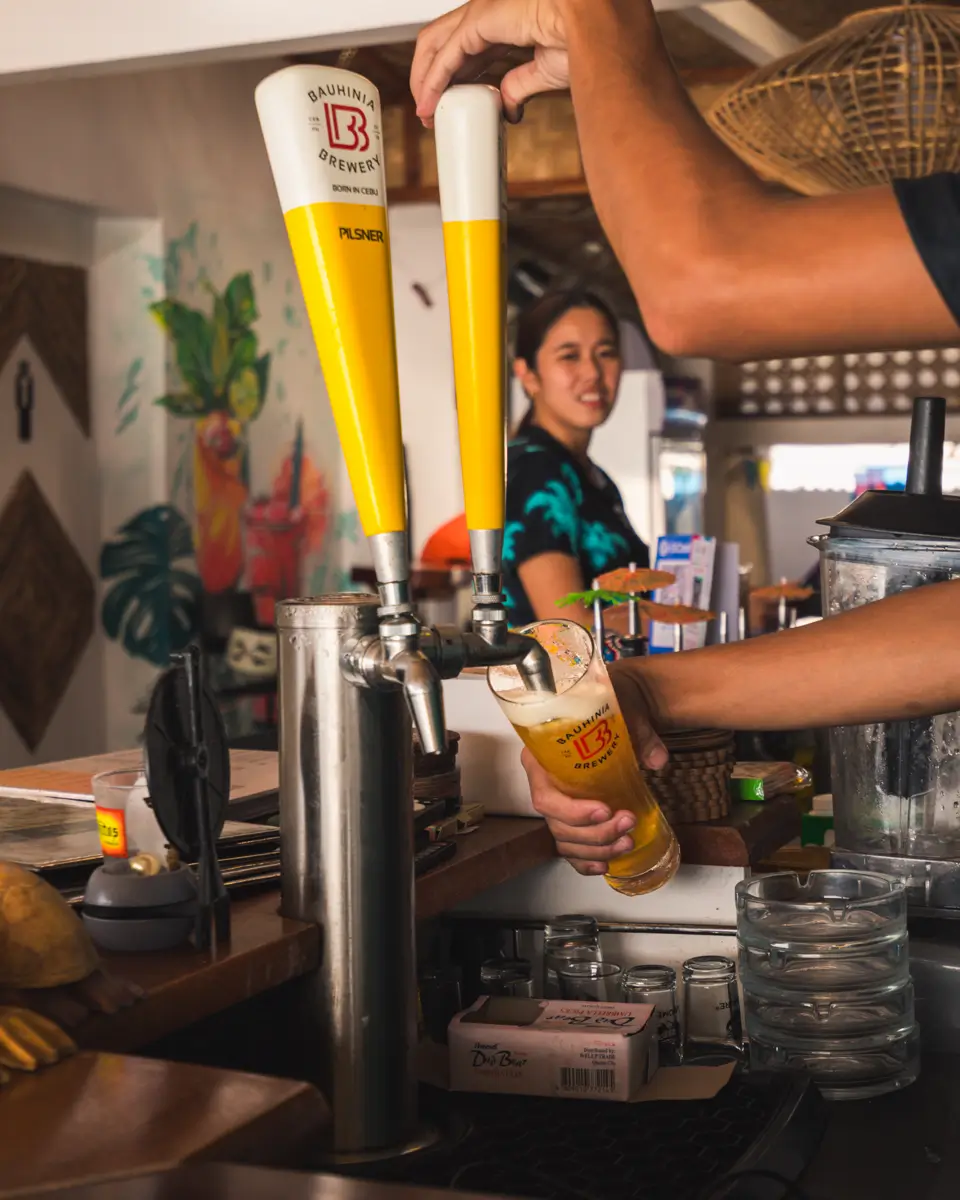
16. Local Craft Beer
Beer in the Philippines is overwhelmingly dominated by two options: San Miguel and Red Horse, which are cheap, easy to find, and easy to drink. Far be it from me to say anything negative about these Filipino classics, but if you’re up for giving local craft beer a try as well there are certainly options available. Bauhinia is a small craft brewery with a very solid Pilsner and an IPL as their most commonly poured offerings. While the brewery itself is in Cebu City, you can find Bauhinia beers on tap in Moalboal, for now at Three Bears, Tilás Lounge, and Smooth Cafe.
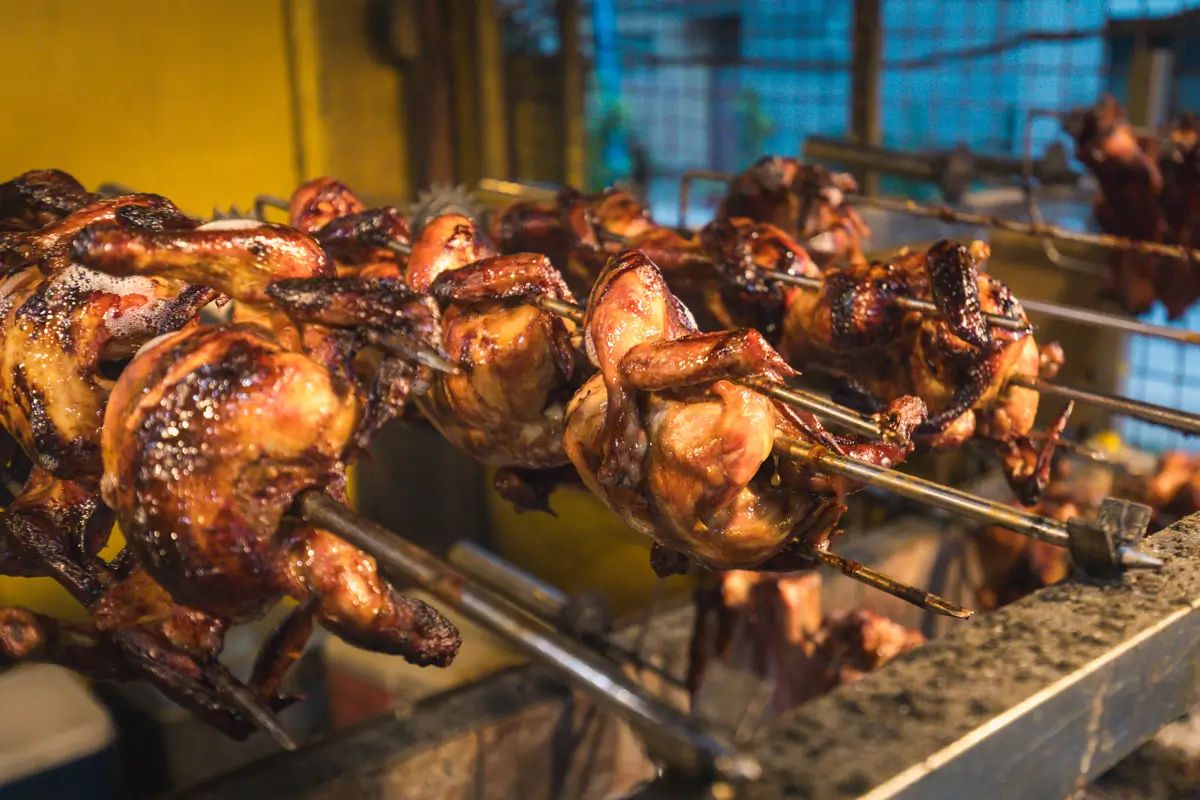
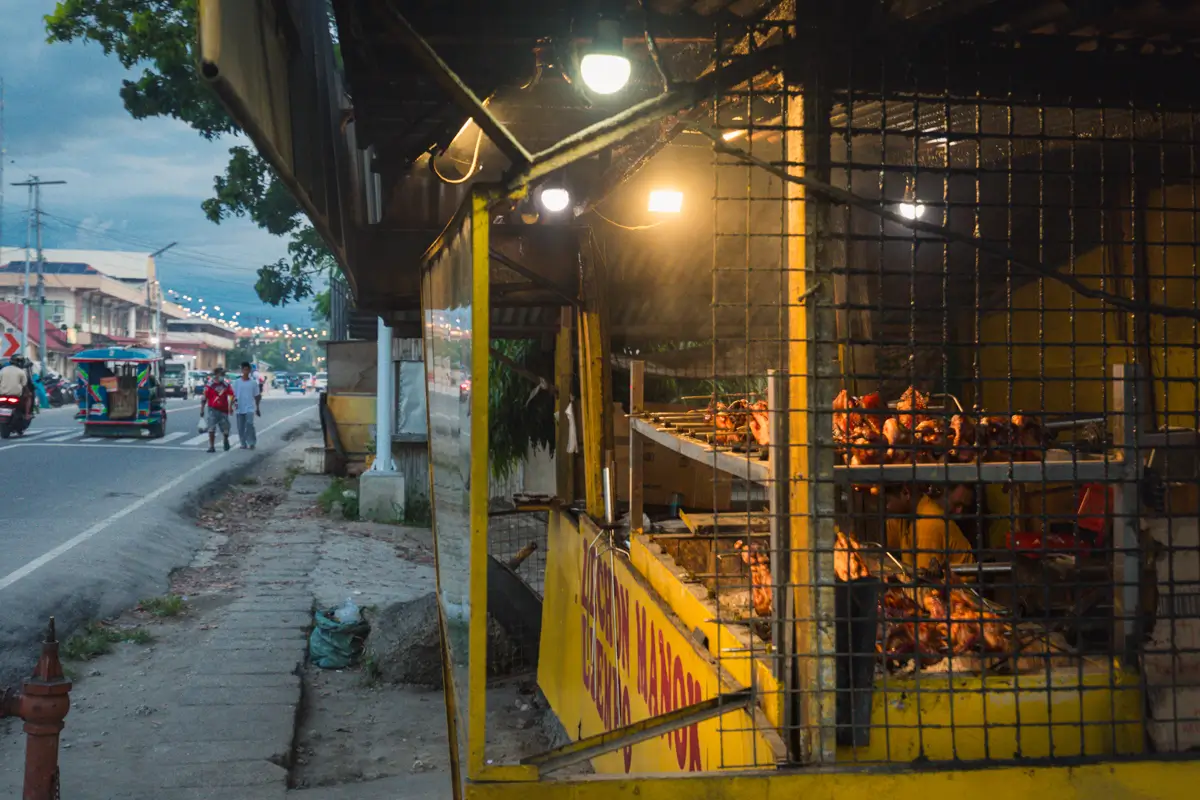
17. Panyang BBQ for Lechon Manok
Lechon manok is the everyday rotisserie chicken of the Philippines, and it’s also one my absolute favourite dinners ever. Unlike lechon baboy, which is a whole roast pig reserved for big celebrations, lechon manok is fast, affordable, and eaten any day of the week. While it is possible to find in fancy restaurants, it’s an indisputible fact that no matter where in the world you are the best roast chicken comes from the side of the road. Throughout the Philippines, you can spot roadside stalls in the late afternoon with glowing coals, rows of succulent chickens turning on spits, and smoke drifting into the street. In Moalboal, my preferred stop is Panyang, impossible to miss thanks to its bright yellow signage.
Whole chickens are marinated in a simple but effective mix of soy sauce, calamansi or vinegar, garlic, pepper, and sugar, then slowly rotated over charcoal until the skin turns bronze and lightly blistered while the meat stays juicy. You buy it chopped to order, packed into paper, and served with rice and sawsawan. Panyang also grills liempo, thick slabs of pork belly marinated and cooked until smoky and crisp at the edges, as well as lechon belly, a rolled and herb-stuffed boneless version of lechon baboy with crunchy skin and rich layers of fat and meat.
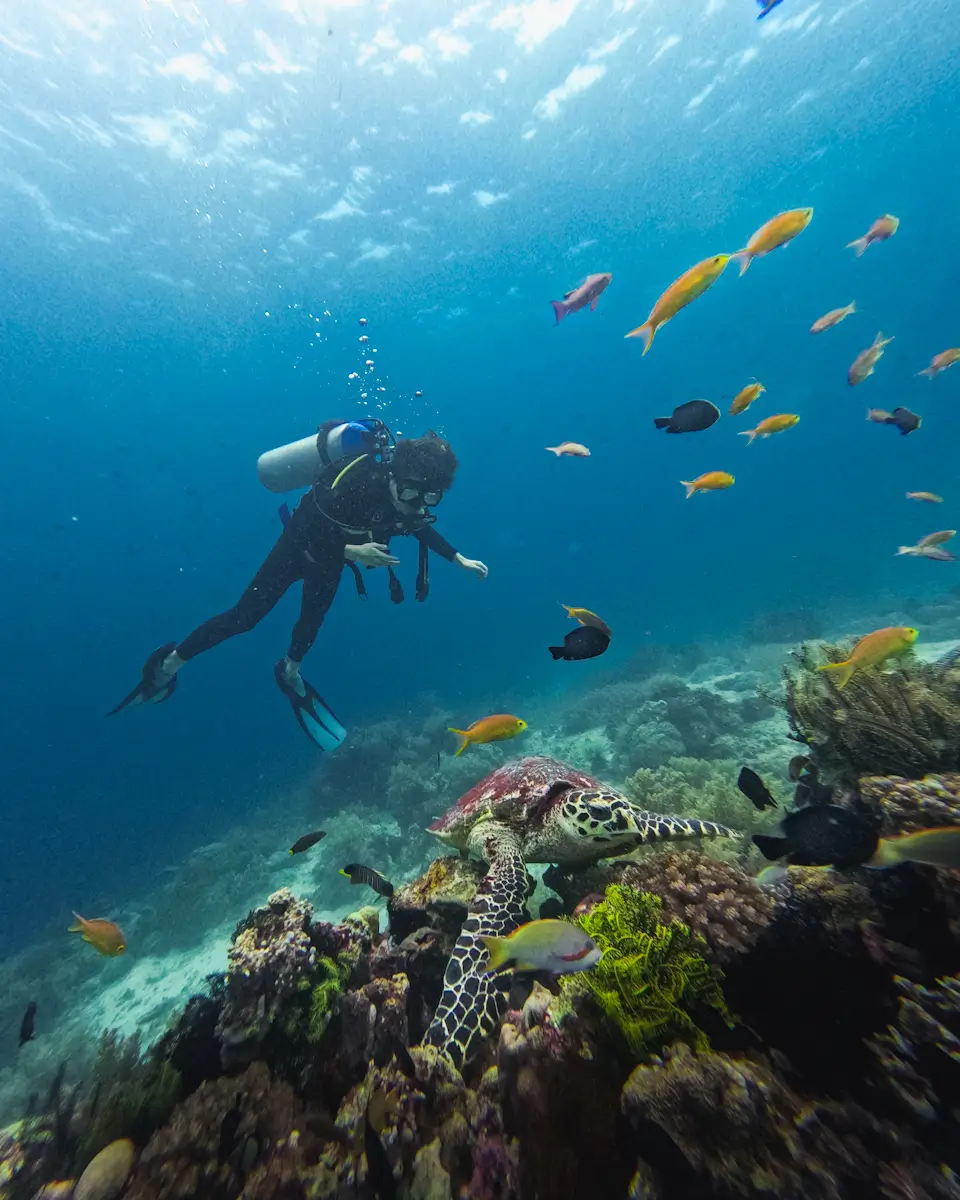
18. Scuba Diving
Moalboal is a convenient place to do a scuba course because of Panagsama’s dense run of dive shops and easy shore entries. The strip does get busy and the difference between a good course and a rushed one is usually group size, clear briefings, and a good instructor. If you’re already an experienced diver, Moalboal works best as a no-fuss dive base where you can roll out of bed and be in the water fast, with easy access to the sardines, nearby walls and reefs, and day trips that keep your logbook varied. Savedra Dive Center is frequently thrown around as the best dive shop in Moalboal, but I’ve also heard good things about Cebu Fun Divers and Neptune Diving Resort.
19. Freediving
Freediving is diving underwater on a single breath instead of using a scuba tank, so you’re moving in short, quiet drops where the goal is relaxed technique, safe buddy habits, and spending a few minutes at a time below the surface rather than doing a long tank dive. In Moalboal the sardine run is the obvious draw, and freediving changes the experience because you can drop into the edge of the school, drift through it, then come back up and reset instead of just watching from the surface. If you’re brand new, do it with a proper instructor or guide. Freediving Planet Moalboal comes very highly recommended.
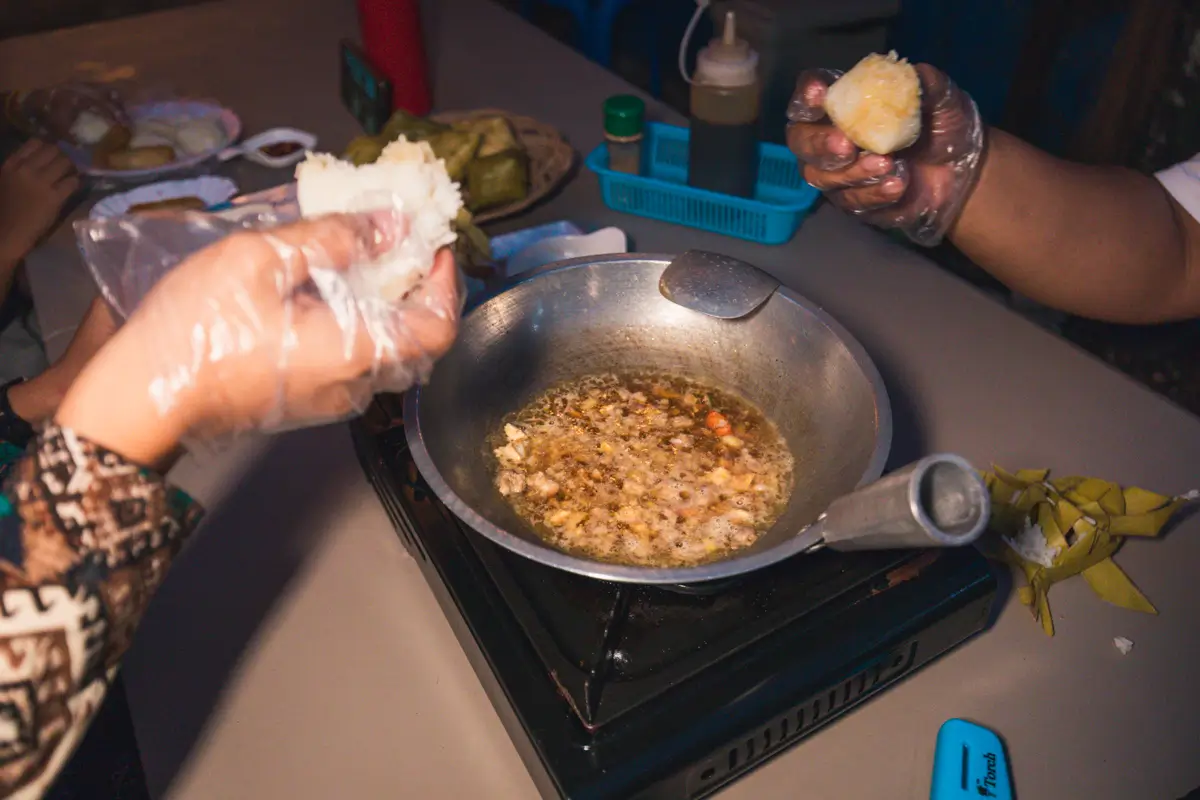
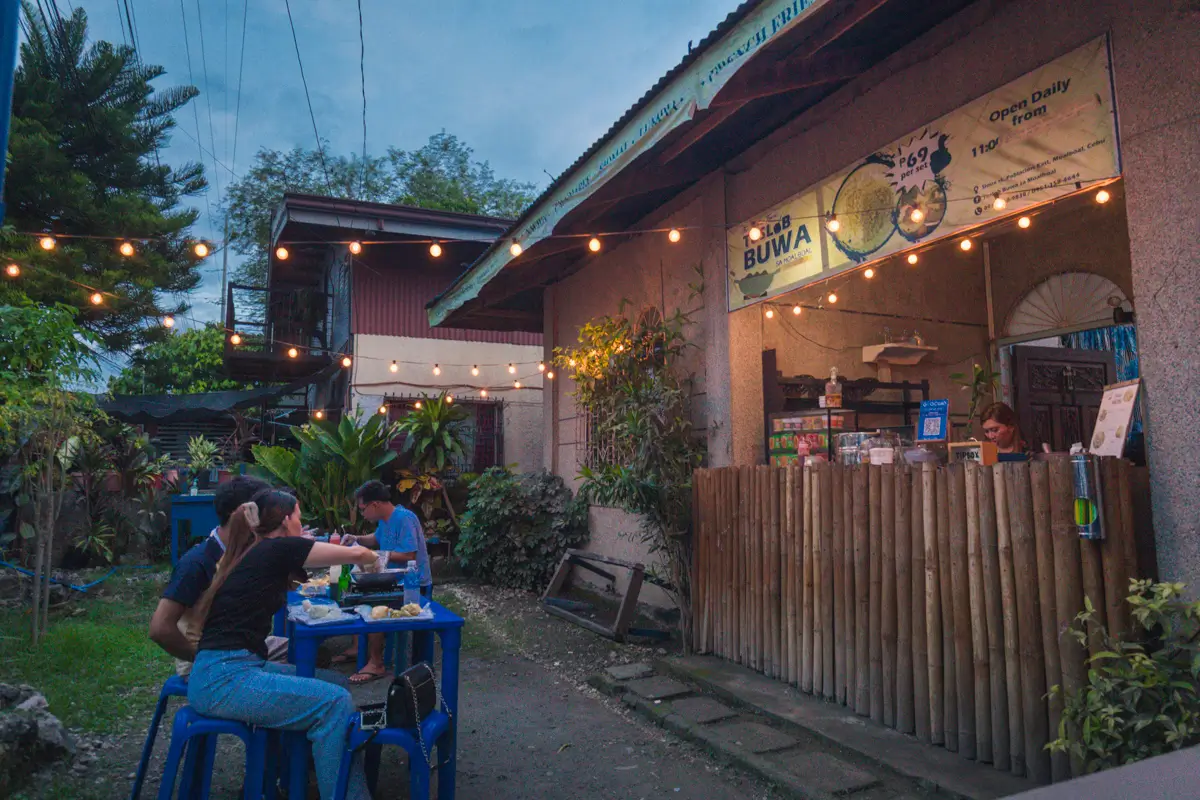
20. Tuslob Buwa sa Moalboal
Tuslob buwa, literally “to dip in bubbles”, is a typically communal meal in which puso (rice in woven coconut leaves) is dipped in a sort of pig bran gravy. It’s most commonly associated with Cebu City, but it’s also possible to try it in Moalboal.
First garlic, onions, and oil are added to a wok, sometimes with liver paste or ground pork to boost the umami. Once that’s sautéed, the utak (pig’s brain) goes in. It’s mashed and stirred until it emulsifies into a thick gray sludge. Seasonings vary by cook, but soy sauce, fish sauce, black pepper, and MSG are common. The mixture thickens and froths as it cooks – hence the buwa – and the whole thing is meant to stay bubbling as you eat as you crowd around the pan with friends or strangers, grab a chunk of puso, and dip directly into the wok. Tuslob buwa is rich, umami, delicious, and definitely a little putok batok – a local slang term for dangerously rich, artery-clogging food (literally “neck explosion”).
21. Manang Fe BBQ
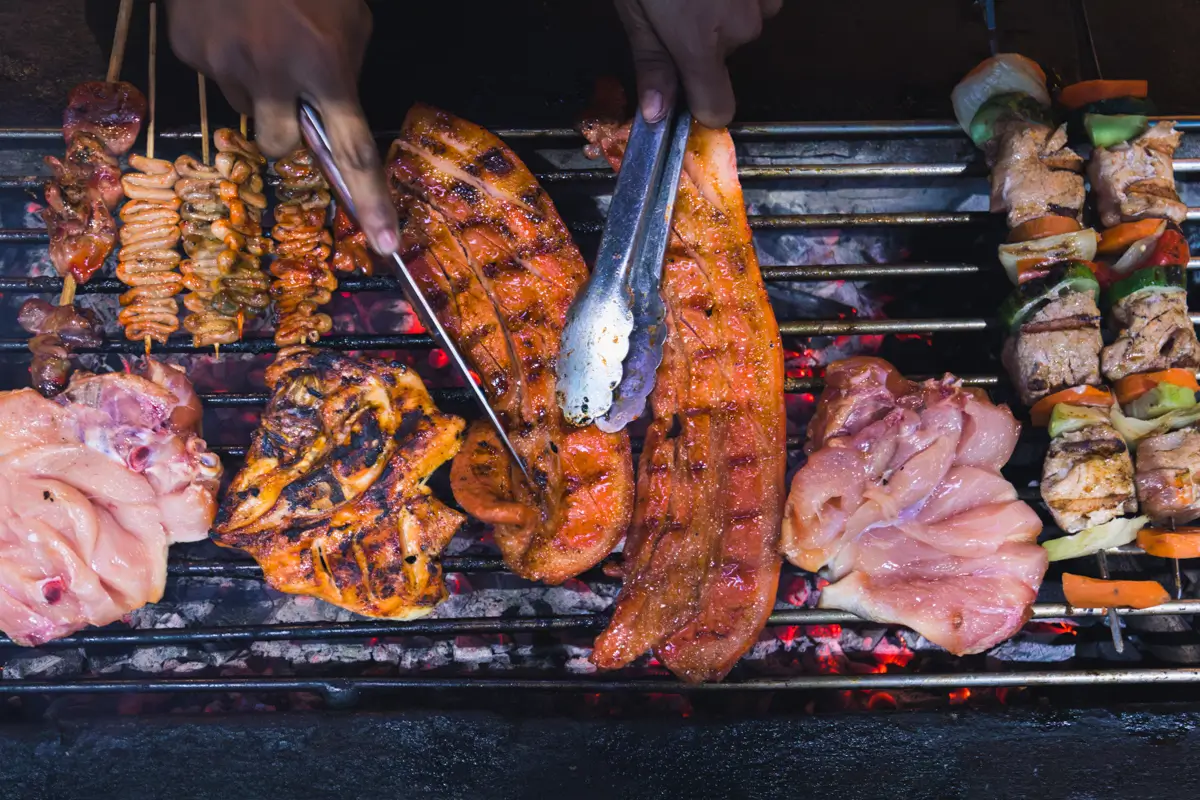
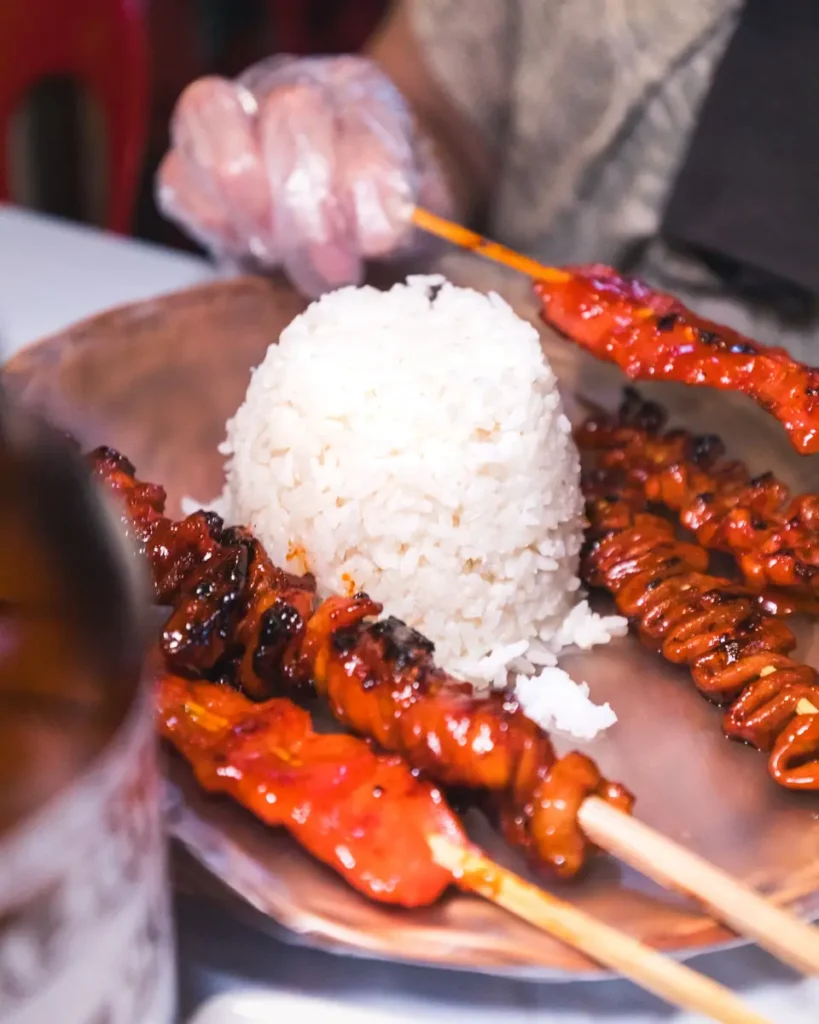
Sinugba is Filipino charcoal grilling, usually done on a long, shallow ihawan where meats and seafood cook fast over very hot coals, then get brushed with a sweet-savoury basting sauce as they pick up smoke and char. A table can order a few skewers, large cuts of pork or chicken, chorizo, and some grilled seafood, then pair everything with rice and a sawsawan.
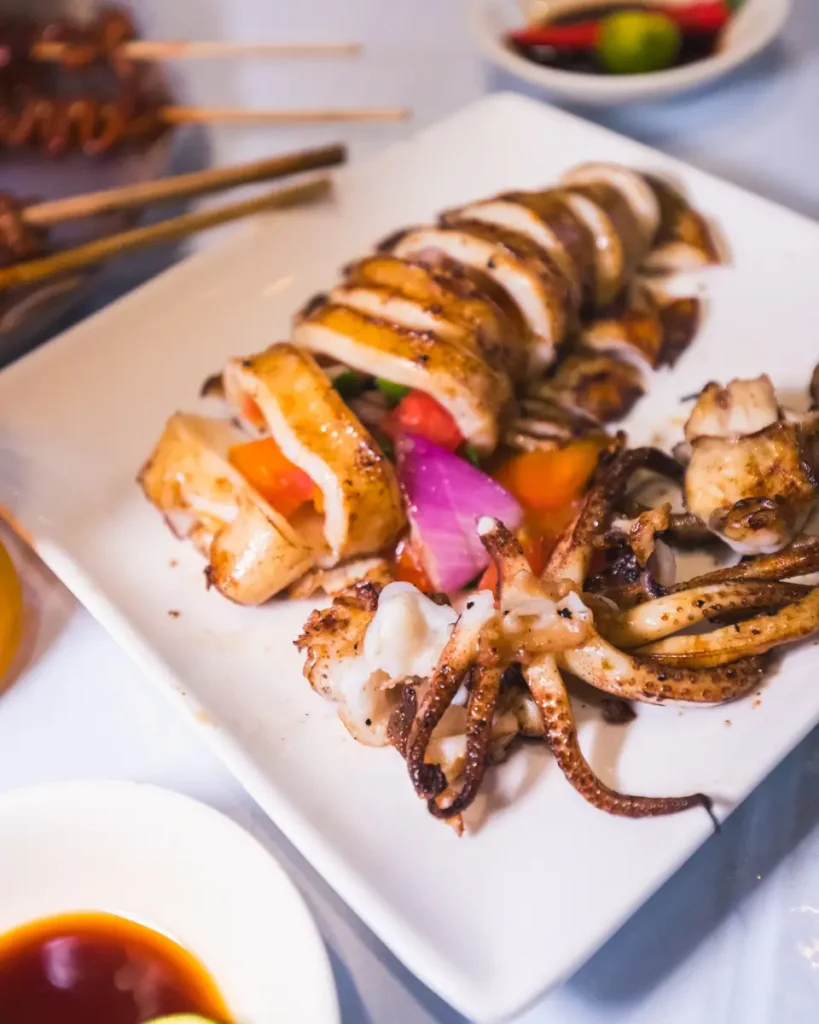
Manang Fe BBQ is a Cebu City sinugba chain with multiple branches, and the Moalboal location is the biggest and most well-known place for Filipino BBQ in Moalboal. While most sinugba spots are dimly lit simple roadside set-ups, Manang Fe is a popular place for travellers because it’s set up like a proper restaurant, with a large, clean, open seating area and a counter-order system where you can quickly choose what you want. A great place to start is with straightforward staples like chicken leg and pork belly, but don’t be squeamish – you’ll also love the chicken skin and chicken intestines. I promise. Since this is a seaside town, you also don’t want to miss out on the grilled seafood. They’ve got all the classics from shrimp skewers to squid to tuna belly, and it might take more than a few visits to work your way through all the options.
22. LMAO
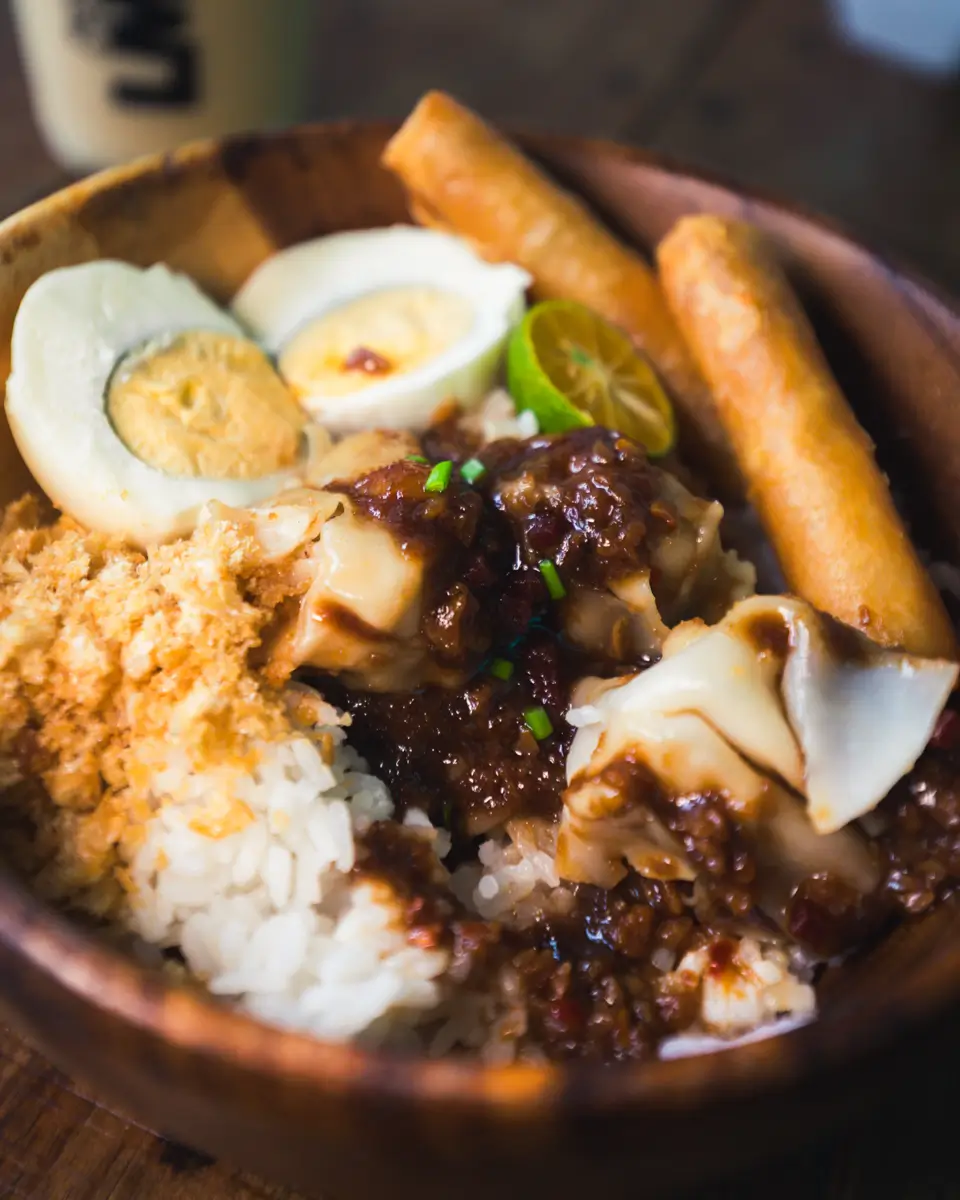
Lamaw is a Cebuano street food that you’ll find commonly outside public schools and markets. It’s a humble rice bowl (with a name that translates to slop, or animal feed) that starts with a scoop of rice in a plastic cup or bowl, topped with siomai, a hard-boiled egg, then is doused in sweet garlic soy sauce and topped with crushed chicharon for crunch. Squeeze a little calamansi and mix it all up and you’re good to go. For some of the most affordable food in Moalboal, visit LMAO. They offer a variety of different lamaws each with a different protein added, from porkchop to chicken cutlet to ginabot, lumpia, or chicken skin. They also have a variety of other budget meals including silogs and pares.
23. Kugita
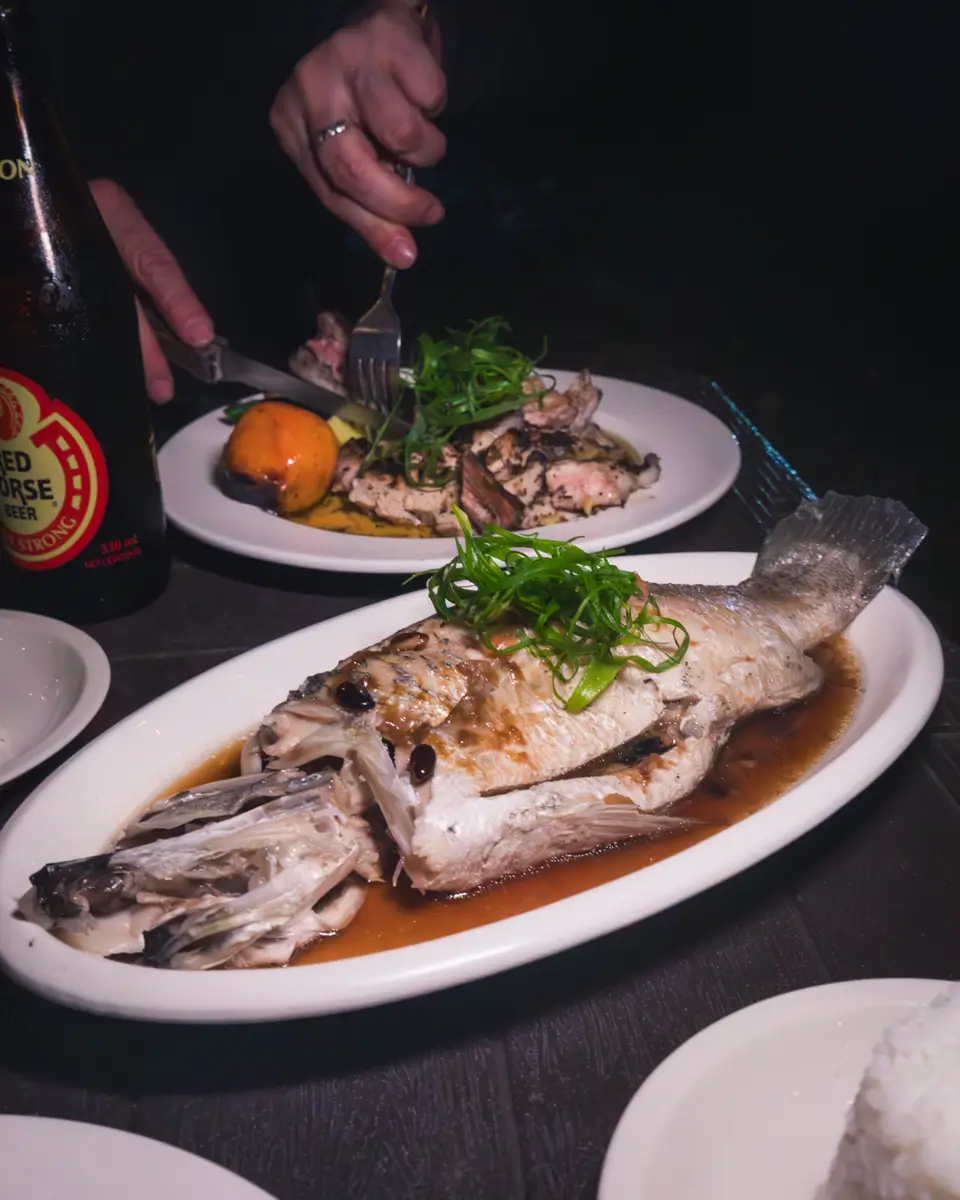
Ask around for the best restaurant in Moalboal, and you’ll reliably hear about Kugita. Opened in 2018 by Jay Garife, the kitchen reflects his years working as a chef in California and Costa Rica. This isn’t traditional Filipino, but nearly everything in the menu utilizes high-quality local flavours in a fresh contemporary way. The highlight of the menu is the tomahawk porkchop in a tuba-based sauce, but equally appetizing are the variety of fresh seafood dishes (including the hands-down best kinilaw in Moalboal). Make sure to also give the various maki rolls a go, which is where Garife’s experience as a sushi chef shines, combining Japanese technique with local flavours. There’s a very solid chance that this meal will be your favourite one you have in Moalboal.
24. Town Center
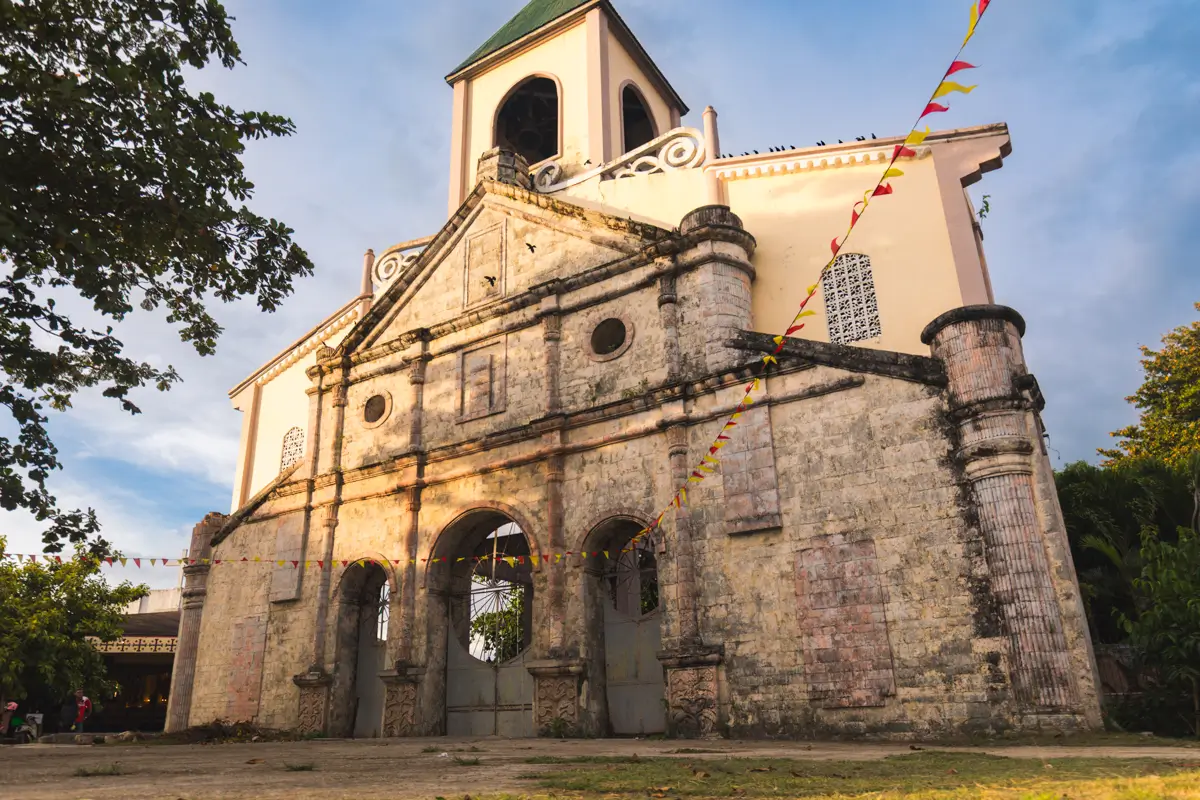
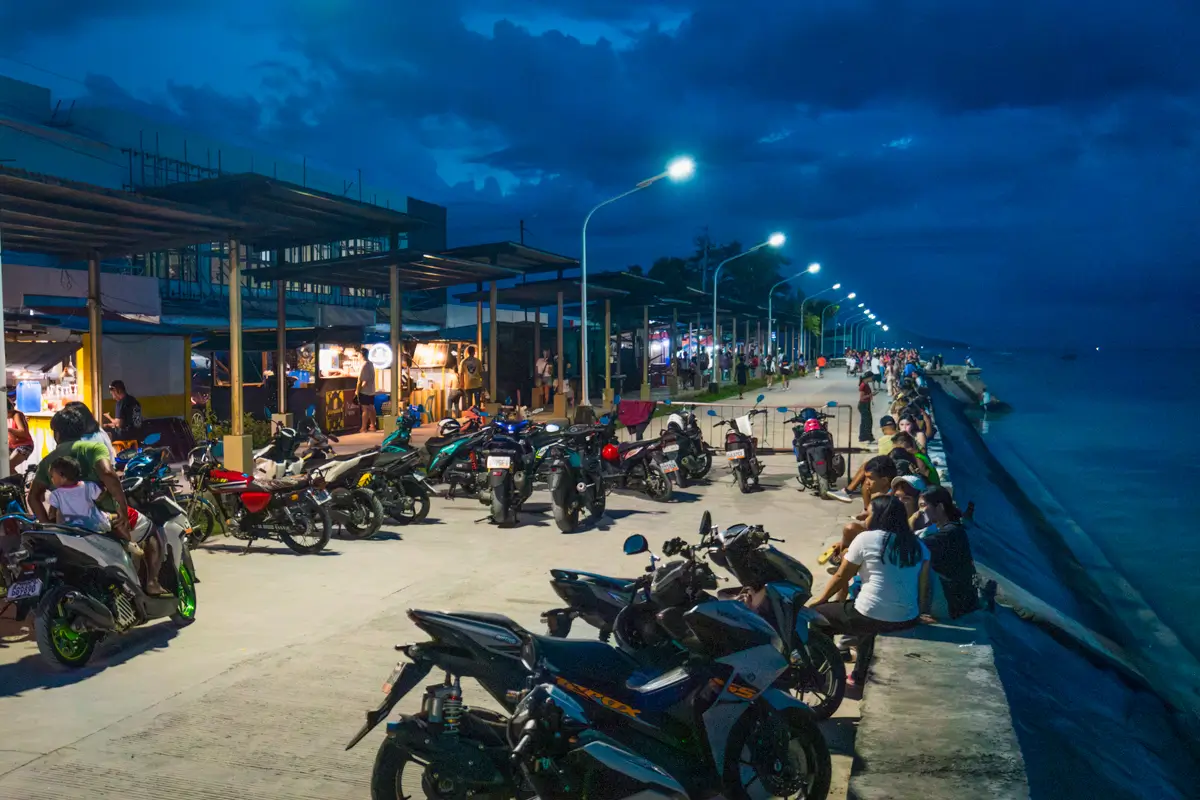
Moalboal’s town centre is worth a loop even if you’re staying out on Panagsama, because it’s where you get the everyday version of the place, with the public spaces and the sunset crowd rather than dive-shop traffic. The tulay (pier) is the focal point. During the day it’s the place to visit the fruit stall and depart on boat tours, but around early evening, especially on weekends, it comes to life as a casual street-food zone, with small sellers setting up so you can grab a few grilled or fried snacks and appreciate the spectacular sunset views. During dusk it’s the most popular spot to hang out among Moalboalanos, and you’ll spot people eating, dancing, and exercising. A few minutes away, Moalboal Seaside Park gives you a flat, open stretch by the shore with benches. You may spot street food sellers here too. Nearby, the ruins of the old San Juan Nepomuceno church are easy to miss if you’re not looking for them, since what survives is mainly the stone facade. The parish itself dates to 1852 and the old structure was condemned in 2005 after years of storm and earthquake damage.
25. Ate Bing’s
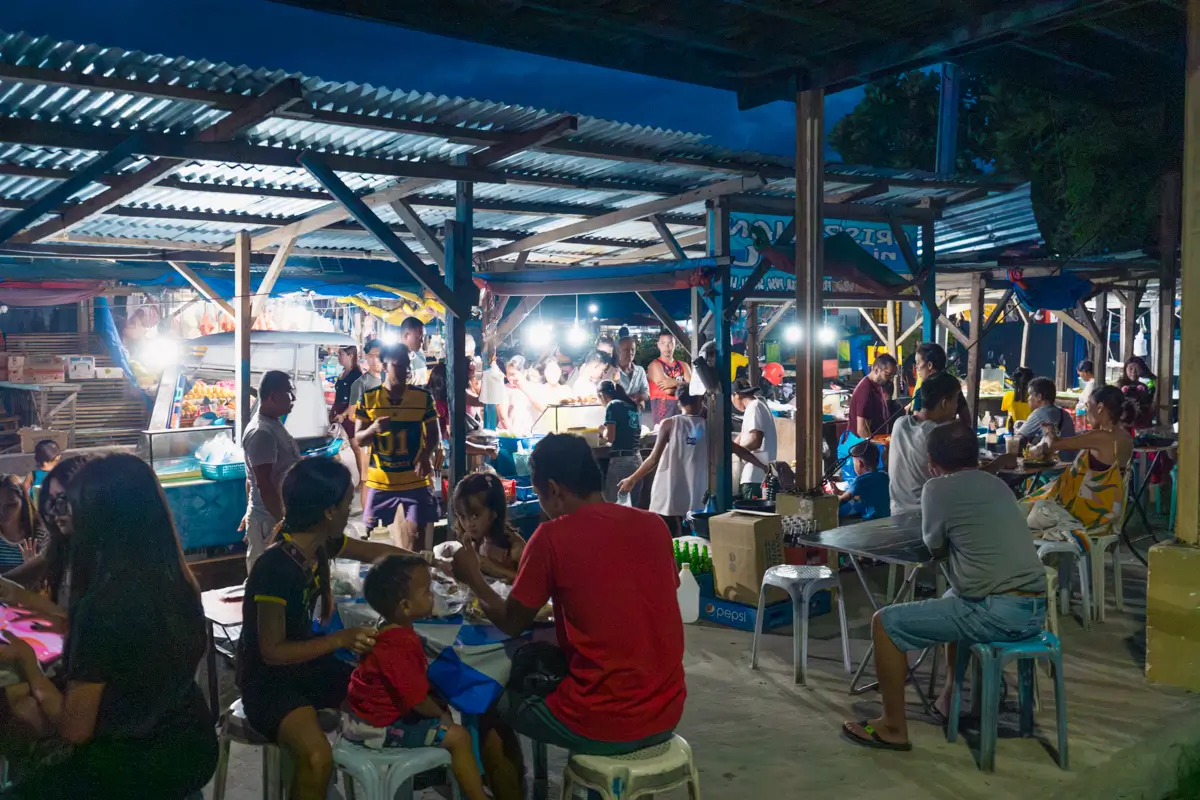
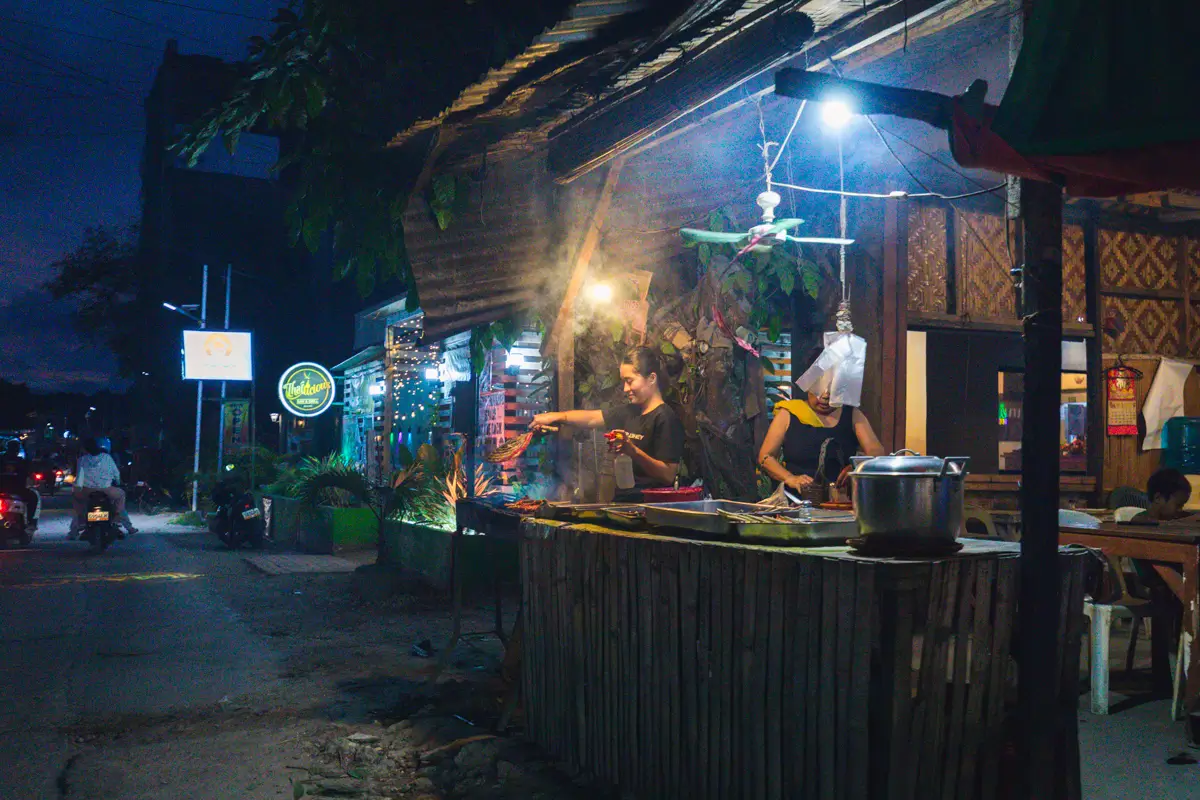
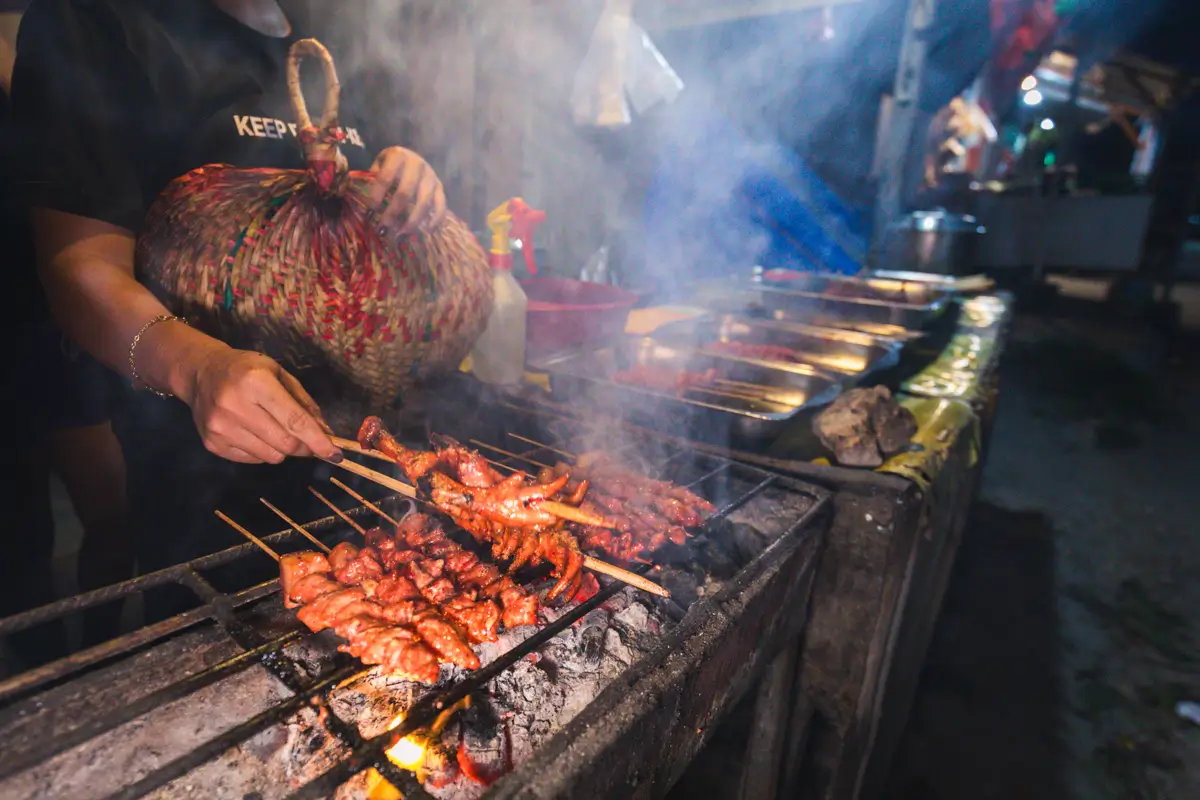
While I recommend Manang Fe BBQ for tourists who want to prioritize the restaurant-style experience, my personal favourite spot for sinugba on the Panagsama strip leans a bit more old-school. This small signless carinderia / sinugba spot feels like a holdover from a decade ago when most of this street was just rural houses punctuated by the odd tindahan or carinderia. It’s a little out of place now with the Thai restaurant next door and a tattoo parlour across the street, but it has more personality than the surrounding places trying desperately to pull in Westerners.
It’s only a short walk from the nearby bars and hostels, making it the perfect place for a late night bite. The endlessly charming Ate Bing does a great job of grilling up the various cuts of meat while you sit and enjoy a beer, and is more than happy to have a good late night chat. When I’m in Moalboal I make a ritual of coming here almost every night around ten, when the vibes are fantastic, and the conversation flows.
The biggest benefit of choosing the local spot over the chain is the personality behind it, in more than just one way. If you ask Bing nicely, it’s possible to pick out your own seafood from the local wet market and bring it to her to grill it up for you perfectly later that day. Try doing that at any of the nearby restaurants.
26. Party on Panagsama Beach
Panagsama nightlife is a one-road, walkable setup where the same strip you use to book dives in the daytime turns into a loose bar crawl after dark on weekends, with most places open-air and facing the street so you end up drinking, chatting, and people-watching all at once as scooters pass. Expect lots of events – there’s always live music, trivia nights, and karaoke going on somewhere any given night of the week, but there aren’t any real parties except for on weekends. Truth be told, you don’t need to over-plan too much. The strip is walkable in ten minutes or so, so it’s easy to see with your own eyes where you want to try. My suggestion is to grab some food and a beer or two by the waterfront for sunset – got to get those classic Panagsama views – Chili Bar, Tilás Lounge, Breeze View Bar, and Neptune Bar are all good options with sunset views. Once it gets dark, follow the music to any of the popular late-night spots – try Haze Bar, The Nomad Music and Art Bar, or Blue Mango Bar. Don’t forget to pop out for late night sinugba to keep you going. Eventually most people make their way back to Chili Bar to cap off the night.
27. Carinderias
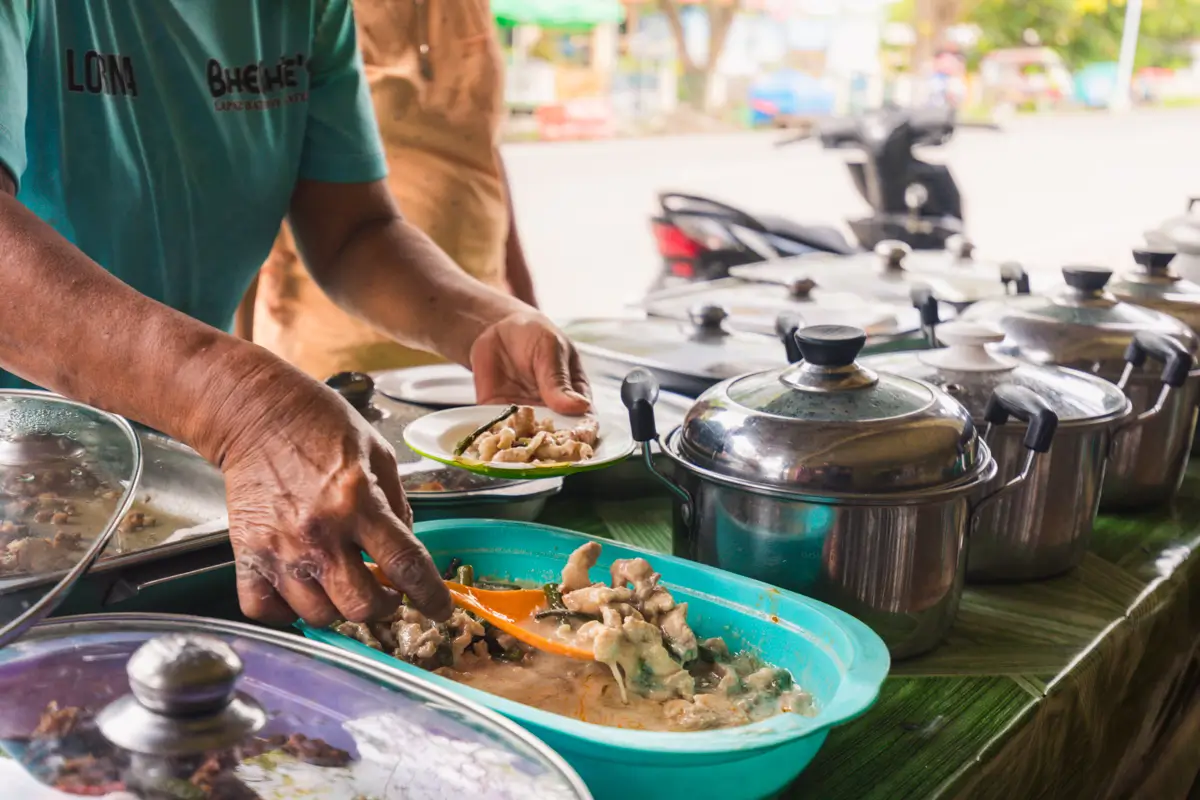
Carinderias are small Filipino neighbourhood eateries that cook a set of home-style ulam each day and serve it turo-turo-style, so you point at what you want, it gets plated with rice, and you’re eating within a minute or two. A lot of foreigners are scared of carinderias because they assume they’re unclean or unsafe, but the truth is that unlike the tourist restaurants, carinderias are more reliant on repeat local business. If anything it’s the restaurants where I’d be more careful. That said, go early when food is freshest, and don’t be afraid to try something unfamiliar. Portion sizes are small, so it’s easy to get two or three dishes and see what you like.
You won’t really find many carinderias left on the main Panagsama strip, but there are quite a few left if you stroll down one of the rural roads where locals still live, including Tubli Road, which turns right off of Panagsama next to Blue Mango Bar.
28. Oslob
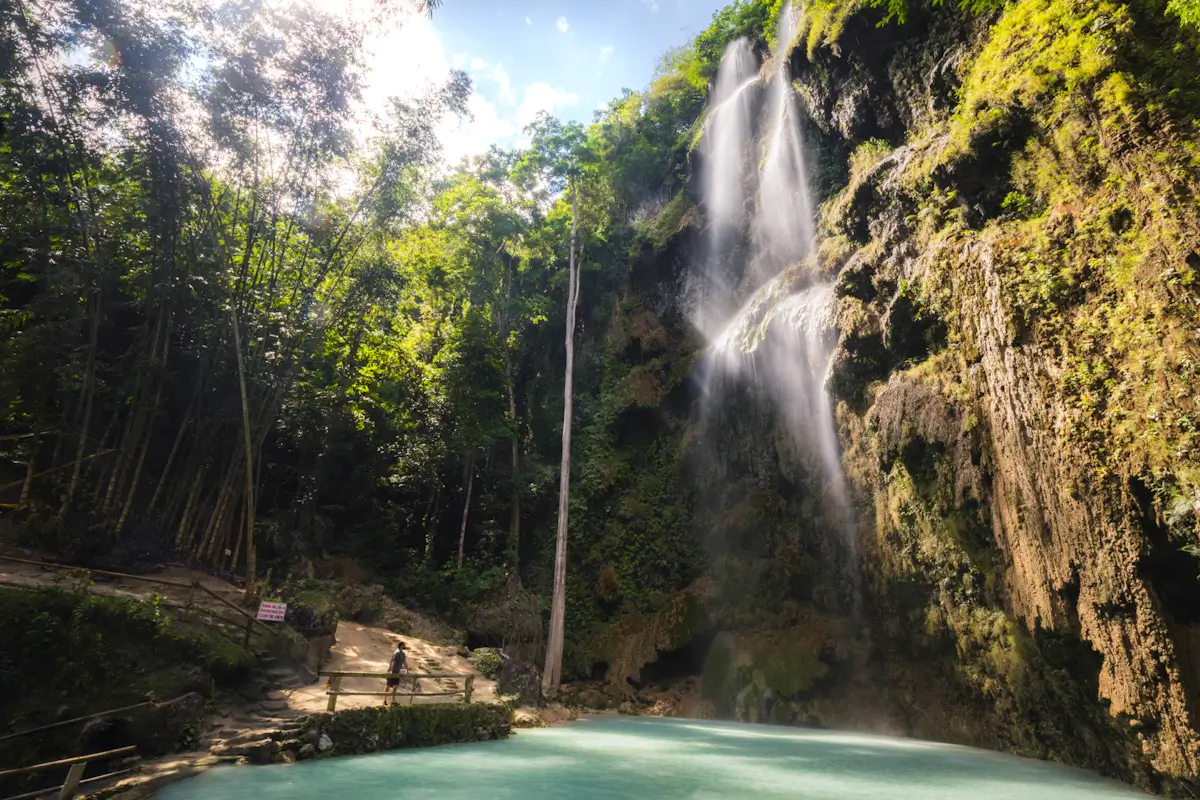
Oslob is not actually in, or really very near, Moalboal. Actually, this small town on Cebu’s southeastern coast is about 85 kilometres from Moalboal, which means a two to three hour drive each way. Most tourists visit Oslob just as a day trip from Moalboal, so despite its distance there are actually plenty of options for getting here. The whale shark activity is the main draw, but it’s not the only attraction. Tumalog Falls is just inland from Oslob, with its tall, light spray of a cascade dropping into a bright turquoise basin. A few minutes down the highway sits the cuartel, the unfinished 19th-century coral-stone barracks built by Spanish forces, which is one of the most interesting Spanish ruins on Cebu. Boats at the Oslob port also run quick crossings to Sumilon Island, home to clear shallows, good snorkeling, and a gorgeous sandbar that shifts with the tide
If you want to make a jaunt over to Oslob, you can of course rent a scooter yourself, but if you want to join in a tour or hire a private driver that’s also very easy to do. You can always arrange something in advance through your accommodation or direct on Facebook, but even if you just walk down Panagsama you’ll find several shops with signs advertising tours to Oslob.
Things to Do Outside Moalboal
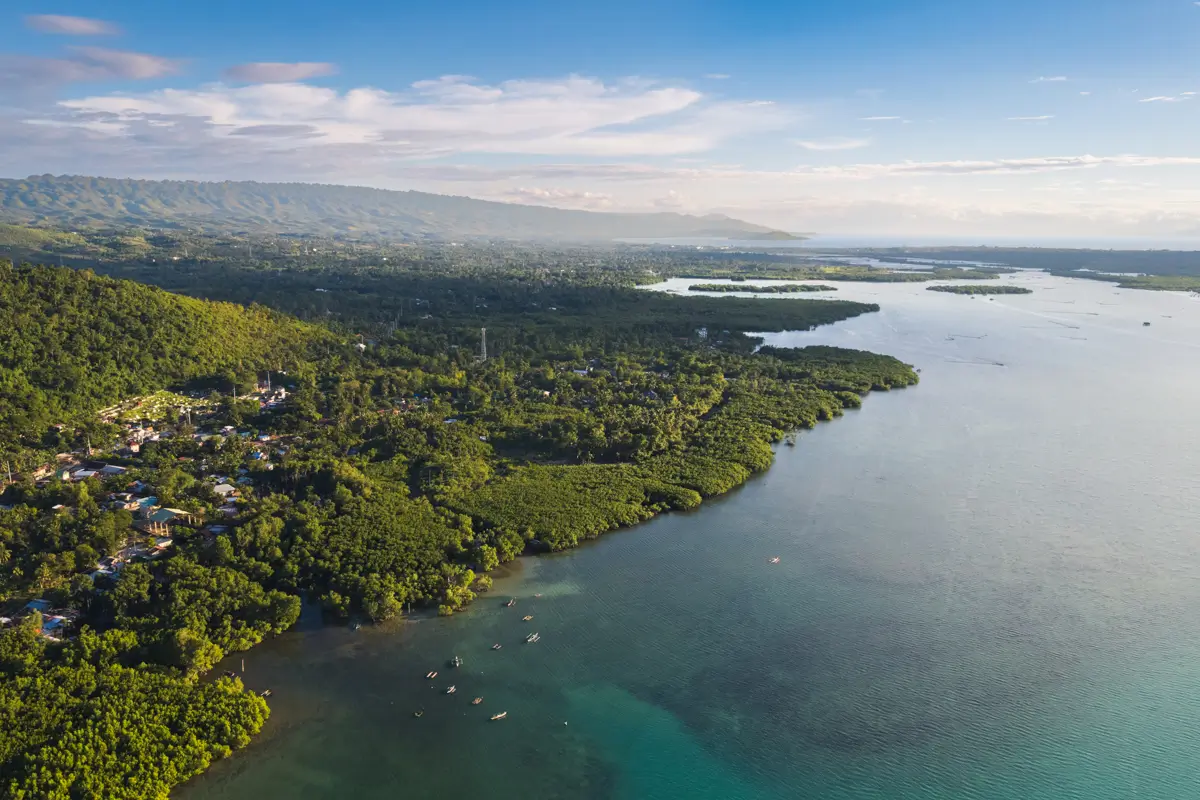
Many of the best things to do in Moalboal are found just outside town by driving either up or down Cebu’s southwest coast. Renting a scooter or arranging local transport makes it easy to reach nearby waterfalls, beaches, and viewpoints in places like Badian and Alegria, all within a short ride from Moalboal. I’ve included estimated driving times, and more or less ordered things from near to far. If you’re looking to book a driver to take you around, I have one I can recommend. I suggest messaging here.
28. Lambug Beach
30 minutes from Moalboal
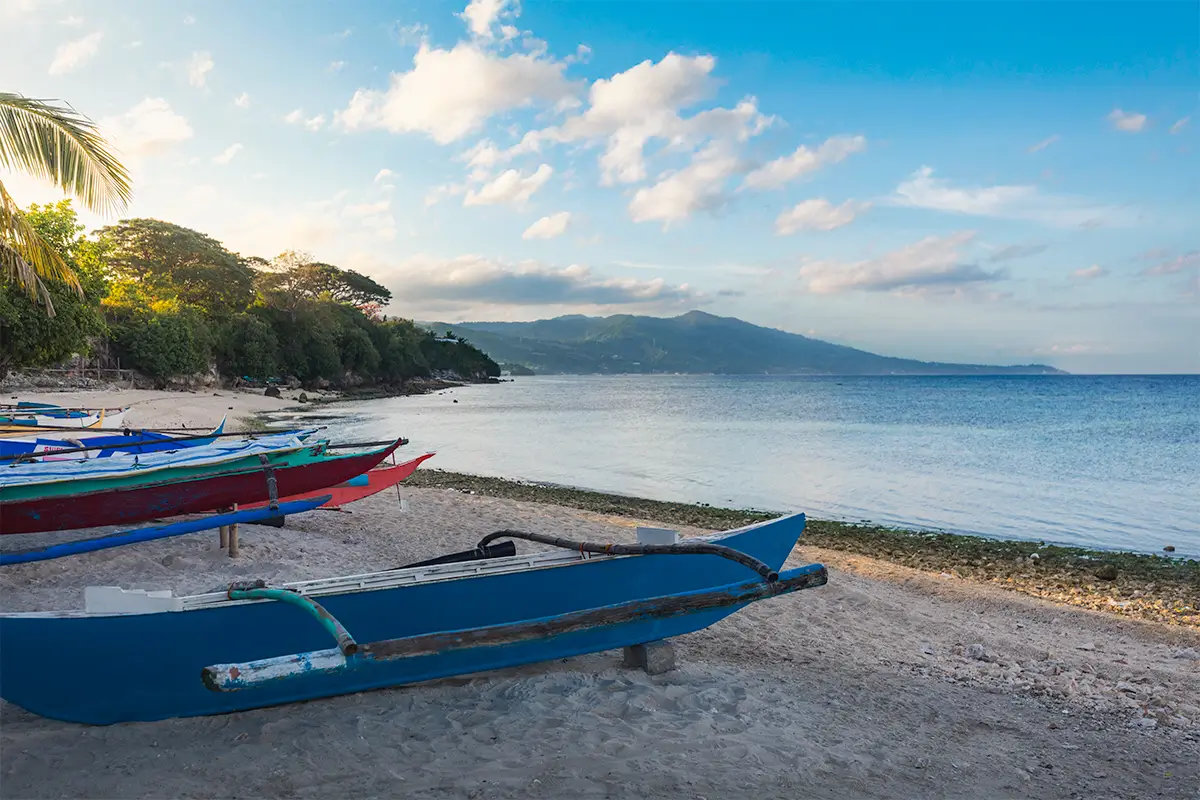
Lambug Beach is the easy sandy-beach day trip South of Moalboal when you want a proper sandy shoreline instead of the seawall entries around Panagsama, and it sits down the coast far enough that it’s much quieter than Basdaku Beach, with a more local crowd. Getting there is simple by scooter or a hired tricycle, usually around half an hour each way, making it a solid choice for sunset.
29. Palanos Mangrove Boat Tour
20 minutes from Moalboal
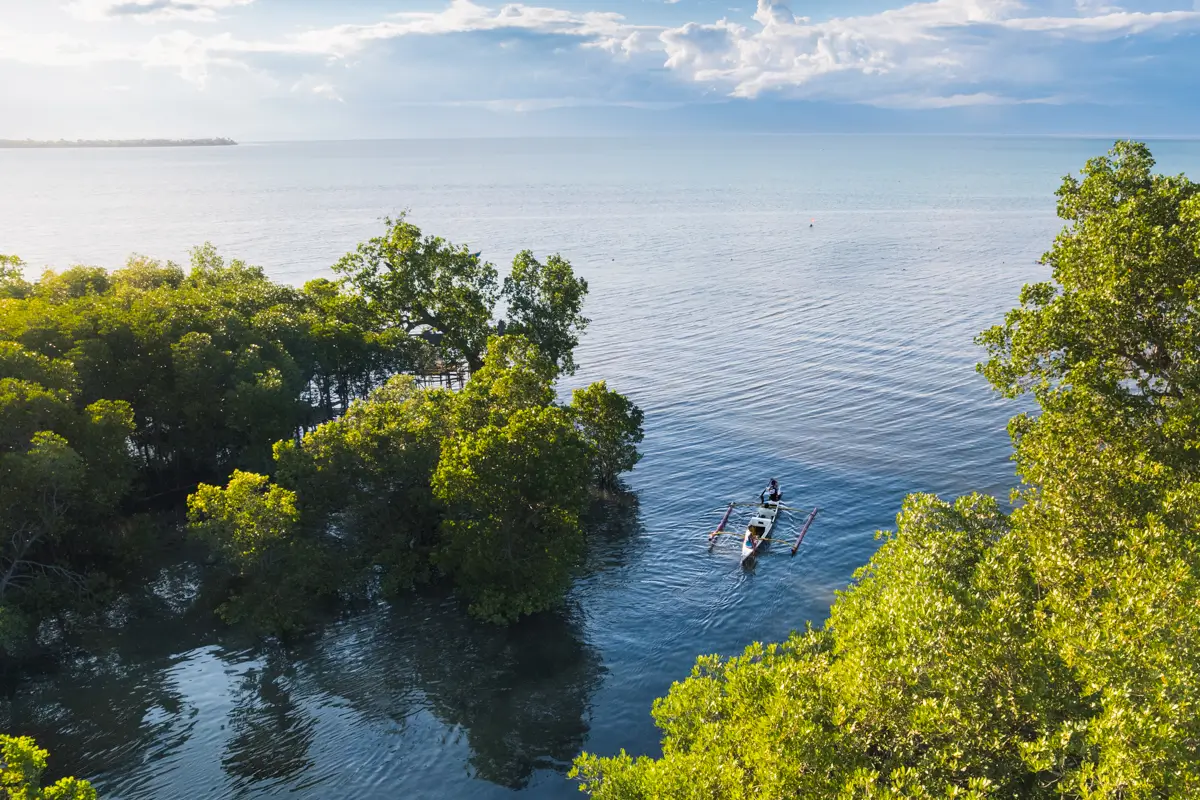
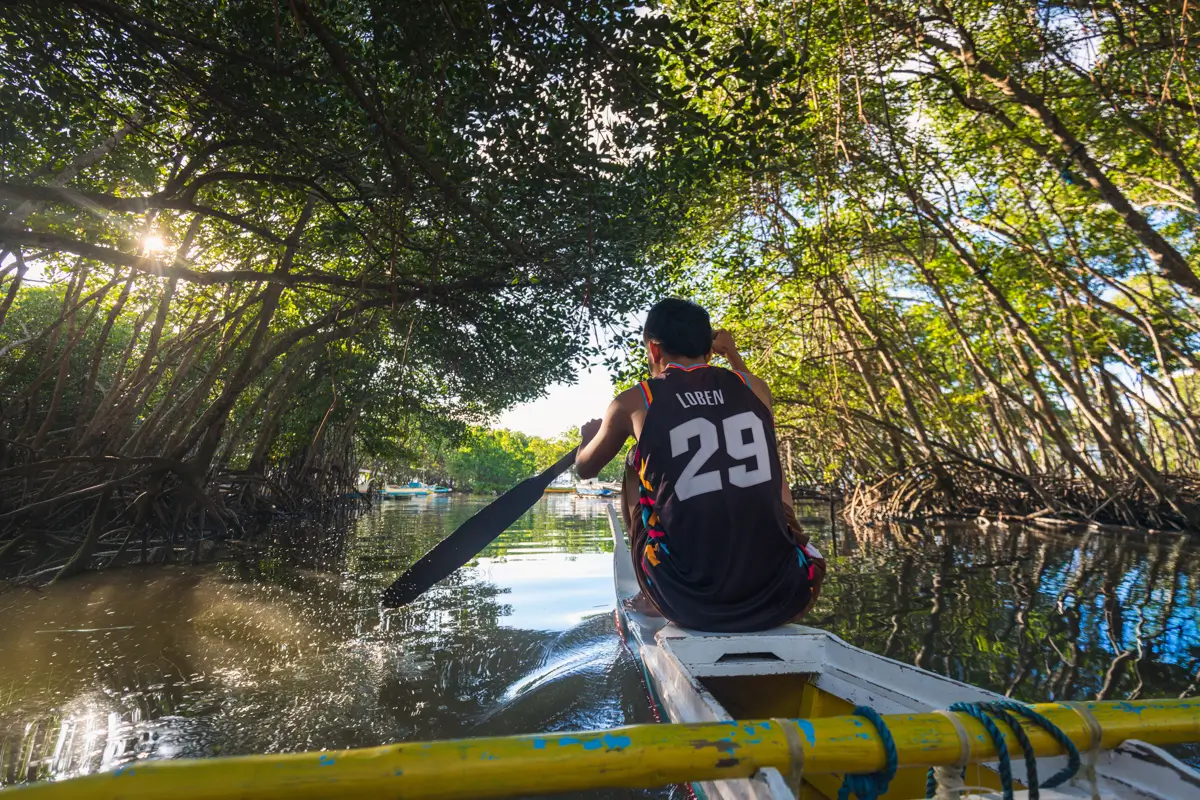
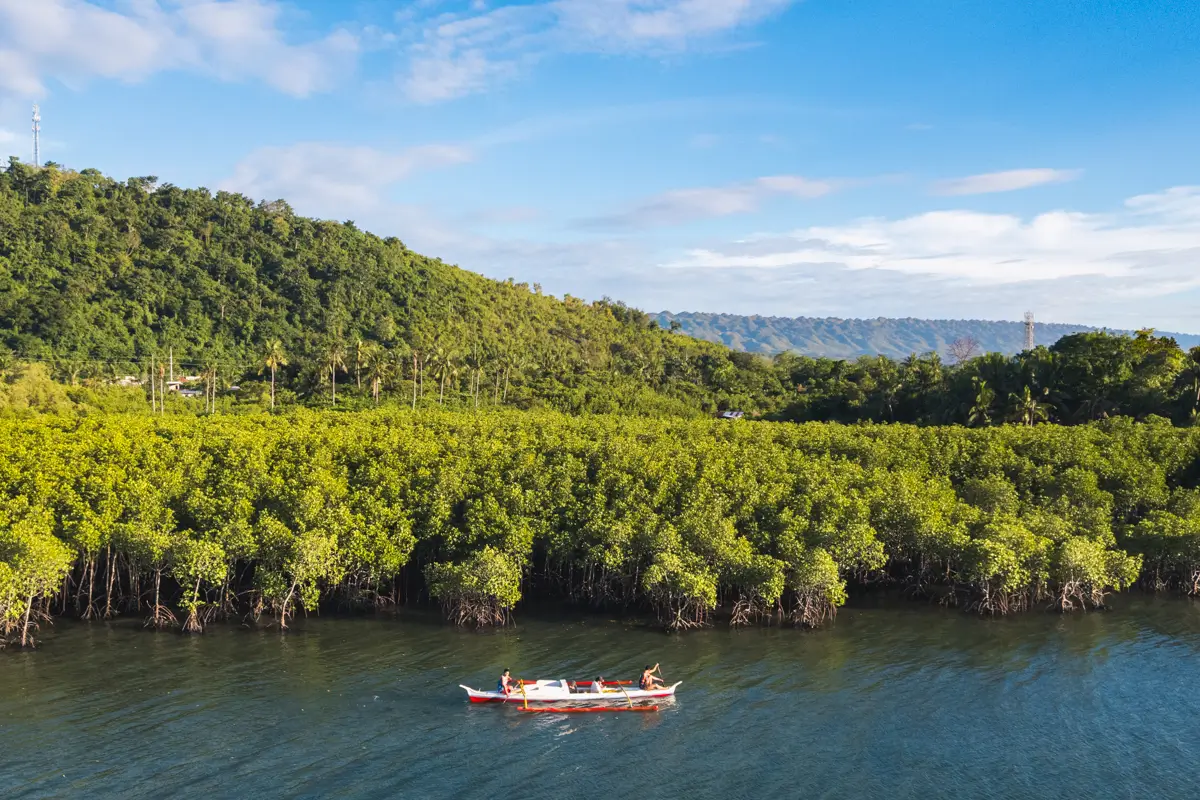
Mangrove forests are a common sight in the Philippines, particularly in brackish river mouths and sheltered bays. With exposed root systems that trap sediment, they reduce wave energy during storms and create nursery habitat for all kinds of fish, crabs, and other marine life. They’re also heavily threatened in many parts of the Philippines because of coastal development, fishpond conversion, wood harvesting, and pollution. Most mangrove forest tourist sites are bamboo boardwalks that get destoryed every couple of years in a typhoon, but the Palanas Mangrove Tunnel in Ronda is different because the main experience is a boat ride through the forest, as well as rentable huts among the trees. Make sure to come at high tide when the water is deep enough for the boat to glide through the trees.
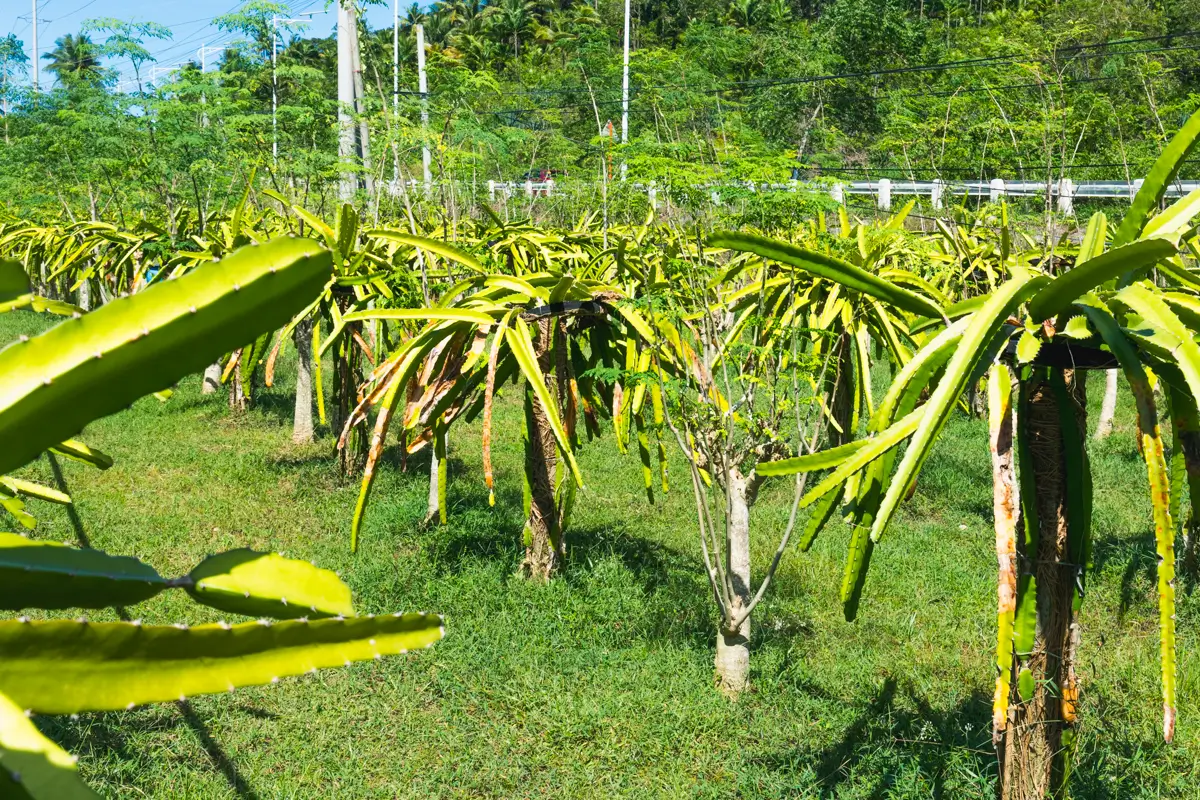
30. Delcio’z Resto Cafe
30 minutes from Moalboal
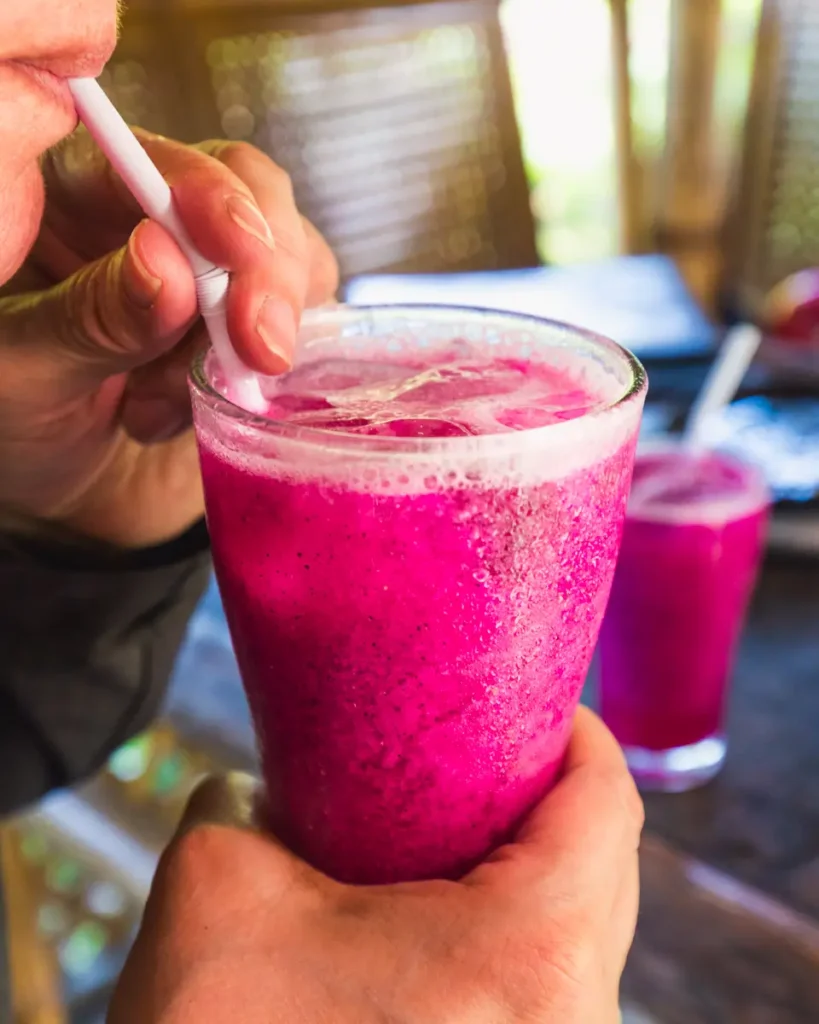
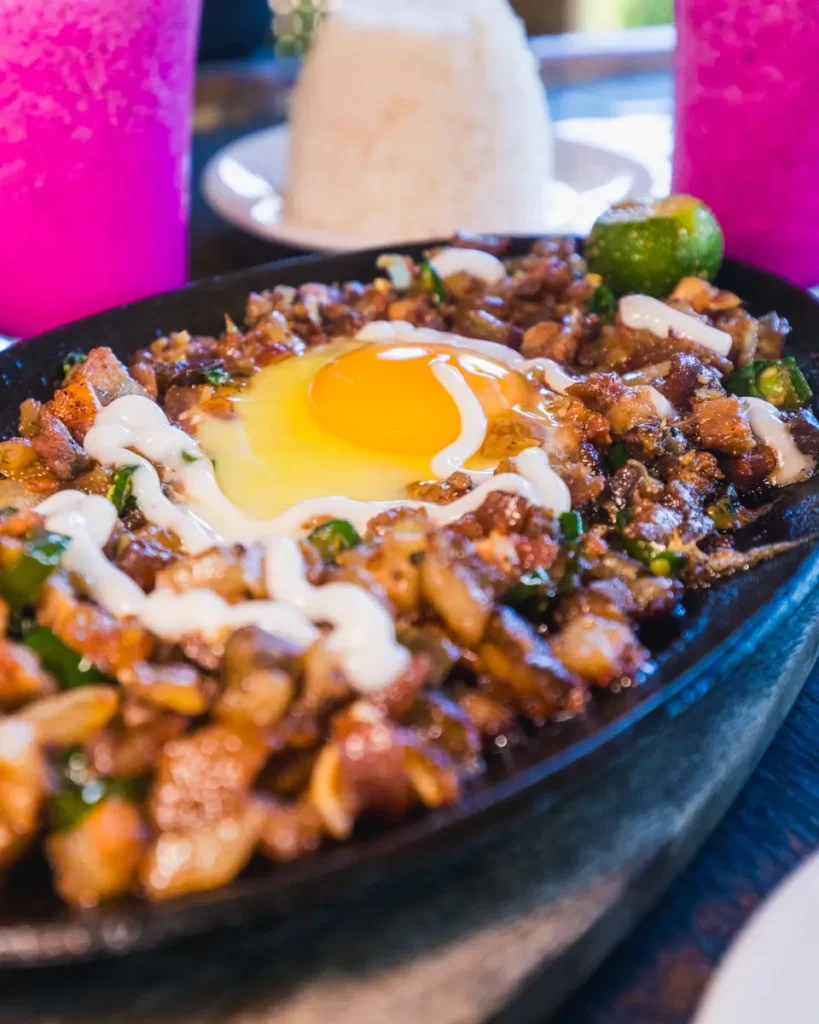
Delcio’z Resto Cafe and the attached dragonfruit farm in Ronda started as a private farm by Maximino and Elma Alayacyac in 2015 for their own consumption, then expanded as visitors started showing up. To handle that foot traffic, they built Delcio’z Resto Cafe on the property, which opened in 2018 as a place where travellers could stop on the south-coast drive, sit down for a meal, and access the farm area for photos. Order your food and eat in one of the bahay kubos (traditional nipa huts); they have Filipino classics from sisig to tinola to pancit canton, but of course the real reason to visit is for the delicious and fresh dragonfruit juices and shakes.
30. Fat’s Aquapark Resort
1 hour from Moalboal
Fat’s Aquapark Resort is an oceanside stop about an hour north of Moalboal where you can rent a kayak or a cottage, but the main draw is the long wooden boardwalk on stilts that runs out over shallow, clear water to a set of jump platforms at different heights. The wide-open views over the water and back toward Cebu’s mountains look especially good in late afternoon light, so I suggest coming later in the day when the tide is higher. This place isn’t well-visited by the Moalboal crowd and is more of a local spot, so generally feels relaxed rather than packed.

31. Hermit’s Cove
1.5 hours from Moalboal
Hermit’s Cove is a small, sheltered white-sand beach north of Moalboal that remains pretty unknown to foreigners. It’s known for its steep forested cliffs that make the beach feel compact and tucked-away, requiring a steep concrete stairway of roughly 88 steps to reach the sand. Alternatively, if you’re visiting the Bojo River, which is just a couple minutes away, it’s possible to be picked up and/or dropped off by your boat here. Like all the beaches near Moalboal it’s west-facing, making it ideal for sunset.
32. Bojo River Cruise
1.5 hours from Moalboal
The Bojo (pronounced bo-ho) River Cruise in Aloguinsan is a community-run eco-cultural boat tour through a 1.4 km protected mangrove river. It was launched in 2009 after the local government trained residents for months to shift livelihoods away from destructive fishing and shoreline pressure. The local guides are incredibly well versed on the ecology and history of the river – blowing away any guides I’ve had anywhere else in the Philippines. You board a bangka boat and drift down the narrow, shaded channel while your guide points out mangroves, birds (the river is home to over 70 species), and explains how the river system works as a nursery and storm buffer. As the river inlet opens up towards the Tañon Strait, steep limestone cliffs rise up on either side and coral gardens and schools of fish can be seen.
33. Busay Cave
30 minutes from Moalboal
Busay Cave is a quick inland side trip from Moalboal when you want to mix things up after all the waterfalls and beaches. The small limestone cave starts with a spring-fed pool right at the entrance, so you can cool off in clear, very cold turquoise water that’s shallow enough to just barely stand in, then push farther into the cave with a local guide. You’ll walk upstream, stopping to admire the stalactites and stalagmites as well as the large colony of bats that calls the cave home. You’re sure to notice the pipes that run throughout the cave, transporting the spring water all the way down to Moalboal.
34. Basak Falls
30 minutes from Moalboal
I hate using tired cliches like “hidden gem” but, you know…
Located not far from Kawasan Falls, Basak Falls is a practically unknown tufa waterfall that sits only a short five minute walk from the nearby road. The river is quite shallow, so it’s usually possible to approach the base of the falls. There’s also a trail leading up to the top of the falls, though I’m not sure there’s anywhere I’d try jumping in.
35. Osmeña Peak
1 hour from Moalboal
Osmeña Peak, officially Mount Labalasan, is the most famous hike in Cebu, up in the Mantalongon highlands, where the landscape turns into a row of jagged limestone peaks. The hike is short and beginner-friendly, about 30 minutes to the top. From here you get panoramic views of the hills around you, as well as the coastline; Badian Island and the Moalboal Peninsula, with the Tañon Strait and Negros behind. The peak is at its busiest at sunset (for good reason), but if golden hour is what you’re after then the sunrise views are equally spectacular.
36. Coastal Watchtower Ruins
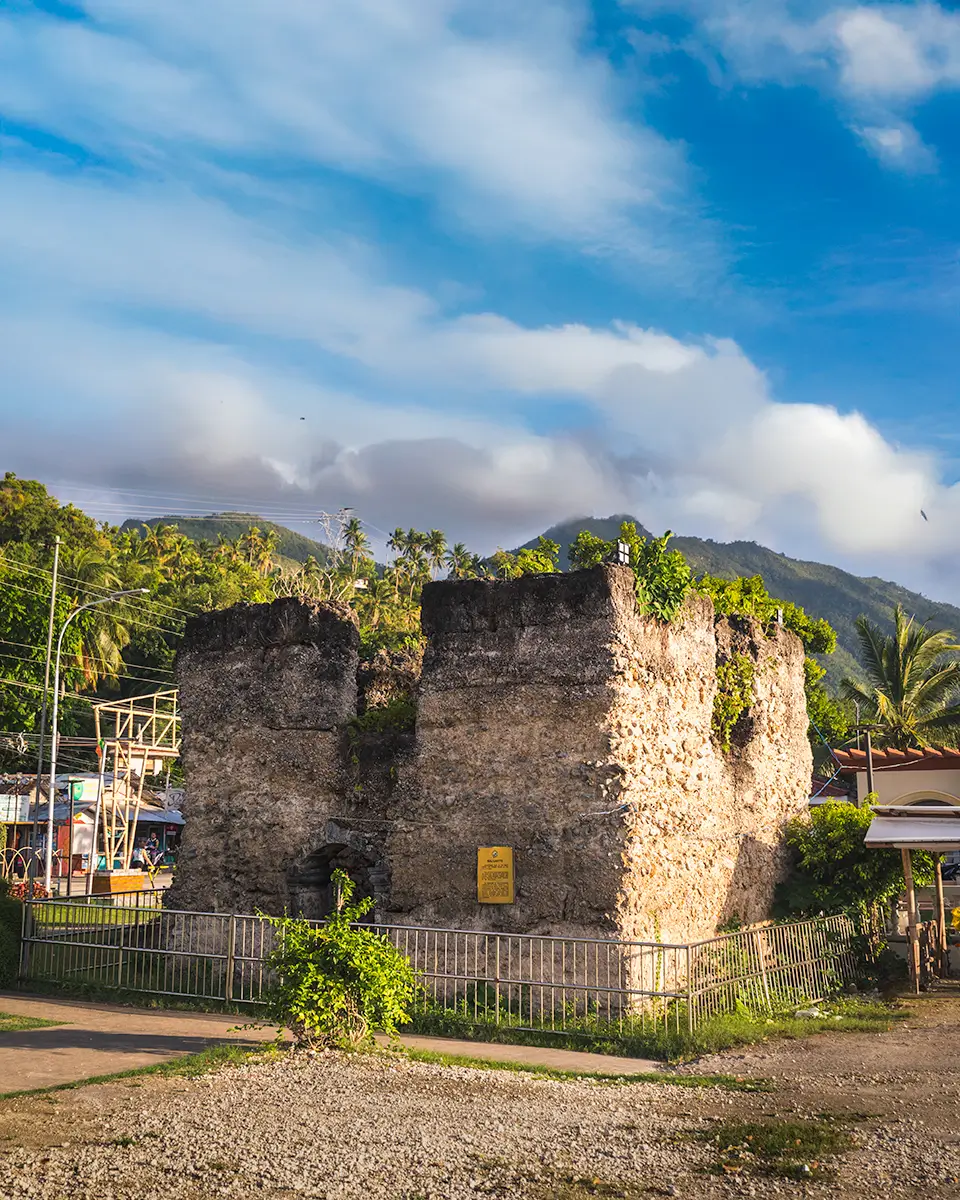
Cebu’s coastal watchtower ruins are leftovers from a Spanish-period warning network built to spot Mindanao pirates. These small towers were called baluartes, but locals also knew them as bantay or bantayan sa hari. (The nearby island of Bantayan was named for its watchtowers.) 74 baluartes were built across Cebu in the latter half of the Spanish period, with only about 22 still standing today, many of them reduced to partial walls and lime-mortar lumps. For travellers based in Moalboal, the most realistic way to see them is as quick roadside stops on a north or south day trip, since many sit in small heritage parks near municipal buildings or church plazas. From Moalboal, I suggest visiting the towers in Aloguinsan, Alegria (the best preserved), Malabuyoc (which has been turned into a small museum), and Santander. There are even more ruins on the East coast of Cebu, which I suggest visiting if you’re heading to Oslob. (in Sumilon, Daanlungsod, Oslob, Bonbon, Granada, Poblacion, Alcoy, Obong, and Dalaguete)
37. Mantayupan Falls
1 hour from Moalboal
Mantayupan Falls is one of the tallest waterfalls in Cebu and it’s one of the few major attractions north of Moalboal. The walk to the falls takes only a few minutes, and involves crossing a fantastic hanging bridge over the lower falls. It features a large basin of turquoise water opoular for swimming. Be warned: Mantayupan is visited not only from Moalboal, but also from Cebu City, meaning that it can get quite busy especially on weekends,
38. Cambanog Falls
1 hour from Moalboal
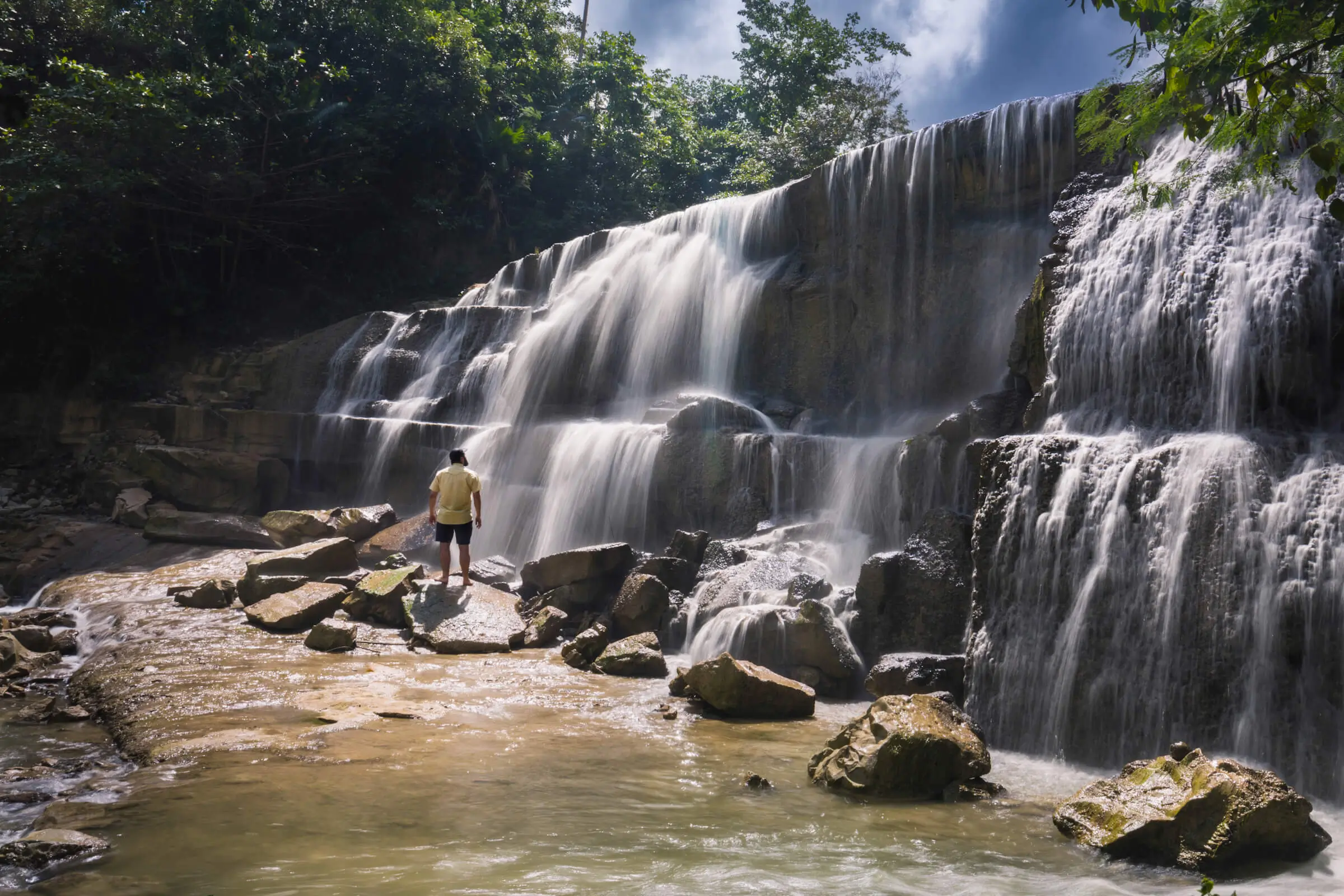
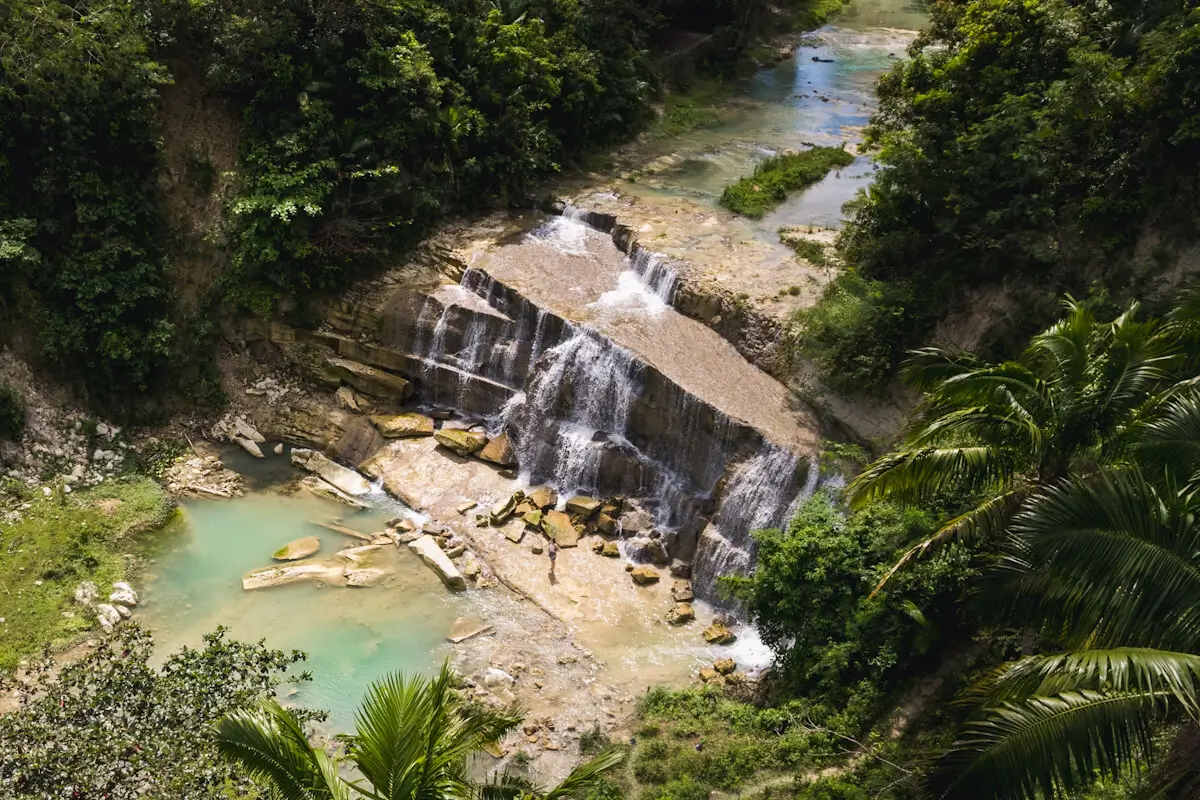
Cambanaog Falls is an off-the-beaten-path undeveloped waterfall that requires hiking along a rough ttrail through beautiful fields and palm trees to reach. When I visited I was the only one there, and that’s not something I can say for many of the waterfalls on this list. The river flows down multiple steps, making it possibly one of the most distinct waterfalls in Cebu. There isn’t really anywhere to swim at the waterfall, but there are several lovely looking swimming holes slightly downriver.
39. Lusno Falls
1 hour from Moalboal
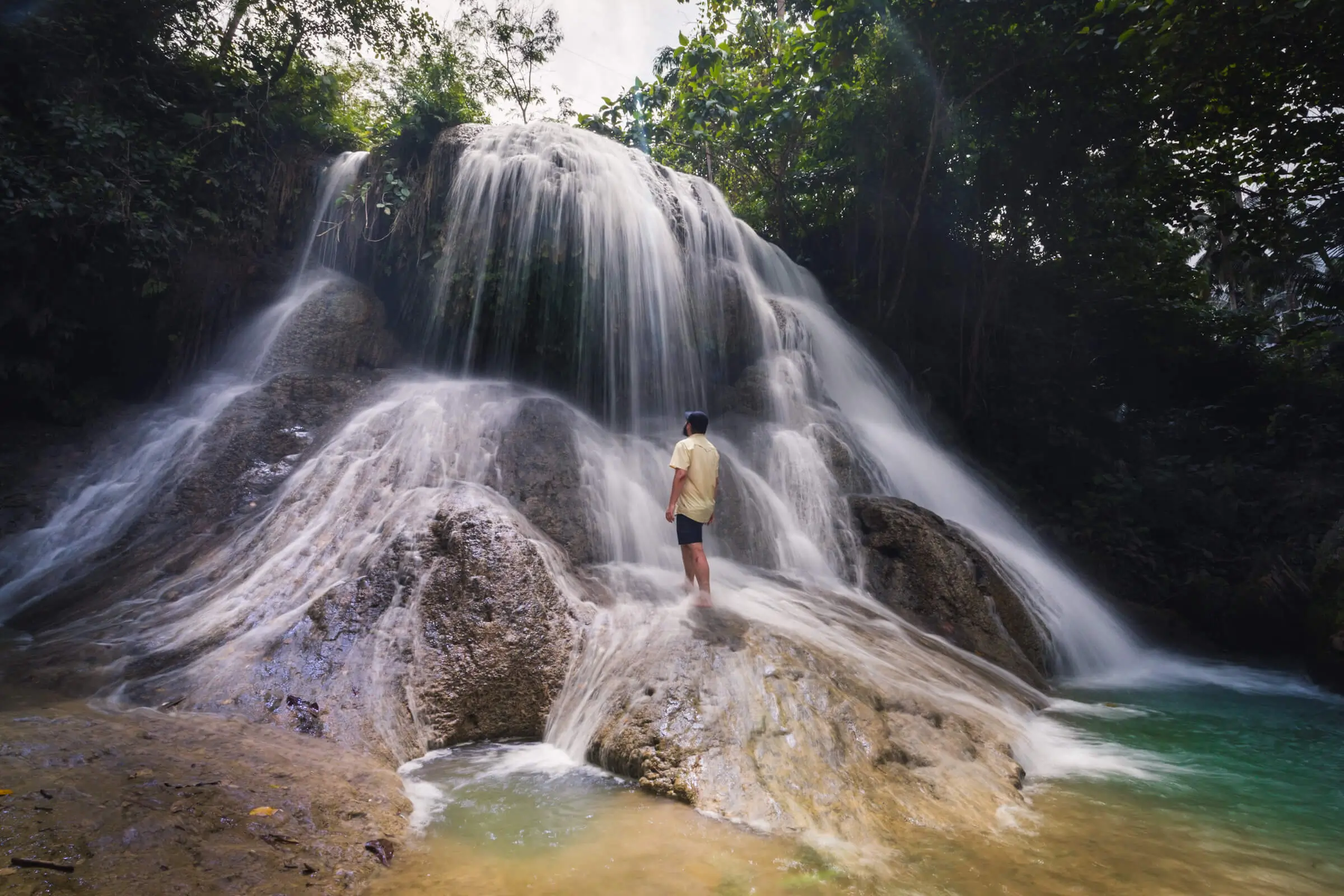
Lusno Falls is located a short distance from Cambanog Falls, and I would definitely visit both on the same trip. Of the two, Lusno is the slightly better-known waterfall but it’s still fortunatelt very undeveloped. This spectacular tufa waterfall is a shorter walk along an easier-to-follow trail. Similar to Cambanaog, the river is shallow enough that it’s easy to directly approach the waterfall from below.
40. Kandungaw Peak
1 hour from Moalboal
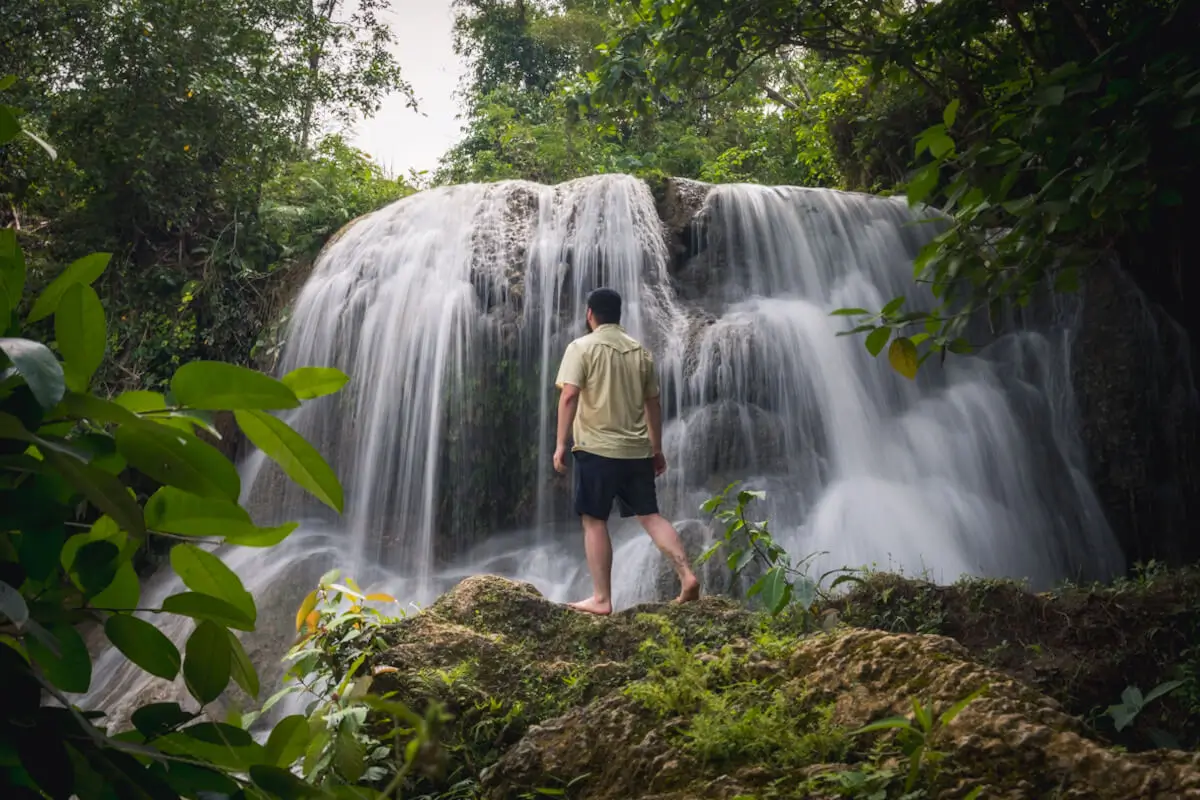
Kandungaw Peak sits north of Osmeña Peak in the Mantalongon highlands, and while it’s not quite as tall, the views are equally spectacular (with less of a crowd to share them with.) The 30 minute hike is steeper for most of the way, following concrete stairs up the limestone ridge before evening out as it follows it to the peak. There are multiple viewpoints along the way, with the best of course being at the very top. Views are similar to Osmeña’s; the coastline, Badian Island and the Moalboal Peninsula, with the Tañon Strait and Negros behind. In my opinion, Kundangaw has the best coastal views of the three Mantalongon hikes.
41. Lugsangan Peak
1 hour from Moalboal
Lugsangan Peak, (formerly Casino Peak), has the shortest hike to a viewpoint in the Mantalongon highlands. Slightly southeast of Osmeña Peak, it’s easy to visit one after the other or to connect the two into one longer hike. If you’re just heading up Lugsangan by itself though, the walk is only around ten minutes. That said, the peak is the least developed of the Mantalongon peaks, making it a little steeper and more difficult to follow near the top. Personally, I’m a big fan of the less developed trail, given how many beautiful outdoor spaces in the Philippines tend to get concrete poured everywhere. In my opinion, the views of the surrounding Mantalongon hills is best from the sharp summit Lugsangan Peak, while the views of the coastline are better from the other two peaks.
42. Kawasan Falls
40 minutes from Moalboal
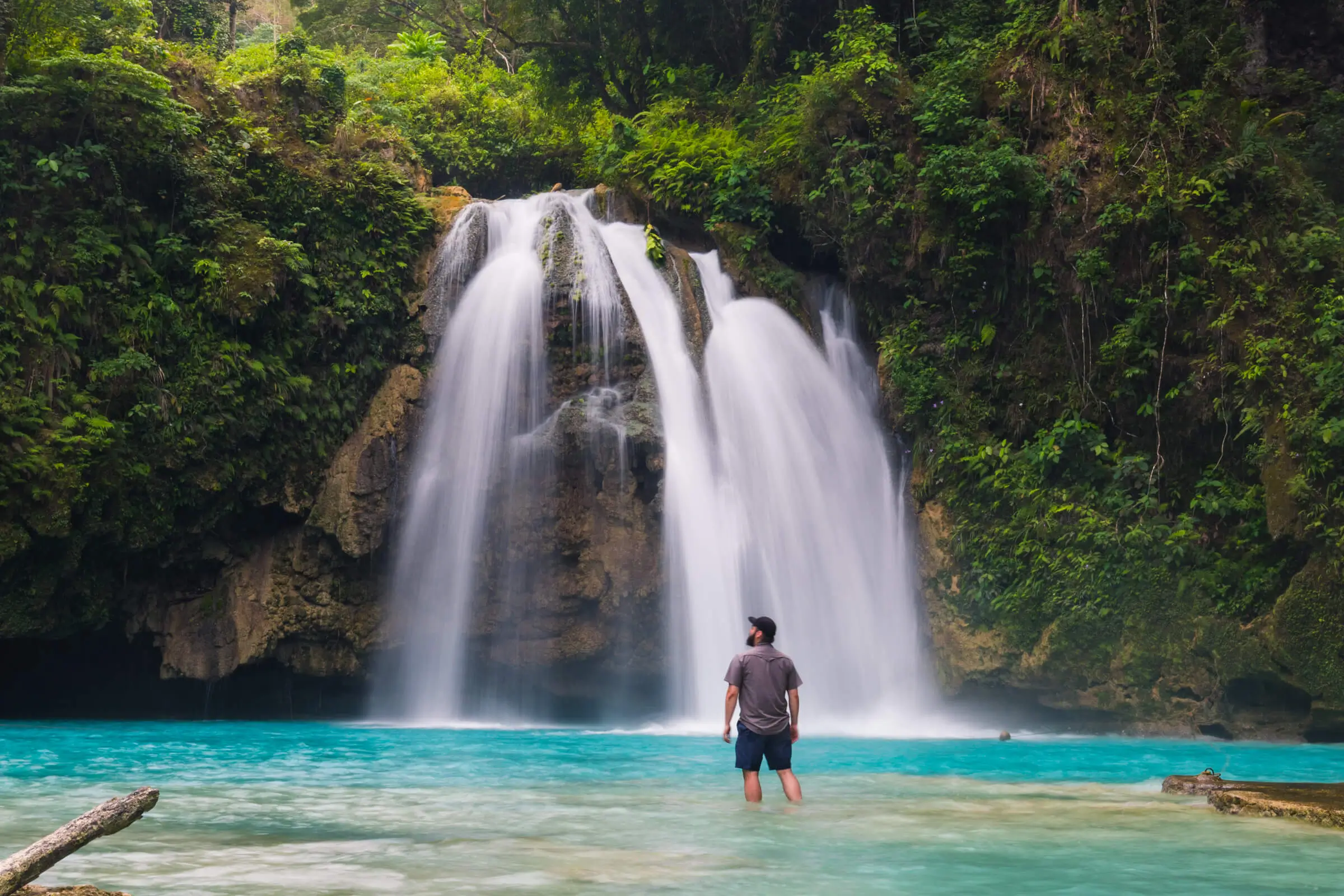
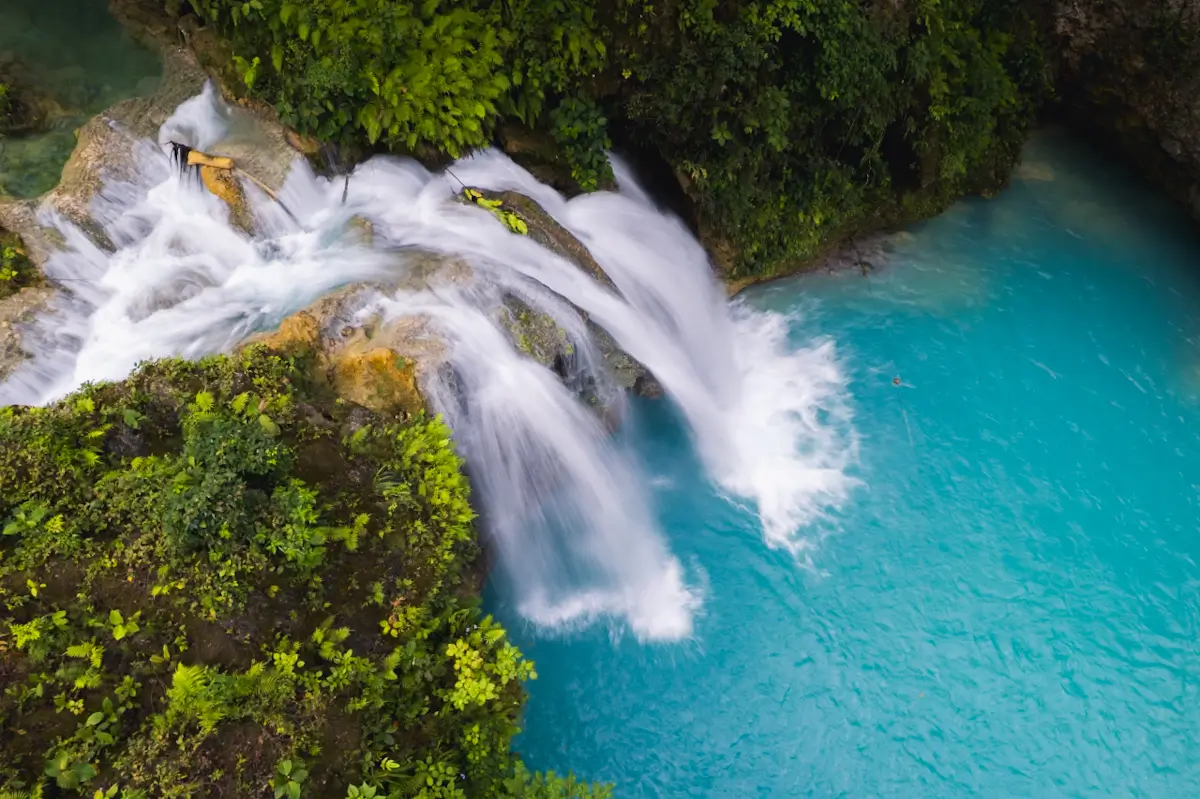
Kawasan Falls is the most famous waterfall in the Philippines, which also means it’s one of the busiest and most commercialized, especially compared with some of the quieter falls around Moalboal. It’s been a tourist stop since at least the 1980s, and the waterfall is nonetheless beautiful and the water an incredible blue, but the overall experience now depends heavily on timing and expectations, since you’ll be sharing the path and the viewing areas with a steady stream of other visitors. Most people don’t just visit Kawasan these days, with the crowds all coming from the canyoneering tours upstream. The walk in takes roughly half an hour along an easy flat path, and used to lead to several levels of waterfalls. Since 2021 only the lower falls are accessible, with the other falls upstream tied to joining a canyoneering tour.
43. CangKalanog Falls
1 hour from Moalboal
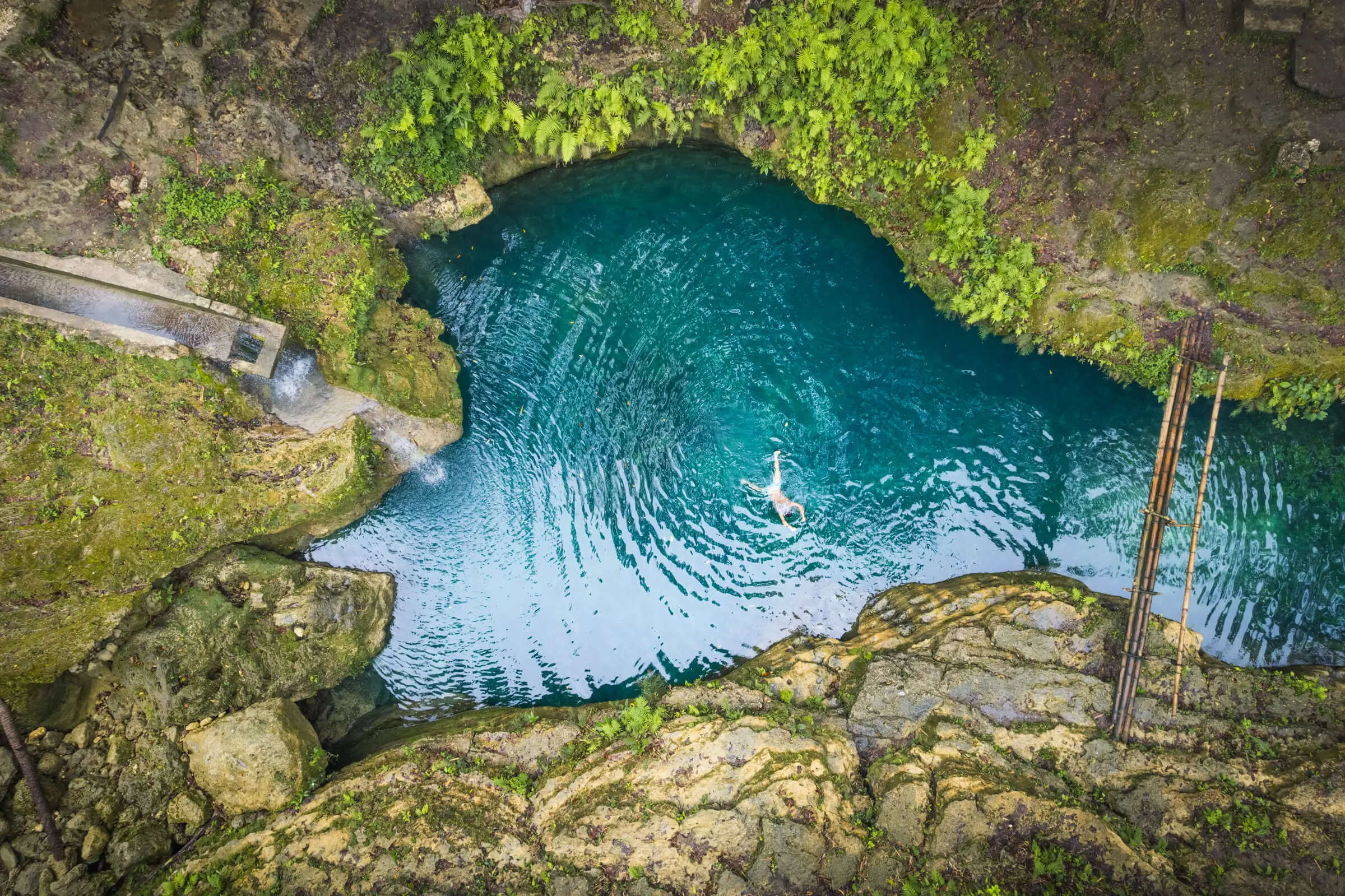
Cangkalanog Falls isn’t really a waterfall at all anymore. The channel where water used to tumble down a small cascade and feed into a swimming hole was filled with rubble in 2021, and the small waterfall is completely gone. You can see photos of what it used to look like here. The deep swimming hole remains somewhat of an attraction though, high up in the hills of Alegria, surrounded by foggy mountain peaks. Honestly, the drive up here is worth it all by itself. The beautiful blue pool and lush vegetation are decent draw as well, either for relaxing in the cool water or jumping into it from the rocks or bamboo bridge. Ultimately I’d only visit this one if you’ve already done all the waterfalls on this list already, since this is by far the least interesting “waterfall”.
44. Cambais Falls
1 hour from Moalboal
Cambais Falls is known for it’s wide deep turquoise pool perfect for swimming, with several different waterfalls feeding into it, along with a couple spots to jump. Follow a trail or the river and you’ll reach Upper Cambais Falls, which is a much larger waterfall and well worth the extra ten minutes to reach. Much like the lower falls, there’s plenty of room to swim and climb right underneath the waterfall. Unlike most of the waterfalls in this list which are located practically just off of the coastal road, Cambais is much more inland (and high elevation). The result of it being a bit out-of-the-way is that it’s harder to combine a visit to Cambais with other waterfalls, but it’s also usually a bit quieter than many of the other popular waterfalls which are closer together.
45. Kanlahing Peak
1.5 hours from Moalboal
Unlike the earlier peaks in the Mantalongon highlands, Kanlahing Peak is a lot further south, in Alcoy. It’s also different in that it doesn’t offer much in the way of coastal views, but instead is a viewpoint of its surrounding hills, and a valley which is known for filling up with fog in the mornings. For that reason, Kanlahing is a popular sunrise spot amongst locals, but practically remains practically unvisited by tourists staying in Moalboal. The best part? No hiking skills required, this particular viewpoint rewuires walking up no more than ten minutes from the road.
46. Montpellier Falls
1 hour from Moalboal
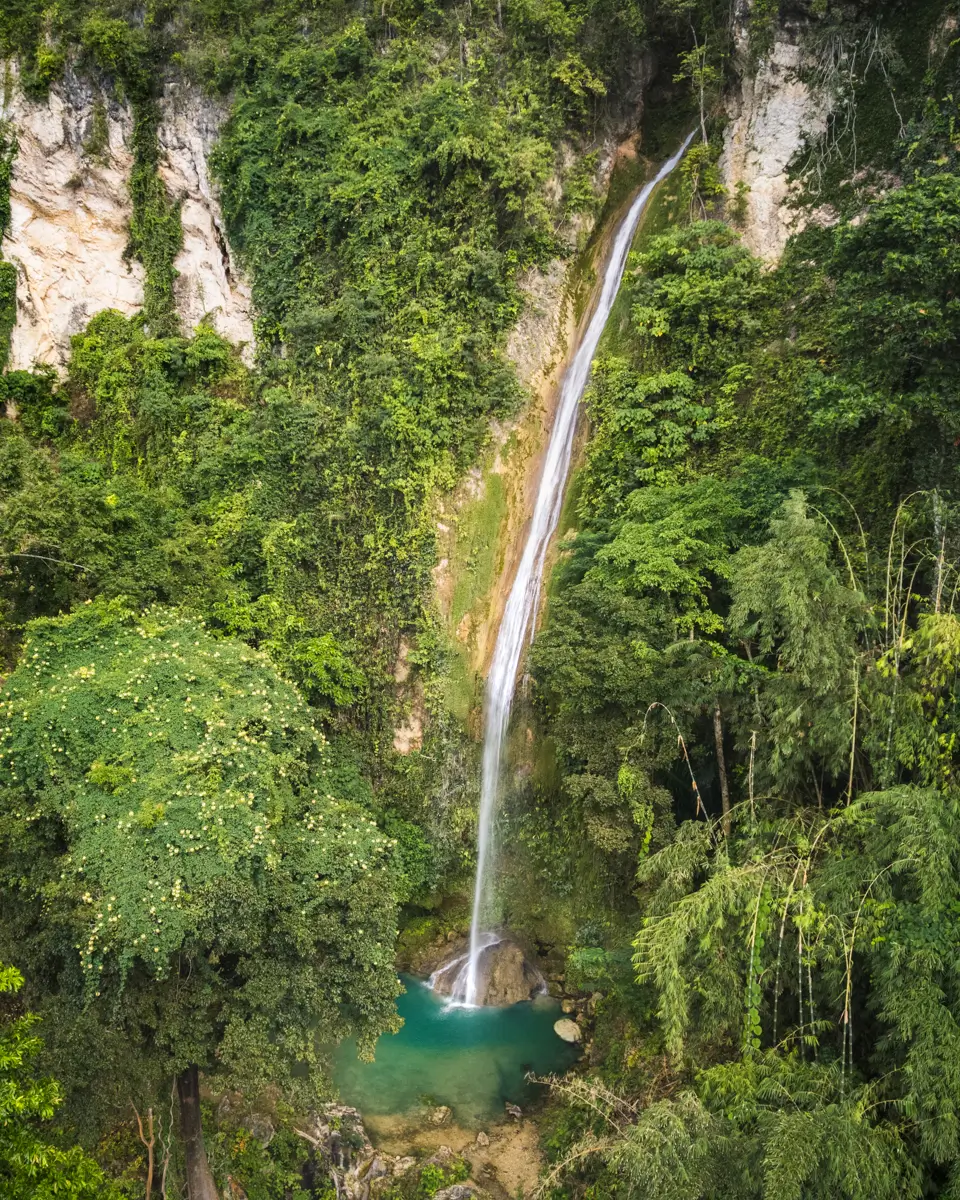
Montpellier Falls is a tall waterfall south of Moalboal that drops into a deep, cold pool, and before 2021 it was known as one of my favourite South Cebu falls, as well as one of the easiest to reach; the approach was a short walk through a small community rather than a long hike. Nowadays, it is officially closed due to danger of falling rocks. Unofficially, it’s still possible to reach the falls if you do a little research on alternative routes, but I’ll leave that to you. If it reopens in the future I’ll update this.
47. Mount Lanaya
1 hour from Moalboal
There are two connected peaks which are both often referred to as Mount Lanaya, so to avoid confusion I’ve used the name Mount Lanaya to refer to the actual summit, and Little Mount Lanaya for the much lower peak.
Mount Lanaya is one of the most distinct peaks in Southern Cebu, and you’ll definitely notice it as you drive down the coastal road. There are actually a few slightly different routes to reach the top, but I’m going to break them down into two. The 1.5km Lumpan Trail heads through the jungle up from the backside of the mountain, making its way up quickly and steeply from a point most of the way up the mountain. Elevation gain is somewhere around 150m. The “Legaspi Trail” however, starts from sea level, in the small coastal town of Legaspi. I put it in quotation marks because there are actually a whole bunch of slightly different trails leading up to Little Mount Lanaya, and it is technically possible to ride a scooter a decent way up this route as well. Long story short, from Legaspi, you’ll head up for as long as 2km to Little Mount Lanaya, a grassy viewpoint that offers fantastic views of the coast. From here, the trail enters the jungle and climbs up another 1.7km to to the actual summit of Mount Lanaya. Elevation gain from Little Mount Lanaya to Mount Lanaya’s summit is about 360m, not including the (up to) 300m elevation gain from Legaspi to Little Mount Lanaya.
48. Little Mount Lanaya
1 hour from Moalboal
Most people who say they have summitted Mount Lanaya have not summitted Mount Lanaya. Most of them have summitted Little Mount Lanaya. The confusion is so great there are tons of posts from official Facebook accounts displaying photos of the hike up Little Mount Lanaya, but containing the stats for the much longer Mount Lanaya, so it’s prettymuch impossible to tell what information is for what hike.
Little Mount Lanaya is the grassy peak about halfway up the slope of Mount Lanaya. It’s a popular camping spot, and there are a variety of ways up depending on your hiking ability level. At most, it’s a 2km distance and 300m elevation hike from Legaspi, but some people also ride all the way up. Or ride up halfway and hike from there. The point is, you have options.
49. Mainit Hot Spring
1 hour from Moalboal
The Philippines sit on the Pacific Ring of Fire, with active and recently active volcanoes and major fault systems that let groundwater circulate deep underground, heat up, and then rise back to the surface through fractures. Cebu doesn’t have the headline volcanoes you’ll see on Luzon, but it still sits in that broader tectonic setting, so pockets of geothermal water still show up.
Mainit Hot Spring south of Moalboal is one of these natural hot-springs, tucked just off the coastal highway, and the name is literal by the way. Mainit means hot. Start with a short walk into the shady riverbed, then soak in a set of pools fed by geothermal water. The site has been somewhat developed with several large concrete soaking pools with different temperatures, so you can pick a comfortable one (the hottest one is really hot), and it’s normal to rotate between warm water and the cooler river flow nearby to keep from overheating. If you’d like, it’s also possible to walk upriver to a steep canyon, where it’s possible to climb your way between rocks up to a waterfall.
50. Dayhag Falls
2 hours from Moalboal
Dayhag Falls is actually located far enough from the coastline that it’s actually more often visited from the east, but if you’re willing to undertake a spectacular ride through the highlands of Cebu, it’s well worth visiting from the west as well. You’ll almost certainly be the only non-local if you do. A well-maintained trail leads down past several waterfalls, with several man-made swimming holes at the bases of each. Each of the falls is named after one of the virtues, with the most impressive tufa waterfall is the fourth one down, “kindness”. While effort has been into making the site as toyrist-friendly as possible, I wish some restraint had been had. For example, the rows of non-native plants lining the path are unfortunate and distract from the beautiful jungle, and the concrete pool after concrete pool is a bit much.
51. Handigan Falls
1 hour from Moalboal
It’s not a competition to see what the least-visited waterfall on this list is, but if it were… Fortunately, despite the fact that all you have to go off of are a couple of websites and a handful of Google reviews, Handigan Falls is actually pretty easy to reach. From a small bridge, you wal upstream for about half an hour until you reach the spot where the small waterfall spill sinto a large swimming hole. Handigan is one of the most unique waterfalls in the area, as the beautiful turquoise water seems to rush right out of a vertical limestone wall, where a canyon presumably goes back who-knows-how-far.
52. Kabutongan Falls Canyonerring
1 hour from Moalboal
Eager to cash in on the “Kawasan Canyoneering” craze, Kabutongan Falls, a once quiet waterfall south of Moalboal, opened up a few years ago as a “canyoneering experience”. While a part of me is annoyed that a waterfall that was previously totally hikeable by yourself and a guide now has to be a grand affair with big tour groups, mandatory lifejackets, and prescribed photo spots, I also can’t be mad that the local community is trying to make money off of their resource. And hey, it’s not like they’ve poured a bunch of concrete and built a restaurant next to the waterfall. So it’s for the best.
Ultimately, the 45-minute-ish canyoneering trip upstream isn’t much of a match for the “Kawasan canyoneering” on the Matutinao River, and if you’re trying to pick the most exciting canyoneering package in Cebu this isn’t it. There are a couple of spots the locals have figured out make for good jumps, but ultimately the real draw here isn’t the canyoneering experience, it’s the beautiful waterfall at the end. Plus, credit where credit is due, the fantastic cliff where it’s possible to jump into the deep basin below Kabutongan Falls.
53. Inambakan Falls
1.5 hours from Moalboal
TLDR: Go read all the one star Google reviews on this one before you go.
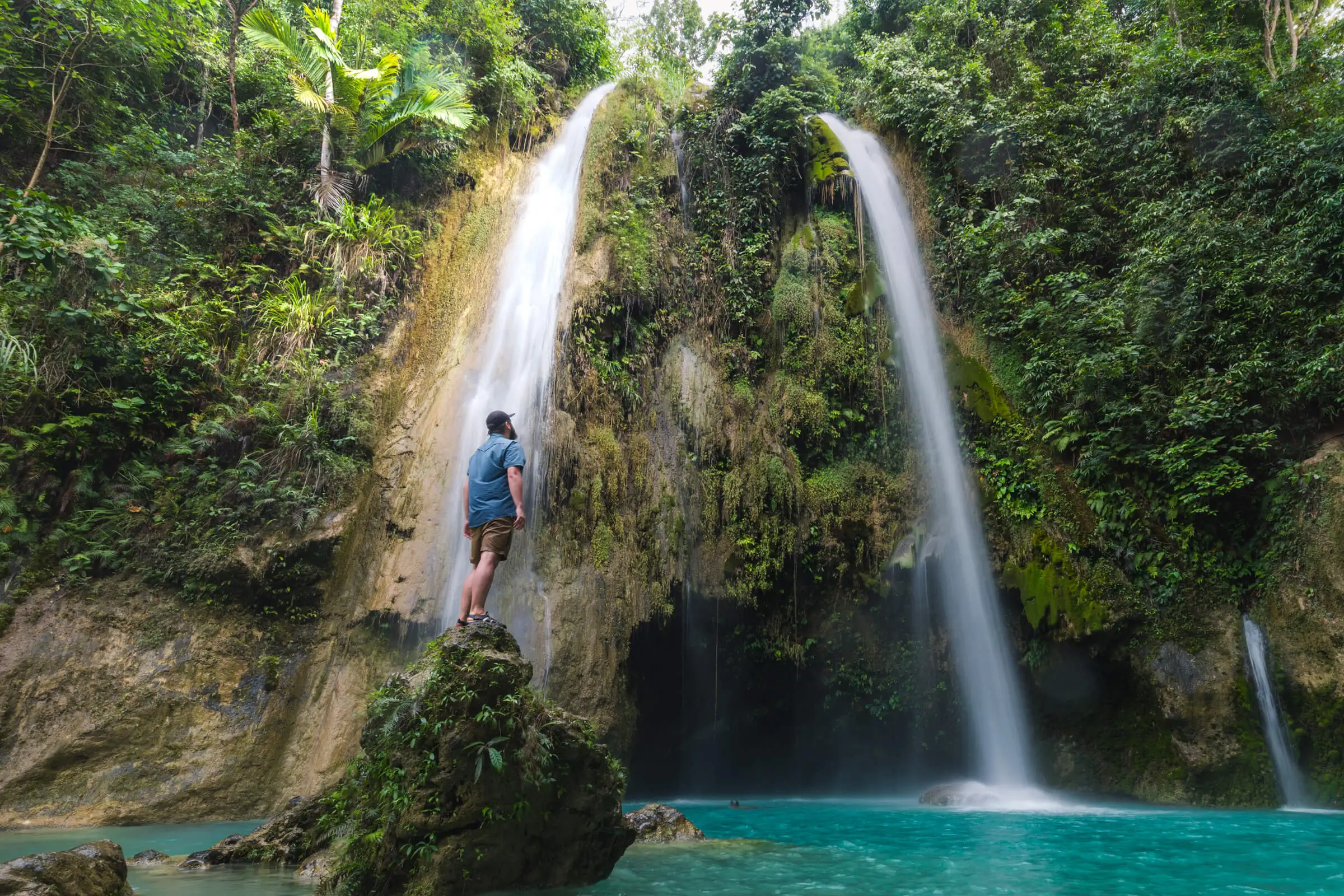
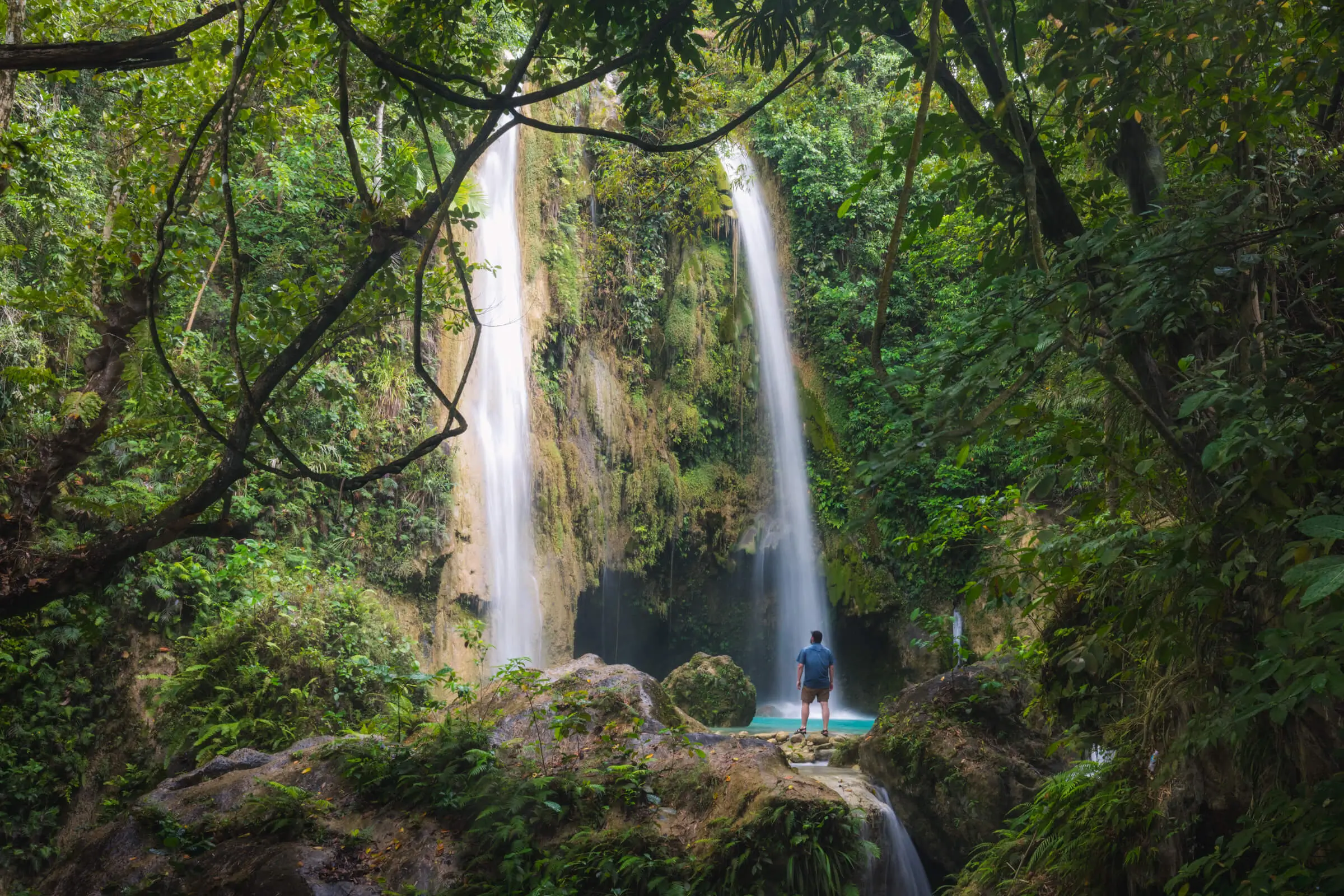
Ugh… I want to like Inambakan Falls. it’s a beautiful waterfall. And if despite everything I have to say you visit anyways because it’s a beautiful waterfall then I don’t blame you. Unfortunately, when I visited in 2018 it was run by thieves, and when I visited again in 2025 it was still run by thieves. Let me paint you a picture of my last experience there. First thing that happened when I arrived, before I had even gotten off my bike, is a man aggressively tried to sell me an expensive canyoneering package to visit the upper falls. Reading the reviews, it seems like a number of people have been tricked by him, thinking that the expensive canyoneering package is the only way to see the falls and, feeling obligated, say yes. It’s predatory.
Once you say “no thanks” to him and walk up to the actual counter, you’ll likely be told that a guide for the two minute walk to the waterfall is mandatory – despite the multiple signs saying a guide is not mandatory. On my most recent visit, I was told that okay yes, fine, I was right, a guide isn’t mandatory, but because of “the weather”, it was mandatory on that particular day for my safety. The weather was partly cloudy.
In addition to a 70 PHP entrance fee and a 20 PHP parking fee, the guide fee is 300 PHP – the most expensive of any waterfall on this list. Now, I do think 300 PHP is actually a very reasonable amount of money for the guide to make, but guess what, my guide told me that actually he doesn’t get any of that money and relies entirely on me tipping him generously on top of the fees I’ve already paid! Was he telling the truth? I don’t know, but either way someone’s screwing me over.
The icing on the cake of the predatory practices and extensive fees is the fact that Inambakan Falls is the dirtiest waterfall in Cebu. There is trash all along the trail, and it looks like it’s been there for years. I’m very happy to pay extra for local communities to reinvest into their natural attractions, but that’s clearly not what’s happening here.
Whatever, it was prettier before 2021 anyway.
54. Dao Falls
1.5 hours from Moalboal
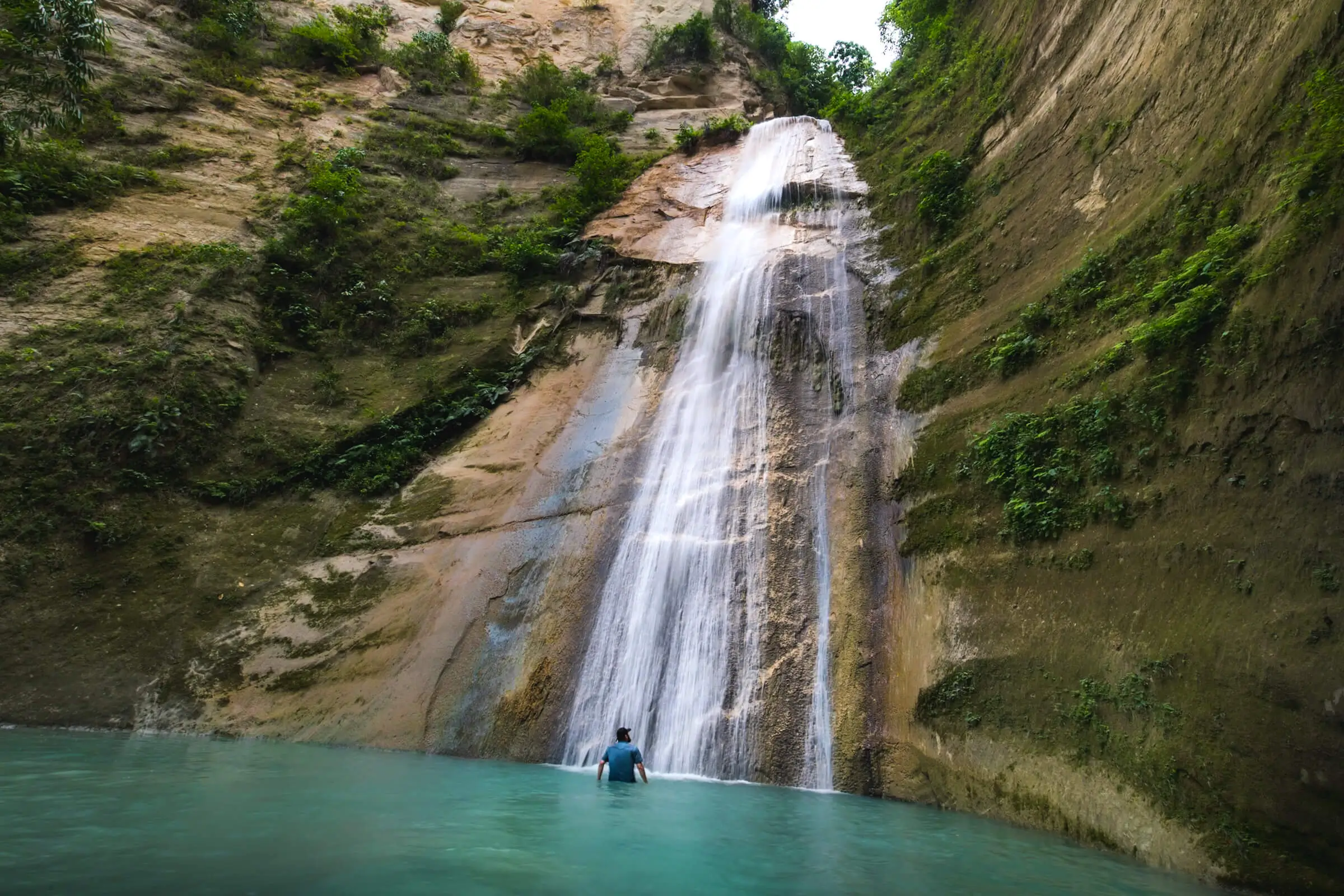
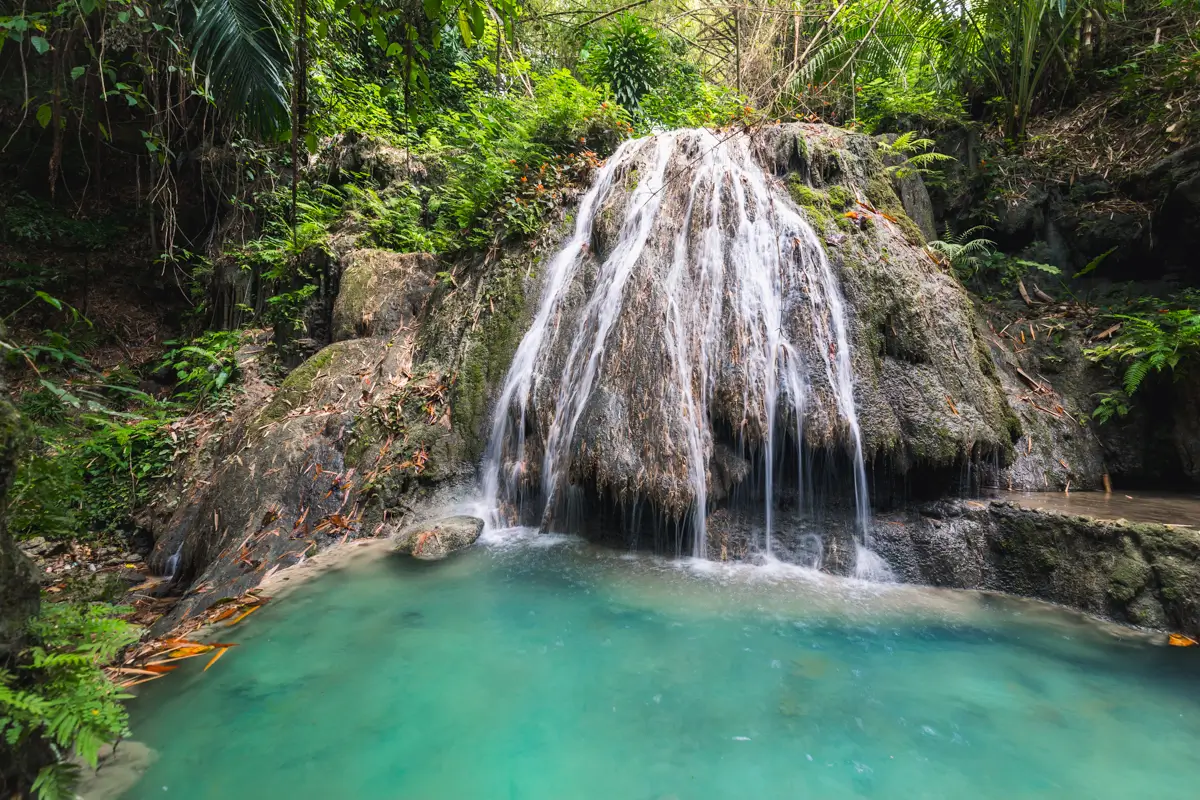
Dao Falls (two syllables, da-oh, named for the dao tree which grows nearby) is hands-down my favourite waterfall on Cebu. Actually, the hike through the gorgeous sandstone ravine could be the attraction on it’s own, no waterfall at the end, and it would still be entirely worth doing. The hike here is so much fun, and the stairs carved into the canyon wall are the perfect example of making a place accessible without ruining it by pouring concrete everywhere.
The 30-minute walk starts down a short road, but before long you’ll find the steep canyon walls rising up alongside you, and turquoise water running underfoot. You’ll get your feet wet as you walk through a series of stunning blue pools, and even though some sections of trail might look a little scary as they ascend alongside the canyon, the path is never slippery, and there’s always a well-built railing to hold onto. Finally the reveal of the waterfall at the end and the huge emerald pool are just the icing on the cake.
55. San Miguel Falls
1.5 hours from Moalboal
San Miguel Falls is a small tufa waterfall named for the nearby town’s patron saint, and is just a short two minute walk down from the road. The waterfall is actually on private property, and though if you ask nicely it seems like there’s no problem at all visiting, the owners are clearly not advertising this as a tourist destination so out of respect for them neither will I. If you really want to visit this waterfall, there’s enough information online to figure out how to get there yourself – just don’t ask me.
56. Campanario de Antigua
1.5 hours from Moalboal
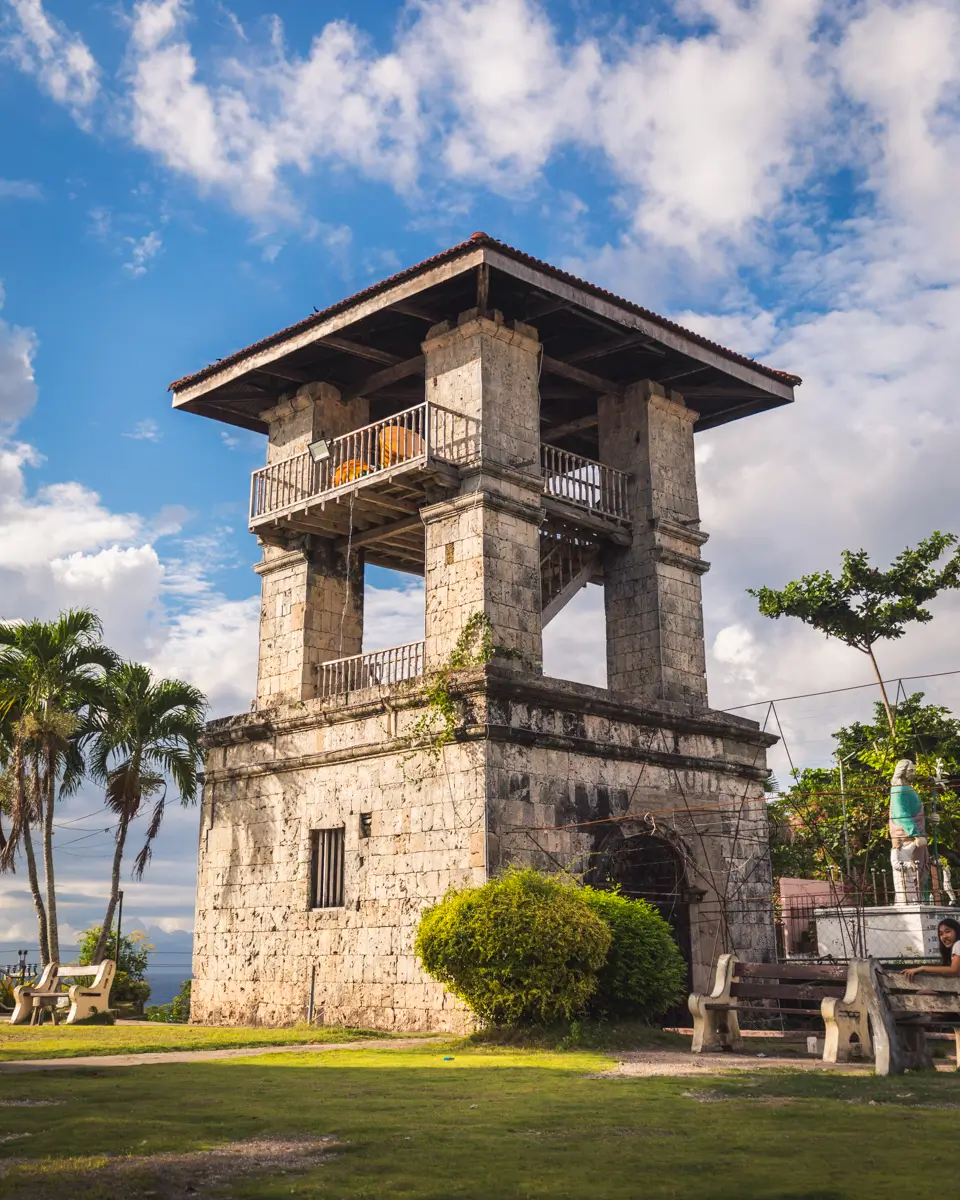
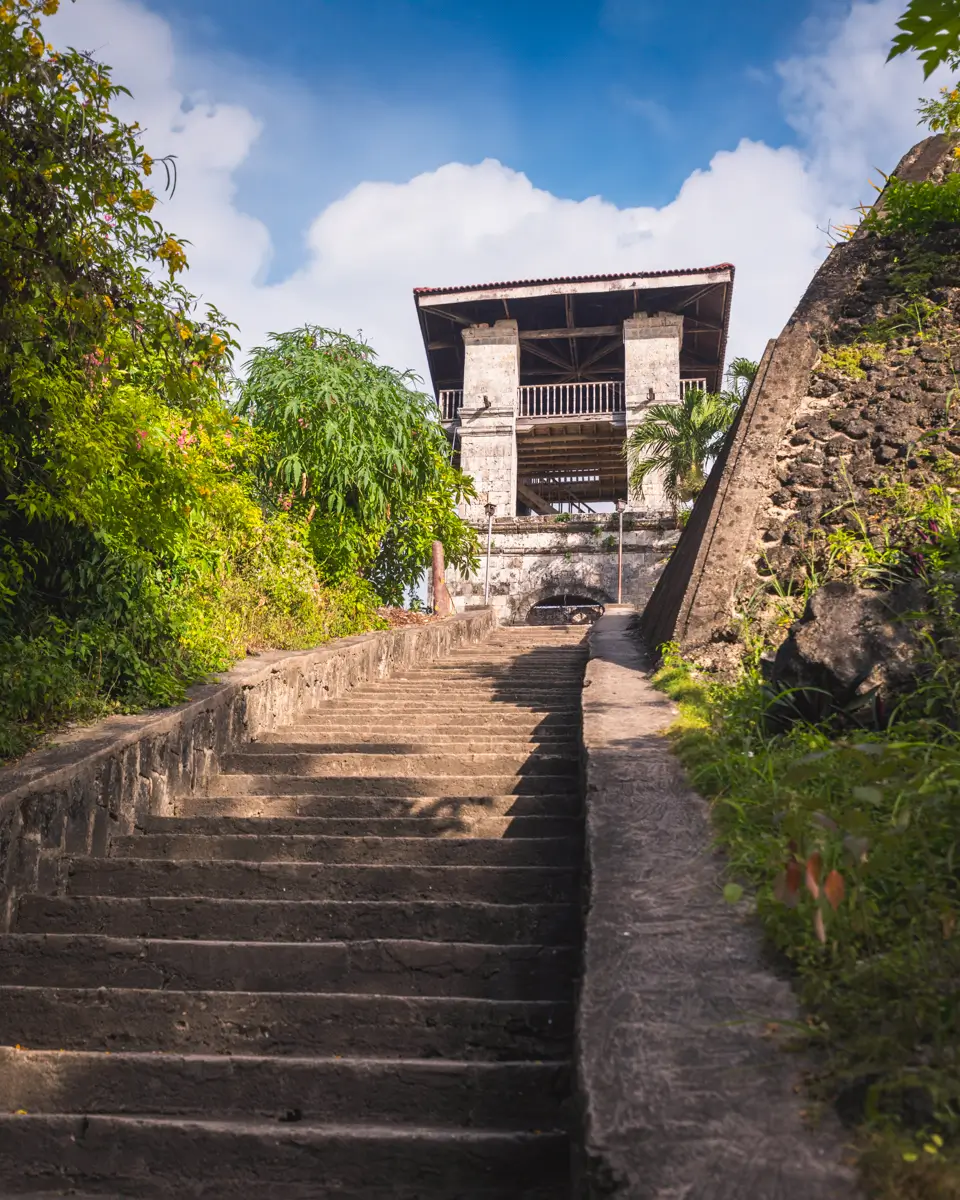
Built in 1808 beside the San Miguel Arcangel parish, the Campanario de Antigua served as both a bell tower and a watchtower, constructed from coral stone to protect the town from pirate raids while also fulfilling religious purposes. Perched on an elevated area above the coast, the tower offers panoramic views of the Boljoon coastline and surrounding landscape, Access to the tower from the highway below is by the Escala de Jacobe, a coral stone staircase named after Saint James the Apostle. The Escala de Jacobe was built in 1878 under Fr. Toribio Gerzon to make it easier for parishioners from the coastal communities to reach the church complex on that higher ground, and its 147 steps functioned as a permanent access route between the shoreline level and the religious and civic centre that Spanish administration depended on for worship, records, local governance, and public gatherings.
57. Binalayan Falls
1.5 hours from Moalboal
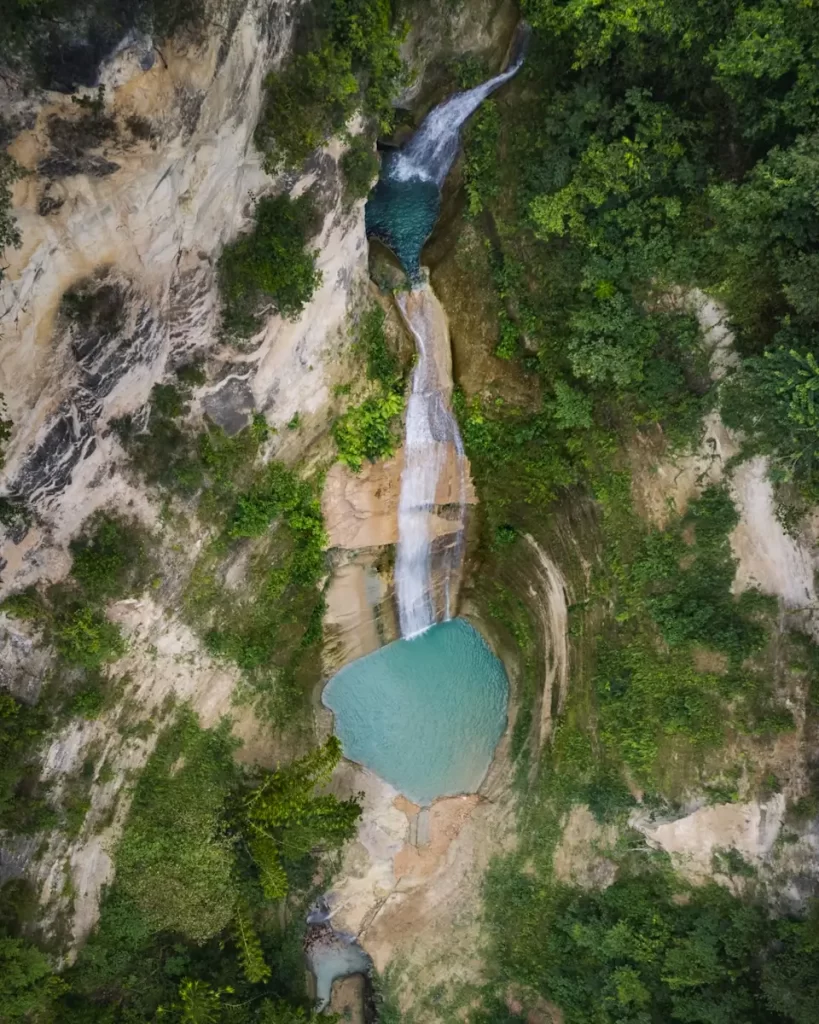
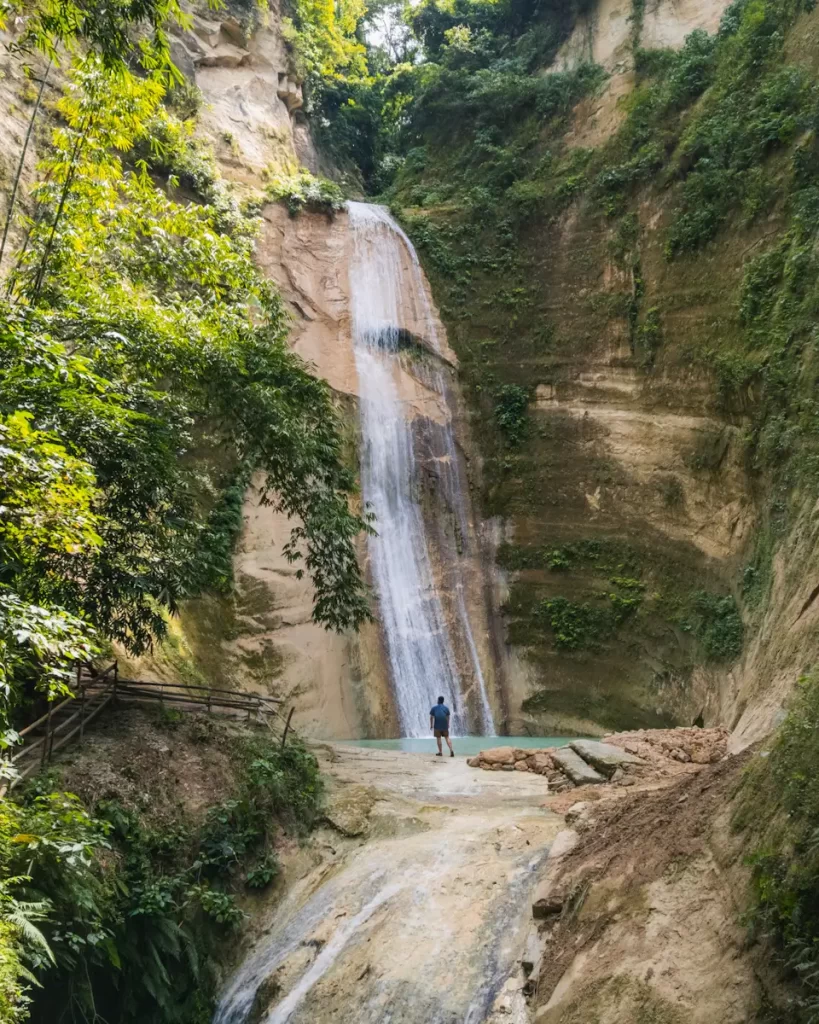
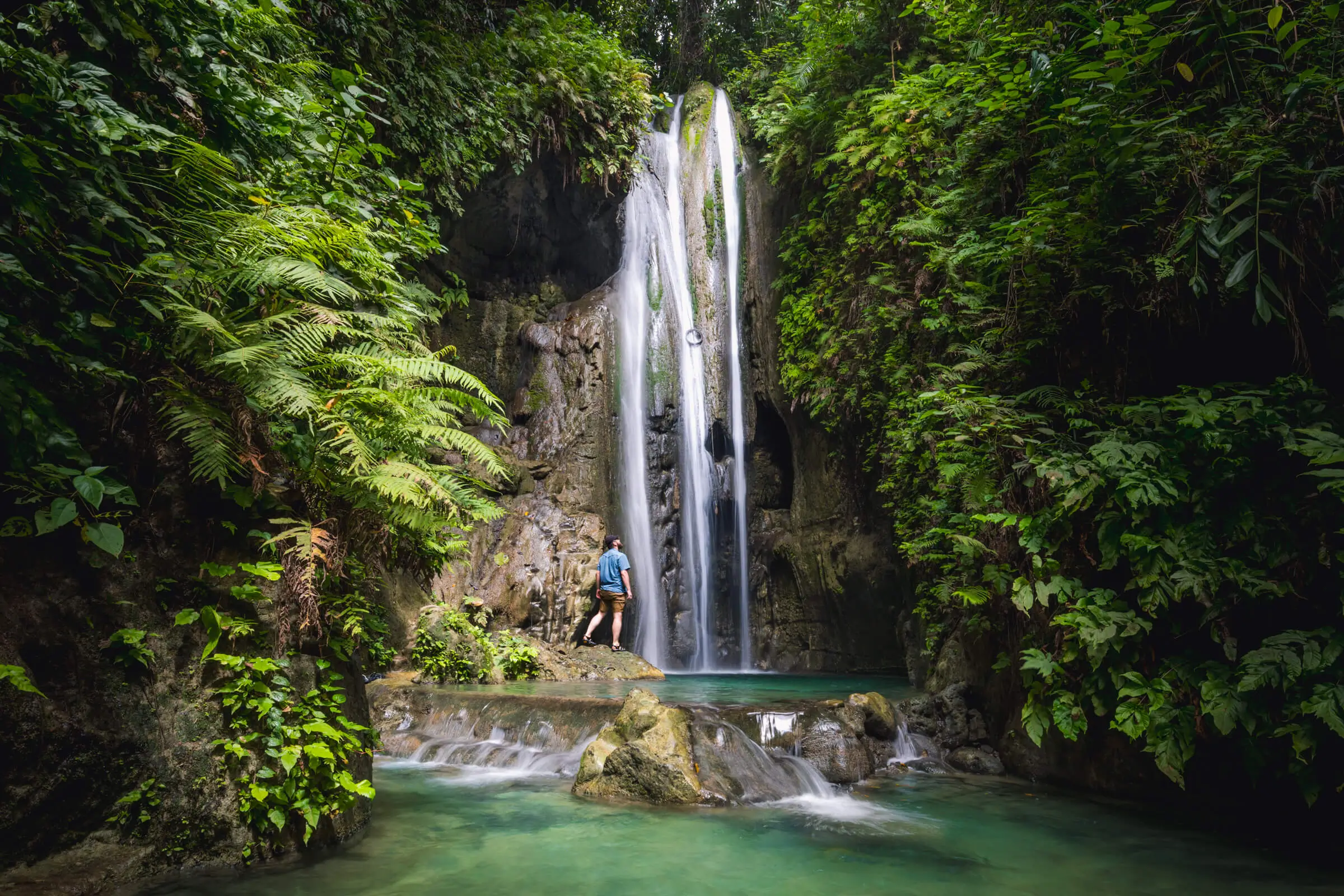
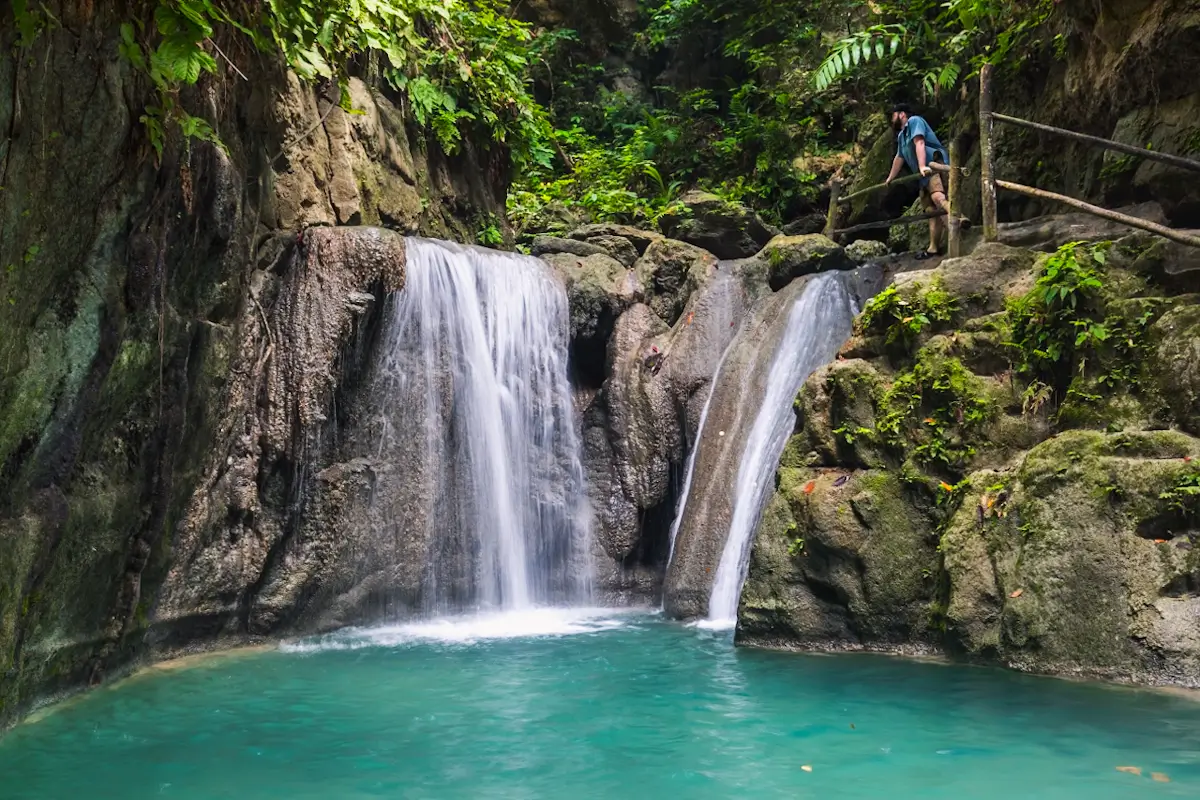
If Dao Falls is my favourite Cebu waterfall, Binalayan isn’t far behind in second place. Similar to Dao, the walk upstream through the jungle has been made accessible in the least distracting way possible. Wooden railings and stone stairs instead of huge concrete eyesores? Yes please. Spectacular lush jungle instead of planted invasives? Yes, please!
There’s actually a lower falls with a beautiful turquoise pool perfect for jumping, as well as the more recognizable upper falls – with a beautiful turquoise ppol perfect for jumping. In fact, there are three different spots at varying heights from which it’s possible to jump in – they do require climbing up alongside the waterfall – but the guides are great at showing you the way. Seriously – I generally avoid saying too much about the guides because experiences vary, and you likely won’t get the guide I did – but every time I’ve been to Binalayan the guides have been exceptionally friendly, helpful, and eager to point out interesting flora and fauna.
58. Balay’g sawa Falls
1.5 hours from Moalboal
Balay’g Sawa Falls is a smaller series of waterfalls that gets left off of most itineraries, and it’s only relatively recently that a proper path to it has been built. That said, it’s only a short ten minute hike up and down a small hill to reach the short series of falls, complete with multiple little swimming holes as you make your way up. For now at least, this is one South Cebu waterfall you’re likely to have all to yourself – just don’t look up what the name means.
59. Aguinid Falls
1.5 hours from Moalboal
Aguinid Falls in Samboan is a multi-tier waterfall climb where the activity is moving up the Tangbo River through a series of cascades, using fixed ropes and natural rock steps while you wade, swim short sections, and occasionally pull yourself up directly through the flow, visiting eight different incredibly gorgeous tufa waterfalls. Much like the “Kawasan” canyoneering on the Matutinao River, the experience of climbing up the river is just much as part of the adventure as seeing the waterfalls. Expect about a couple hours for the whole experience,
60. Santander
2 hours from Moalboal
Santander sits at the very southern tip of Cebu, and while it has a decent collection of resorts catering mostly to divers, it’s as untouristy as it gets. I suggest making a visit to Pebble Beach, Cebu’s southernmost beach, and taking in the fantastic views of the mountainous island of Negros less than six kilometers away. Sunset here is well worth it. The area is also home to some excellent snorkelling and diving if you ask around.