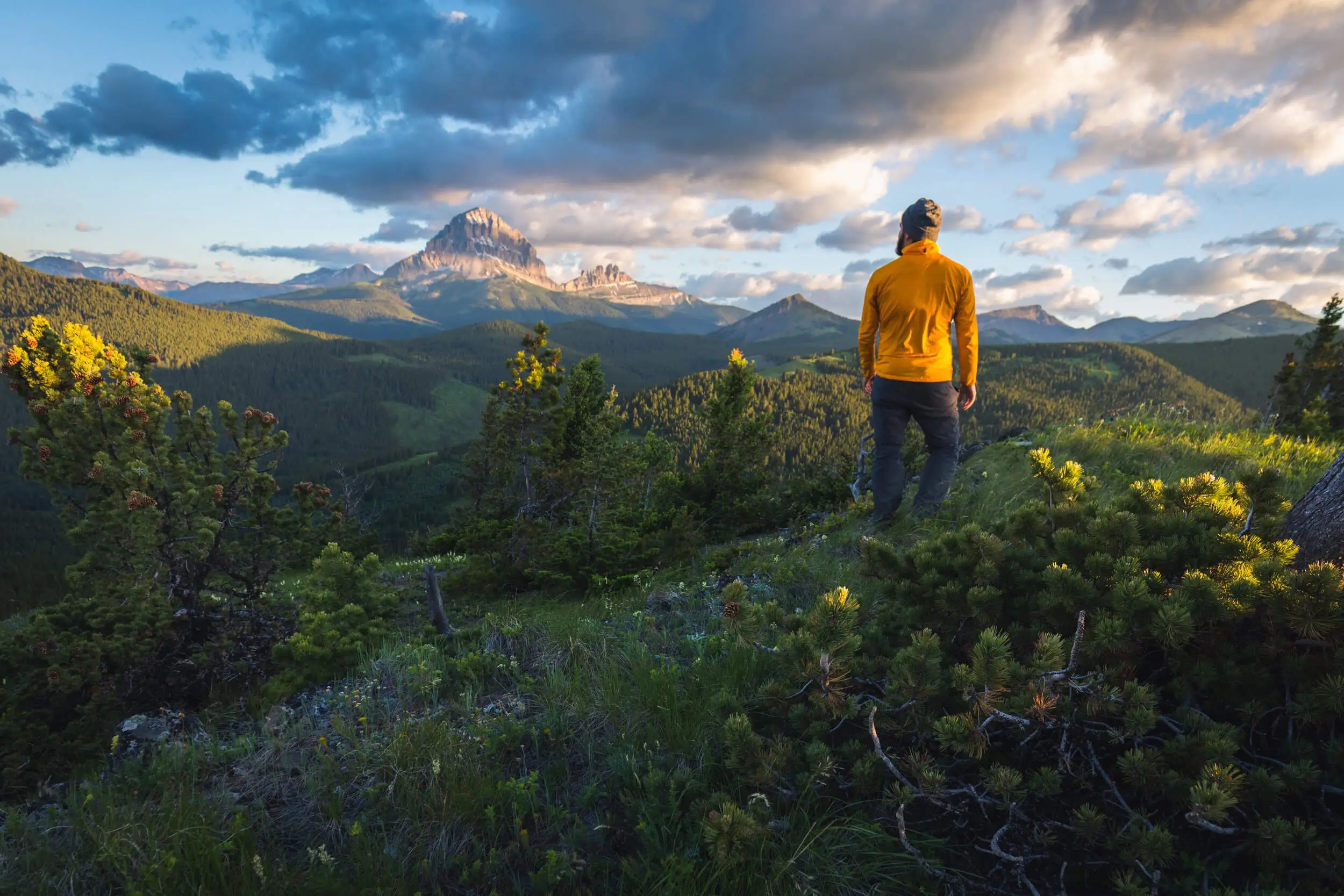
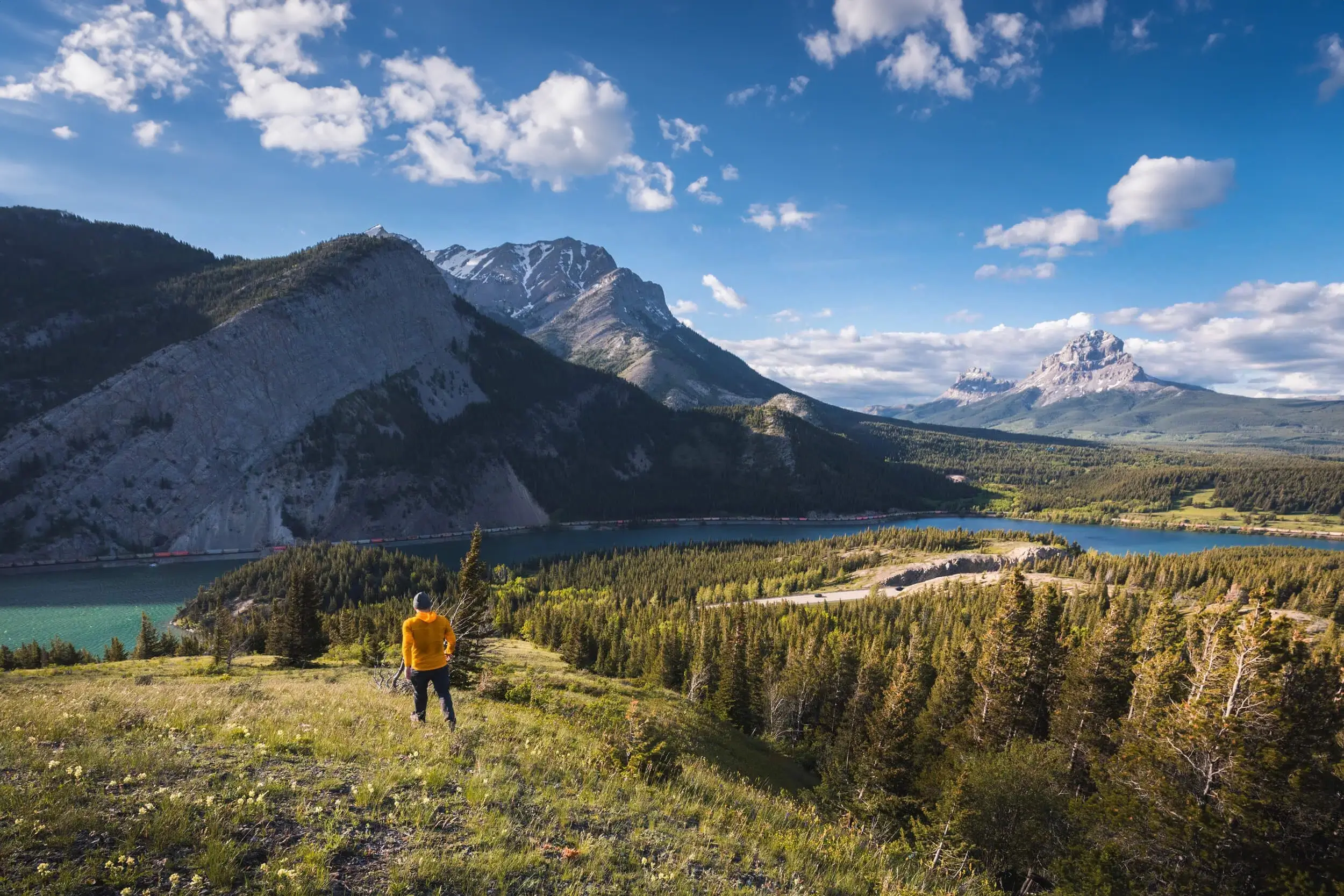
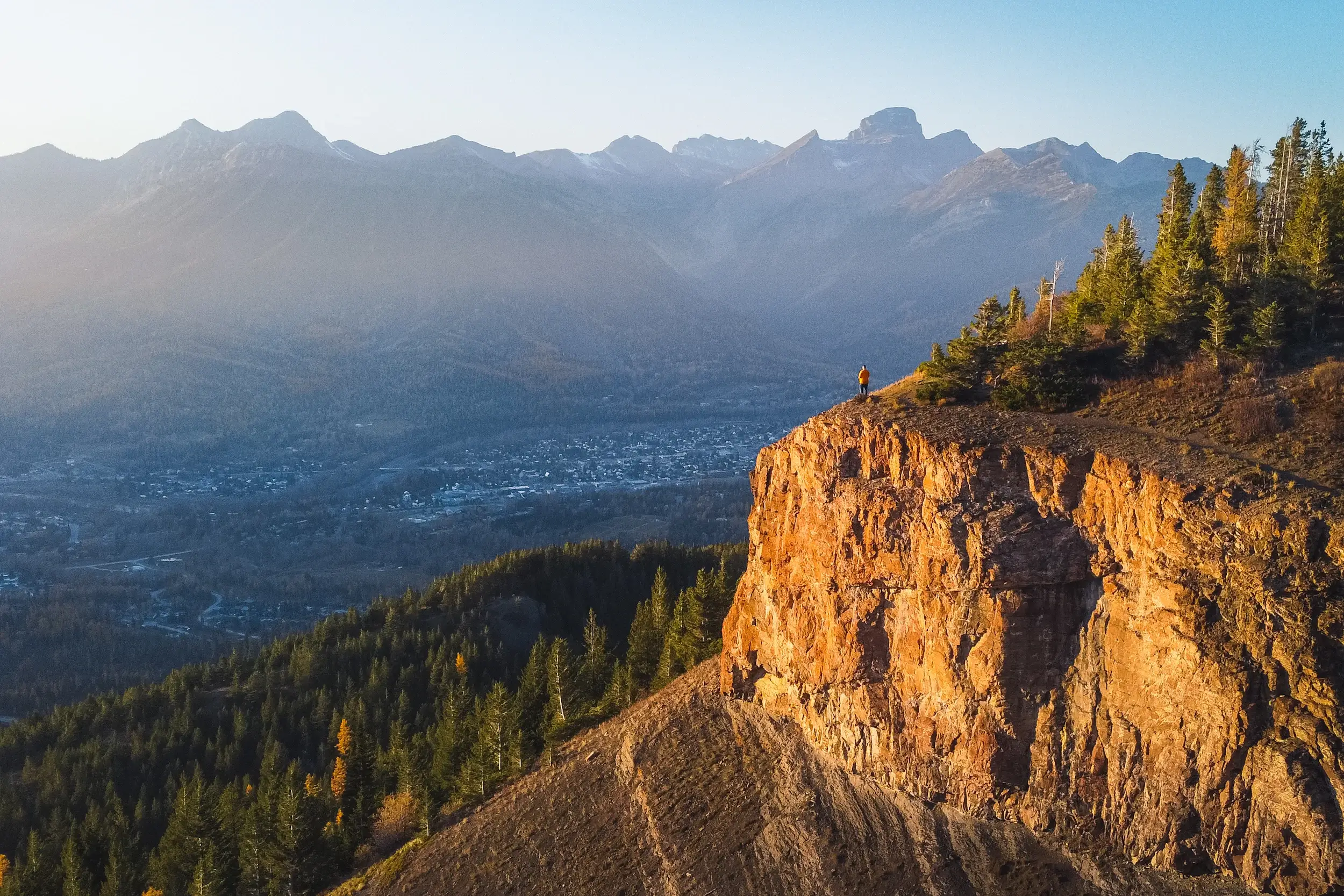
The Crowsnest Pass, tucked into the southern Canadian Rockies on the Alberta–British Columbia border, might not be the first place that comes to mind for a weekend away – but it should be. This rugged, mountain-framed windy corridor is packed with natural beauty, fascinating history, and plenty of ways to fill a day (or several) without the Disneyland-esque crowds you’ll find in the bigger-name mountain destinations. (Banff I’m looking at you.)
Long before European settlement, the region was an important travel and trading route for the Ktunaxa , Piikani , and other Indigenous peoples, who moved through the valley following seasonal game and gathering plants. Many traditional place names and stories tied to this land have been largely forgotten by newcomers, but the Indigenous presence here is thousands of years deep.
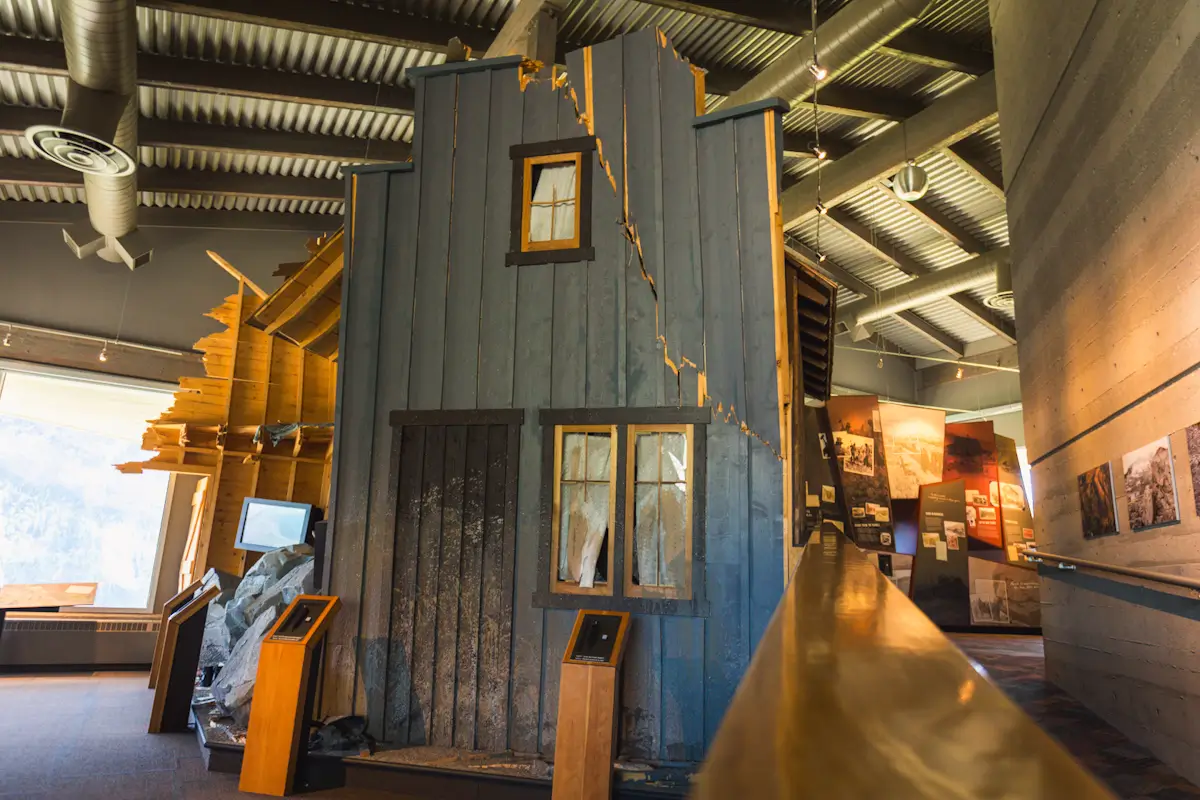
Today, the Pass is made up of five small former coal towns strung closely together—Blairmore, Coleman, Bellevue, Frank, and Hillcrest. If you’re into hiking, mountain biking, or scrambling, there’s no shortage of trails, peaks, and ridgelines to explore. While the mines have mostly closed, their remnants remain – ruins, abandoned buildings, and reminders of the boom-and-bust years that reshaped the valley. To understand the more recent, tragedy-filled history of the Pass, it’s worth stopping into the local museums or the Frank Slide Interpretive Centre, which tells the story of the 1903 disaster that buried part of the valley in 90 seconds.
In this guide, I’ve detailed all the best things to do in the Crowsnest Pass, along with a few worthwhile stops in nearby Pincher Creek. If I’ve missed something (and I probably have), feel free to let me know.
Summer is of course the most common time to visit the Pass, with clear trails, open historic sites, and community events like Bellecrest Days in July and the Doors Open & Heritage Festival in August. Fall brings quieter trails and golden larch trees in nearby Castle and in the Elk Valley, plus the Culture & Cuisine Festival highlighting local food and art.
Winter turns the Pass into a base for snowshoeing, skiing, and snowmobiling, with the Powderkeg Ski Festival adding some lively energy. Spring is shoulder season – unpredictable weather, but great for seeing waterfalls at their peak.
Accommodation in the Crowsnest Pass is small-scale and spread across its five towns. Blairmore has the most options, from basic motels to a few boutique-style inns, and it’s the most convenient for nearby restaurants. Coleman offers a quieter base with heritage buildings and a couple of character-filled guesthouses. Bellevue and Hillcrest are even sleepier, with just a handful of B&Bs.
There are also several campgrounds in the Crowsnest Pass, including Crowsnest Pass Campground, Chinook Campground, and Lost Lemon Campground.
Best Things to Do in the Crowsnest Pass
1. Explore the Bellevue Underground Mine
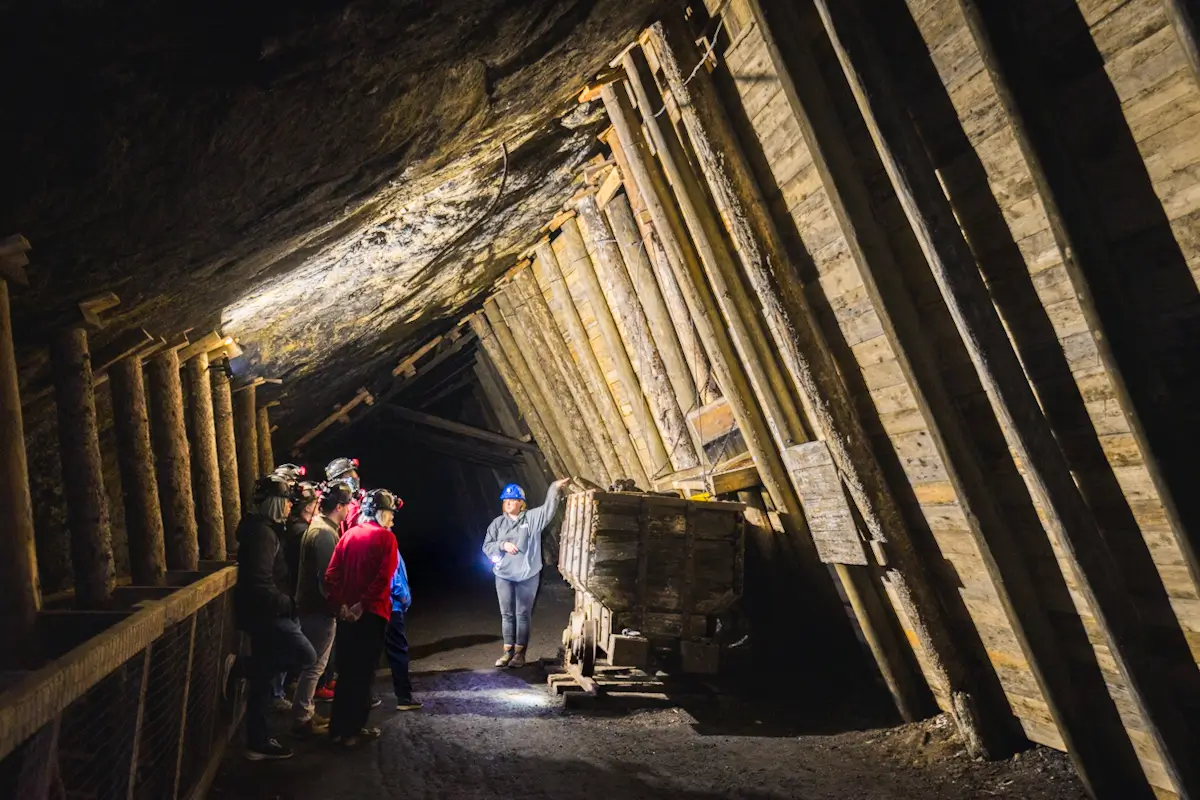
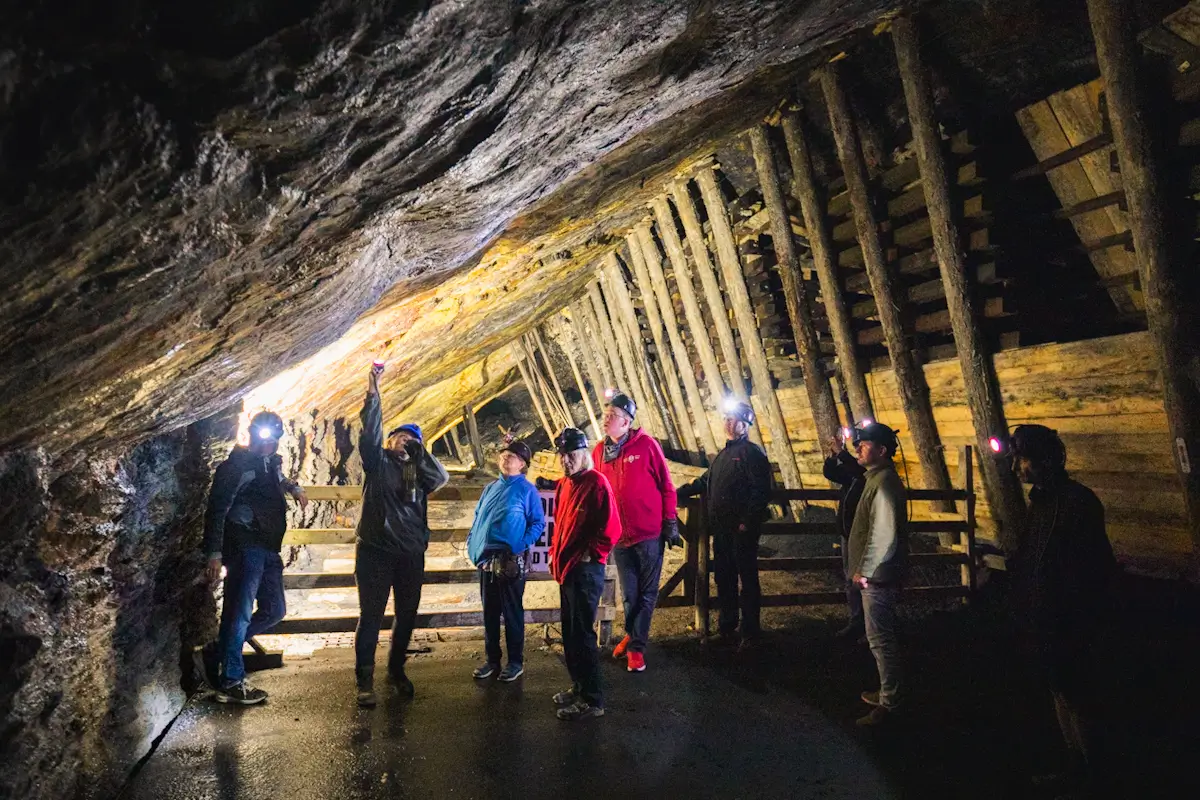
Taking a guided tour through the Bellevue Underground Mine offers a glimpse into early 20th-century coal mining in Alberta. Opened in 1903, the mine supplied fuel for the Canadian Pacific Railway and helped drive the growth of the surrounding community. Today, visitors can join guided tours that descend about 150 feet underground, traveling through roughly 1,000 feet of restored tunnel , which is only about 0.1% of the total mine. The mine is also remembered for a tragic explosion in 1910 that killed 31 workers and led to renewed attention on safety in Western Canadian coal operations, though it was soon overshadowed by the nearby Hillcrest mine disaster four years later, which killed 189 and is Canada’s worst mining disaster to date.
The tour takes about an hour, and you’ll want to bring a warm jacket as the mine stays chilly year-round. Honestly, it was the very last thing on this entire list that I got around to doing. I’d probably driven past it a hundred times before finally stopping, and I really regret waiting so long since it turned out to be one of my favorite experiences in the Pass.
2. Walk the Frank Slide Interpretive Trail
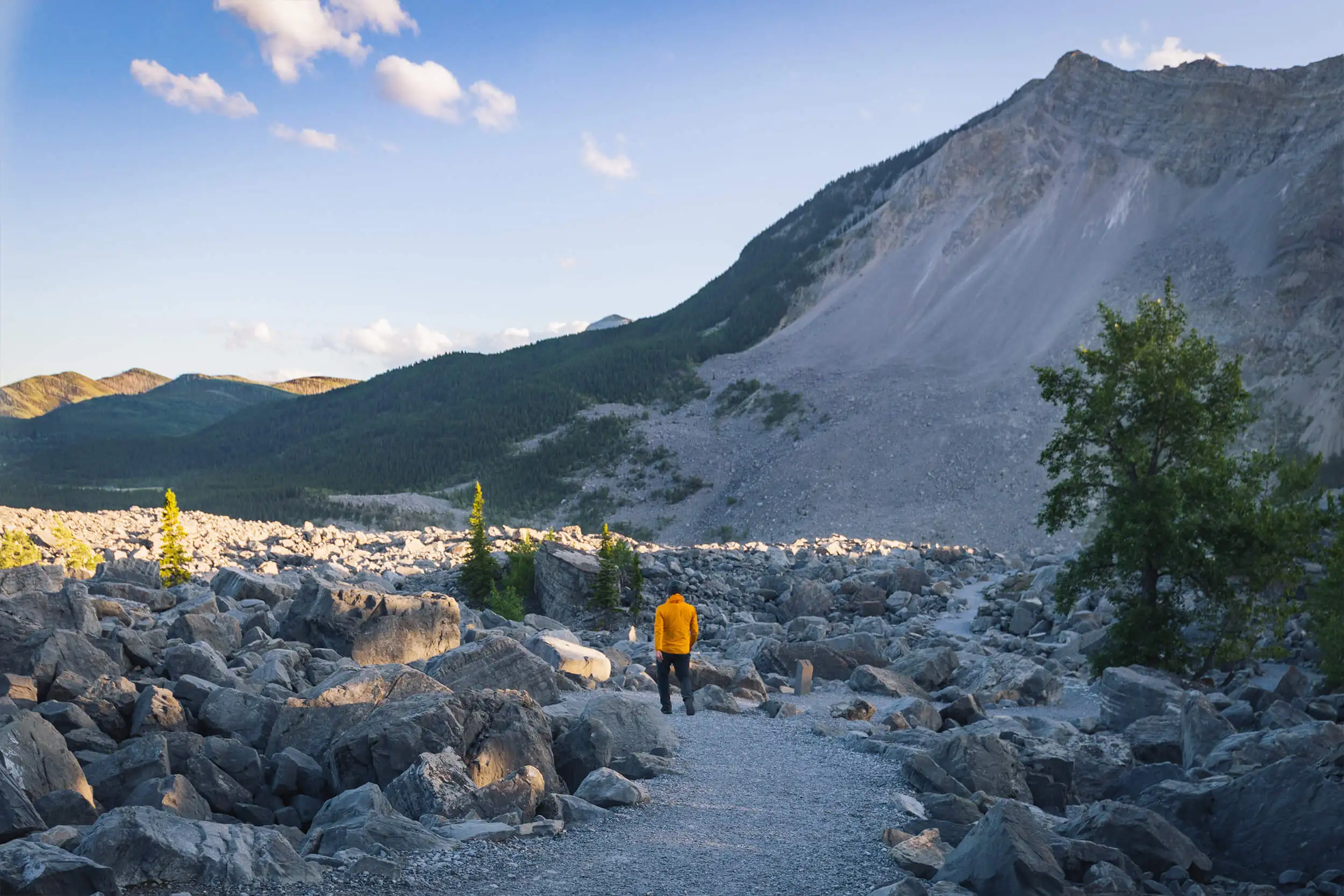
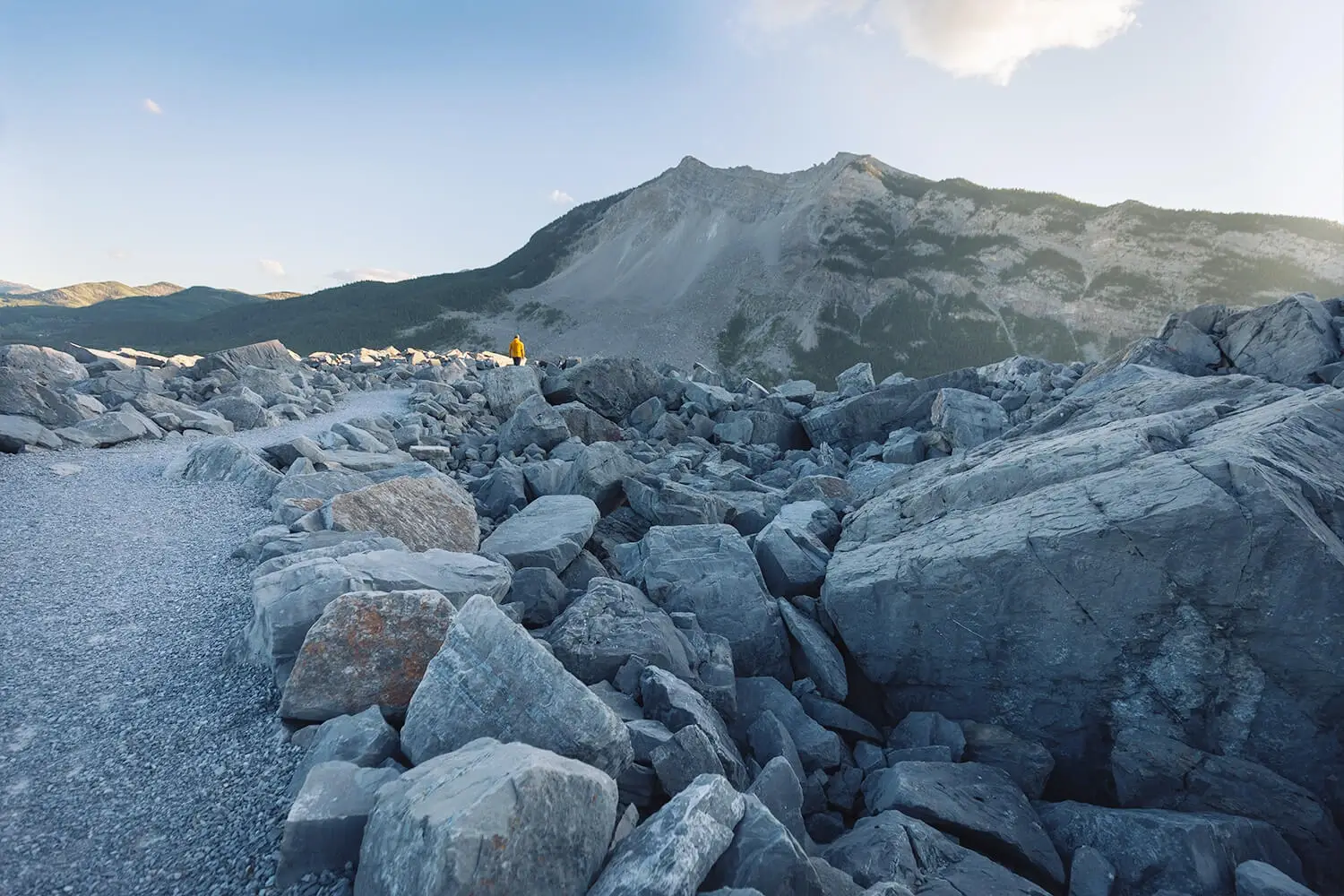
On the morning of April 29, 1903, a massive section of Turtle Mountain collapsed, sending over 80 million tonnes of limestone crashing down onto the mining town of Frank in just 90 seconds. The rockslide buried part of the town, destroyed homes and infrastructure, and killed at least 70 people. You definitely won’t miss the impressive rockslide as you drive straight through it on your way into the Pass, but it’s worth seeing it up close as well. The Frank Slide Interpretive Trail is a short walk that leads visitors through the debris field. The 1.5 km gravel loop winds through the rubble – some of the boulders the size of small houses – offering an up-close view of the scale of destruction. Interpretive signs along the path explain the geological conditions that led to the slide, including unstable layers of limestone and shale, as well as the role of coal mining near the mountain’s base. And just a reminder: taking rocks from the slide is illegal, so don’t be that person.
3. Unwind at Pass Beer Co
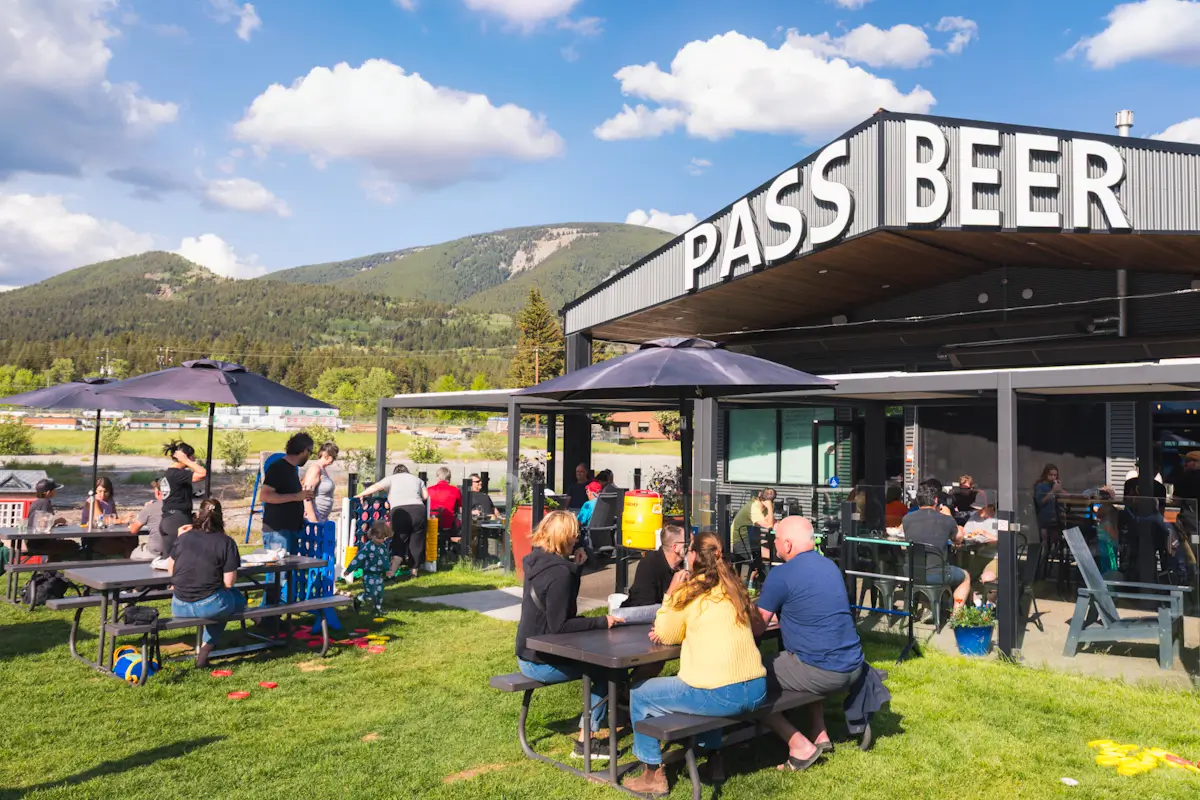
Pass Beer Co is my go-to spot in the Crowsnest Pass for a casual beer and something filling to eat, especially after a nearby hike. They have 12 taps and a solid food menu – my favourite is the Angry Blue Chicken Poutine. The airy taproom and dog-friendly outdoor seating area both offer great views of Crowsnest Mountain and Turtle Mountain. It’s almost always buzzing with locals, especially when there’s live music, which is usually at least once a week.
4. Relax by Chinook Lake
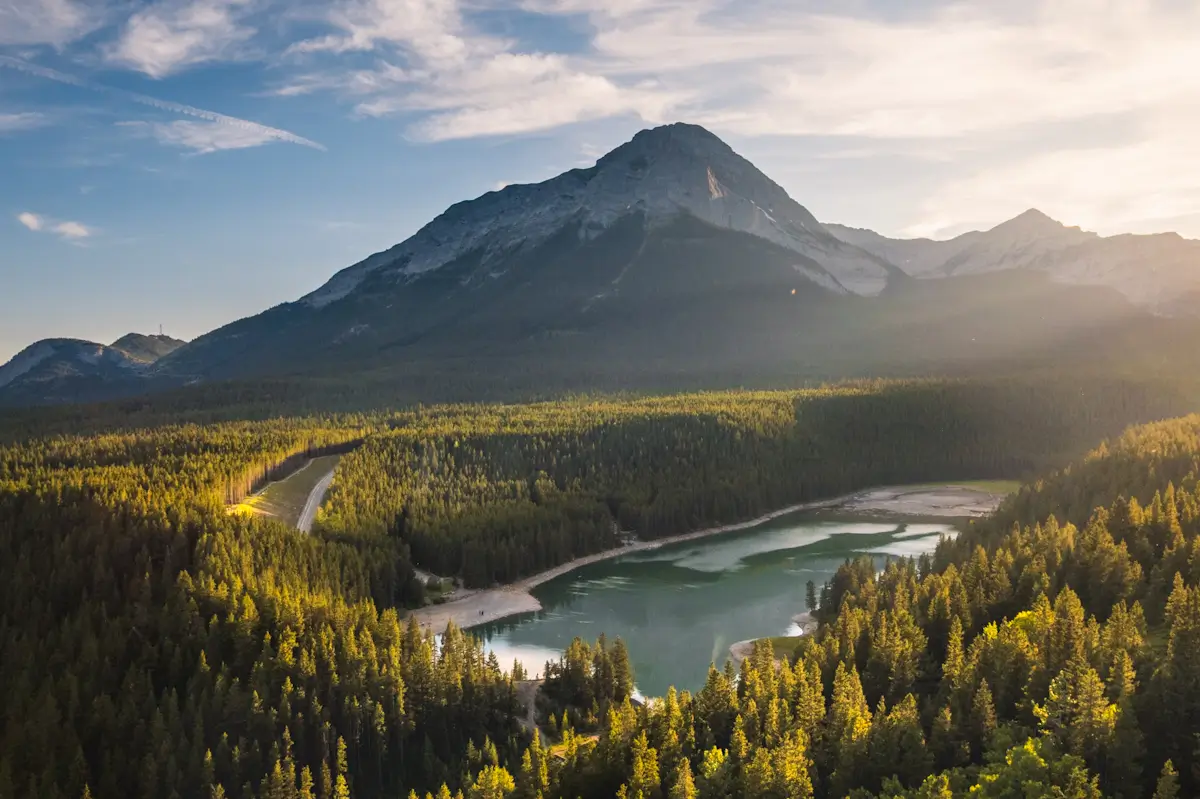
Surrounded by forest and framed by the rocky peaks of the southern Canadian Rockies, Chinook Lake is a small, calm lake with a popular campground and day-use area that makes it popular with both locals and travelers passing through. There’s a sandy beach, picnic tables scattered along the shore, and plenty of space to set up for the day. The still waters are perfect for paddling, so you’ll often see people in canoes, kayaks, or stand-up paddleboards. There’s also a short trail that loops around the lake, offering fantastic views of nearby Crowsnest Mountain, and which can be used to reach nearby Allison Creek Falls. I’m a fan of Chinook Lake especially since it’s the only Crownest Pass lake that isn’t right next to the highway. The other lakes are probably more beautiful, but it’s nice to get out on the water without the sounds of passing cars.
5. Step Back in Time at Leitch Collieries Leitch Collieries
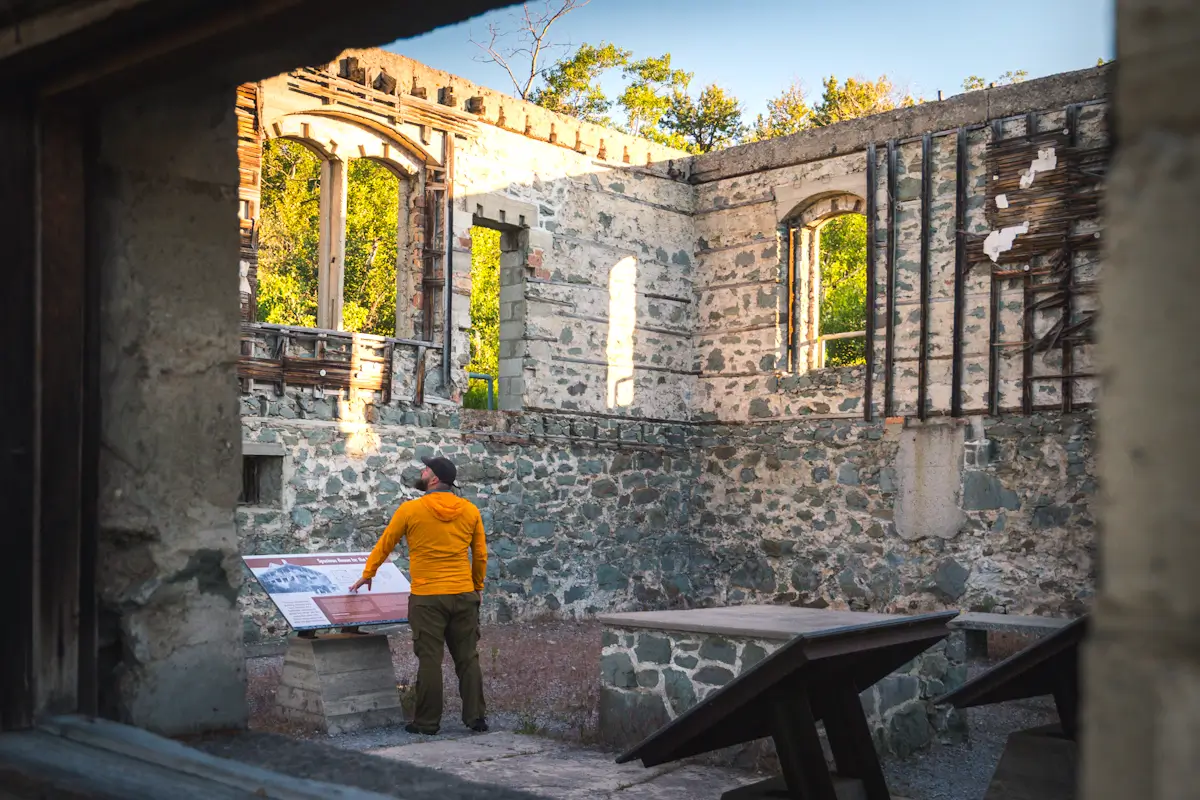
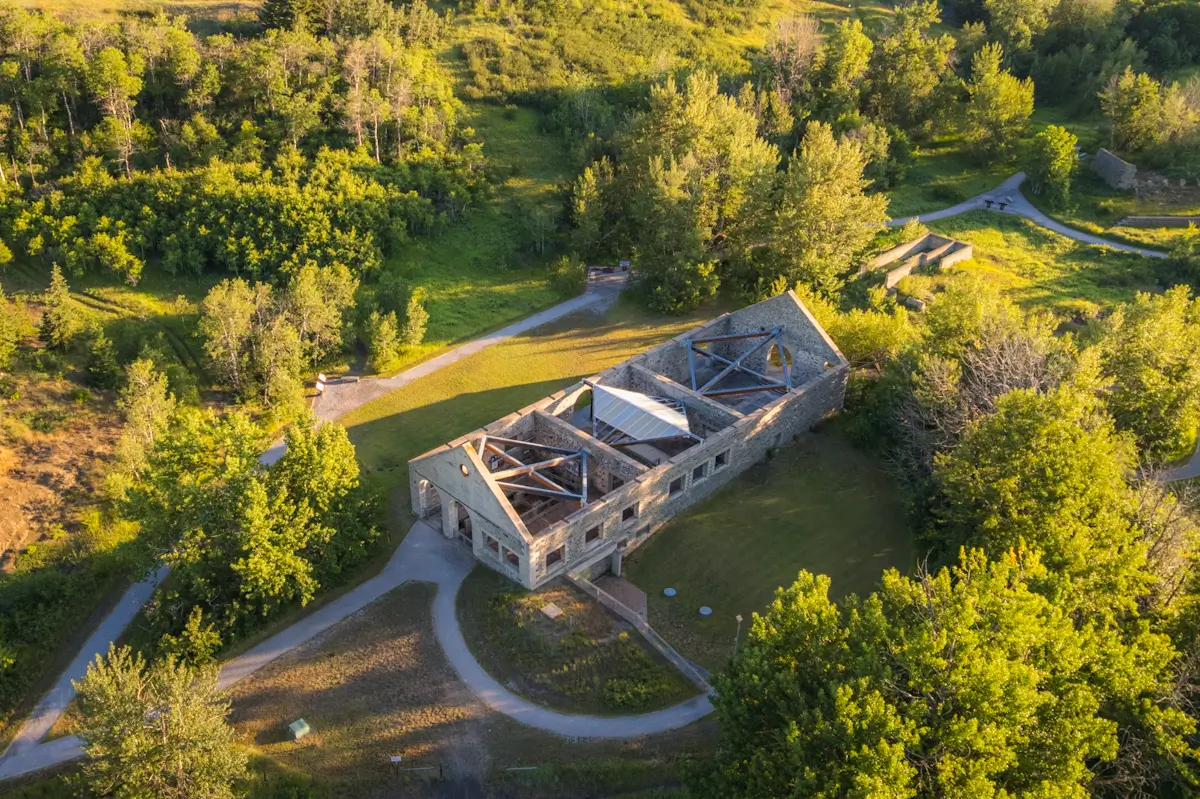
Leitch Collieries is one of the most striking historic sites in the Crowsnest Pass, with the skeletal remains of its sandstone buildings standing against the mountain backdrop. Once a bustling coal mining operation in the early 1900s, it was the only mine in the Pass fully owned by Canadian interests. The plan was ambitious: massive processing facilities, hundreds of workers, and the latest technology of the time. But a combination of poor management, financial trouble, and World War I meant the mine operated for less than a decade before shutting down for good in 1915.
Today, the site has been preserved as a provincial historic resource. Interpretive signs around the grounds explain the history and the people who worked here, from miners and engineers to the families who lived in the surrounding communities. It’s clear that a lot of money has been spent to preserve the site, and I was very impressed with it. It’s just off of the highway, so it can be anywhere from a five minute to half hour stop depending on how much you want to walk around.
6. Take in the Views at Crowsnest Lake
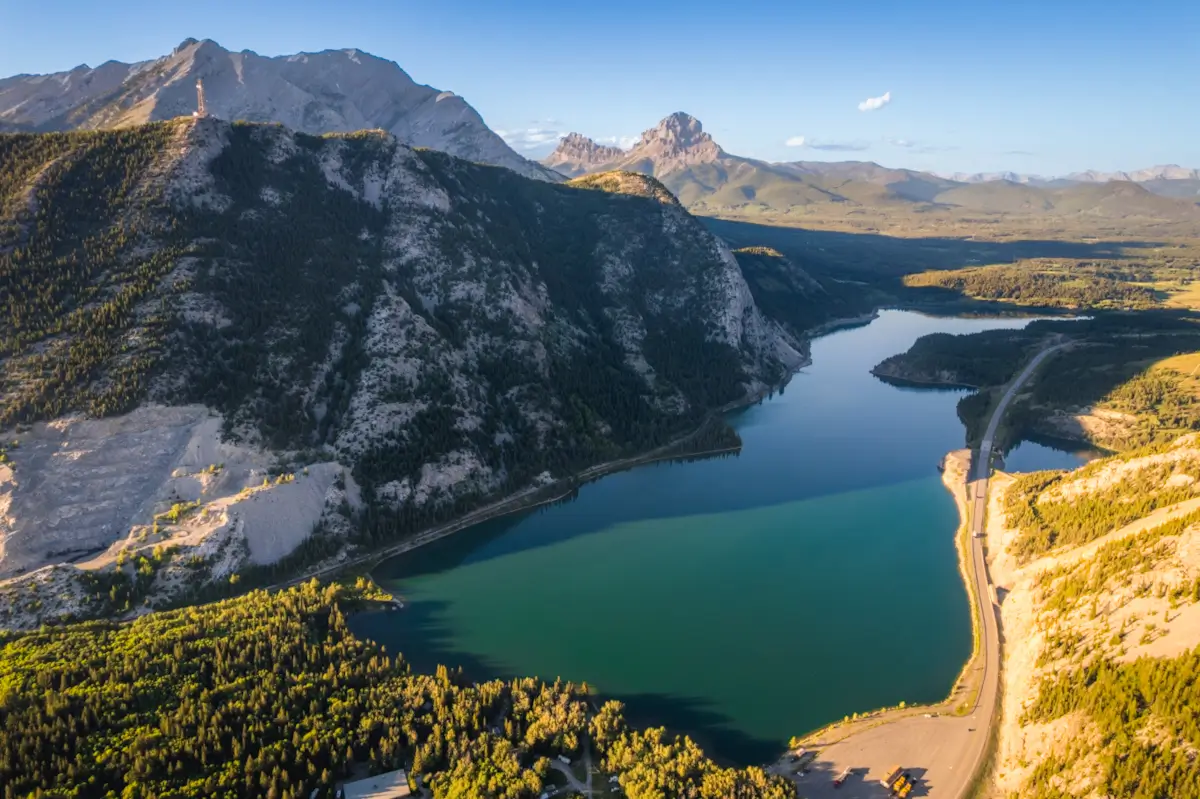
Crowsnest Lake sits right at the western edge of the Pass in the shadow of Crowsnest Ridge , just before you cross into British Columbia, and it’s one of the most beautiful stretches of water along Highway 3. This is a deep, cold lake – fed by mountain runoff and notorious for unpredictable winds. It’s a place for fishing, kayaking or SUPing on a calm day, or simply enjoying the scenery. There’s a small pullout with picnic tables that’s a popular spot for a quick roadside stop, and I highly recommend pulling off on your way through.
7. Sip Southern Alberta at Lost Things Distillery
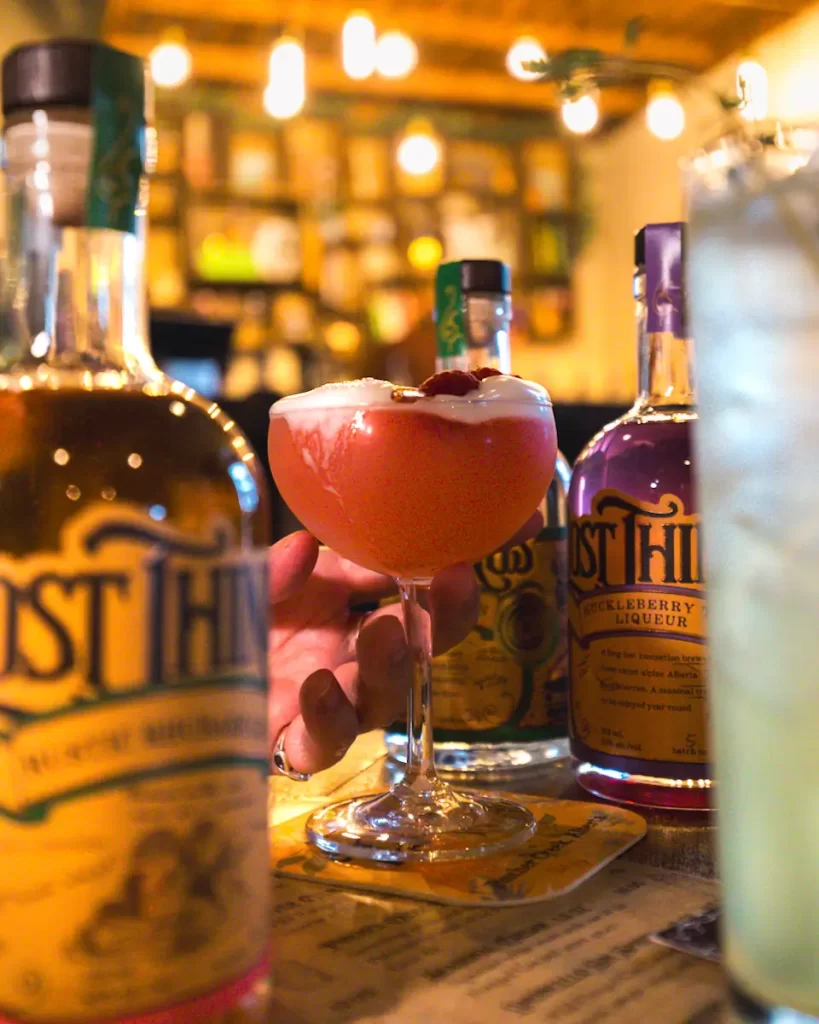
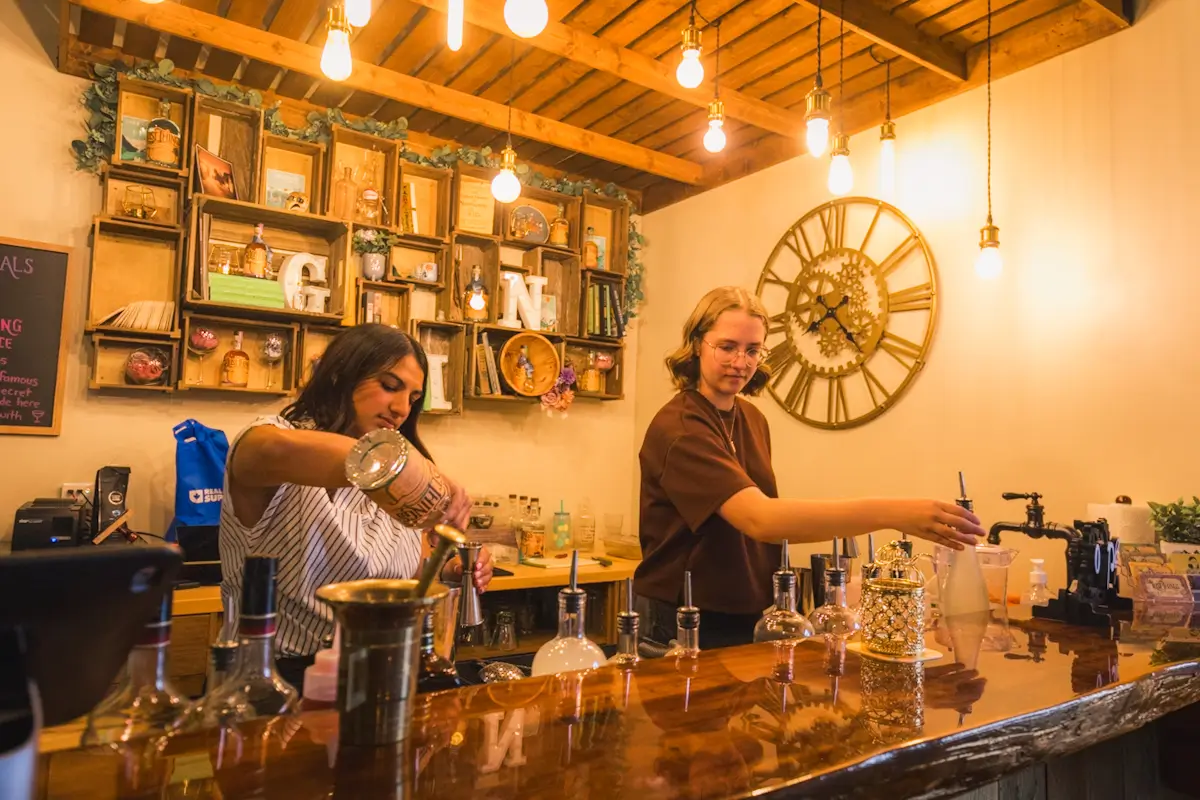
Housed in a former mechanic shop on Main Street in Pincher Creek, just a half hour out of the Pass, Lost Things Distillery is the only craft distillery in Southern Alberta, and it’s definitely worth the stop. Started by two Pincher Creek couples, Lost Things is best known for its flagship Wild‑Foraged Gin, which features botanicals foraged from banks of the Oldman River. In addition to cocktails made with their gin and liqueurs (some of which are only available to try in-tasting room). They also host the occasional live music night or special event, and the staff are as welcoming and knowledgeable as you’d hope in a small-town operation like this.
8. Hike the Local Peaks
Unlike Banff or Canmore, the mountains in the Crowsnest Pass are refreshingly uncrowded. On the other hand, unlike officially maintained trails in designated parks, the trails here are user-maintained, so don’t expect polished signage or manicured paths.
Turtle Mountain is the most famous hike in the Pass, its broken slopes forever tied to the 1903 Frank Slide. The trail climbs steadily to the ridge, where you’ll look down over the massive rock field that buried part of the town of Frank. It’s a surreal view, especially when you realize you’re standing on the very mountain that collapsed—and will inevitably collapse again.
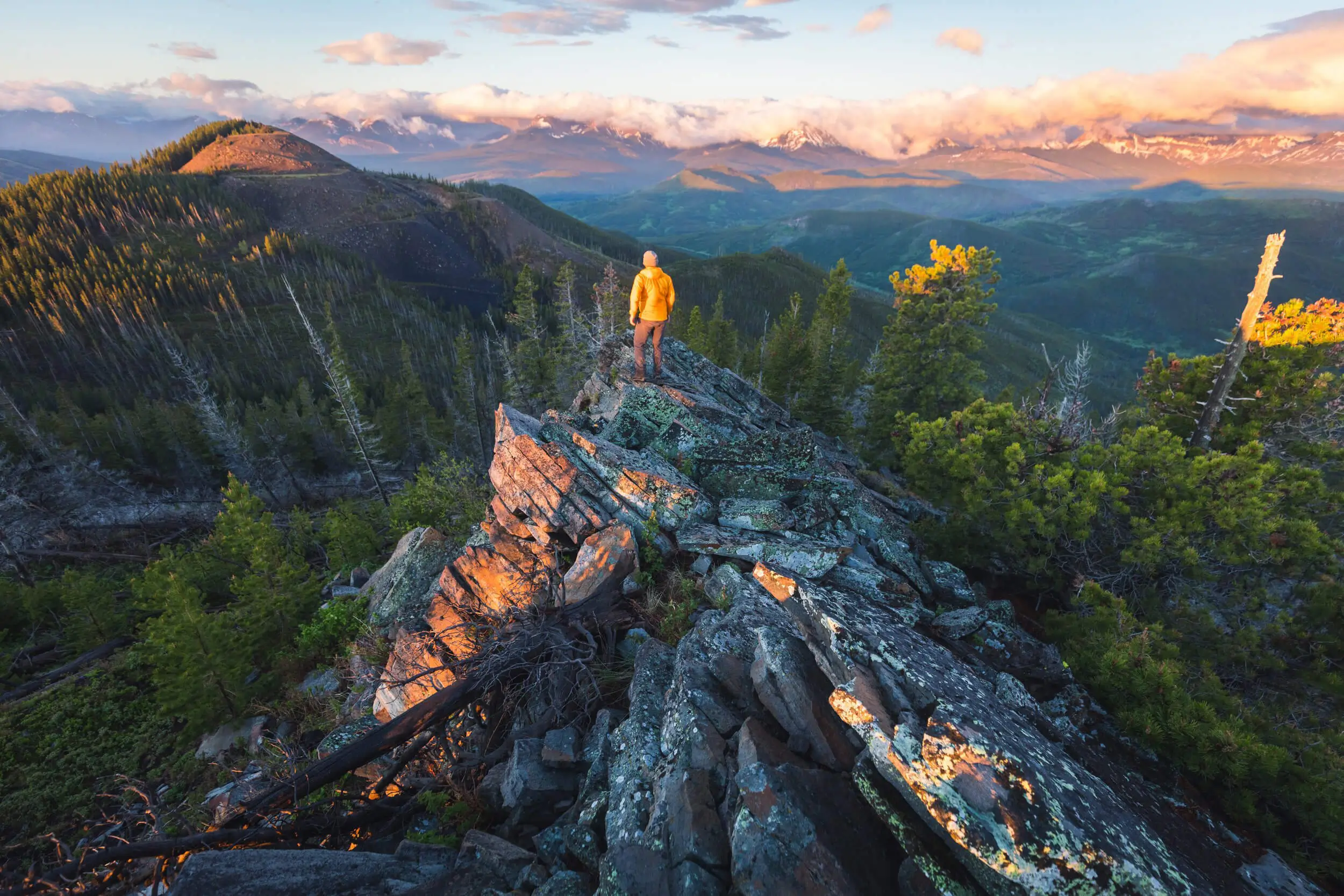
For something a little less demanding, the Crowsnest Volcanics offer a completely different kind of landscape. These ridges were created by ancient volcanic eruptions that predate the formation of the Rockies. Saskatoon Mountain is a personal favourite, with a moderate ascent and wide-open views that feel far removed from the rest of the valley.
Up for the ultimate challenge? Take on Crowsnest Mountain, the most iconic peak in the pass. Just be warned, experienced hikers and scramblers only.
If you’d rather explore with a local guide, I highly recommend Uplift Adventures. They offer guided hikes and outdoor experiences that not only keep you safe but also give you deeper insight into the natural and cultural history of the area. It’s the easiest way to get more out of your time in these mountains.
9. Experience the Power of Lundbreck Falls
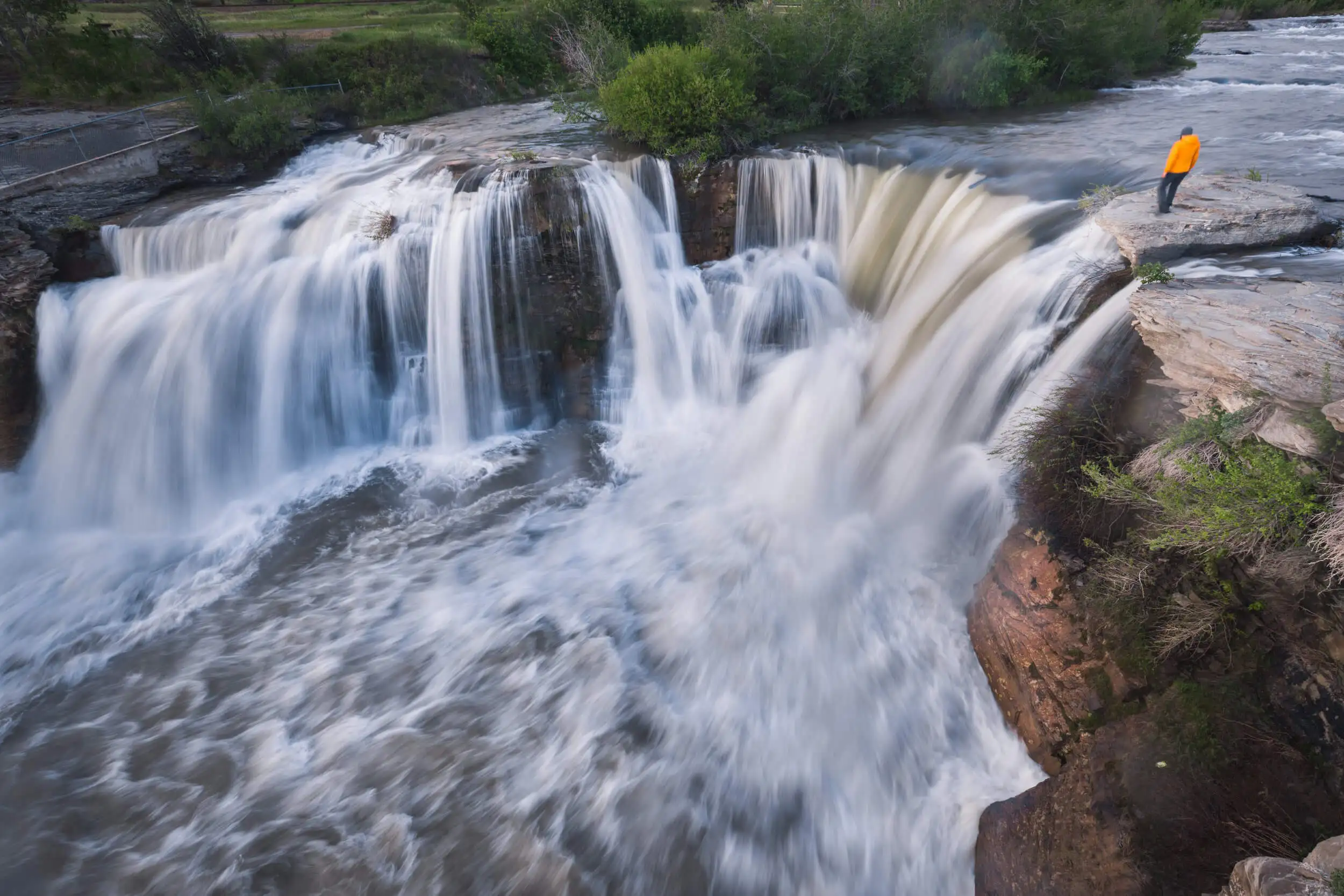
Lundbreck Falls crashes over a rocky cliff along the Crowsnest River, just off Highway 3, making it one of the most striking and accessible natural stops in the area. The river splits and plunges in two tiers over ancient bedrock, dropping 12 metres into a mist-filled canyon with a constant, echoing roar.
A sturdy viewing platform lets you get right up to the edge for a close look, and a short path leads down to the riverbank for a different perspective at the base. Because it’s so close to the highway, you won’t have it all to yourself, but it’s still an easy, worthwhile detour – five minutes is all it takes to see one of the Pass’s most photographed spots.
10. Learn the Story at the Frank Slide Interpretive Center
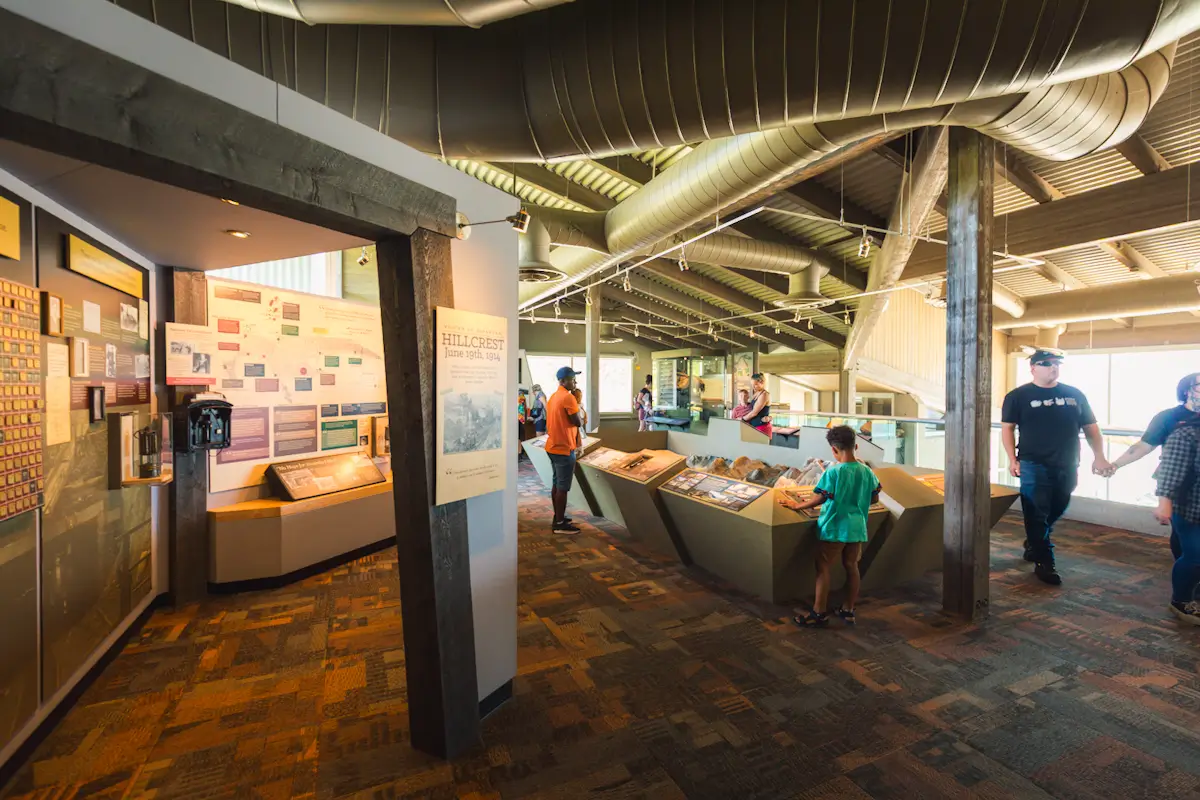
After walking the Frank Slide Interpretive Trail and seeing the debris field up close, the Frank Slide Interpretive Centre adds the deeper context that ties it all together. Perched on a scenic ridge overlooking the slide, the centre gives you a panoramic view of the devastation while walking you through the story behind it.
Inside, you’ll find well-designed exhibits that explain why Turtle Mountain collapsed and how it reshaped the community overnight. There are personal accounts from survivors, artifacts recovered from the rubble, and detailed models showing what the mining town of Frank looked like before that April morning in 1903. It’s one of the best places in the pass to learn about the history of the area.
11. Paddle the Calm Waters of Emerald Lake
Emerald Lake is a bit of a misnomer – it isn’t really a separate lake at all, but an offshoot of Crowsnest Lake, linked by a narrow channel under the highway. Like its larger counterpart, it’s a popular spot for paddling and SUPing, but it’s more sheltered from the strong winds that Crowsnest Lake is notorious for. The old highway runs right along the shoreline beneath Sentry Mountain, while across the water is Bald Hill – a quick, easy hike that offers in my mind the best bang-for-your-buck views anywhere in the Pass. If you’re here in spring during runoff, keep an eye on Sentry Mountain; a small seasonal waterfall spills straight down its rocky face into the lake.
12. Start Your Day at Ophelia Outpost
Ophelia Outpost is easily the best coffee spot in the Crowsnest Pass and the perfect place to kick off your day. Their breakfast sandwiches are the stuff of local legend – and they do sell out – so get there early if you want one. If you miss out, there’s no shortage of other options: fresh in-house pastries, creative sandwiches, and daily specials. Ingredients are sourced as locally as possible, and the shelves double as a mini showcase of regional flavor, with Crowsnest Pass craft beer and Fernie-roasted coffee available to take home, along with locally made mugs and totes.
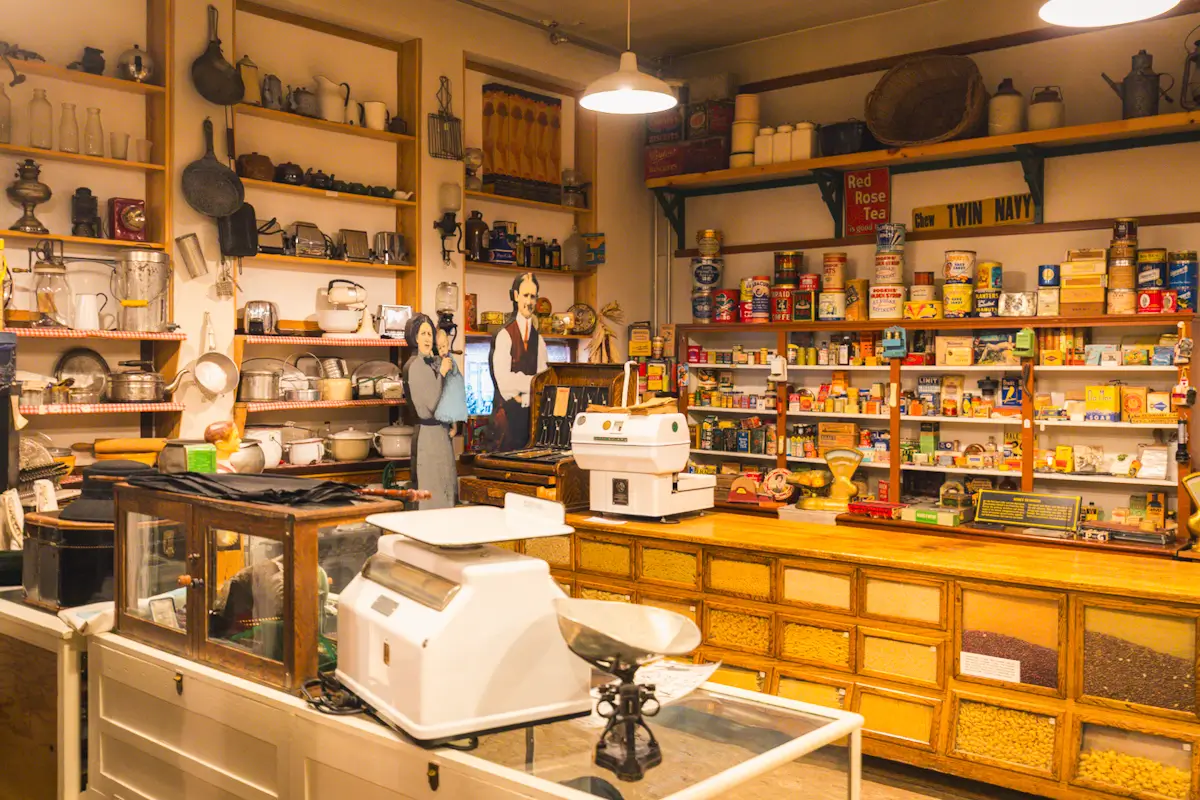
13. Discover History at the Crowsnest Museum
Housed in the old Coleman High School, the Crowsnest Museum dives into the history of the Pass, with a strong focus on the coal mining industry that built and defined the region. You’ll find original equipment, archival photos, and personal artifacts from the boom years, when rich coal seams drew workers from across Canada and overseas. One section covers the deadly mine explosions that were tragically common in the early 1900s, offering a sobering look at the risks miners faced every day just to earn a living.
To be honest, many small-town museums in Canada, while meaningful to locals, don’t always have enough unique history to warrant a visit from out-of-towners. The Crowsnest Pass is the exception – its history of boom, bust, and tragedy is genuinely compelling, and the museum does an excellent job of telling it.
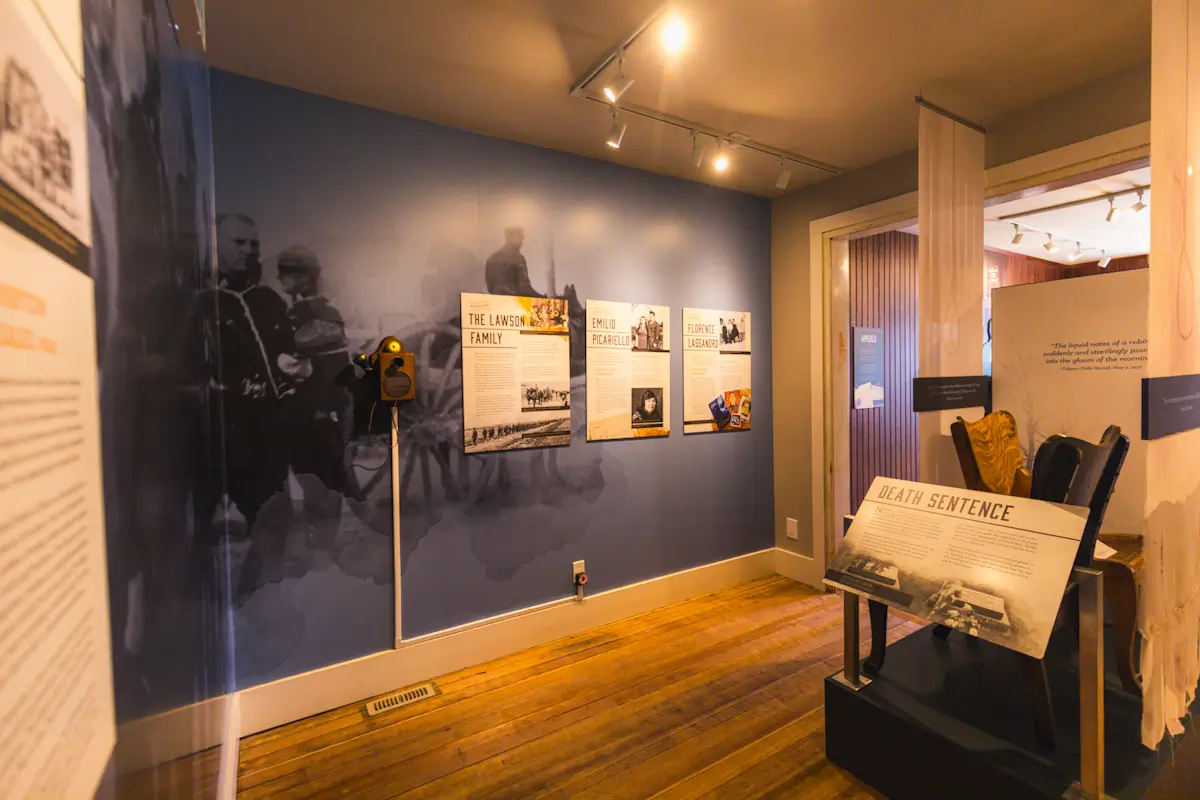
14. Delve into the Lawson Shooting at the A.P.P. Barracks
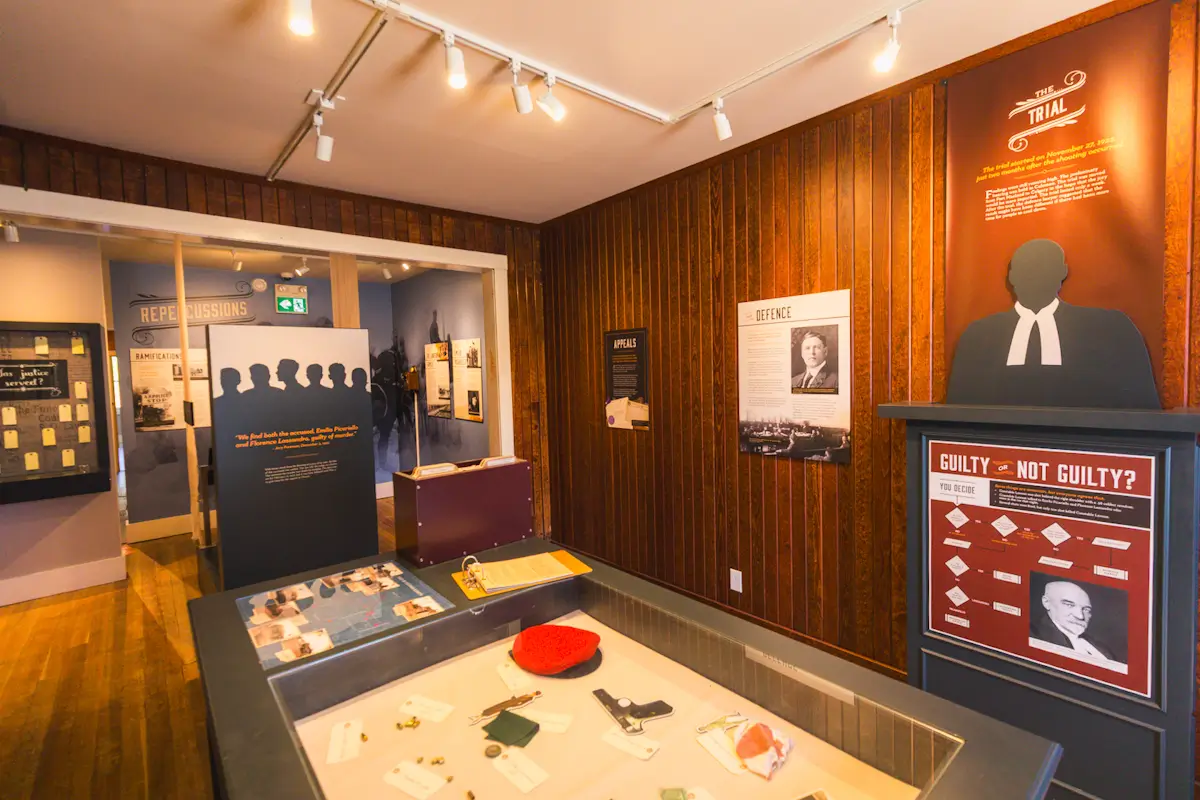
Included in your ticket to the Crowsnest Museum is the Alberta Provincial Police Barracks, which was built in 1904 and served the Alberta Provincial Police (APP) from 1917 to 1932. The building was saved from demolition in 2001 and in 2017 was restored and converted into a small museum dedicated to the 1922 shooting of Constable Stephen Lawson on the barrack’s front steps, one of Alberta’s most infamous unsolved crimes.
During the height of Prohibition, the Pass was a hotbed for bootlegging and organized crime, and tensions often boiled over. On the night of September 21, 1922, Constable Lawson was gunned down, and a bootlegger named Emilio Picariello, along with his accomplice Florence Lassandro, was arrested and convicted for the murder, despite serious doubts about the evidence.
Inside the museum, you’ll find the rooms transformed into immersive exhibits that walk you through the events leading up to the shooting, the investigation, and the controversial trial that followed. Artifacts, photos, and personal accounts bring the story to life, while interactive displays let you explore the different theories about what really happened that night. Was justice truly served, or was it a miscarriage fueled by the anti-bootlegging fervor of the time?
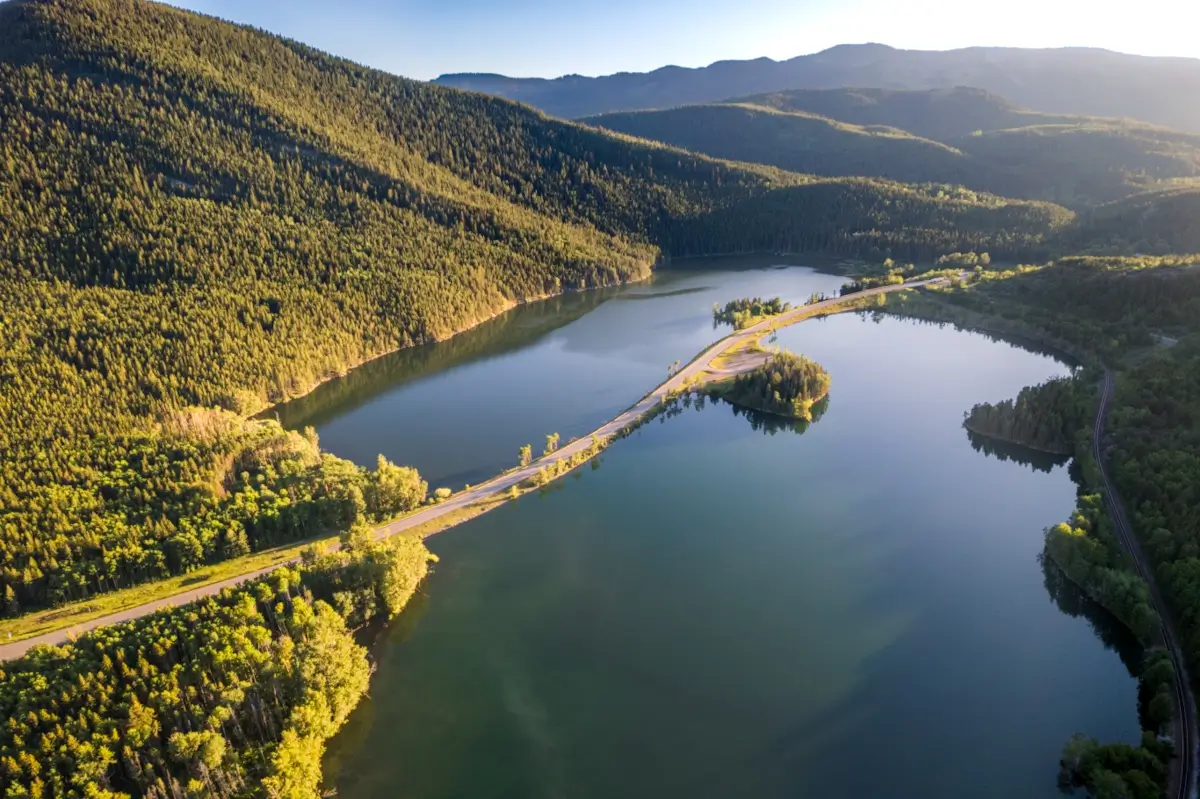
15. Escape to Island Lake
While several of the Crowsnest Pass’s lakes are right alongside the highway, Island Lake is unique in that the highway was built right through it (and the eponymous island). The (former) island in the middle of the lake is a popular spot to pull off and launch boats and paddleboards. On the southeast end of the lake is a campground which seems mostly suited to RVers as opposed to tenters.
16. Find Hidden Waterfalls in the Pass
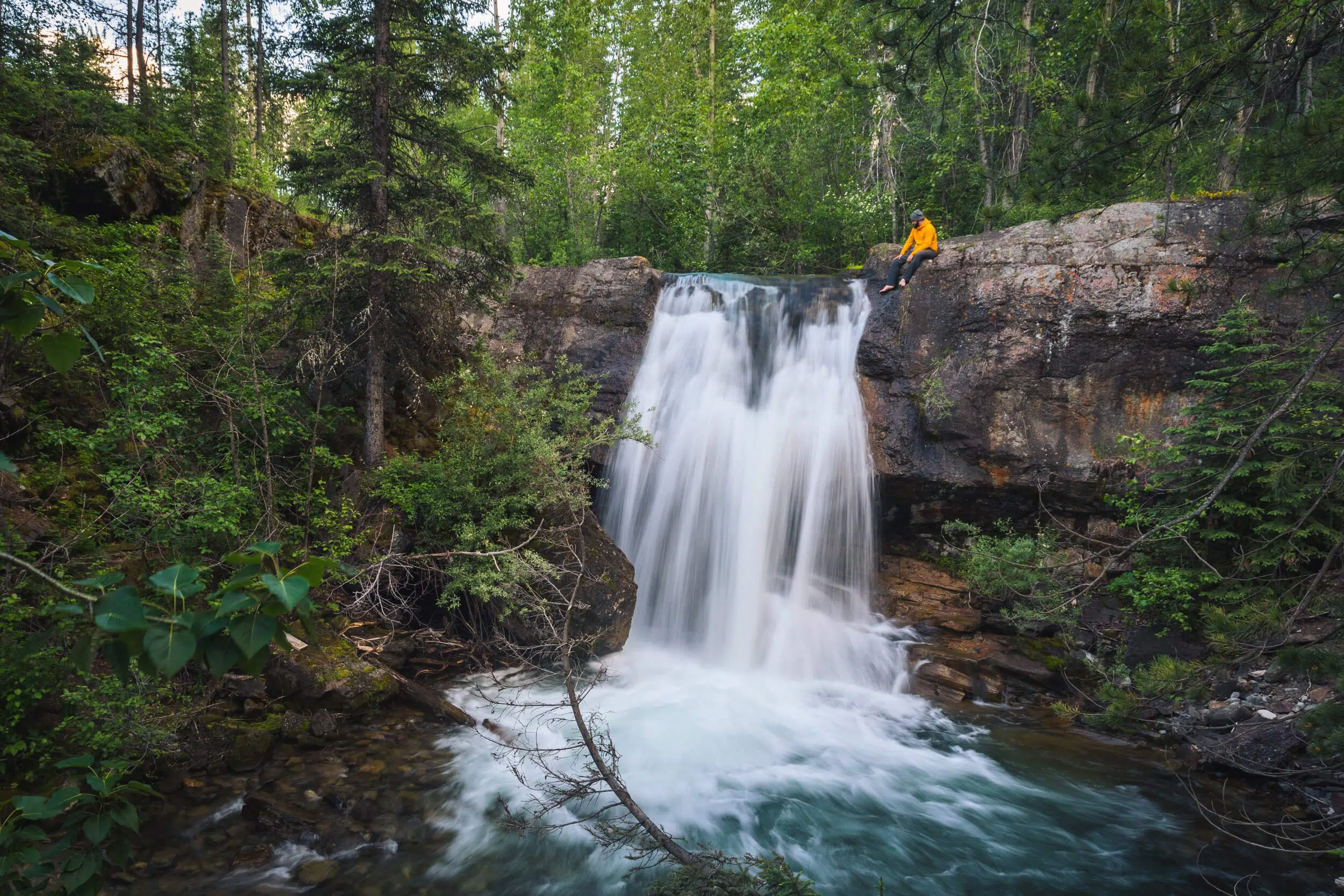
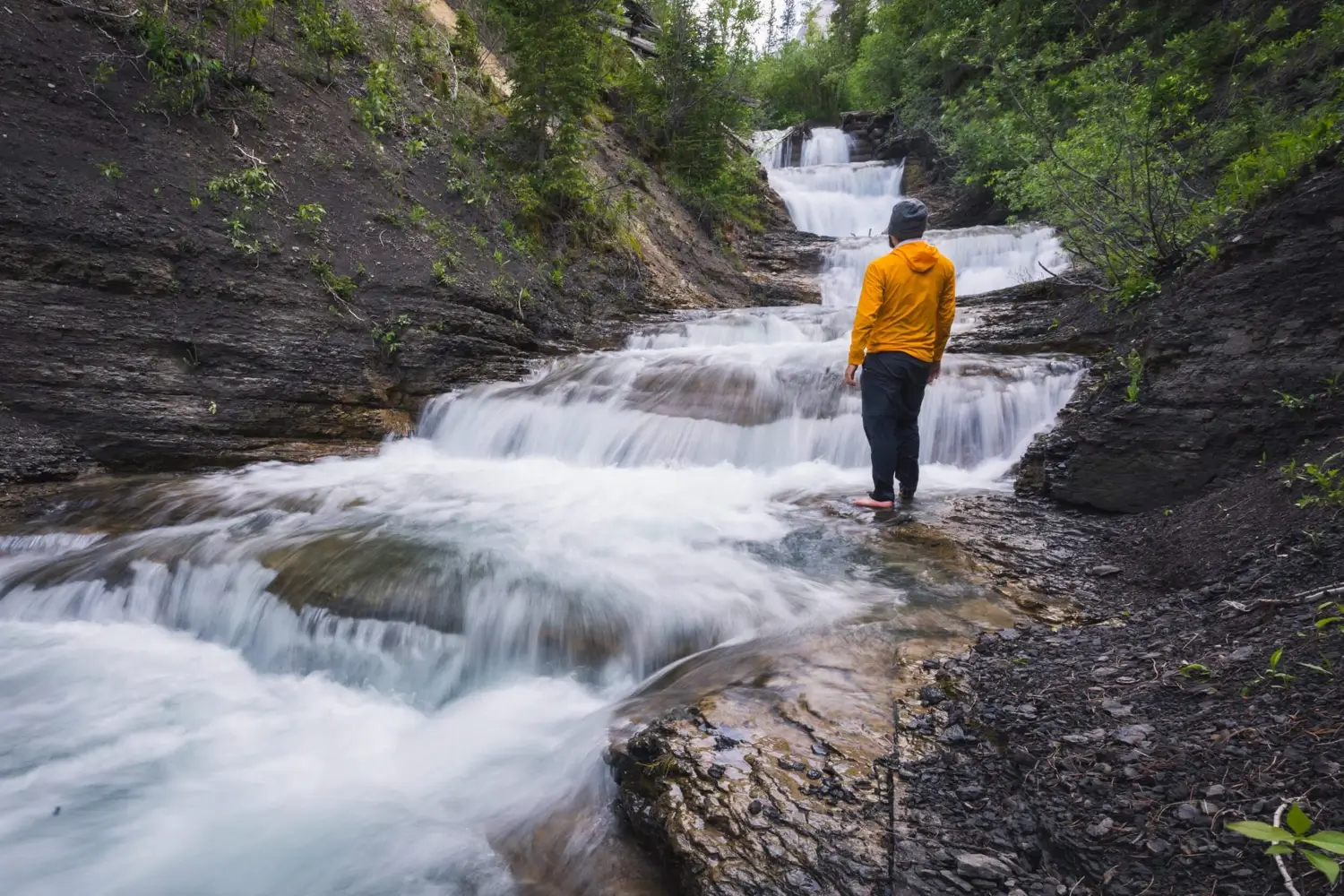
The Crowsnest Pass is full of small to mid-sized waterfalls, many of them just a short walk from the road. None of them will take up a whole day, so it’s easy to fit them in among other adventures. Star Creek Falls is one of my favourites, tucked into a tight canyon outside Blairmore. To really see it properly, you’ll have to scramble up a short chain section. If you’re after something easier, Allison Creek Falls near Chinook Lake is a mellow option. It’s a quick walk through the forest to a cascade that’s especially pretty in spring when the meltwater is running strong. York Creek Falls is another one worth a stop, tucked just off the side of the road near Coleman, and only a short stroll to reach.
17. See Local Creativity at the Art Gallery
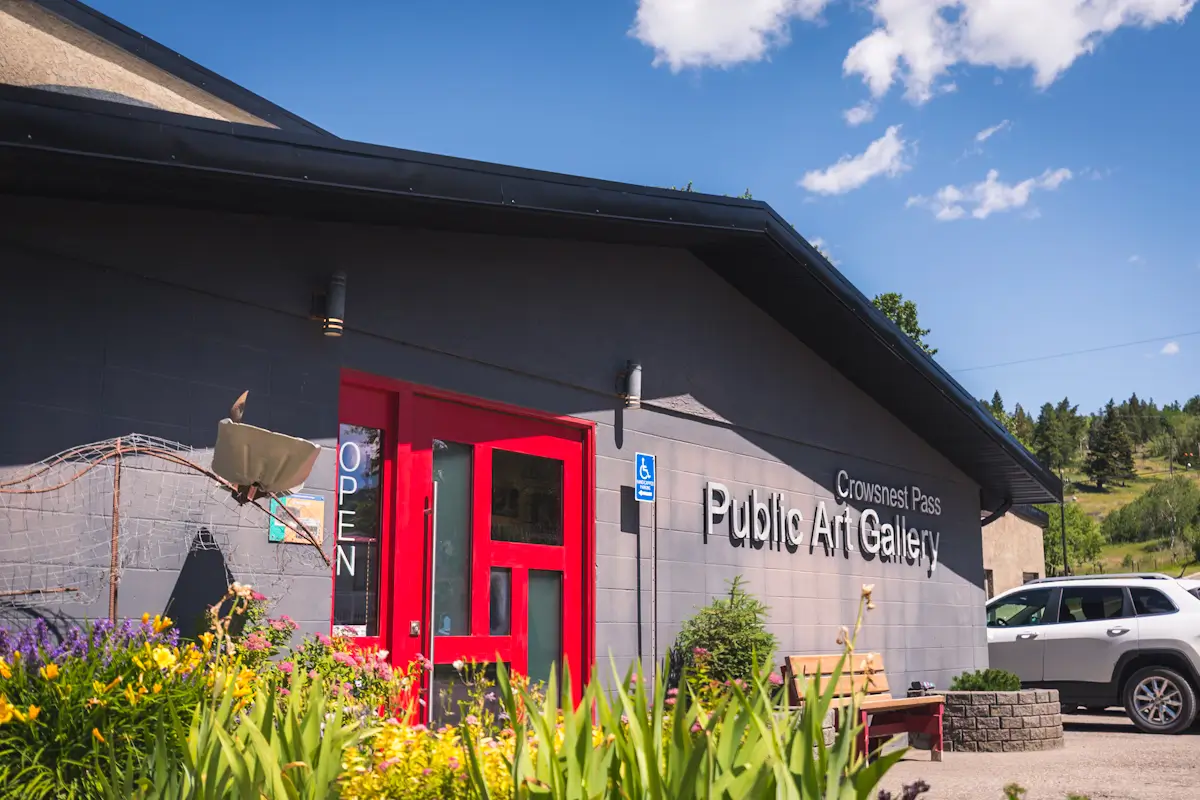
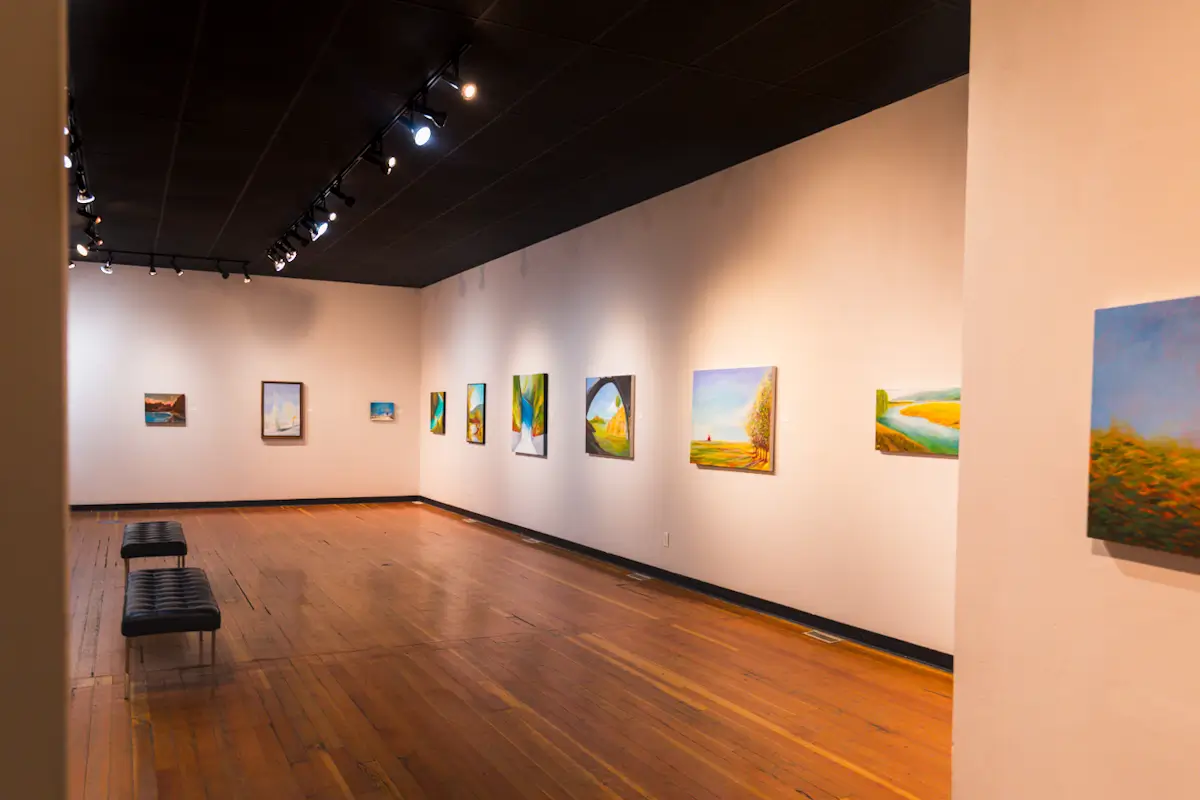
The Crowsnest Pass Public Art Gallery has hosted a rotating lineup of exhibits featuring regional and provincial artists since it opened in 1981, with everything from traditional landscape paintings and sculpture to contemporary installations and mixed media pieces. The cute roadside gallery is free to enter, and features a really nice little gift shop with locally made souvenirs. It doesn’t take long to visit but in my opinion is well worth it.
18. Snap a Pic of the Resilient Burmis Tree
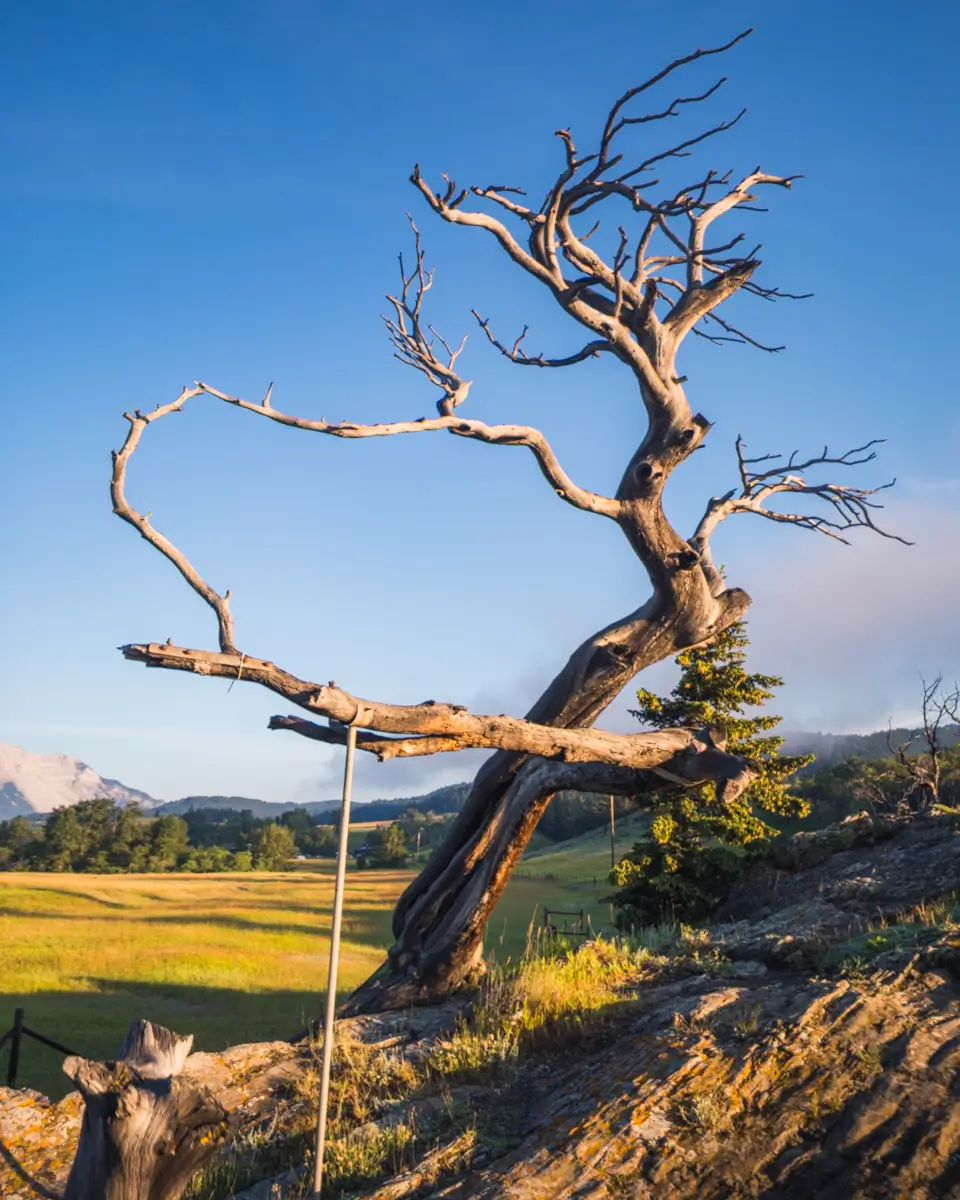
On the eastern edge of the Crowsnest Pass, just off Highway 3, stands one of Southern Alberta’s most photographed landmarks. The Burmis Tree is a limber pine that took root here up to 700 years ago, surviving relentless wind, snow, and dry conditions before finally dying in the late 1970s. Its twisted, weather-beaten skeleton was left standing, and it’s remained a popular roadside stop for local photographers. The small pulloff is a five second detour as you’re entering the pass, and getting a photo with the tree is mandatory in order to prove you were actually here.
19. Trek to the York Creek Plane Crash Site
In January 1946, a Royal Canadian Air Force Dakota crashed into the slopes above York Creek during a blizzard, killing all seven men on board. Nearly eighty years later, the twisted wreckage still lies where it fell, scattered across a rugged alpine basin beneath Mount Coulthard. Over the years, it’s been peppered with bullet holes from target practice and defaced with graffiti, but despite that, it remains a sobering and fascinating site to visit.
Reaching the crash site isn’t a casual stroll. The York Creek trail is roughly 16 kilometers round trip with over 800 meters of elevation gain, so plan for a full day and be prepared for some route-finding, especially in the upper sections. Most hikers start from the York Creek Staging Area near Coleman, following old logging roads before the trail narrows and climbs steadily through forest and finally into open alpine terrain.
20. Explore the Lime City Ruins
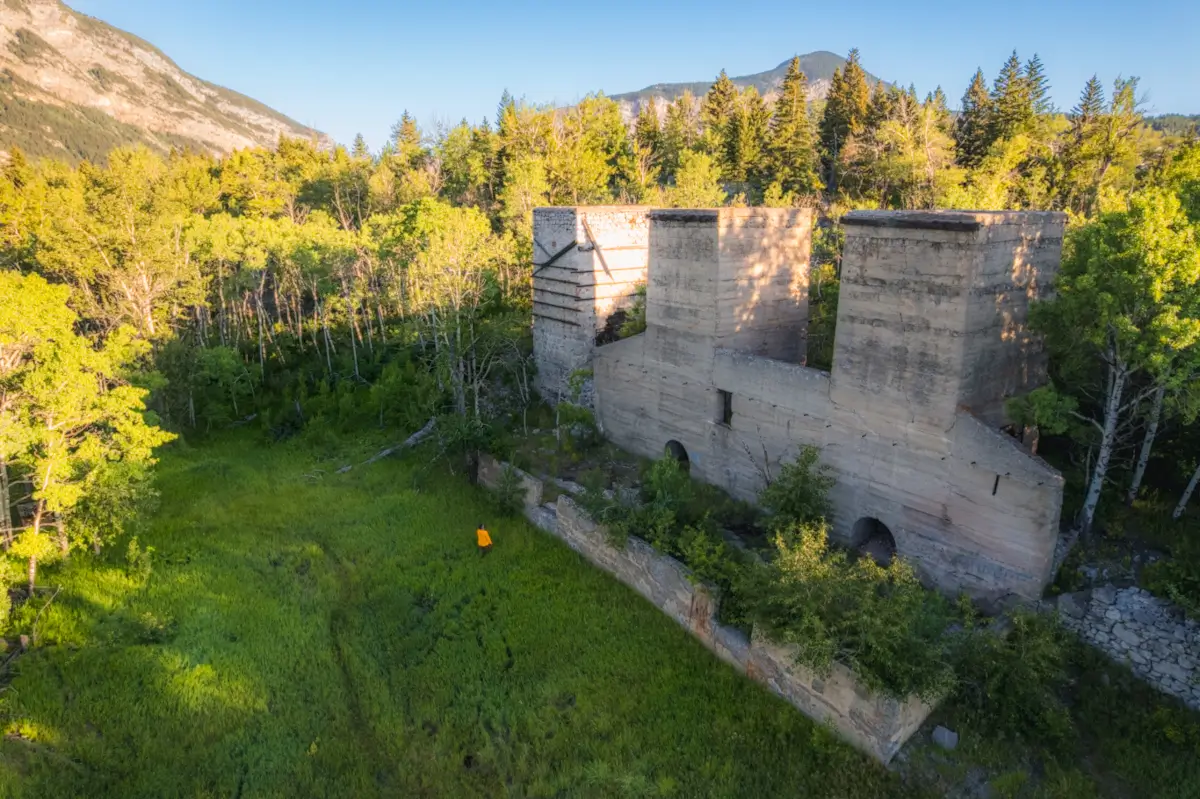
Not far from the Frank Slide Interpretive Centre lies the overgrown ghost of Lime City – once a small industrial settlement built around massive lime kilns fed by the slide’s endless limestone supply. In 1909, pioneers Joe Little, D. Christie, and J.A. Henderson established the operation here, constructing two concrete kilns in 1910 to convert the rockslide debris into lime – a key ingredient for mortar and mine dust control. A third kiln, built of rough stone, was added in 1912 after Winnipeg Fuel and Supply took over.
The kilns ran on wood and possibly coal, with stone broken and hauled via steam-powered hoist. Workers lived nearby in bunkhouses and a manager’s residence, forming the tiny community known as Lime City. Production ceased in 1918 and the operation wound down by 1923.
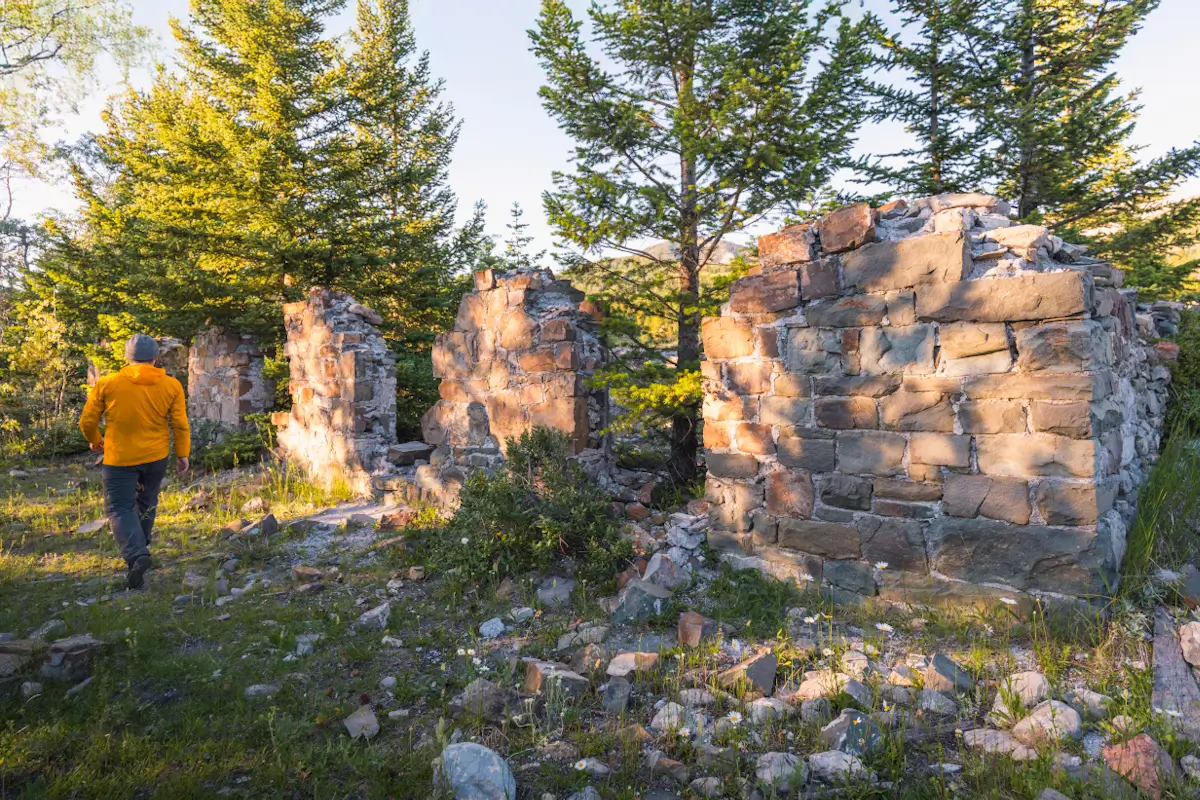
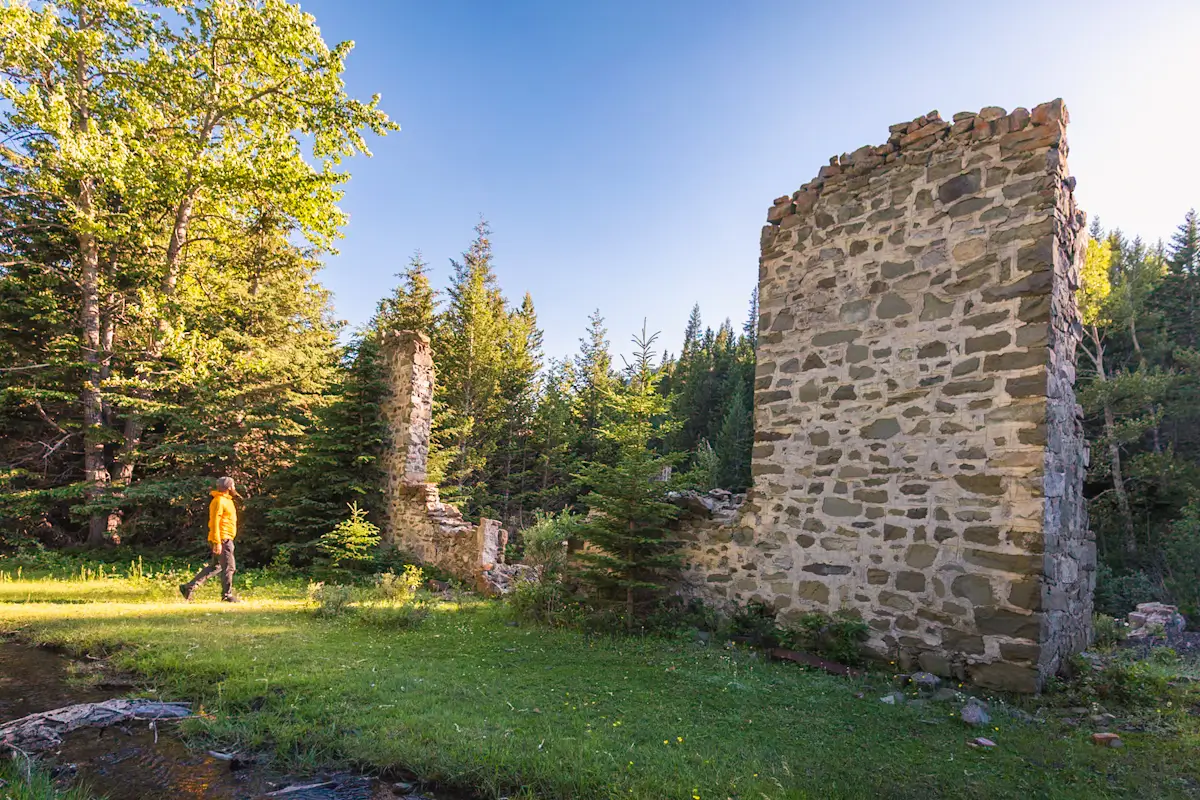
Today the shells of the three kiln towers still rise from the undergrowth, and not much else remains. A rough trail climbs up and around them, and it’s a fun little spot to explore.
21. Grab a Meal at The Rum Runner
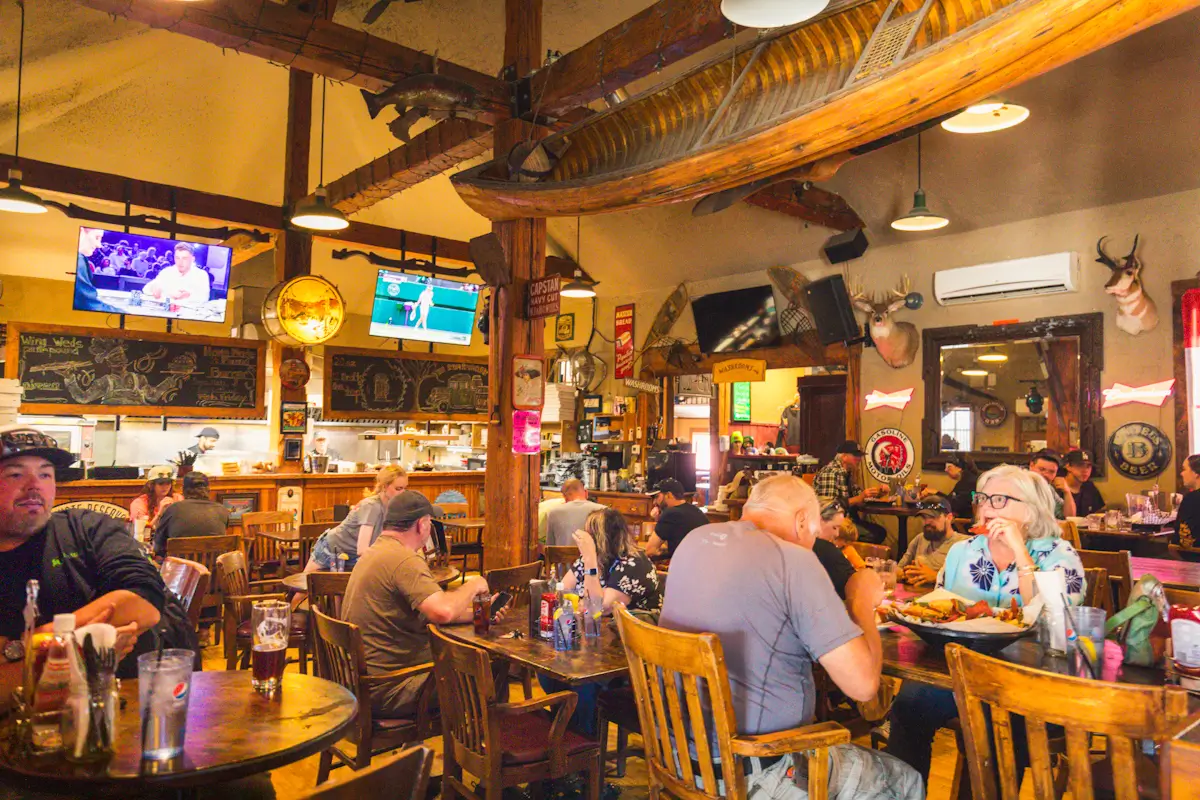
The Rum Runner in Coleman is the iconic local pub to visit in the Crowsnest Pass. The name nods nods to the prohibition era, when rum-running routes passed through the Pass, but inside it’s a casual spot to grab a meal and a pint. The building itself is unpretentious, with wood-paneled walls and a view of Crowsnest Mountain from the patio.
The menu is typical pub fare – with the burgers being the highlight. It’s a reliable stop post-hike, and is usually pretty busy with locals as well as out-of-towners.
22. Wander Through the Ghost Town of Lille
Hidden deep in the backcountry north of the Crowsnest Pass lies what’s left of Lille, a coal mining town that boomed briefly in the early 1900s before vanishing almost as quickly as it appeared. At its peak, Lille had about 400 residents, a hotel, a school, a store, and even a brewery supplying beer to the miners. But the town’s remote location, the high cost of hauling coal out by rail, and labor unrest sealed its fate. By 1912 the mines closed, and the town was abandoned.
Reaching Lille today requires a long hike or bike along old logging and mining roads, passing through thick forest and eventually emerging into a wide clearing where the town once stood (and now only cows stand instead). Occasional scattered stone foundations and crumbling brick chimneys are all that remain of the buildings.
23. Stop for a Pint at Oldman River Brewing
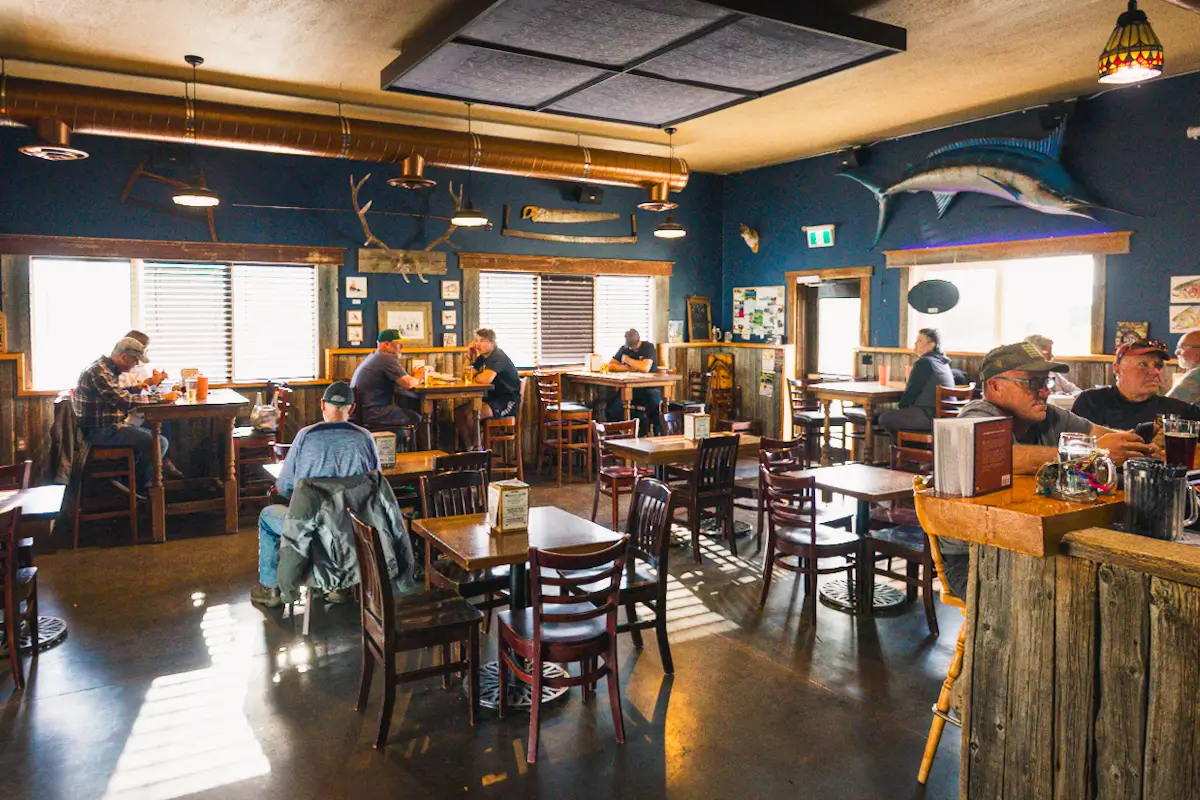
Oldman River Brewing sits in the tiny hamlet of Lundbreck, just minutes outside the Crowsnest Pass, and it has the vibe of any blue-collar Southern Alberta pub. The beer lineup is straightforward, with the Lime Sally Citrus Ale standing out. The small food menu covers the basics – burgers, pizza, wings. It’s an easy stop before or after visiting nearby Lundbreck Falls, making it a convenient place to grab a pint and a casual bite without going out of your way.
24. Sneak Away to Summit Lake
Summit Lake is probably the least-visited lake in the Crowsnest Pass, largely because access is a bit awkward thanks to the train tracks that wrap around its shoreline. It’s tucked just off the highway on the BC side of the Pass, with a small pullout offering a decent lookout if you’re driving west. If you’re determined to get down to the water, it’s possible – just be mindful of train traffic when crossing the tracks. Once you’re there, it’s a quiet and scenic spot for paddling or SUPing, and you’re bound to have the lake all to yourself.
25. Savor Local Flavors at Seeds
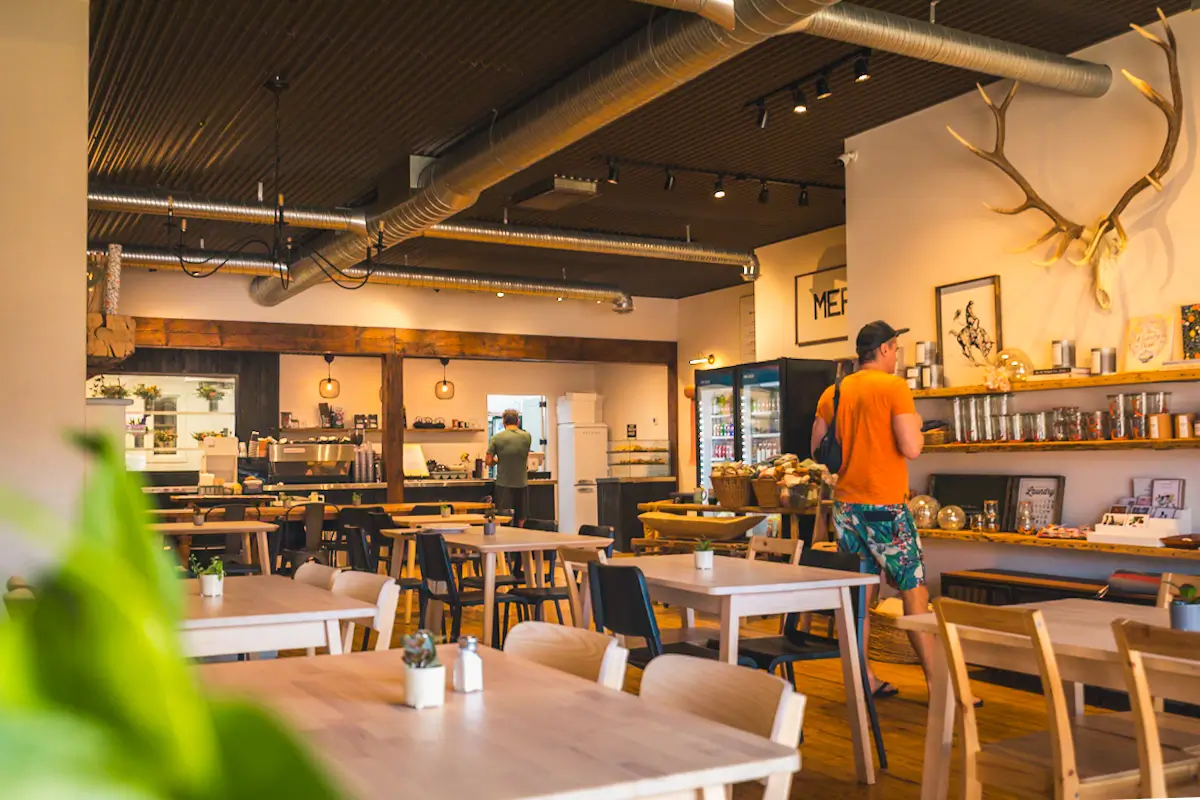
Seeds started as a simple flower stand at the farmers’ market in 2016 but has since grown into a charming multi-use space that combines a café, flower shop, gift shop, fresh-milled flour operation, and community gathering spot all in it’s bright and airy location on Pincher Creek’s main street. The café serves a thoughtful breakfast and lunch menu made with locally sourced ingredients, and while you’re waiting for your meal, it’s worth browsing the shelves stocked with other regional products and small-batch goods.
26. Tour the Kootenai Brown Pioneer Village
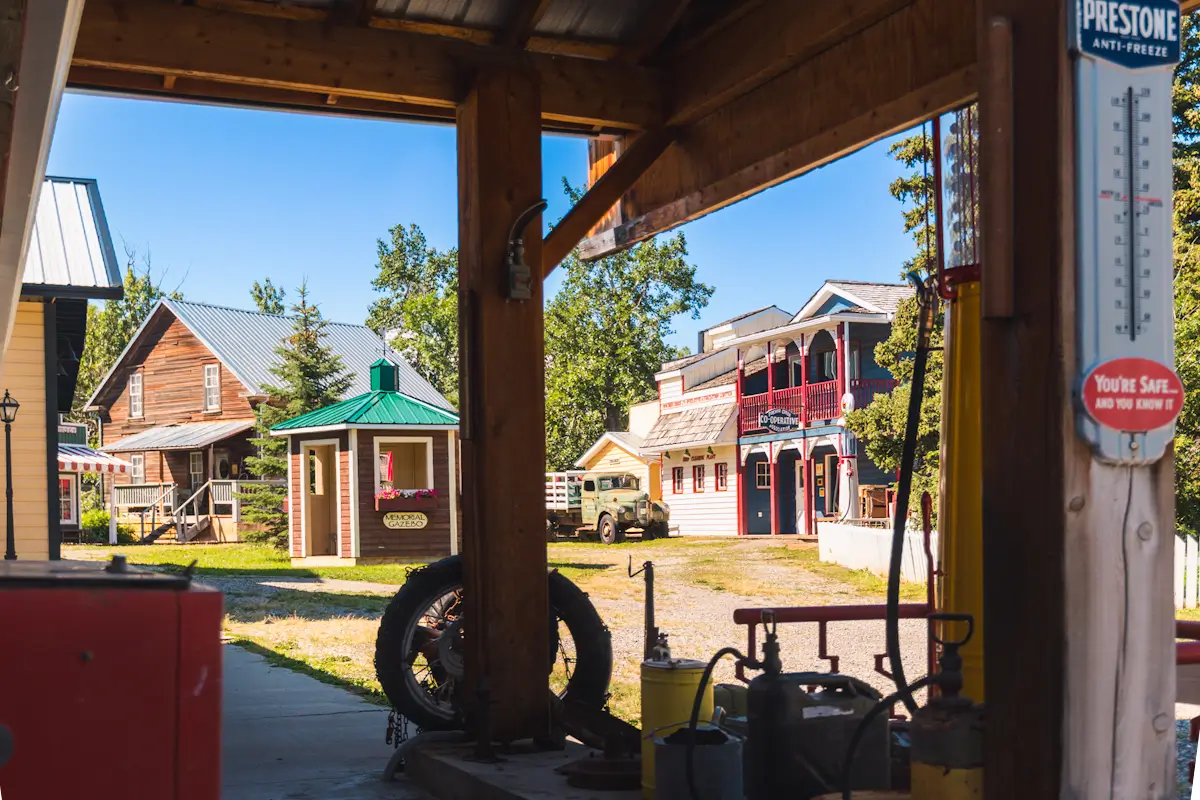
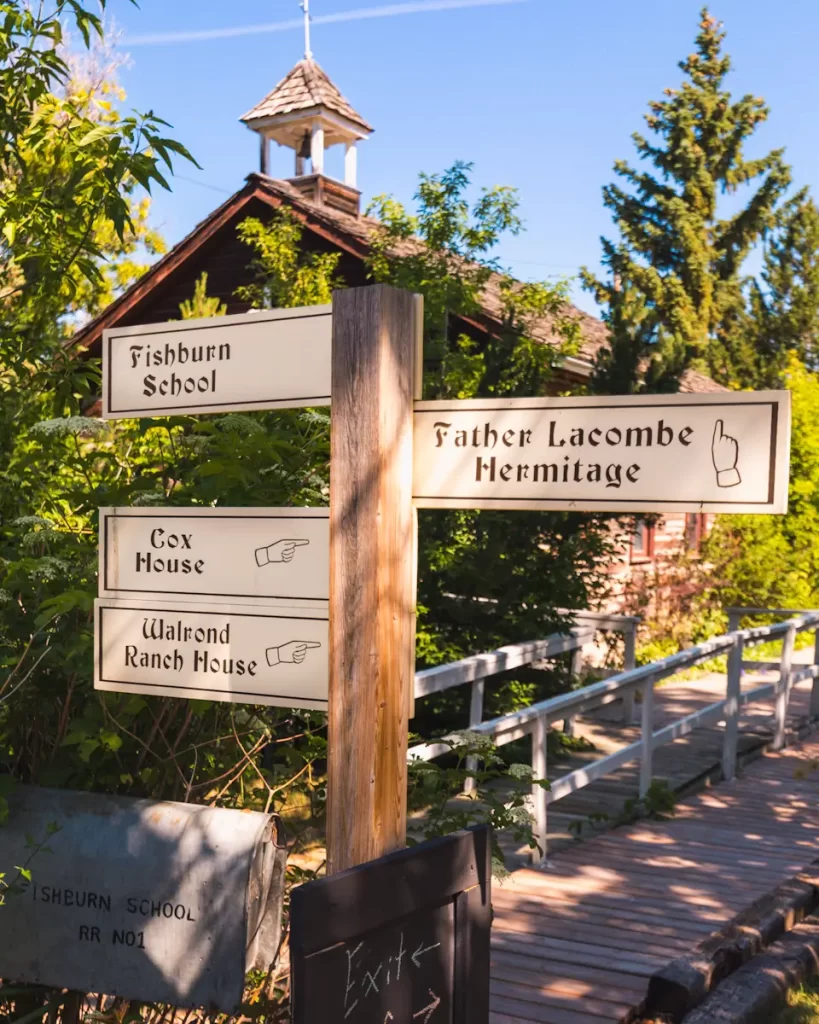
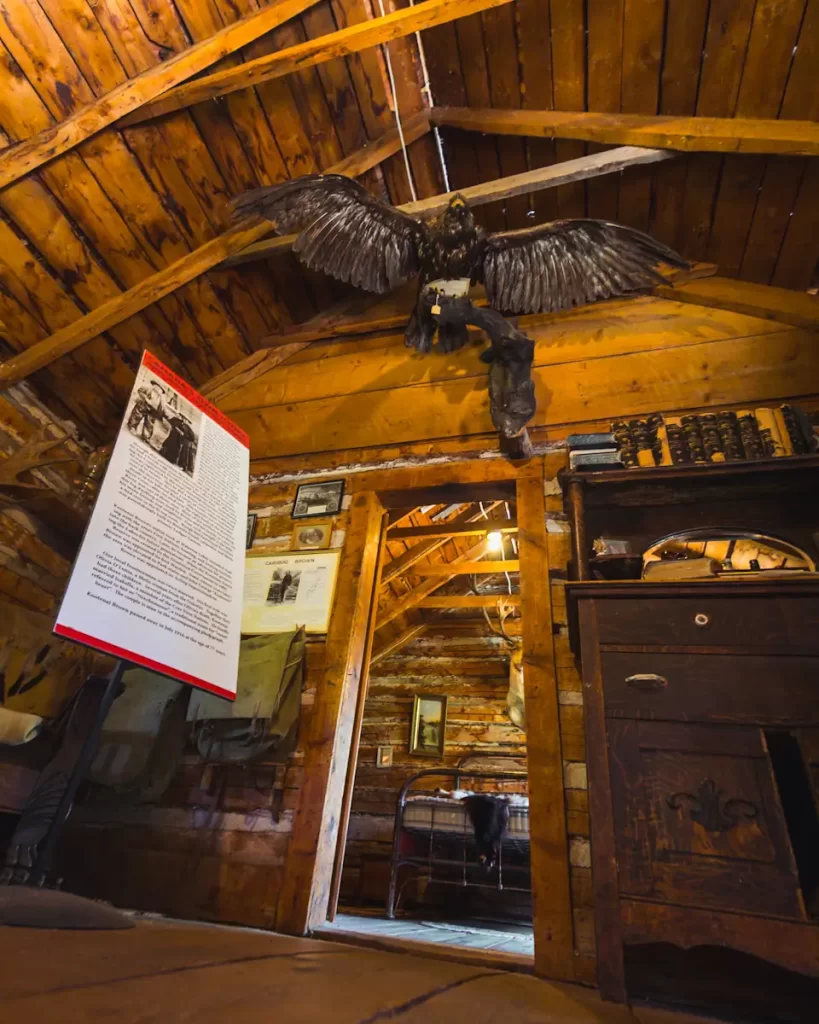
Located in Pincher Creek but well worth the drive from the Pass, Kootenai Brown Pioneer Village is an open-air museum that preserves and tells the story of life on the western frontier. Spread over six acres, the site features more than 30 heritage buildings, each filled with authentic artifacts from the late 1800s and early 1900s. It’s not a recreated theme park but a carefully assembled collection of actual historic structures moved here from around southern Alberta, including a blacksmith shop, a schoolhouse, a general store, and even a North West Mounted Police outpost. Truth be told I expected something a little kitschy, but I was really really pleasantly surprised by how much I enjoyed exploring the park, and how exciting it was discovering what was in each building.
27. Shop Sustainably at Small Town Collective
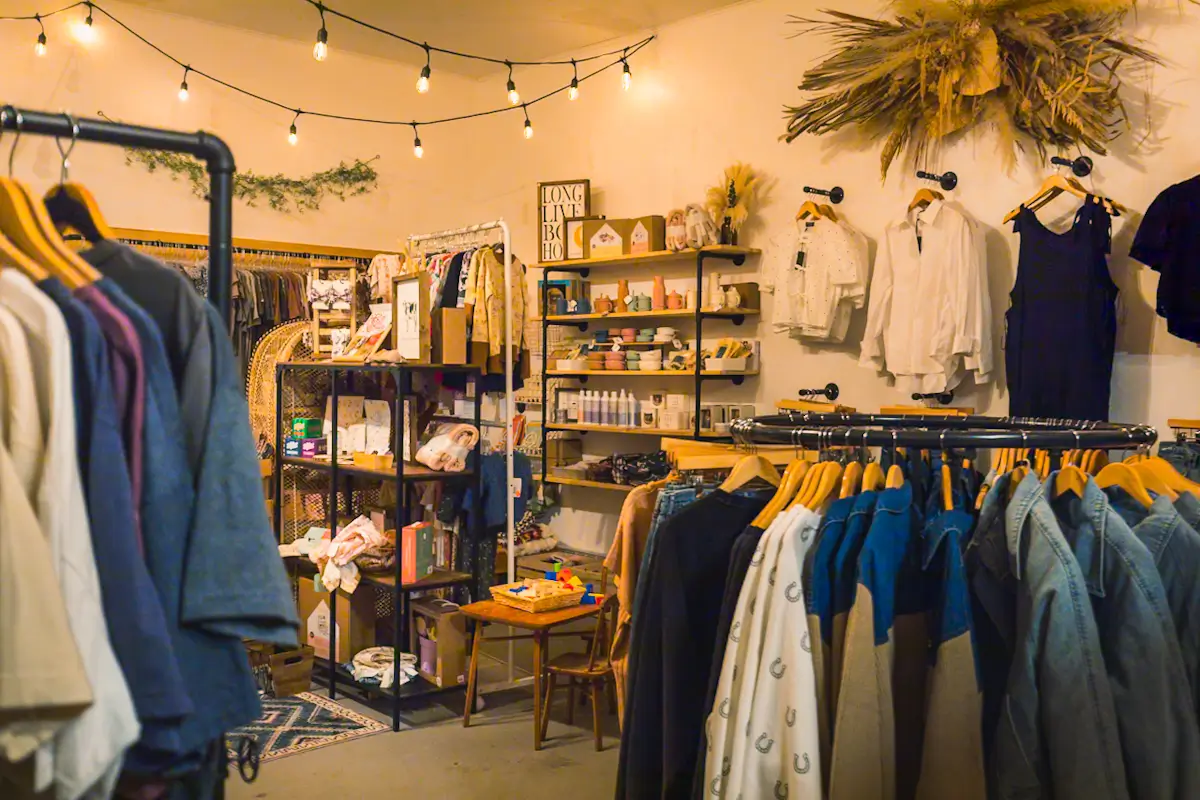
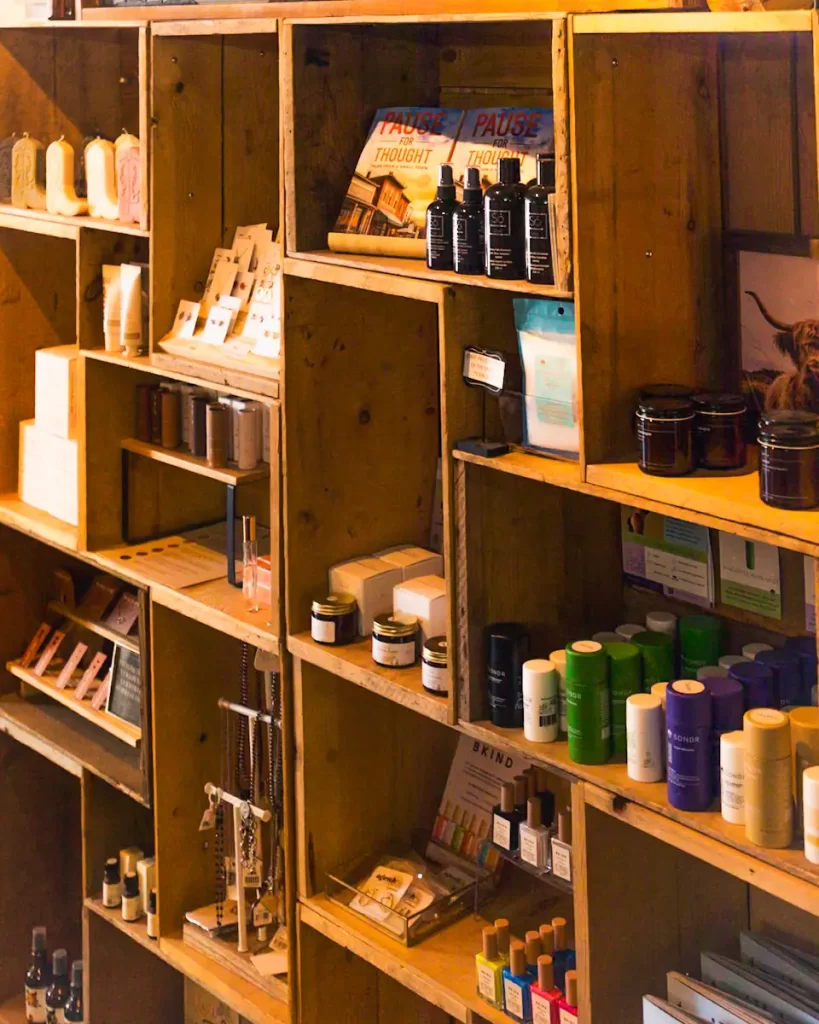
Small Town Collective opened in Pincher Creek in 2021 and quickly became the best spot to find thoughtfully curated, locally made goods in the area. With a focus on sustainability and small-batch Alberta brands, the shop feels more like a modern community boutique than a typical souvenir stop full of made-in-China junk. You’ll find everything from ethically made clothing and cozy housewares to stationery, skincare, and locally produced snacks, so unless you’re very picky, you’re probably not leaving empty-handed.
28. Venture into Castle Provincial Park
Castle Provincial Park sits just southwest of the Crowsnest Pass, making the Pass an ideal basecamp if you want to explore one of Alberta’s newest protected areas without giving up easy access to food, lodging, or other attractions. It’s less than an hour’s drive to reach the park boundary, so you can spend the day hiking rugged alpine ridges or fishing in quiet streams and still be back in time for a pint at one of the local breweries.
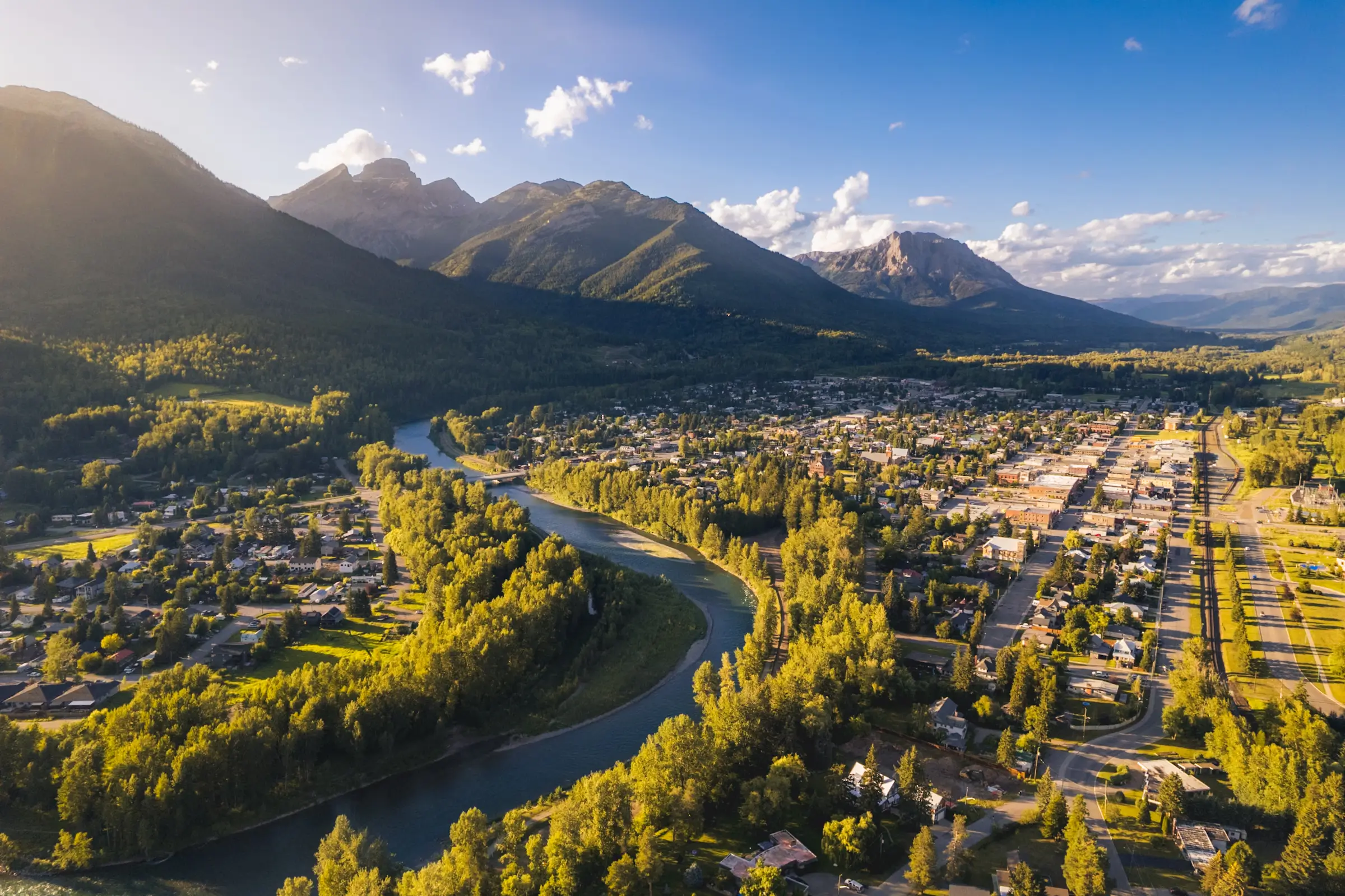
29. Continue Your Journey to Fernie
If you’re basing yourself in the Crowsnest Pass, it’s worth knowing that one of British Columbia’s best little mountain towns is less than an hour away. Cross the provincial border and you’ll hit the slightly livelier Fernie. The town is ringed with options – hiking, biking, or even just a mellow riverside walk with mountain views in every direction. In winter it becomes one of the most reliable snow destinations in the Rockies, with Fernie Alpine Resort offering some of the deepest powder in Canada.